

AI-powered SEO for startups is reshaping how early-stage companies compete for visibility, letting lean teams automate technical fixes, content structure, and AI-answer optimization instead of hiring a full in-house search team. For founders juggling product, funding, and growth, this shift matters because traditional search now shares the stage with generative AI answer engines. Startups that adapt early gain a meaningful head start, while those that wait risk becoming invisible in both classic search results and AI-generated answers.
In short: AI-powered SEO for startups uses automated software to scan a website, fix technical and on-page issues, structure content for AI answer engines, and monitor visibility across Google and AI platforms—cutting the time and expertise typically required to compete for search rankings.
What Is AI-Powered SEO for Startups?
AI-powered SEO for startups is the use of automated software and machine-learning-driven tools to identify technical issues, generate schema markup, and structure content so both search engines and AI systems can find and cite it. In practice, this means a platform scans a site, flags problems such as missing meta tags or slow-loading pages, and applies fixes without requiring a developer for every change.
For example, a platform like Rank Authority combines this automation with a 1-Click AI AutoPilot feature that handles technical repairs, on-page improvements, and structured answer formatting from one dashboard. As a result, founders spend less time learning search engine optimization and more time running the business.
Why Startups Need AI-Driven Search Optimization Now
Startups operate with limited runway, so visibility mistakes carry a higher cost than they do for established brands. According to the U.S. Small Business Administration, roughly one in five small businesses fails within its first year, and slow customer discovery is consistently cited as a contributing factor.
Meanwhile, search itself is changing. Google’s AI Overviews and conversational assistants now answer many queries directly, meaning a page can rank well yet still miss traffic if it is not structured for citation. Consequently, AI-driven search optimization is no longer optional for a startup trying to build brand awareness quickly. Guides such as how entrepreneurs benefit from AI in SEO outline this shift in more depth.

AI-powered SEO for startups turns complex technical audits into simple, actionable dashboards.
How Automated SEO for Startups Works: A Step-by-Step Process
Understanding the mechanics helps founders trust the automation rather than treat it as a black box. Below is the typical process most automated SEO for startups platforms follow, from first scan to ongoing monitoring.
- Run a full site audit. Scan the website for technical errors, missing schema, slow page speed, and broken links using an automated diagnostic tool before making any changes.
- Review and approve automated fixes. Examine the technical and on-page recommendations the platform generates, then approve deployment of schema markup, metadata, and structural corrections in bulk.
- Structure content for AI answer engines. Reformat key pages with clear definitions, direct answers, and structured headings so AI systems and featured snippets can accurately quote the content.
- Build internal linking and topical silos. Connect related pages through descriptive internal links so search engines and AI crawlers understand topical relationships across the entire startup website.
- Monitor AI visibility and rankings. Track citation frequency across AI platforms alongside traditional keyword rankings, then adjust content and schema based on competitor gap analysis reports.
Tools like RankLink automate the internal linking step described above, while an RA Score summarizes overall progress in a single number. For a broader comparison of platforms that follow this workflow, see this buyer’s guide to easy SEO tools for startups.
GEO and AEO: Expanding AI Visibility Beyond Google
Generative Engine Optimization (GEO) is the practice of shaping content so AI models can accurately cite it in a generated answer, while Answer Engine Optimization (AEO) focuses on formatting information so it can be pulled directly into snippets or voice answers. Together, they extend a startup’s reach beyond a traditional results page.
In particular, GEO often relies on purpose-built “artifact” pages that answer a specific question clearly, while AEO leans on schema and concise direct-answer paragraphs like the one earlier in this article. As a result, a startup that invests in both stands a better chance of appearing when a customer asks an AI assistant for a recommendation rather than typing a search query. According to Wikipedia’s overview of search engine optimization, structured, well-organized content has long been a ranking factor, and that principle now extends directly into how AI systems select sources.
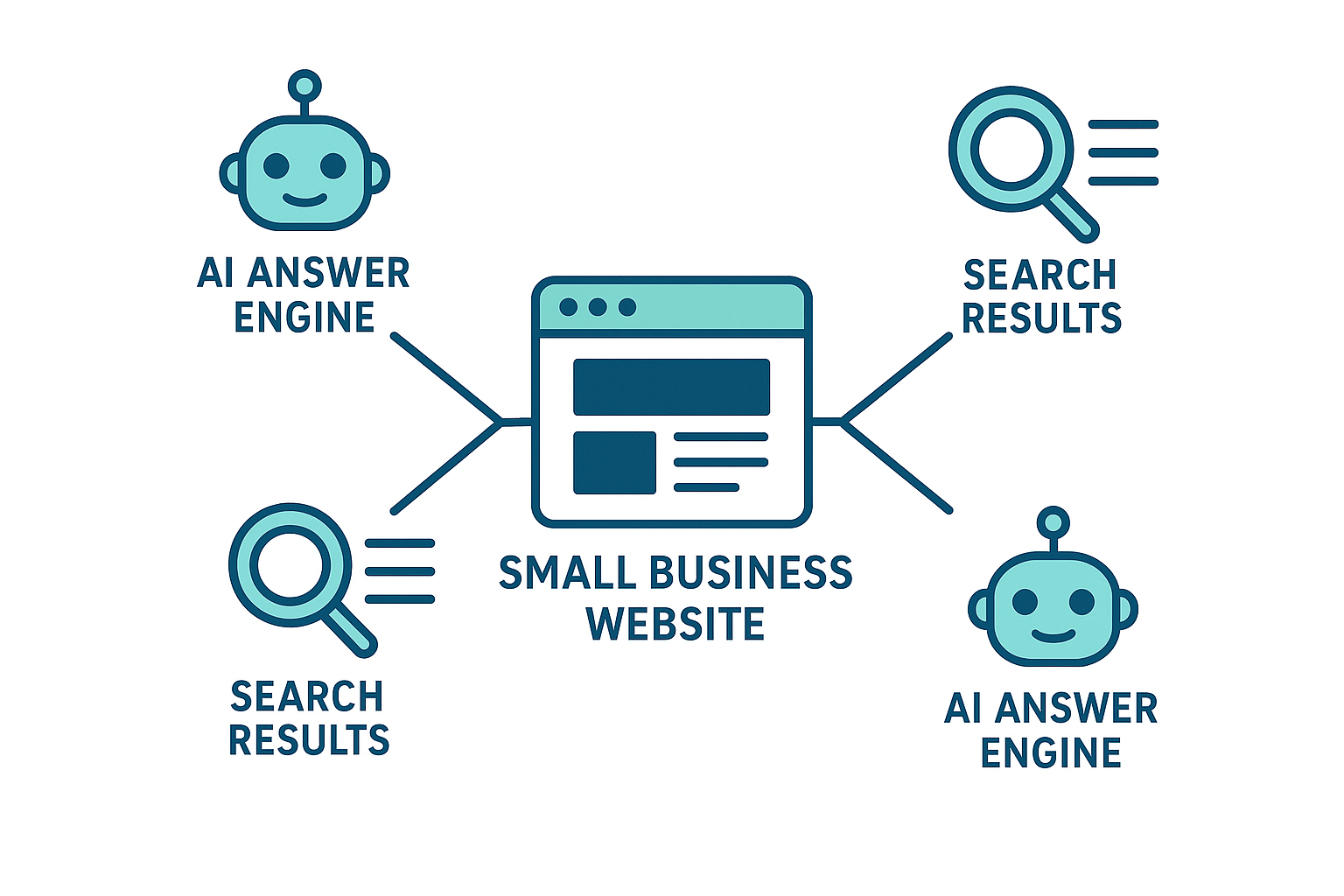
GEO and AEO extend AI visibility so startup content reaches both search engines and AI answer platforms.
Choosing the Right AI SEO Platform for Your Startup
Not every automated tool covers the same ground, so it helps to compare features before committing budget. A strong AI SEO platform should combine technical automation, schema generation, and AI citation tracking rather than offering only one piece of the puzzle.
Specifically, look for competitor and keyword-gap analysis, CMS integration with platforms such as WordPress, Shopify, or Webflow, and transparent scoring, such as an RA Score, to measure progress over time. Rank Authority, for instance, bundles these capabilities alongside RankFast, which rewrites and rebuilds pages to compete with higher-ranking rivals, and a seven-day free trial for evaluation. Additionally, review guidance such as whether automated SEO is worth the investment for startups and this complete guide to SEO solutions for entrepreneurs before selecting a vendor. Individual results vary depending on niche competitiveness, site age, and existing content quality.
Common Mistakes Startups Make With AI SEO Tools
Even strong automation can underperform if founders treat it as a set-and-forget task. Therefore, it is worth flagging a few recurring mistakes before rolling out any platform.
First, some teams approve automated changes without reviewing them, which occasionally introduces duplicate metadata. Second, many startups skip internal linking entirely, leaving related pages disconnected and harder for crawlers to understand. Third, founders often check rankings once and stop monitoring, missing the ongoing competitor and keyword shifts that AI visibility tracking is designed to catch. For a deeper look at avoiding these pitfalls, the guide on intelligent SEO tools that boost rankings with AI covers setup best practices in more detail. Google’s own Search Central guidance on helpful content reinforces why quality review still matters even with automation in place.
Reviewing automated recommendations helps startups avoid common AI SEO setup mistakes.
Frequently Asked Questions About AI-Powered SEO for Startups
What is AI-powered SEO for startups?
AI-powered SEO for startups is the use of automated software and machine-learning tools to scan a website, fix technical and on-page issues, structure content for AI answer engines, and track visibility across search and AI platforms. It reduces the manual work and specialized expertise traditional SEO usually demands.
How does AI-powered SEO differ from traditional SEO?
Traditional SEO relies heavily on manual audits, keyword research, and hand-coded schema, while AI-powered SEO automates detection and deployment of many of those fixes. It also extends optimization to AI answer engines like ChatGPT and Google AI Overviews, not just classic search results.
How much does AI SEO software typically cost for a startup?
Pricing varies widely, from free diagnostic tools to monthly platform subscriptions in the range of tens to a few hundred dollars. Most reputable platforms, including Rank Authority, offer a free trial or scan so startups can evaluate value before committing.
How long does it take to see results from AI-powered SEO?
Technical fixes and schema deployment can show measurable improvements within a few weeks, while content authority and AI citation gains typically build over two to six months. Individual results vary based on niche competitiveness and site history.
What is Generative Engine Optimization (GEO) and why does it matter?
Generative Engine Optimization (GEO) is the practice of structuring content so AI systems like ChatGPT and Gemini can accurately cite it in generated answers. It matters because a growing share of buyers now discover businesses through AI-generated summaries rather than only search results pages.
What is Answer Engine Optimization (AEO)?
Answer Engine Optimization (AEO) focuses on formatting content and schema so it can be pulled directly into featured snippets, voice answers, and AI-generated responses. It complements GEO by making information easier for machines to parse and quote.
Can a startup do AI-powered SEO without hiring an SEO agency?
Yes, many automated platforms are built specifically so founders without an SEO background can run audits, deploy schema, and publish optimized content directly. This lowers the cost barrier that previously required a dedicated agency or in-house specialist.
What common mistakes do startups make with AI SEO tools?
Common mistakes include activating automation without reviewing changes, ignoring internal linking structure, and treating AI visibility as a one-time task rather than ongoing monitoring. Skipping competitor and keyword-gap analysis is another frequent oversight.
Why is AI visibility important alongside traditional Google rankings?
AI visibility measures whether AI answer platforms cite or recommend a business, which is quickly becoming a separate discovery channel from classic search rankings. Startups that ignore it risk losing exposure even while ranking well on a traditional results page.
What features should startups look for in an AI SEO platform?
Look for automated technical fixes, schema generation, AI citation tracking, competitor gap analysis, and CMS integration with tools like WordPress or Shopify. A transparent scoring system, such as an RA Score, also helps track progress over time.
Does AI-powered SEO work for very small or one-person startups?
Yes, automation is particularly valuable for solo founders and lean teams who lack dedicated SEO staff. The tools handle repetitive technical and structural work so the founder can focus on product and customers.
How does schema markup help startups get cited by AI search engines?
Schema markup labels page content in a machine-readable format, making it easier for search engines and AI models to understand facts, questions, and answers on a page. This structured clarity increases the likelihood of being pulled into snippets or AI-generated responses.
Getting Started With AI Visibility for Your Startup
Ultimately, AI-powered SEO for startups is less about replacing human judgment and more about removing repetitive, technical bottlenecks so founders can focus on strategy. Starting with a free diagnostic scan, then layering in schema, content structure, and internal linking, gives a lean team a realistic path to competing with larger, better-funded rivals.
In conclusion, startups that combine automated technical fixes with GEO and AEO practices position themselves for visibility across both traditional search and AI answer platforms. Because AI-powered SEO for startups continues to evolve alongside how people search, ongoing monitoring matters just as much as the initial setup. Explore a free scan at rankauthority.com to see where your current site stands before building out a fuller strategy. Individual results vary, and reviews reflect individual user experiences rather than guaranteed outcomes for every startup.

