

Automated analytics for SEO is changing the way businesses track, interpret, and act on search performance data. Rather than manually exporting spreadsheets from five different tools, teams now lean on intelligent systems that continuously monitor rankings, traffic, and technical health in the background. This shift matters because search itself is evolving quickly, with AI-driven answer engines reshaping how people discover information online. As a result, understanding automated analytics for SEO has become essential for marketers, agencies, and business owners who want to keep pace.
Traditionally, SEO reporting required pulling data from Google Search Console, third-party rank trackers, and content audits, then stitching it all together by hand. Consequently, insights often arrived too late to act on. Today’s automated platforms remove that lag by combining data collection, analysis, and recommendations into one continuous workflow, which is exactly what makes automated analytics for SEO valuable for anyone managing multiple sites or clients.
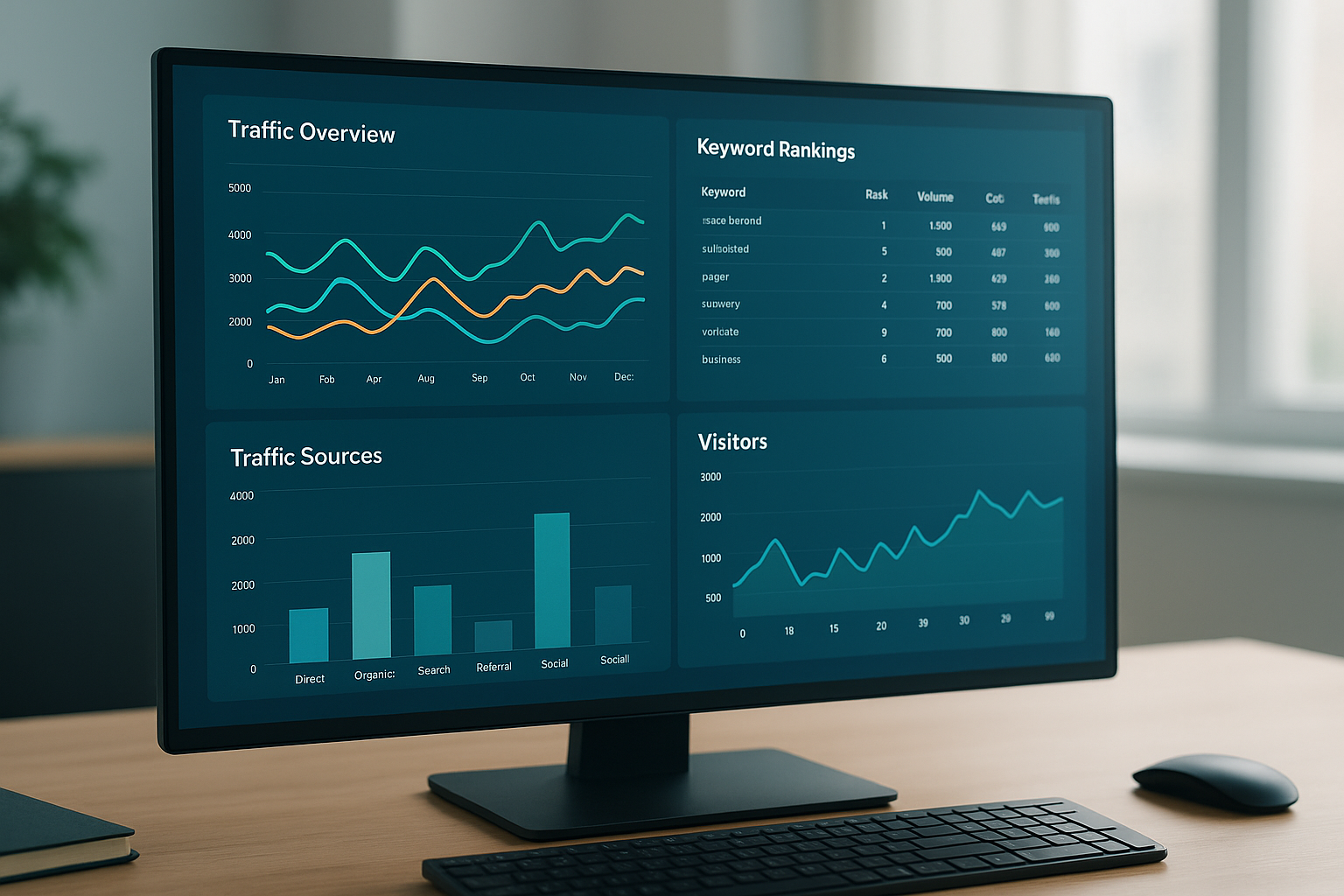
A live dashboard is the heart of automated analytics for SEO, refreshing data around the clock.
What Is Automated Analytics for SEO?
Automated analytics for SEO is the use of software and AI-driven algorithms to continuously collect, analyze, and interpret search performance data — including rankings, traffic, backlinks, and technical issues — without requiring manual data pulls or spreadsheet work. In short, it replaces repetitive reporting tasks with always-on monitoring and instant insight.
Unlike a static report that captures a single moment in time, automated systems refresh continuously throughout the day. Therefore, a sudden ranking drop or crawl error gets flagged within hours rather than at the next monthly review. For a deeper technical breakdown, the complete 2025 guide to AI-driven SEO analytics covers the underlying mechanics in more detail.
Why AI-Powered SEO Analytics Matters in 2025
Search behavior is no longer limited to typing a phrase into a search box. Increasingly, people ask questions directly to AI chatbots and voice assistants, which pull answers from indexed web content. Gartner has projected that traditional search engine volume could fall as much as 25% by 2026 as more users shift toward these AI-driven answer experiences (Gartner, 2024).
Given that trend, relying on manual SEO tracking alone is risky. In contrast, AI-powered SEO analytics can watch both classic rankings and visibility inside AI Overviews at the same time. Consequently, brands using automated analytics for SEO tend to spot emerging opportunities, such as a competitor losing a featured snippet, well before manual reviewers would notice. The guide to AI analytics for smarter rankings explores this shift further.
How Automated Analytics for SEO Works: A 5-Step Process
While every platform differs slightly, most automated analytics for SEO systems follow a similar sequence. Understanding these steps helps explain why the results feel faster and more precise than manual reporting.
- Connect your data sources. The platform links to Google Search Console, analytics tools, and crawl data so every ranking, click, and technical signal flows into one dashboard automatically.
- Track rankings and traffic continuously. Instead of weekly manual checks, the system refreshes keyword positions and traffic patterns daily, catching sudden drops before they become bigger problems.
- Apply AI-driven pattern recognition. Machine learning models compare current performance against historical baselines to flag anomalies, seasonal shifts, and emerging opportunities a human might miss.
- Generate automated reports and alerts. The system compiles findings into readable reports and sends real-time alerts when a page loses rankings or a technical error appears.
- Deliver actionable, prioritized recommendations. Finally, the platform ranks suggested fixes by potential impact, so teams know exactly which optimization task to tackle first.

AI pattern recognition helps automated analytics for SEO surface issues before they affect traffic.
Key Benefits of Automated SEO Analytics
Beyond saving time, automated SEO analytics offers several practical advantages that compound over months of use.
- Faster issue detection: problems surface in hours, not weeks, limiting lost traffic.
- Consistent reporting: every stakeholder sees the same real-time numbers, reducing confusion.
- Scalability: agencies can monitor dozens of client sites without adding headcount, as covered in this guide to scalable SEO solutions that grow rankings fast.
- Data-backed prioritization: teams spend time on fixes with the highest projected impact first.
- Visibility across AI search: automated tracking extends to AI Overviews and answer engines, not just classic blue links.
Choosing the Right Automated Analytics for SEO Platform
Not every automation tool covers the same ground, so it helps to compare a few things before committing. Specifically, look at how many data sources a platform connects to, whether it explains its recommendations in plain language, and how it handles emerging AI search surfaces.
For example, RankAuthority combines automated analytics for SEO with Generative Engine Optimization (GEO) and Answer Engine Optimization (AEO) tools through its 1-Click AI AutoPilot technology. This approach suits small business owners, digital marketers, and agencies managing several client properties at once, particularly because it comes with a risk-free seven-day trial. If you are still deciding whether to automate at all, the article on automating SEO processes effectively is a useful starting point.
In addition, according to the Search Engine Optimization overview on Wikipedia, search algorithms weigh hundreds of ranking signals simultaneously, which is precisely why manual tracking struggles to keep up. Similarly, Google’s own Search Central documentation recommends monitoring Core Web Vitals and indexing status regularly, tasks that automated dashboards handle without extra effort.
Common Mistakes to Avoid With Automated SEO Analytics
Even the best automated analytics for SEO tools can underperform if used carelessly. First, some teams ignore alerts simply because they arrive frequently, which allows genuine problems to slip through. Second, others treat automated recommendations as final answers rather than starting points that still need business context.
Furthermore, failing to connect all relevant data sources — such as skipping Google Search Console — leaves gaps that reduce accuracy. As explained in this complete guide to automated performance analysis, the value of automation grows in direct proportion to how complete the underlying data set is. Web analytics fundamentals, outlined on Wikipedia, remain just as relevant inside automated systems as they were in manual ones.

Reviewing automated reports as a team helps catch context that algorithms alone might miss.
Frequently Asked Questions About Automated Analytics for SEO
What is automated analytics for SEO?
Automated analytics for SEO is the use of software and AI to continuously collect and interpret search performance data, such as rankings, traffic, and technical health, without manual reporting. It replaces spreadsheet-based tracking with always-on monitoring.
How does automated analytics for SEO differ from traditional reporting?
Traditional reporting relies on manual data pulls that capture a single moment in time. Automated analytics refreshes continuously and flags issues in real time instead of days or weeks later.
Why is automated analytics for SEO important for AI search visibility?
As AI answer engines change how content gets discovered, automated systems can track visibility across both classic search results and AI-generated answers. This helps brands adapt quickly rather than reacting after traffic has already dropped.
How much does automated SEO analytics software typically cost?
Pricing varies widely, from free basic tools to enterprise platforms costing several hundred dollars per month. Many providers, including RankAuthority, offer a risk-free trial period so teams can test value before committing.
How long does it take to see results from automated SEO analytics?
Initial insights typically appear within the first 24 to 48 hours after connecting data sources. Meaningful ranking or traffic improvements usually take four to twelve weeks, depending on site size and competition.
Can automated analytics for SEO replace an SEO specialist?
Automation handles data collection, pattern detection, and repetitive reporting, but strategic decisions still benefit from human judgment. Most teams use automated analytics for SEO to free up specialists for higher-value work.
What data do automated SEO analytics platforms track?
Most platforms track keyword rankings, organic traffic, backlinks, crawl errors, page speed, and content performance. Advanced tools also monitor visibility in AI-generated answers and featured snippets.
What are common mistakes when using automated SEO analytics tools?
A frequent mistake is ignoring alerts because they seem routine, which allows real problems to go unnoticed. Another is relying solely on automation without reviewing recommendations for business context.
Is automated analytics for SEO suitable for small businesses?
Yes, automated analytics for SEO is especially useful for small businesses that lack a dedicated marketing team. It removes the need for deep technical expertise while still delivering professional-level insights.
How does automated analytics for SEO support GEO and AEO strategies?
Automated systems can monitor how content performs in AI Overviews, chatbots, and voice assistants alongside traditional rankings. This dual visibility is central to Generative Engine Optimization and Answer Engine Optimization.
What is the difference between automated analytics for SEO and rank tracking tools?
Rank tracking tools focus narrowly on keyword positions, while automated analytics for SEO combines rankings, traffic, technical audits, and content insights into one continuous workflow. The broader scope makes it more actionable.
How do I get started with automated analytics for SEO?
Start by connecting your website and Google Search Console data to an automated platform, then let it establish a performance baseline. From there, review the automated recommendations and prioritize fixes by potential impact.
Final Thoughts
In summary, automated analytics for SEO gives businesses a faster, more complete view of how their content performs across both traditional search and emerging AI answer engines. Rather than reacting weeks after a problem starts, teams can catch issues within hours and act on prioritized, data-backed recommendations. Above all, this shift matters because search itself keeps changing, and manual tracking simply cannot keep pace on its own.
Whether you manage a single website or dozens of client accounts, adopting automated analytics for SEO now can help protect and grow the visibility you have already worked hard to build. Platforms like RankAuthority, with tools such as 1-Click AI AutoPilot, make it possible to start without a steep learning curve, and a seven-day trial offers a low-risk way to see the difference for yourself.

