

Automated content improvement is the process of using AI-driven tools to analyze, optimize, and update website content so it ranks higher across both traditional search engines and newer AI answer engines. Instead of manually rewriting pages line by line, businesses can rely on intelligent software that continuously scans content, flags weaknesses, and applies data-backed fixes. For small business owners, marketers, and agencies juggling multiple sites, this shift matters more than ever, since AI-powered search is reshaping how people find information online.
Direct answer: Automated content improvement uses AI to audit, rewrite, and structure existing web pages so they meet current ranking and answer-engine standards, all with far less manual effort than traditional editing.
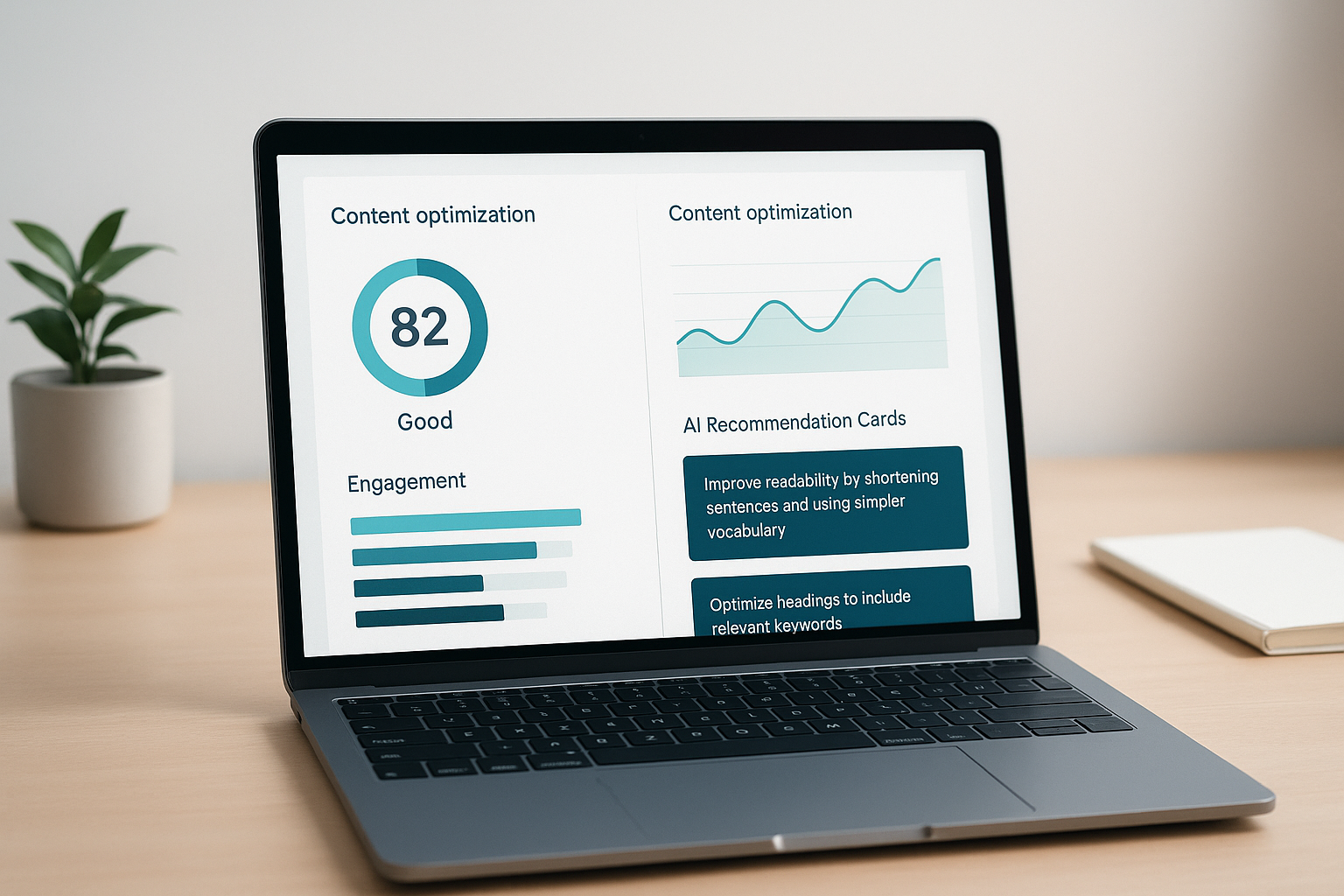
A typical dashboard view of automated content improvement in action.
What Is Automated Content Improvement?
Automated content improvement is a technology-driven approach that uses artificial intelligence to evaluate existing content, identify gaps, and apply optimization changes with minimal human input. Specifically, it typically covers technical SEO fixes, semantic keyword coverage, readability adjustments, and structured data that help both search engines and AI systems understand a page. In contrast to a full manual rewrite, the process runs continuously in the background.
As a result, teams no longer need to schedule content audits every quarter and hope they catch every issue. Instead, software flags outdated statistics, thin sections, and missing context in real time. For a deeper technical breakdown of the mechanics involved, this guide to how automated content optimization works walks through the underlying logic step by step.
Why Automated Content Optimization Matters for AI Search
Search behavior has changed considerably over the past two years. According to Google’s own guidance on helpful content, pages that directly and clearly answer a searcher’s question are favored by both classic algorithms and AI-generated summaries. Consequently, content that is vague, outdated, or poorly structured tends to lose visibility even if it once ranked well.
Furthermore, answer engines like AI Overviews pull directly from web content to generate responses, so pages must be structured for extraction, not just persuasion. In particular, this means clear headings, direct answers near the top, and well-organized data. Because manually restructuring hundreds of pages is impractical, automated content improvement fills that gap efficiently.
To understand the broader shift, Wikipedia’s overview of search engine optimization offers useful historical context on how ranking factors have evolved alongside user intent.

Automated content improvement often transforms cluttered pages into clear, well-structured ones.
How Does Automated Content Improvement Work?
In short, automated content improvement works by scanning pages against ranking signals, then applying or suggesting edits automatically. Below is the typical process most platforms follow, whether they are simple plugins or full automation suites.
- Run an AI content audit. The tool scans every important page to identify thin content, missing structure, outdated statistics, and gaps compared with top-ranking competitors.
- Prioritize pages by impact. Pages are ranked by traffic potential and current performance so automation focuses first on content most likely to move rankings.
- Apply automated optimization. The platform rewrites thin sections, adds semantic keywords, inserts structured data, and improves headings based on its analysis.
- Review and refine manually. A human checks the automated edits for accuracy and brand voice before publishing anything live.
- Monitor and repeat. Rankings, traffic, and AI answer citations are tracked monthly, and the cycle repeats on pages that still underperform.
Notably, this cycle mirrors what platforms like the 1-Click AI AutoPilot service automate end to end, removing most of the manual coordination between audit, edit, and review.
Tools That Power Automated Content Optimization
Several categories of tools support this workflow. AI writing assistants handle rewrites, technical crawlers catch structural issues, and dedicated GEO/AEO platforms combine both along with structured data automation. Naturally, the right choice depends on how many pages a business manages and how much oversight it wants over each change.
For a closer look at specific software options, the article on tools that help with automated content optimization compares several practical choices by feature and price. Meanwhile, developers evaluating structured data implementation can reference Schema.org for the technical vocabulary these tools often rely on behind the scenes.
Manual vs. Automated Content Optimization: Key Differences
Manual optimization gives a writer full control over tone, nuance, and factual precision, which is valuable for sensitive or highly technical topics. However, it is slow, and it does not scale well across dozens or hundreds of pages.
By contrast, automated content improvement scales instantly, applying consistent structural fixes across an entire site in a fraction of the time. That said, automation works best when paired with human review rather than left completely unsupervised, since context and accuracy still matter for trust.
Data point: Industry research on AI search behavior suggests that pages with clear, direct answers near the top are significantly more likely to be cited in AI-generated overviews than pages that bury key information deep in the text, according to Google’s helpful content guidance.
Best Practices for Improving Content Automatically
To get the most from automation, start with a clear priority list rather than optimizing every page at once. Specifically, focus first on pages that already receive some traffic but underperform relative to competitors, since those tend to show the fastest improvement.
Additionally, always keep a human review step before publishing AI-generated edits. This protects against factual errors and ensures the brand voice stays consistent. For guidance on connecting these optimizations to broader visibility goals, see how to improve online visibility using AI.
Finally, revisit optimized pages on a regular schedule. Because AI models and search algorithms change often, a page that performs well today may need another round of automated content improvement within a few months.
Common Mistakes to Avoid
One frequent mistake is publishing automated edits without any review, which can introduce awkward phrasing or inaccurate claims. Another is over-optimizing for keywords, which harms readability and can look manipulative to both readers and algorithms.
Likewise, ignoring content discoverability is a missed opportunity. Even well-written content needs proper internal linking and structure to be found by both users and AI crawlers, as explained in how AI can enhance content discoverability. For additional background on how language models interpret text, MDN’s overview of natural language processing is a helpful primer.

Human review remains an essential final step in automated content improvement.
Frequently Asked Questions About Automated Content Improvement
What is automated content improvement?
Automated content improvement is the use of AI software to analyze existing web pages and apply optimization changes, like better keyword coverage and structure, without manually rewriting every page.
How does automated content improvement work?
It scans a page’s content, compares it against ranking signals and competitor data, then applies or suggests edits such as added context, better headings, and structured data automatically.
Why is automated content improvement important for AI search?
AI Overviews and similar tools summarize content instead of just linking to it, so pages need clear structure and direct answers, which automated tools apply consistently at scale.
How much does automated content improvement cost?
Pricing varies widely, from free basic plugins to subscription platforms costing roughly $50 to $500 or more per month depending on page volume and automation depth.
How long does it take to see results?
Most sites notice initial ranking or visibility changes within four to eight weeks, though full results depend on site authority, competition, and refresh frequency.
What is the difference between automated content improvement and manual content optimization?
Manual optimization relies on a person editing each page, while automation uses software to apply data-backed changes across many pages at once, saving considerable time.
What tools can help with automated content optimization?
Options range from AI writing assistants to full platforms combining technical audits, keyword research, and one-click publishing built specifically for GEO and AEO.
Can automated content improvement replace human writers?
No, it works best alongside human judgment; automation handles repetitive optimization tasks while writers still provide expertise, voice, and factual accuracy.
What are common mistakes when using automated content optimization?
Common mistakes include publishing AI edits without review, over-optimizing for keywords, and ignoring how changes affect readability or accuracy.
What is a best practice for automated content improvement?
A strong best practice is combining automated audits with periodic human review, ensuring every AI-suggested change still matches brand voice and search intent.
Does automated content improvement help with AI Overviews and answer engines?
Yes, because automated tools often add structured data, direct answers, and clear headings, the same elements AI Overviews and answer engines favor when selecting content to cite.
Is automated content improvement safe for SEO rankings?
It is generally safe when tools follow search engine guidelines and avoid manipulative tactics; risks mainly appear when automation runs without any oversight.
How often should content be automatically optimized?
Most experts suggest reviewing and refreshing key pages every one to three months, since search algorithms and competitor content change frequently.
What metrics show automated content improvement is working?
Look for improvements in organic traffic, keyword rankings, click-through rate, and citations within AI-generated answers as signs the optimization is effective.
Who should use automated content improvement tools?
Small business owners, marketers, and agencies managing multiple websites benefit most, since automation saves the time needed to optimize content manually across many pages.
Conclusion
Ultimately, automated content improvement gives businesses a practical way to keep pace with fast-changing search algorithms and AI answer engines without rewriting every page by hand. By combining AI audits, prioritized fixes, and human review, teams can steadily strengthen rankings, visibility, and discoverability over time. As a next step, platforms such as rankauthority.com offer a risk-free trial for businesses ready to see automated content improvement in action on their own site.

