

Data-driven SEO optimization is the practice of letting real analytics — rankings, click-through rates, crawl data, and user behavior — steer every search decision instead of relying on guesswork or copy-paste tactics. As AI Overviews, chatbots, and answer engines reshape how people find information, businesses that commit to data-driven SEO optimization gain a measurable edge over competitors still working on intuition alone. In this guide, you will learn exactly what data-driven SEO optimization means, why raw analytics data alone is not enough to win rankings, and how to build a repeatable, results-focused process that outperforms guesswork every time.
Quick answer: Data-driven SEO optimization means basing content, technical, and link decisions on real performance data instead of assumptions. In practice, this involves tracking metrics like organic traffic, keyword rankings, engagement, and AI citation frequency, then adjusting strategy based on what the numbers actually show — not on what a generic checklist says should work.
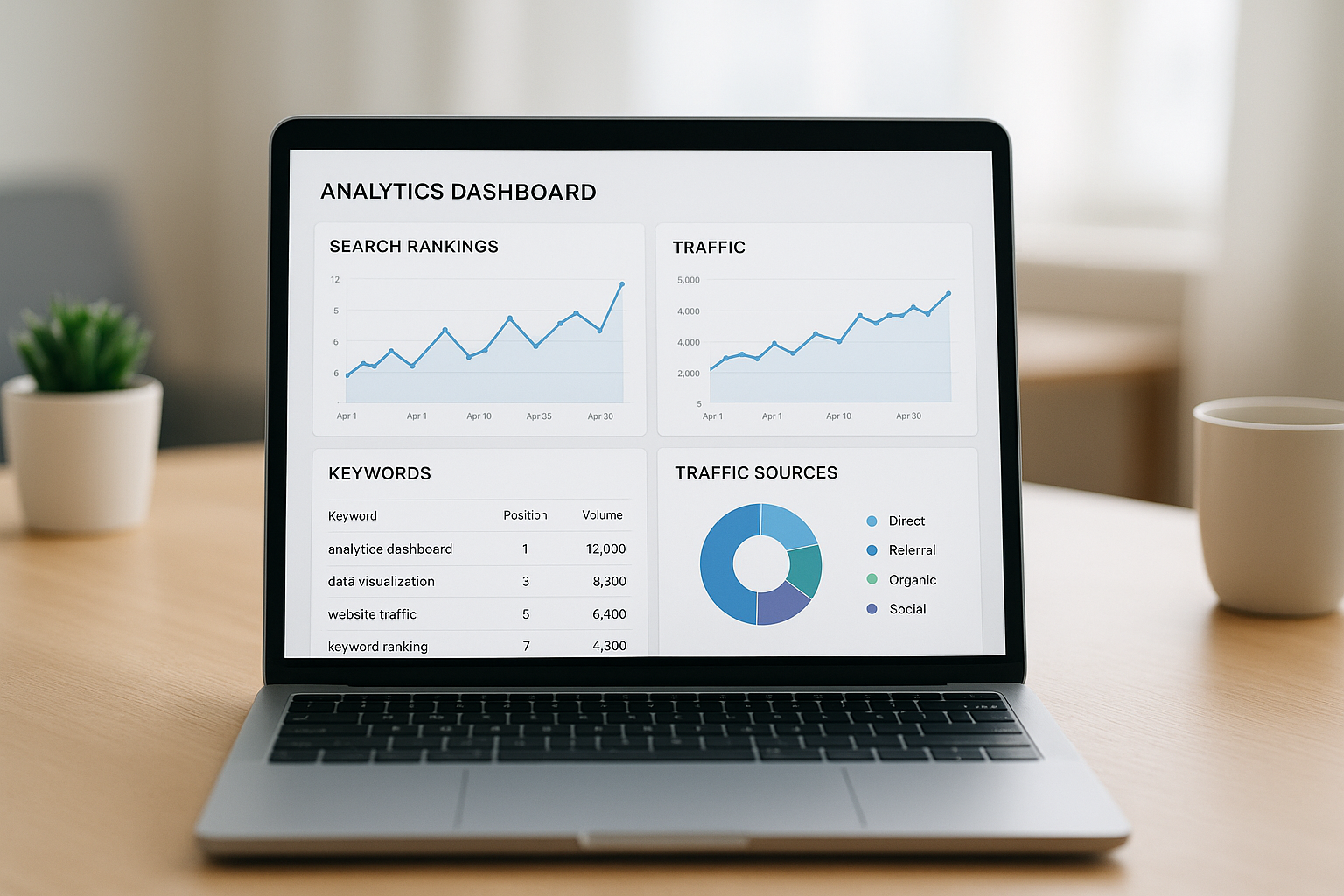
Analytics dashboards form the backbone of any data-driven SEO optimization strategy.
What Is Data-Driven SEO Optimization?
Data-driven SEO optimization is an approach to search strategy where every decision — from keyword targeting to technical fixes — is based on measurable performance data rather than assumptions. Specifically, this means pulling numbers from tools like Google Search Console and analyzing them before making a single change to a page.
Unlike older SEO methods that leaned heavily on generic best practices, data-driven SEO optimization treats every website as unique. Consequently, teams study their own ranking history, traffic patterns, and conversion data to figure out what actually moves the needle for that specific site, in that specific industry. According to Wikipedia’s overview of search engine optimization, SEO practices have continuously evolved alongside search engine algorithms — which is exactly why ongoing data analysis matters more than static, one-size-fits-all rules.
Data-Driven SEO Optimization vs. Raw SEO Data: Why an API Feed Isn’t a Strategy
Plenty of tools exist that simply hand you raw SERP data, keyword volumes, or backlink lists through an API. However, a spreadsheet full of numbers is not the same thing as a strategy. In fact, one of the biggest gaps businesses run into is assuming that access to data automatically produces better rankings.
True data-driven SEO optimization goes several steps further than a data feed. It requires a repeatable framework for prioritizing what to fix first, testing changes in a controlled way, and measuring the outcome against a clear baseline. In other words, raw data answers the question “what is happening?” while data-driven SEO optimization answers the far more valuable question: “what should we do about it, and how do we know it worked?” This distinction matters most for teams that don’t have an in-house data scientist to interpret an API response — which is most small businesses, marketers, and agencies.
Why Data-Driven Strategies Matter for AI-Powered Search
AI Overviews, chatbots, and answer engines now influence a growing share of how people discover information online. As a result, businesses can no longer rely solely on classic keyword rankings to measure success; they also need to track visibility inside AI-generated answers, a concept often called answer engine optimization (AEO) — the practice of shaping content so AI systems choose to cite it.
For example, industry reports consistently show that AI-driven search features already influence a significant share of informational queries, shifting how click-through behavior works. Therefore, data-driven strategies that monitor both traditional rankings and AI citation frequency give businesses a far clearer picture of true search performance than tracking blue-link rankings alone. You can read more about this shift in our breakdown of whether AI-driven SEO outperforms traditional methods.
Above all, data removes the guesswork. Instead of assuming a page needs more keywords, data-driven SEO optimization might reveal that the real issue is slow page speed, thin content, or a mismatched search intent entirely.

AI search results now sit alongside traditional rankings, making continuous data tracking essential.
The Core Elements of a Data-Backed SEO Strategy
A strong data-backed SEO strategy typically includes several connected components working together. Specifically, these elements help ensure decisions are grounded in evidence rather than trends, opinion, or a competitor’s checklist.
- Technical audits: Site speed, crawlability, and mobile usability data reveal barriers search engines face. Google’s own Core Web Vitals documentation is a useful benchmark for this layer.
- Keyword and intent research: Search volume and intent data guide which topics deserve content investment.
- Content performance tracking: Engagement metrics show which pages satisfy users and which need revision.
- Backlink and authority analysis: Link data indicates how search engines perceive site trustworthiness.
- Competitive gap analysis: Comparing your rankings, content depth, and SERP features against competitors highlights untapped opportunities.
- AI visibility tracking: Monitoring citations in AI Overviews and chatbot answers, a fast-growing part of modern SEO analytics.
If you want a deeper look at the tools that support these elements, our guide on AI analytics for smarter rankings covers this in more detail. Similarly, our roundup of intelligent SEO tools built for 2025 breaks down which platforms handle which layer of this stack.
How to Build a Data-Driven SEO Optimization Process
Building a repeatable process is what separates one-off SEO fixes from lasting data-driven SEO optimization. The following seven steps outline a practical framework you can start using this week.
- Audit current SEO performance data. Pull existing traffic, ranking, and engagement numbers from tools such as Google Search Console and Google Analytics to establish an accurate baseline before making any changes.
- Set clear, measurable goals. Define specific targets, such as a percentage increase in organic traffic or improved rankings for priority keywords within a defined timeframe.
- Research keywords and search intent. Identify search terms with strong intent alignment, then group them by topic so content can fully address what users are actually searching for.
- Run a technical and content gap audit. Compare your site speed, crawl errors, and content depth against top-ranking competitors to find the highest-impact fixes first.
- Optimize content for search and AI engines. Restructure headings and answers so both traditional crawlers and AI systems can easily extract, summarize, and cite the information.
- Launch controlled tests, one variable at a time. Change a single element, such as a title tag or internal linking pattern, then measure the isolated impact before moving to the next test.
- Track, review, and refine continuously. Monitor ranking and traffic shifts after each change, and adjust the strategy based on what the data actually shows over time, not on assumptions.
For a more detailed walkthrough of streamlining this workflow, see how to streamline your SEO strategy using AI. In addition, our guide to targeted SEO automation tools shows how to automate steps four through seven so testing happens continuously instead of quarterly.
The Metrics That Prove Your Data-Driven SEO Optimization Is Working
Not every metric deserves equal attention. In fact, one of the fastest ways to stall a data-driven SEO optimization program is tracking dozens of numbers without knowing which ones actually matter. The three categories below cover what to watch first.
Traffic and Ranking Metrics
Organic traffic, keyword position, and impressions form the foundation of any SEO scorecard. However, tracking rank position alone can be misleading, since a page can rank well but still earn few clicks if the snippet is weak or an AI answer intercepts the click.
Engagement and Conversion Metrics
Click-through rate, time on page, bounce rate, and conversion rate reveal whether traffic actually satisfies user intent. Consequently, a page with rising traffic but falling conversions is often a sign that the content ranks for the wrong intent, not that it needs more keywords.
AI Visibility Metrics
Citation frequency inside AI Overviews, chatbot answers, and generative search results is the newest addition to the metrics stack. Because these surfaces rarely send a traditional click, tracking citation share is the only way to measure whether data-driven SEO optimization is working across the full modern search landscape.
Essential Tools for AI SEO Analytics and Tracking
Free Analytics Foundations
Google Search Console and Google Analytics remain foundational, offering free access to ranking, traffic, and behavior data straight from the source. In addition, according to Google Search Central’s official documentation, structured, well-organized content performs more consistently across both classic and AI search results — which underscores why continuous data tracking matters more than a one-time audit.
Advanced Rank Tracking and Automation Platforms
Beyond free tools, rank tracking platforms and AI-driven automation tools have become essential as search surfaces multiply. Our related resource on how machine learning transforms rankings explains how automated platforms process this data at scale — something that would take a human analyst far longer to replicate manually. Meanwhile, our overview of smart SEO solutions built for AI-powered rankings compares the leading options side by side.
Real-World Example: Data-Driven SEO Optimization in Action
The Challenge
Consider a mid-size e-commerce site that had been publishing content for years but saw traffic plateau. On the surface, the team assumed they simply needed more blog posts targeting more keywords.
The Data-Driven Fix
Instead of publishing more, an audit of Search Console data revealed dozens of pages ranking on page two with high impressions but low click-through rate. Rather than writing new content, the team rewrote title tags and meta descriptions on those existing pages, restructured headings to directly answer search queries, and fixed a slow-loading product template flagged in the technical audit.
The Results
Within three months, click-through rate on the targeted pages improved noticeably and several moved from page two into the top five results. This example illustrates the core lesson of data-driven SEO optimization: the data pointed to a click-through and speed problem, not a content-volume problem — and no amount of guessing would have surfaced that on its own.
Common Mistakes That Undermine Data-Driven Optimization
Even well-intentioned teams make mistakes that weaken their data-driven SEO optimization efforts. Recognizing these early can save significant time and budget.
One common error is tracking too many metrics without acting on any of them, which leads to analysis paralysis. Similarly, some teams change multiple variables at once, making it impossible to know which change actually caused a ranking shift. Finally, ignoring AI search visibility entirely, while focusing only on classic blue-link rankings, is an increasingly costly oversight, as noted by the Moz Beginner’s Guide to SEO.
How RankAuthority Automates Data-Driven SEO Optimization
RankAuthority is built specifically to make data-driven SEO optimization accessible without requiring a dedicated analytics team, an API subscription, or a developer to interpret raw data feeds. Its 1-Click AI AutoPilot technology automates much of the technical and strategic work involved, from tracking performance data to implementing optimization changes across both traditional and AI-powered search surfaces.
For small business owners, digital marketers, entrepreneurs, and agencies managing multiple client sites, this automation removes the steep learning curve typically associated with search optimization. Furthermore, RankAuthority offers a risk-free seven-day trial, so businesses can test the platform’s automated GEO and AEO tools before committing. You can learn more directly at rankauthority.com, or explore our broader roundup of digital optimization tools for AI-powered search success.

Automation platforms streamline the repetitive work behind data-driven SEO optimization.
Frequently Asked Questions About Data-Driven SEO Optimization
What is data-driven SEO optimization?
Data-driven SEO optimization is the process of making search strategy decisions based on measurable data, such as rankings, traffic, and user behavior, rather than assumptions. It relies on analytics, testing, and reporting to guide every change to a website’s content and structure.
How is data-driven SEO different from traditional SEO?
Traditional SEO often relies on general best practices applied uniformly, while data-driven SEO uses site-specific analytics to guide decisions. As a result, data-driven approaches tend to produce faster, more measurable improvements.
What’s the difference between data-driven SEO optimization and using a raw SEO data API?
A raw data API simply returns numbers, such as search volume or backlink counts, without telling you what to do with them. Data-driven SEO optimization, in contrast, is the full decision-making framework: prioritizing fixes, testing changes, and measuring results against a baseline.
Why does data-driven SEO optimization matter for AI search?
AI-powered search engines and answer engines evaluate content quality, relevance, and structure using complex signals that are hard to guess manually. Data-driven SEO optimization helps identify which signals actually influence visibility, so effort is not wasted on ineffective tactics.
What tools are used for data-driven SEO optimization?
Common tools include Google Search Console, Google Analytics, rank tracking platforms, and AI-driven automation tools like RankAuthority. These tools collect performance data and highlight opportunities for improvement.
How long does it take to see results from data-driven SEO?
Most websites see measurable improvements within three to six months, though timelines vary based on competition and site history. Consistent tracking helps confirm progress earlier through smaller metrics like impressions and click-through rate.
Is data-driven SEO optimization expensive?
Costs vary widely, from free tools like Google Search Console to paid platforms and automation software. Many providers, including RankAuthority, offer trial periods so businesses can test the approach before committing.
What metrics matter most in data-driven SEO?
Organic traffic, keyword rankings, click-through rate, and conversion rate are core metrics. In addition, engagement signals like time on page and bounce rate help reveal content quality issues.
Can small businesses use data-driven SEO optimization?
Yes, small businesses can benefit significantly because data removes guesswork and focuses limited resources on high-impact changes. Automated platforms have also made data-driven SEO more accessible without requiring in-house expertise.
Do I need coding skills or API access to run data-driven SEO optimization?
No. While some data providers require developers to query an API and build dashboards manually, automated platforms package the same underlying data into a ready-to-use interface, so marketers without technical backgrounds can act on it directly.
What is the biggest mistake in data-driven SEO optimization?
The most common mistake is tracking too many metrics without acting on them. Businesses should instead focus on a few key performance indicators tied directly to revenue or visibility goals.
How does AI improve data-driven SEO optimization?
AI can process large volumes of ranking and behavioral data far faster than manual analysis, identifying patterns humans might miss. This allows automated platforms to suggest or implement optimizations continuously.
Does data-driven SEO optimization work for AI Overviews and answer engines?
Yes, the same principle applies: measuring which content earns citations or appears in AI-generated answers helps refine future content decisions. This is often called generative engine optimization or answer engine optimization.
How often should SEO data be reviewed?
Weekly reviews are common for active campaigns, while monthly reviews suit stable, established sites. Consistent review cycles make it easier to catch ranking drops or opportunities early.
What is the difference between GEO, AEO, and traditional SEO?
Traditional SEO focuses on ranking in classic search results, while GEO (Generative Engine Optimization) and AEO (Answer Engine Optimization) focus on being cited or featured by AI systems. Data-driven SEO optimization ties all three together by measuring performance across each surface.
Final Thoughts
Ultimately, data-driven SEO optimization is no longer optional for businesses that want lasting visibility across both traditional and AI-powered search. By auditing performance, setting measurable goals, running controlled tests, and continuously refining strategy based on real numbers, teams can avoid wasted effort and focus on what actually works.
As AI Overviews and answer engines continue reshaping how people search, the businesses that treat data-driven SEO optimization as an ongoing process, rather than a one-time project, will be best positioned for sustained growth. Platforms like RankAuthority make this process more accessible through automation, but the underlying principle remains the same: let the data guide the strategy. Last updated: 2026-07-30. Author bio: add author name, credentials, and a 1–2 sentence bio explaining SEO experience and domain expertise.

