

Search performance analytics is the ongoing practice of measuring how well your website ranks, earns clicks, and converts — across classic search engines like Google and Bing, and increasingly across AI-driven answer engines too. In 2025, this discipline has become the single most important habit for any team serious about organic growth. Because search has fractured into dozens of surfaces, including AI Overviews, chatbots, map packs, and traditional blue links, businesses can no longer rely on a rankings-only view. Instead, they need a complete system for measuring visibility, engagement, and citation across every surface where a buyer might find them. This guide covers every metric, tool, and workflow you need, and it goes further than most walkthroughs by showing you exactly how to segment and interpret data that older tactical guides skip entirely.
Quick Answer: Search performance analytics is the ongoing measurement of a website’s rankings, clicks, impressions, conversions, and AI citation activity, combined into one actionable view that guides search optimization decisions across both traditional and AI-powered search.
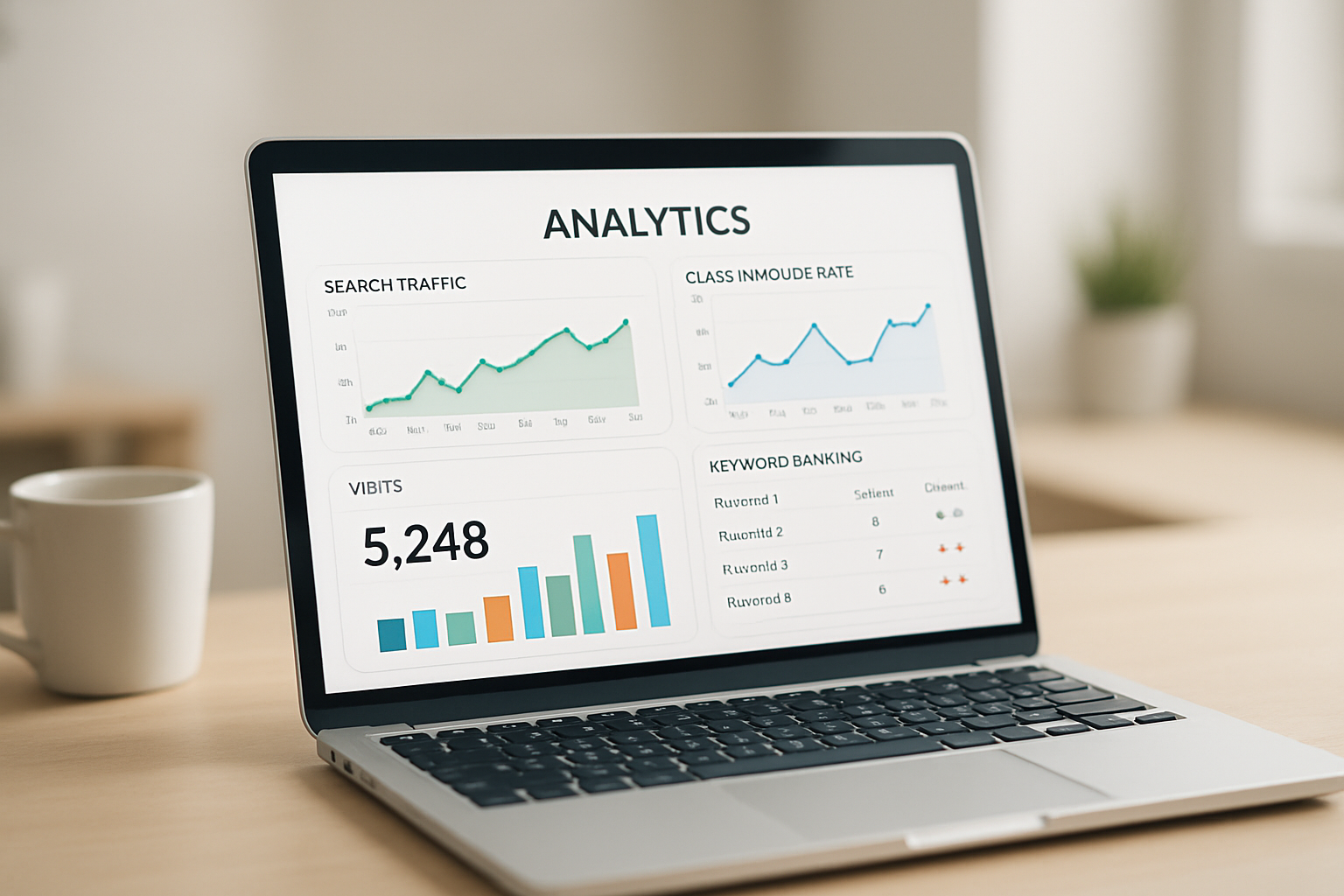
A modern search performance analytics dashboard blending clicks, impressions, rankings, and AI citation data.
What Is Search Performance Analytics, Exactly?
Search performance analytics is the systematic collection and analysis of data that shows how a website performs in search results. Specifically, it combines metrics such as impressions, clicks, average position, and conversion rate into a single, actionable view. As a result, marketers can pinpoint exactly which pages need attention and which strategies already work.
Unlike a one-time ranking check, this type of analytics looks at trends over weeks and months. For example, a page might rank well but still earn few clicks — a pattern that usually signals a weak title tag or meta description rather than a ranking problem. Similarly, AI-powered features like Google’s AI Overviews now factor heavily into the picture, since being cited by an AI system counts as a genuinely new form of visibility, according to Google Search Central.
In short, search performance analytics answers a question no single metric can answer alone: is your search presence actually producing business results, or just producing numbers that look good on paper?
Search Performance Analytics vs. Traditional Rank Tracking
Many teams still confuse rank tracking with true search performance analytics, yet the two serve very different purposes. Rank tracking simply tells you where a keyword sits in the results — position 4, position 12, and so on. However, it says nothing about whether that position produced a click, a visit, or a sale.
Search performance analytics, in contrast, layers rank data with impressions, click-through rate, conversion behavior, and now AI citation frequency. Consequently, it explains why traffic can rise or fall even when rankings stay perfectly stable — a scenario that rank-tracking software alone can never diagnose. If your keyword strategy needs a refresh before you start measuring, this keyword research and ranking guide is a solid starting point.
Put simply: rank tracking tells you where you stand. Search performance analytics tells you whether standing there is actually working.
Why the AI Search Era Makes Organic Search Analytics Essential
Search has changed dramatically over the past two years. Furthermore, AI Overviews, chatbots, and answer engines now intercept a growing share of queries before users ever click a traditional blue link. Consequently, businesses that track only classic rankings risk missing half the picture — and often the more valuable half.
According to Backlinko’s research on click-through rates, the average first-page Google result earns roughly 27% of all clicks, and that share shrinks further when AI-generated summaries appear above organic listings. In particular, this shift means tracking must expand beyond keyword rank checks to include AI citation frequency alongside traditional engagement data. For a deeper look at how AI is reshaping search, see this report on AI search trends.
Above all, remember that a page can lose clicks without losing a single ranking position. Therefore, organic search analytics that ignore AI surfaces will always undercount the real impact of search on your business.
The Metrics That Actually Matter in Search Performance Analytics
Not every metric deserves equal attention. Instead, focus on the handful that connect visibility to real business outcomes.
- Impressions — how often your pages appear in search results, including AI Overview panels.
- Click-through rate (CTR) — the percentage of impressions that turn into clicks, a strong signal of title and snippet quality.
- Average position — where your pages typically rank for target queries over time, not just on a single day.
- Conversion rate — how many search visitors complete a desired action, such as a purchase, signup, or download.
- AI citation frequency — how often generative engines mention, quote, or link to your content in their answers.
- Organic traffic trend — the direction of overall search-driven visits, smoothed across weeks to avoid noise.
For a closer breakdown of automated tracking, this guide on automated performance metrics explains which numbers to prioritize and why.
Segmenting Query Performance by Length: The Advanced Technique Most Guides Miss
One tactic that older analytics tutorials popularized — and then never updated — is segmenting search query performance by word count. The idea still holds up: short, one- or two-word queries tend to signal broad research intent, while longer, conversational queries usually signal someone closer to a decision. However, the original method relied on custom segments in Universal Analytics and AdWords, both of which no longer exist in their old form.
In GA4, you recreate this analysis inside an Exploration, using a calculated field with a regex expression that counts words in the search term dimension, then bucketing results into short, medium, and long groups. Similarly, inside Google Search Console, you can export the Queries report and apply the same word-count logic in a spreadsheet to see how click-through rate and average position shift as query length grows. For the exact configuration steps, Google’s own Explorations documentation is the most reliable reference.
This matters more today than it did when the technique first appeared, because long, conversational queries are exactly the type AI Overviews and chatbots tend to answer directly. Consequently, tracking query length is no longer just a content-planning trick — it is a leading indicator of how much of your traffic AI search is likely to intercept next.
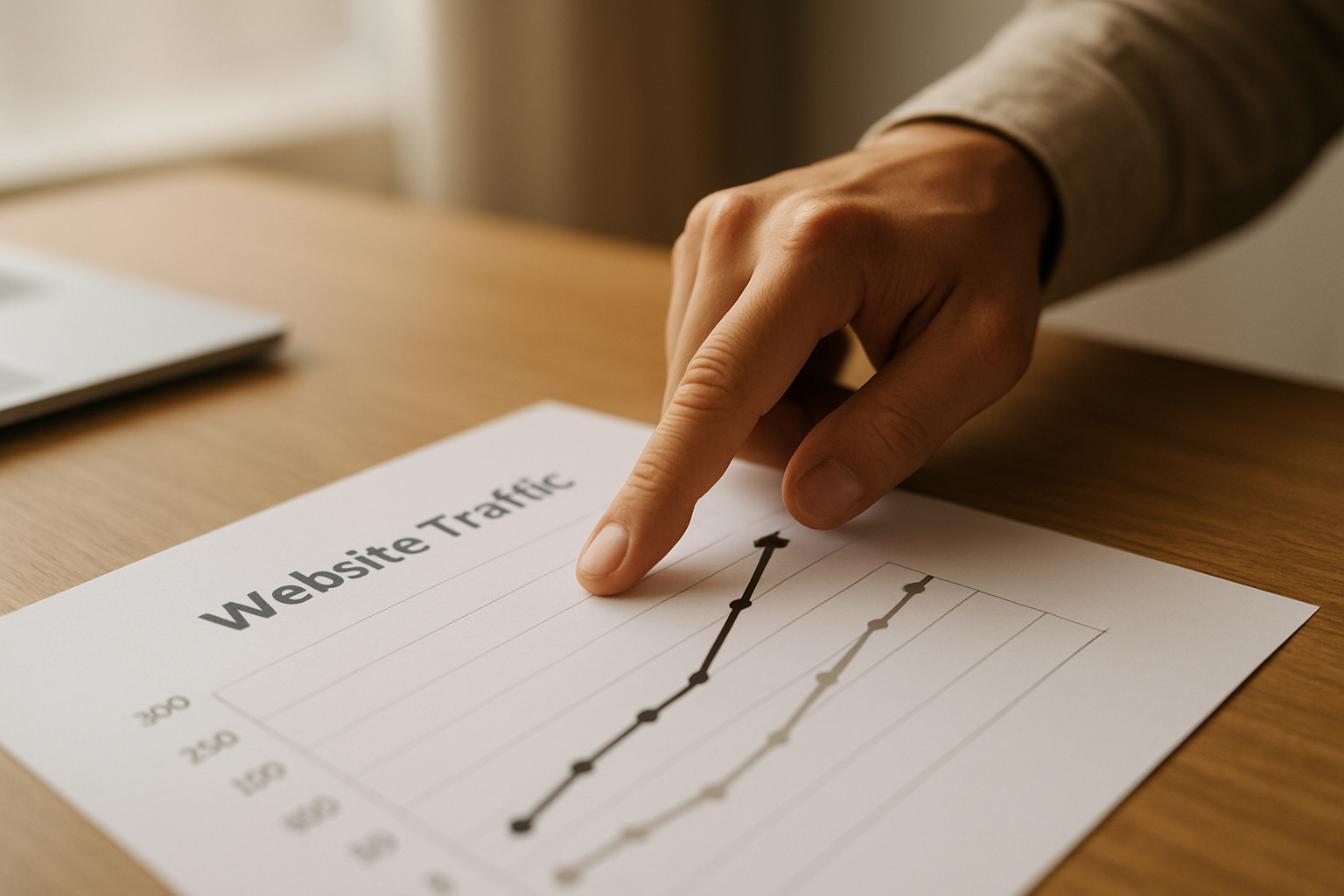
Tracking trends over time reveals more than a single ranking snapshot ever could.
How to Build a Search Performance Analytics Workflow in 5 Steps
Building a reliable workflow does not require a large team. Rather, it requires consistency and the right sequence of steps, repeated on a schedule that fits your resources.
- Connect your data sources. Link Google Search Console, GA4, and any AI visibility monitoring tool to a single dashboard so every metric lives in one place and nothing gets checked in isolation.
- Define your core KPIs. Choose three to five key indicators, such as clicks, average position, conversion rate, and AI citation frequency, so reporting stays focused and genuinely easy to act on.
- Set a consistent reporting cadence. Review data weekly to catch quick anomalies and monthly for deeper trend analysis, always comparing identical date ranges so seasonal shifts don’t distort your conclusions.
- Segment performance by page type and query length. Break results down by blog posts, product pages, and landing pages, and apply the query-length segmentation covered above to see which formats generate the strongest visibility.
- Turn insights into action items. Translate every notable trend into a specific task, such as rewriting a meta description, refreshing outdated content, or restructuring a page for AI citation, then track the outcome.
If you want a more detailed walkthrough, this article on improving search performance using AI covers the process step by step.
Best Search Visibility Analytics Tools for 2025
Google Search Console and GA4 remain the foundation for most businesses, since they are free and directly connected to Google’s index. However, neither tool tracks AI citation activity on its own, which leaves a meaningful gap in any search performance analytics setup that stops there.
This is where automated platforms add real value. For instance, rankauthority.com’s 1-Click AI AutoPilot automates the technical and strategic work behind GEO (generative engine optimization) and AEO (answer engine optimization), giving small business owners, marketers, and agencies a way to monitor search performance analytics without the steep learning curve typically required. A seven-day trial makes it easy to test the workflow before committing. In addition, staying current with the latest trends in search optimization helps teams choose tools that will still matter next year, not just this quarter.
Whichever stack you choose, prioritize tools that combine traditional metrics with AI citation tracking. Otherwise, you are only measuring half of your modern search footprint.
Common Mistakes That Distort Search Performance Data
Even good tools produce bad conclusions when the data is misread. Above all, avoid comparing inconsistent date ranges, since seasonal traffic swings can look like real gains or losses when they are actually just noise.
Similarly, many teams still ignore AI citation frequency entirely, focusing only on classic rank tracking. Others rely on rankings alone while overlooking click-through rate, which often reveals a messaging problem rankings cannot show on their own. Reviewing the broader AI search optimization strategies and ROI data can help avoid these blind spots. Related background on web analytics fundamentals is also useful for teams new to the discipline.
Finally, resist the urge to segment data so narrowly that sample sizes become meaningless. For instance, splitting query length into ten buckets instead of three often produces charts that look precise but tell you nothing reliable.
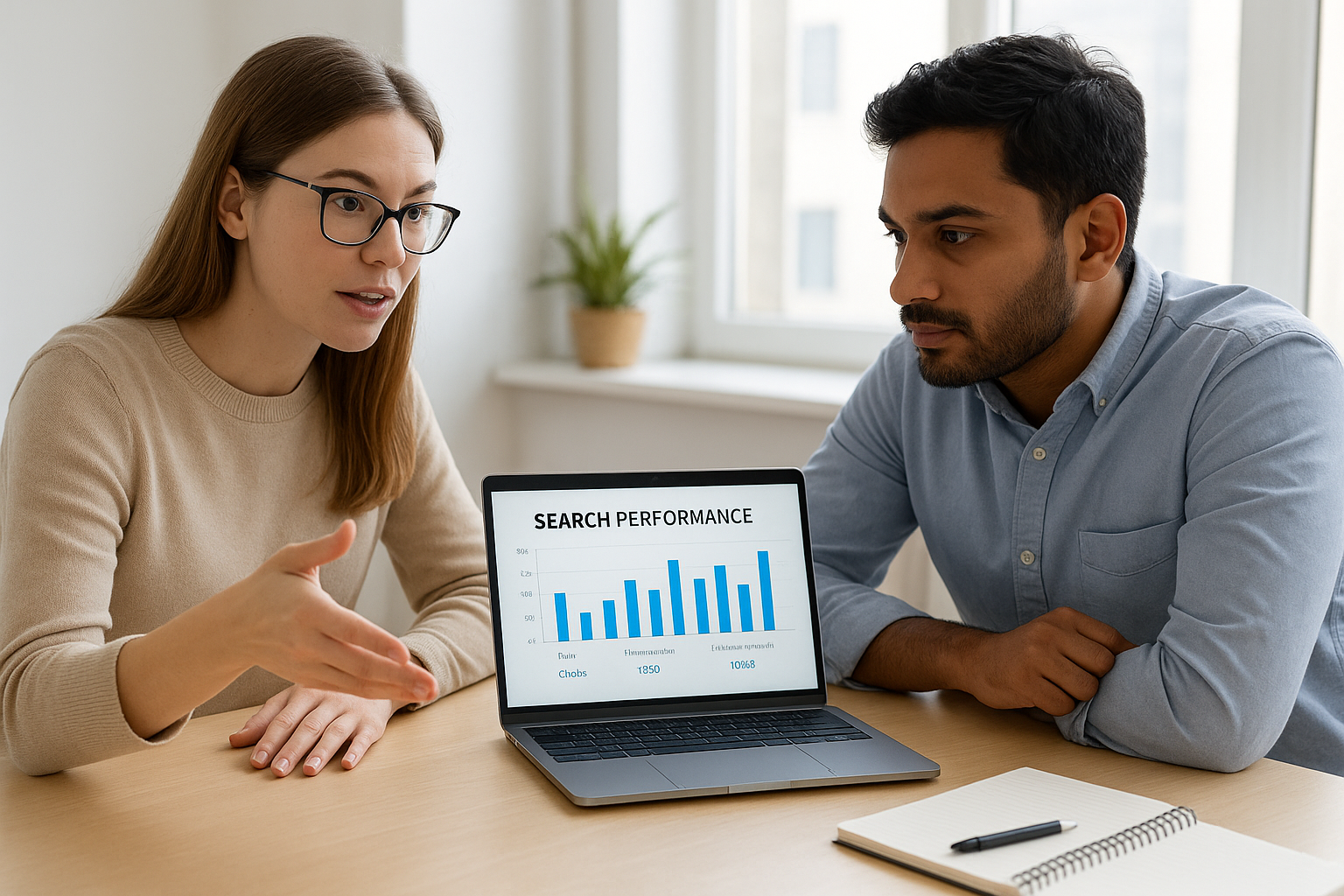
Regular team reviews turn raw search performance analytics into practical action plans.
Search Performance Analytics for Agencies Managing Multiple Clients
Agencies face a unique challenge: the same search performance analytics workflow has to scale across dozens of client accounts without collapsing into spreadsheet chaos. Consequently, standardized KPI templates matter even more at agency scale than they do for a single in-house team.
In practice, this means building one reporting template that applies to every client, then customizing only the KPI targets per account. As a result, junior analysts can produce consistent, comparable reports without reinventing the process each month. For a deeper framework built specifically for agency scale, see this guide on scaling client rankings faster.
Additionally, agencies should track AI citation frequency per client separately from organic rankings. Otherwise, a client whose rankings are stable but whose AI visibility is falling may churn simply because nobody flagged the shift in time.
Connecting Keyword Research to Search Performance Analytics
Search performance analytics works best when it feeds back into keyword strategy, rather than existing as a separate reporting exercise. In particular, pages that rank for high-volume, short-tail terms but earn weak click-through rates often need better keyword targeting, not just better copywriting.
Therefore, before you diagnose a traffic dip, revisit whether the original keyword research still matches current search intent. This keyword research and ranking guide walks through the process of matching content to intent, which is the foundation every search performance analytics program should be built on.
What’s Next: AI-Based Performance Metrics and the Future of Search Analytics
Looking ahead, search analytics will keep expanding beyond clicks and rankings. Specifically, AI-based performance metrics — such as citation share, answer-box presence, and conversational query capture — are becoming standard reporting fields rather than optional add-ons.
For a complete breakdown of these emerging metrics and how to start tracking them today, this 2025 guide to AI-based performance metrics is the natural next read after this article.
Frequently Asked Questions About Search Performance Analytics
What is search performance analytics?
Search performance analytics is the process of measuring how a website performs in search results using data like clicks, impressions, rankings, and AI citation frequency. It helps businesses identify what is working and where to improve.
Why is search performance analytics important for AI search?
AI Overviews and answer engines now capture clicks before users reach organic listings, so tracking must include AI citations alongside traditional rankings. Without this, brands miss a growing share of visibility data.
What metrics matter most in search performance analytics?
The core metrics include impressions, click-through rate, average position, conversion rate, and AI mention frequency, which ties closely to AI content optimization. Together these reveal both visibility and how effectively that visibility converts into traffic.
How often should I review search performance analytics?
Most businesses benefit from a weekly quick check and a deeper monthly review. Frequent monitoring helps catch ranking drops or AI visibility changes before they cause lasting traffic loss.
What tools are best for tracking search performance analytics?
Google Search Console and GA4 cover the traditional side, while automated platforms add AI citation tracking and reporting. Combining both gives a fuller picture of performance across search environments.
How does search performance analytics differ from rank tracking?
Rank tracking only shows keyword positions, while this broader analytics approach combines rankings with clicks, impressions, conversions, and engagement. This explains why traffic changes even when rankings stay stable.
Can AI search engines be measured with search performance analytics?
Yes, modern tools can track how often a brand is cited in AI Overviews, chatbots, and answer engines. This is often called AEO or GEO tracking.
How much does search performance analytics software cost?
Pricing varies widely, from free tools like Google Search Console to paid platforms ranging from roughly $50 to several hundred dollars a month. Many automated platforms offer a free trial before committing.
What is a good click-through rate benchmark?
Industry research suggests the average first-page Google result earns around 27% of clicks, though this drops when AI summaries appear above organic listings. Benchmarks vary by industry and query type.
How long does it take to see results from improvements?
Most sites see measurable shifts within four to twelve weeks after acting on analytics insights. Competitive niches or larger sites may take longer to show significant movement.
What are common mistakes when analyzing search performance data?
Common mistakes include ignoring AI citation data, comparing inconsistent date ranges, and focusing only on rankings while ignoring click-through rate. These errors can lead to misguided optimization decisions.
How does search performance analytics help small businesses compete?
It shows small businesses exactly which pages and keywords drive results, allowing limited resources to focus on the highest-impact opportunities. This levels the playing field against larger competitors.
Does search performance analytics apply to local SEO?
Yes, local businesses can track local visibility through metrics like map pack appearances, local click-through rate, and review-driven traffic. These signals complement standard organic search data.
How do I analyze search query length inside my analytics data?
Use a GA4 Exploration with a calculated regex field to count words in each search term, then bucket results into short, medium, and long queries to compare click-through rate and conversion behavior across each group.
Final Thoughts on Search Performance Analytics
In summary, search performance analytics gives businesses the clearest picture of how their content performs across both traditional search engines and AI-powered answer platforms. By tracking impressions, click-through rate, average position, conversion rate, and AI citation frequency together, teams can make faster, better-informed decisions instead of guessing from rankings alone.
Ultimately, consistent monitoring paired with the right automation tools, such as those covered throughout this guide, turns raw data into steady, measurable search growth — and that is the real promise of search performance analytics done right.

