

Automated keyword tracking is the process of using software to continuously monitor where your website ranks for chosen search terms, without anyone manually checking search results. Instead of spending hours typing queries into Google every week, businesses rely on automated systems to record ranking positions, flag changes, and report trends over time. As a result, teams can focus on strategy rather than repetitive data collection. By RankAuthority — Last updated: 2026-07-30.
Direct Answer: Automated keyword tracking uses software to check and record your search rankings on a schedule, freeing you from manual searches while giving accurate, ongoing visibility into SEO performance.
What Is Automated Keyword Tracking?
Automated keyword tracking is a system that repeatedly checks keyword ranking for a list of search terms and stores that data for review. In particular, it removes the guesswork of manual rank checking by running continuously in the background.
Because search engine results pages change constantly, according to Wikipedia’s overview of search engine optimization, ranking positions can shift daily due to algorithm updates, competitor activity, or seasonal demand. Consequently, relying on infrequent manual checks often produces an inaccurate picture of true performance.
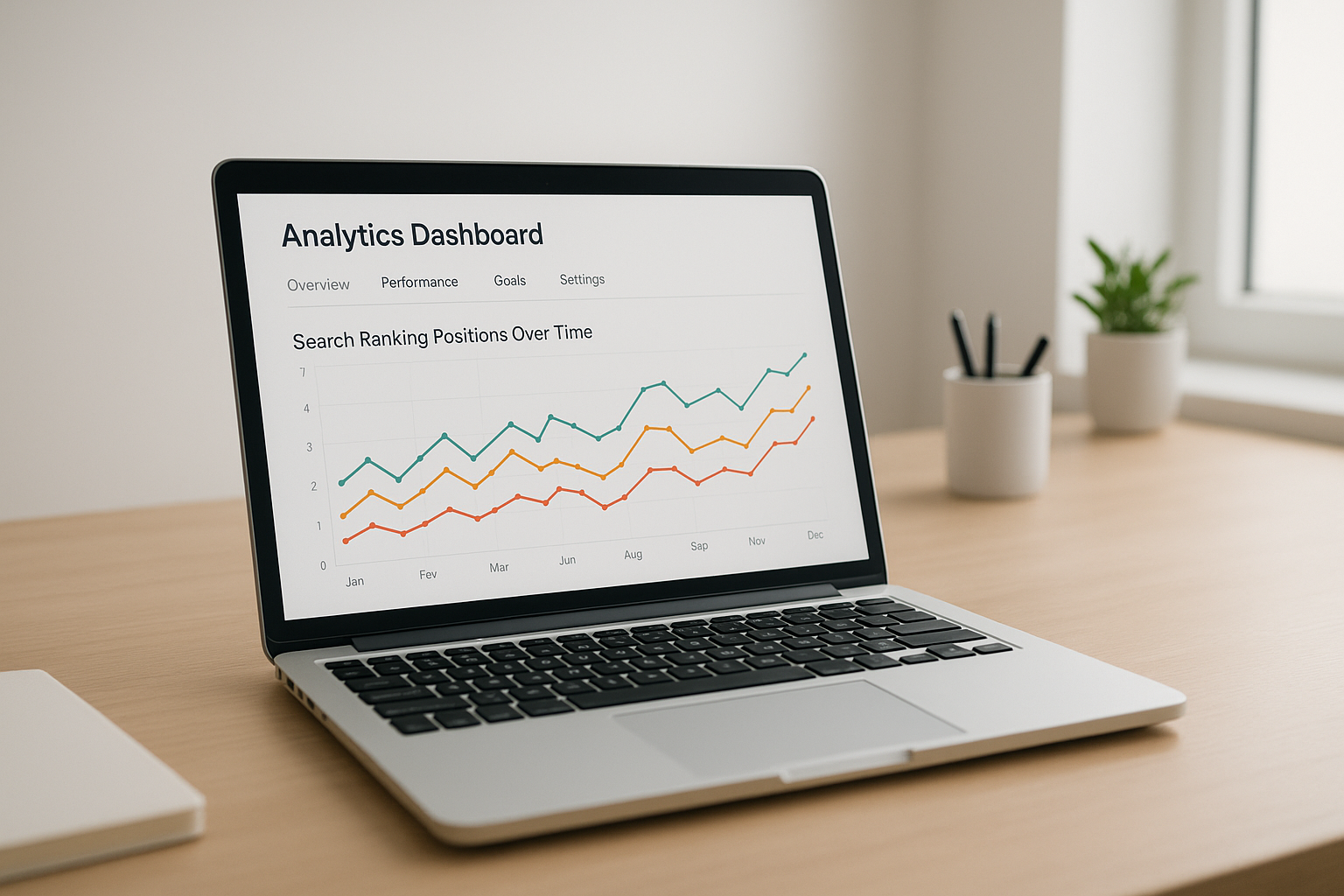
Automated search ranking tools illustrates how automated keyword tracking visualizes position changes over time.
Why Rank Monitoring Automation Matters for SEO Success
local business visibility directly affects traffic, leads, and revenue. Therefore, knowing exactly how your pages perform for target terms helps you make informed decisions rather than relying on assumptions.
For example, if a page suddenly drops several positions, automated alerts let you investigate the cause immediately, whether it’s a technical issue, a competitor’s content update, or a broader algorithm change. In addition, consistent tracking data supports better reporting for clients or stakeholders who want measurable proof of SEO progress.
Notably, industry research from Google’s own Search Central documentation confirms that ranking factors evolve frequently, which makes ongoing monitoring far more valuable than one-time audits.
How Automated Keyword Tracking Works
Most platforms follow a similar underlying process, even though interfaces differ. Below is a simplified breakdown of how automated tracking systems typically operate.
- Choose target keywords. Select terms based on relevance and search intent rather than tracking every possible phrase.
- Connect your website. Link your domain so the platform knows which pages to associate with each keyword.
- Set tracking frequency. Decide between daily or weekly updates depending on how competitive your niche is.
- Add competitor domains. Compare your movement against rivals to understand relative performance.
- Review automated reports. Check dashboards or scheduled summaries to catch drops early and respond quickly.
Similarly, many modern tools like the automation features described in this rank tracking automation guide now extend beyond traditional search engines to monitor visibility inside AI-generated answers, reflecting the shift toward answer engine optimization.
Key Benefits of Automated Rank Tracking
Above all, automation saves time. A study referenced by industry SEO platforms suggests marketers can spend up to 10 hours per week on manual reporting tasks that automated systems complete instantly. That time can instead go toward content creation or strategy. For practical rank-checking steps, see how to check keyword ranking for hands-on guidance.
Furthermore, automated systems reduce human error since they pull data directly from search engines rather than relying on manual entry. As a result, reporting becomes more consistent and trustworthy for both internal teams and clients.
In contrast to sporadic manual checks, continuous monitoring also helps businesses respond faster to sudden ranking volatility, which is increasingly common as search engine results pages incorporate more AI-driven features.
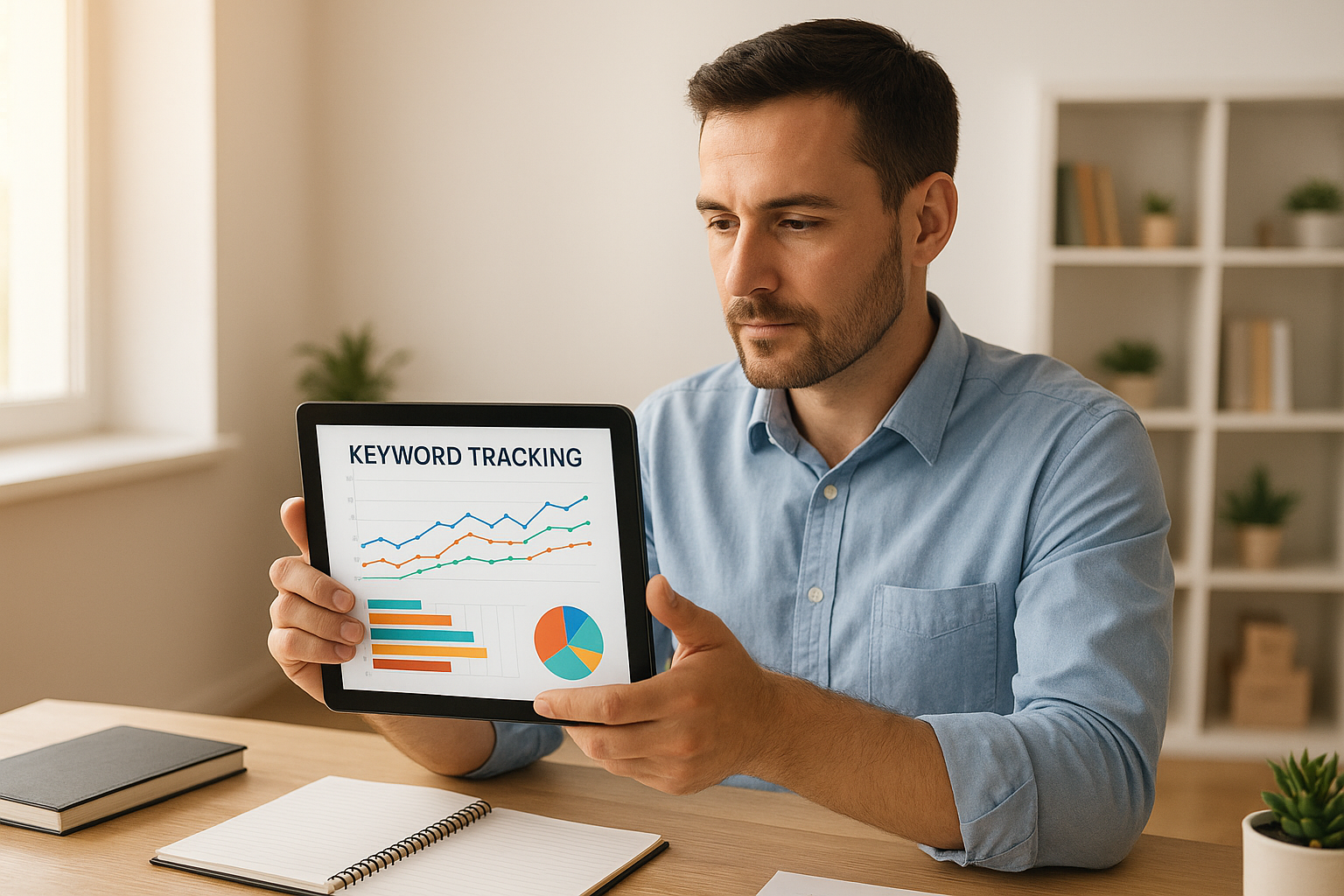
Reviewing automated keyword tracking reports helps businesses quickly spot ranking shifts.
Choosing the Right Automated Keyword Tracking Tool
Not all platforms offer the same depth of automation. Specifically, look for tools that update daily, segment results by device and location, and integrate competitor comparisons. Compare best SEO tools for automation depth and integrations.
For businesses managing multiple client sites, platforms with one-click setup, like the approach outlined in this AI-driven SEO strategy guide, remove much of the technical burden typically associated with configuring rank tracking manually. RankAuthority’s own 1-Click AI AutoPilot platform is one example built specifically for this kind of hands-off automation, backed by a seven-day trial for evaluation.
Additionally, pairing rank tracking with related tools such as an automated keyword optimization solution or automated keyword research tool creates a more complete visibility strategy rather than isolated tracking data.
Common Mistakes to Avoid With Keyword Position Monitoring
One common mistake is tracking too many low-value keywords instead of focusing on terms tied to real business intent. This dilutes reporting and makes trends harder to interpret.
Another issue is ignoring device and location segmentation, since mobile and desktop rankings often differ significantly. Likewise, businesses sometimes overlook AI search visibility entirely, which is a growing blind spot as generative engines reshape how people find information; content creators exploring this shift may find the AI-powered keyword research guide for creators helpful for closing that gap.
Frequently Asked Questions
What is automated keyword tracking?
Automated keyword tracking is a process where software continuously monitors your website’s search rankings for target keywords without manual checking. It updates position data on a schedule and alerts you to significant changes.
How does automated keyword tracking work?
The software sends automated queries to search engines, records ranking positions, and stores that data in a dashboard. Most tools also track competitor positions over time.
Why is automated keyword tracking important for SEO?
It reveals whether your SEO efforts are working by showing ranking movement in near real time. Without it, you’d rely on guesswork or slow manual searches.
How is automated tracking different from manual rank checking?
Manual checking involves searching keywords yourself and recording positions by hand, which is slow and error-prone. Automated tracking runs continuously and delivers consistent, scalable data.
How much does automated keyword tracking cost?
Pricing varies from free limited tools to enterprise platforms costing hundreds monthly. Many providers offer a risk-free trial so you can evaluate the platform first.
How often should keyword rankings be tracked?
Daily tracking works best for competitive industries, while weekly checks suffice for stable niches. Automation makes daily monitoring effortless.
What are common mistakes businesses make with keyword tracking?
A frequent mistake is tracking too many irrelevant keywords instead of high-intent terms. Another is ignoring local or device-specific ranking differences.
What features should I look for in a tracking tool?
Look for accurate daily updates, competitor comparison, device segmentation, and integration with broader SEO reporting. One-click automation saves significant setup time.
Can automated keyword tracking help with local SEO?
Yes, many tools support location-specific tracking so businesses can monitor rankings in individual cities or zip codes, which is useful for multi-location brands.
Does automated keyword tracking work for AI search engines?
Modern platforms are expanding tracking to include visibility inside AI-generated answers, not just traditional rankings, reflecting the shift toward generative search.
How long until I see results from tracking data?
You’ll see ranking data immediately after setup, but meaningful trends typically emerge after two to four weeks of consistent monitoring.
Is automated keyword tracking suitable for small businesses?
Absolutely, small businesses benefit greatly since automation removes the need for dedicated SEO staff and stays affordable even for limited budgets.
What’s the difference between rank tracking and keyword research?
Keyword research identifies which terms to target, while rank tracking monitors how well you already rank for those chosen terms. Both work together as part of a complete strategy.
Final Thoughts on Automated Keyword Tracking
In summary, automated keyword tracking gives businesses continuous, reliable visibility into search performance without the time drain of manual checks. Consequently, teams can react faster to ranking shifts, prove SEO progress with real data, and adjust strategy based on facts rather than assumptions.
As AI-driven search continues to reshape how people find information, pairing automated keyword tracking with broader optimization tools becomes increasingly important. Ultimately, whether you manage one website or dozens of client accounts, adopting automated tracking is a practical step toward sustained search visibility. Add a byline and a clear "Last updated" date below the post to improve credibility and E-E-A-T.

