

Cloud SEO tools are search optimization platforms that run entirely online. They let businesses track rankings, audit websites, and manage content strategy without installing software. As artificial intelligence reshapes how people search, these tools have become essential rather than optional. Many small business owners and agencies rely on them daily to keep pace with traditional search engines and newer AI-driven answer engines. Last updated: 2026-08-18. Author: RankAuthority Editorial Team.
Quick answer: Cloud SEO tools are browser-based platforms for tracking rankings, auditing sites, and optimizing content, hosted remotely so teams can collaborate and access updates in real time without managing local software or hardware.
What These Platforms Do
Cloud SEO tools are software platforms hosted on remote servers instead of installed directly on a personal computer. Because everything runs through a browser, teams can log in from anywhere and see the same real-time data. This matters for agencies juggling several client sites, as well as solo marketers who switch between a laptop and phone throughout the day.
Unlike older desktop-based SEO programs, cloud platforms update automatically whenever search algorithms change. As a result, users always work with current ranking factors rather than outdated software versions. Many platforms, including RankAuthority’s automation suite, also fold in AI-specific optimization so visibility improves across both classic search results and generative answer engines.
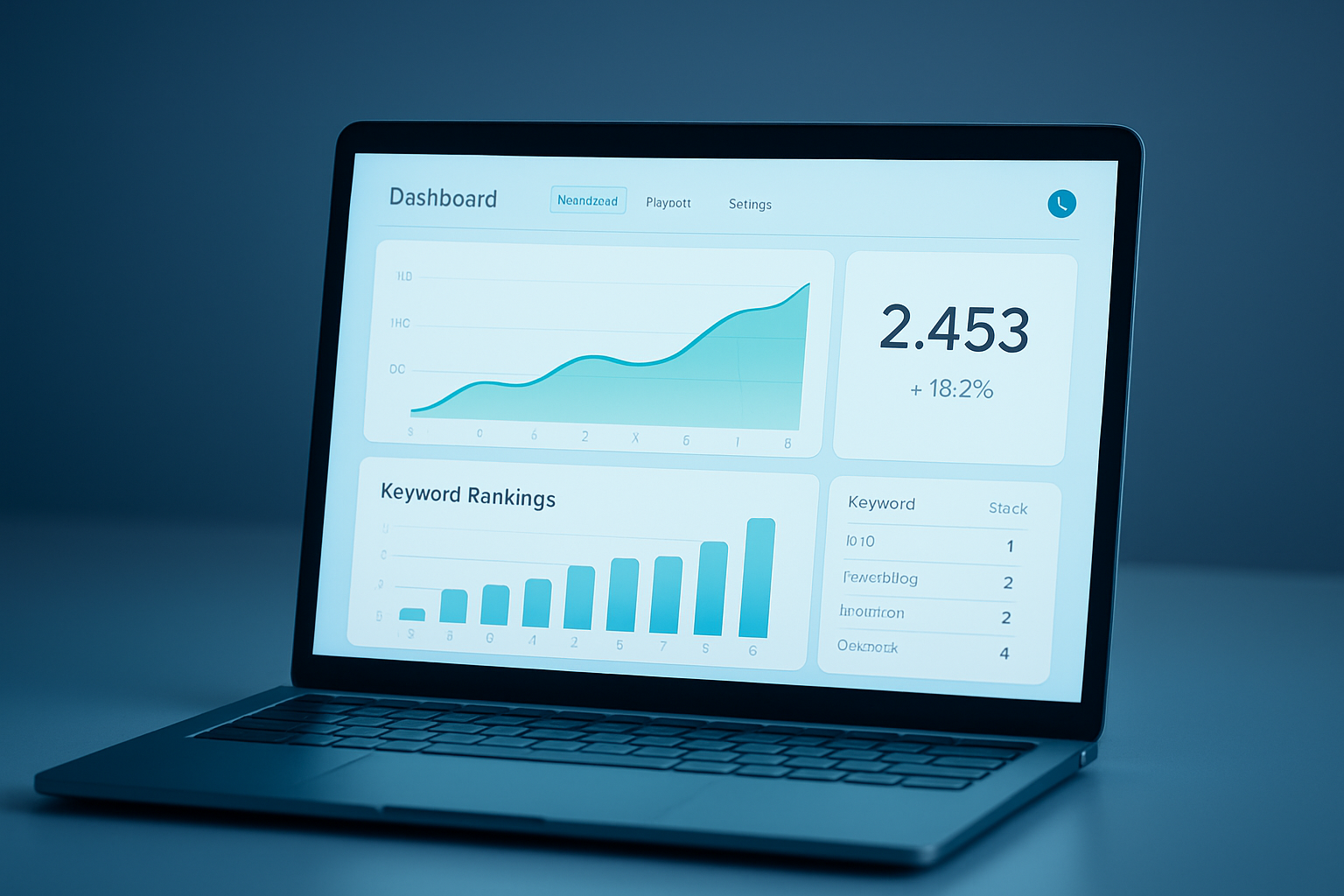
Cloud SEO tools give teams a real-time view of rankings and site health from any device; they also help automate your SEO process.
Why Businesses Are Switching to Cloud-Based SEO Platforms
Businesses are moving toward cloud-based SEO platforms largely because search itself has become more complex. Search engines now blend traditional results with AI-generated summaries, and answer engines pull content directly into conversational responses. Consequently, static desktop tools struggle to keep up with how quickly these environments evolve.
According to a 2023 industry survey referenced by Search Engine Land, marketers using automated, cloud-hosted optimization workflows reported saving several hours per week compared with manual reporting methods. That time savings compounds quickly for agencies managing dozens of client accounts.
In addition, cloud platforms scale naturally. A single freelancer can start on an entry-level plan and expand to enterprise-level multi-site management without switching software entirely. For a closer look at automation across many properties, see this guide on automating SEO across multiple websites.
Key Features to Look for in Cloud SEO Software
Not every cloud SEO tool offers the same depth of functionality. Therefore, it helps to know which features actually move the needle for search visibility rather than simply adding dashboard clutter.
- Automated technical audits that flag crawl errors, slow pages, and broken links.
- Rank tracking across desktop and mobile search results, ideally with historical trend data.
- Backlink monitoring to identify both opportunities and harmful links.
- Content optimization guidance tied to specific target keyphrases.
- AI search readiness, including GEO and AEO support for generative and answer engines.
Above all, prioritize platforms that combine automation with clear reporting. A tool that surfaces problems without explaining next steps often creates more confusion than value. For a broader comparison, this resource on tools for improving digital visibility breaks down feature sets side by side.
Modern platforms pair automation with clear guidance, not just raw data.
How Cloud SEO Tools Support AI Search Optimization
Generative Engine Optimization, or GEO, refers to optimizing content so it gets referenced or summarized by AI systems like chatbots and AI-powered search overviews. Similarly, Answer Engine Optimization (AEO) focuses on structuring content so it directly answers user questions in voice assistants and featured snippets. Cloud SEO tools are well positioned to handle both because they can process large volumes of ranking and content signals continuously in the background.
For example, an automated platform can scan a site’s existing pages, identify gaps in direct-answer formatting, and suggest structural changes, such as adding clear question headings or concise summary paragraphs. This is precisely the kind of work that would otherwise require significant manual research. Explore this deeper breakdown of digital optimization for AI-powered search success for practical examples.
Step-by-Step: How to Choose the Right Cloud SEO Tool
Choosing among competing cloud SEO tools can feel overwhelming, especially with so many overlapping feature lists. The following steps simplify the decision process; see choose the best SEO tool.
- Define your SEO goals. Identify whether you need rank tracking, technical audits, content optimization, or multi-site management before comparing platforms, since goals determine which features matter most.
- Test the free trial. Sign up for a risk-free trial period and connect your actual website so you can evaluate real audit results instead of relying on marketing claims alone.
- Check AI-driven optimization. Confirm the platform supports generative engine optimization and answer engine optimization features, since AI-powered search environments increasingly influence discoverability alongside traditional rankings.
- Compare automation depth. Review how much of the technical optimization work is automated versus manual, because deeper automation saves significant time for solo marketers and busy agencies.
- Review pricing against scale. Match the pricing tier to the number of websites and keywords you actually manage, ensuring the plan remains cost-effective as your search authority grows.
Platforms like RankAuthority offer a seven-day trial specifically so teams can complete this evaluation without financial risk. For a comparison framework, see how to choose and win rankings.
Cloud SEO Tools vs Traditional Desktop SEO Software
Desktop SEO software, common a decade ago, required manual installation and periodic updates that users had to trigger themselves. In contrast, cloud SEO tools update continuously and store data centrally, so teams never lose progress when switching devices. This distinction matters more now than ever, since AI search algorithms shift frequently and outdated software simply cannot keep pace.
Furthermore, collaboration is far easier with cloud tools. Multiple team members, or even outside clients, can view the same live dashboard rather than emailing exported reports back and forth. As a result, most agencies today build their workflows around browser-based platforms rather than locally installed programs. According to W3C web standards documentation, this shift toward browser-based tools reflects a broader industry move away from locally installed desktop software.
Common Mistakes to Avoid When Using Cloud-Based SEO Solutions
Even strong cloud SEO tools produce weak results if used carelessly. One frequent mistake is treating automated recommendations as final answers rather than starting points that still need human review for brand voice and accuracy.
Another common issue involves ignoring the AI search dimension entirely. Teams that only track traditional keyword rankings may miss growing traffic opportunities from generative answer engines. Similarly, some users set up a tool once and never revisit its settings as their site grows, which limits long-term value. For guidance from industry practitioners, this piece on tools experts recommend for search authority outlines practical best practices.

Regularly reviewing automated recommendations helps teams get the most from cloud SEO tools.
Frequently Asked Questions
What are cloud SEO tools?
Cloud SEO tools are search optimization platforms hosted on remote servers rather than installed on a local computer. They let users track rankings, audit sites, and manage content from any browser without maintaining hardware or software updates.
How do cloud SEO tools differ from desktop SEO software?
Cloud SEO tools run entirely online and update automatically, while desktop software requires manual installation and local storage. Cloud platforms also allow multiple team members to collaborate in real time from different locations.
Are cloud SEO tools good for small businesses?
Yes, cloud SEO tools are often ideal for small businesses because they require no technical setup and typically offer flexible, lower-cost subscription pricing. Many platforms include automation features that reduce the need for in-house SEO expertise.
How much do cloud SEO tools cost?
Pricing for cloud SEO tools generally ranges from free basic tiers to several hundred dollars per month for agency-level plans. Cost depends on the number of websites managed, keyword tracking volume, and automation features included.
Can cloud SEO tools help with AI search visibility?
Many modern cloud SEO tools now include generative engine optimization and answer engine optimization features. These help content get surfaced in AI-generated answers, not just traditional search results.
How long does it take to see results from cloud SEO tools?
Most businesses start noticing measurable ranking or visibility improvements within four to twelve weeks of consistent use. Results vary based on site history, competition, and how actively the tool’s recommendations are implemented.
What features should I look for in a cloud SEO platform?
Look for automated site audits, rank tracking, backlink monitoring, and content optimization guidance. Increasingly, tools that support AI search readiness and multi-site management offer the strongest long-term value.
Is it safe to store SEO data in the cloud?
Reputable cloud SEO providers use encryption and secure data centers to protect account and site information. It is still wise to review a provider’s security practices and data policies before committing.
What is a common mistake when using cloud SEO tools?
A common mistake is relying entirely on automated suggestions without reviewing them for relevance to the business. Tools work best when automation is paired with occasional human oversight of strategy and content quality.
Can agencies manage multiple client sites with cloud SEO tools?
Yes, most cloud SEO platforms are built with multi-site dashboards specifically for agencies and consultants. This allows centralized reporting and management across dozens of client properties from a single login.
Do cloud SEO tools replace the need for an SEO specialist?
Cloud SEO tools reduce the technical workload but do not fully replace strategic judgment. They automate repetitive tasks, freeing specialists to focus on content strategy and business goals.
What is the best way to start using cloud SEO tools?
Start with a free trial to test core features like site audits and rank tracking against your actual website. This helps confirm the tool fits your workflow before committing to a paid plan. Platforms such as RankAuthority’s 1-Click AI AutoPilot offer a seven-day trial for exactly this purpose.
Conclusion
Cloud SEO tools have become the practical standard for businesses that need to keep up with both traditional search rankings and rapidly evolving AI search environments. Because these platforms run continuously in the background, they catch technical issues, track authority signals, and surface content opportunities far faster than manual methods ever could. Whether managing a single site or an entire portfolio of client properties, choosing a cloud-based platform with strong automation and clear AI search support gives businesses a real, measurable edge. For teams ready to test this approach, exploring a trial run with a platform like RankAuthority offers a low-risk way to see cloud SEO tools in action.

