

A DA checker is a tool that measures a website’s Domain Authority (DA) score — a metric originally developed by Moz to predict how well a domain is likely to rank on search engine results pages. Understanding your DA score is one of the fastest ways to gauge your site’s overall SEO strength and competitive position. Author: Rank Authority — Last updated: 2026-07-02.
In fact, according to Moz, Domain Authority scores are calculated using a logarithmic scale from 1 to 100. That means moving from a score of 20 to 30 is far easier than moving from 70 to 80. Therefore, knowing where you stand right now is the essential first step in any serious SEO strategy.
What Is a DA Checker and Why Does It Matter?
A DA checker is specifically designed to pull backlink data, analyze link quality, and convert that data into a single predictive score. The higher your score, the more competitive authority your domain carries. Consequently, SEOs use this metric to evaluate their own sites, assess competitors, and vet potential link partners.
Domain Authority is not a Google ranking factor. However, it correlates strongly with search performance because it reflects the same signals — quality backlinks and trustworthy referring domains — that Google’s own algorithm values. In other words, a strong DA score is a reliable proxy for overall SEO health.
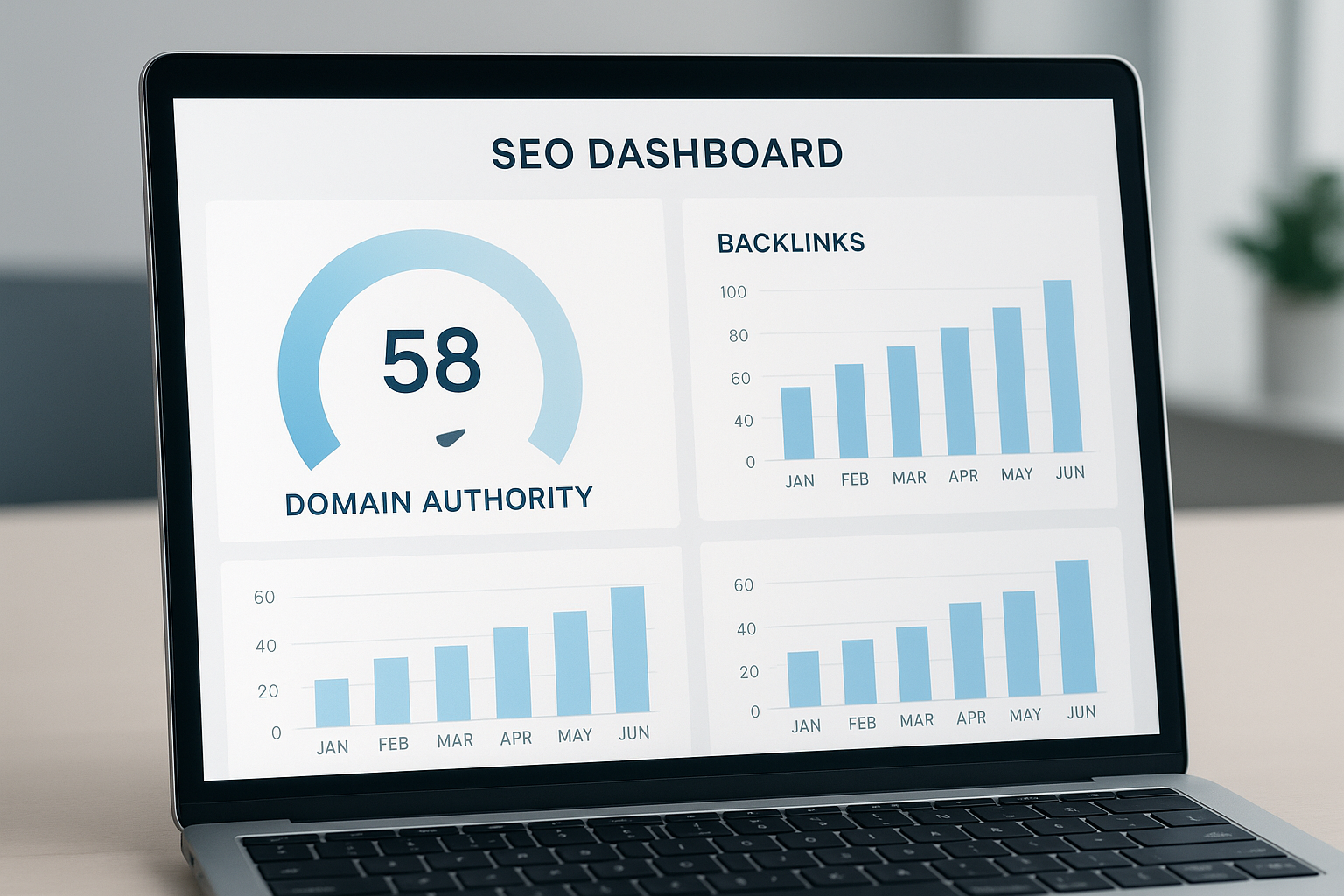
A free DA checker dashboard gives you an instant snapshot of your site’s authority and backlink growth trends.
How Domain Authority Scores Are Calculated
The calculation behind any domain authority checker relies on several interconnected factors. First and foremost, the tool counts the number of unique root domains linking to your site. Then it evaluates the quality of those linking domains. A single link from a high-authority news outlet, for example, carries far more weight than dozens of links from low-quality directories.
Additionally, the logarithmic scale means that early gains come quickly, but improvement becomes progressively harder as your score climbs. For most new websites, a score below 20 is normal. Established sites in competitive niches typically land between 40 and 60. Sites like Wikipedia or major news publishers often score above 90.
Key Signals Analyzed by a Domain Authority Tool
- Linking root domains: The total number of unique websites linking to your domain.
- Total backlinks: The raw count of all inbound links, including multiple links from the same site.
- Link quality: The authority of the sites linking to you, weighted heavily in the score.
- Spam score: A measure of potentially harmful or low-quality links that could drag down your rating.
- Link growth trends: Whether your backlink profile is growing, shrinking, or stagnant over time.
How to Use a DA Checker Step by Step
Using a domain authority checker is straightforward. However, interpreting the results correctly takes a bit more context. Follow these steps to get the most value from the process.
- Choose a reliable DA checker tool. Select a trusted platform such as Moz Link Explorer or Free DA checker to ensure your score is drawn from a comprehensive, regularly updated backlink index.
- Enter your domain URL. Paste your full domain into the free DA checker search field. Make sure you use the correct version — www or non-www — to avoid mismatched data.
- Review your DA score with the Google DA Checker and backlink data. Examine the score alongside supporting metrics: total backlinks, linking root domains, and spam score. Together, these paint a full picture of your site’s authority.
- Compare against competitors. Run the same check on your top competitors using our free DA checker. This reveals the authority gap you need to close and helps you set realistic goals for your link-building campaigns.
- Build a link-building action plan. Use the insights to prioritize outreach, content creation, and technical fixes that will steadily see results from SEO over the coming months.
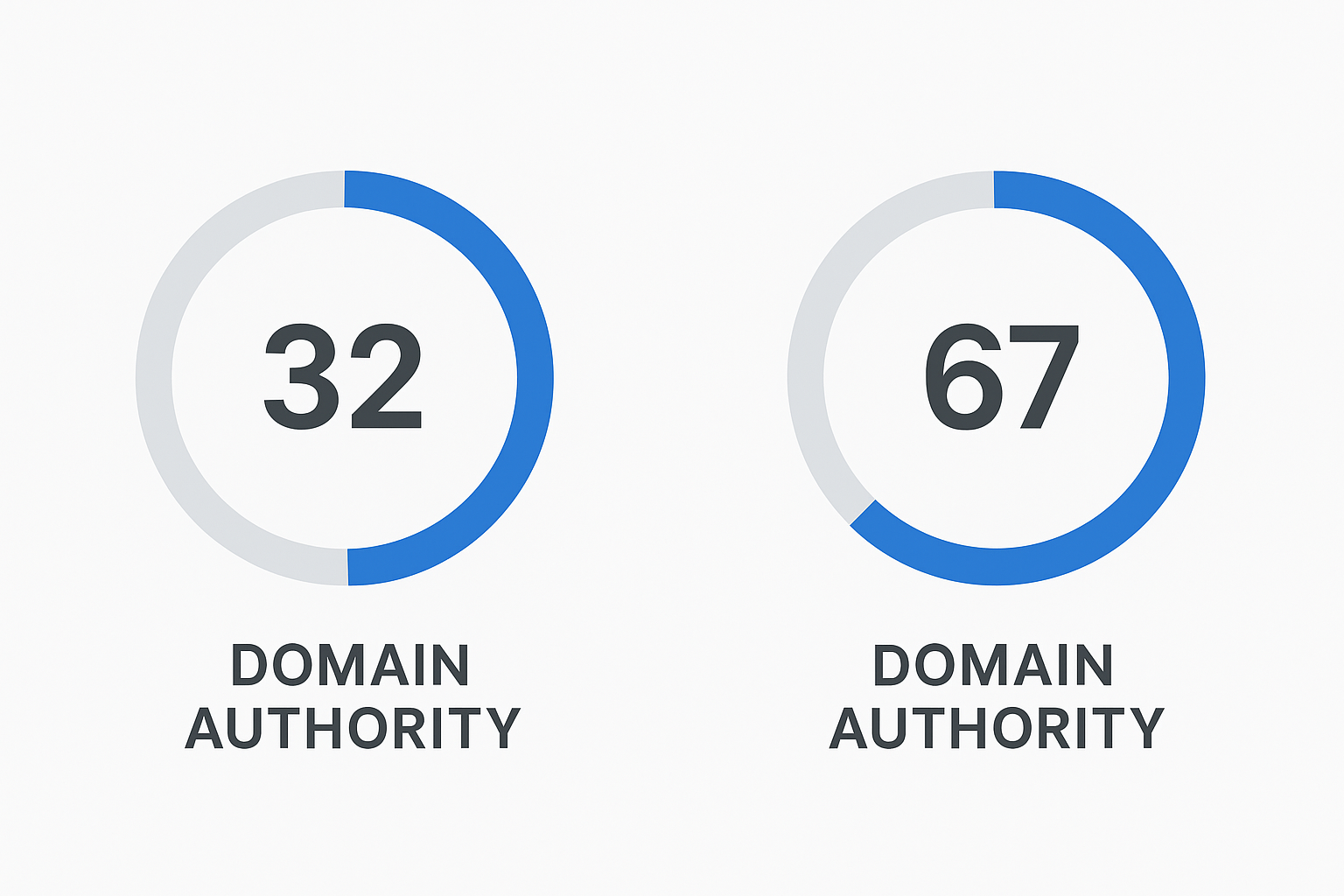
Comparing competitor DA scores helps you understand the authority gap and set realistic SEO benchmarks. Use our Domain Authority Checker to benchmark competitors quickly.
What Your DA Score Actually Means
Many website owners panic when they see a low DA score. In reality, context matters far more than the raw number. Specifically, your score should always be evaluated relative to your niche and your direct competitors — not against global giants.
DA Score Benchmarks at a Glance:
- 1–20: New or low-authority sites. Focus on building foundational links.
- 21–40: Developing authority. Competitive in low-difficulty niches.
- 41–60: Good authority. Competitive across most mid-level keywords.
- 61–80: Strong authority. Capable of ranking for competitive terms.
- 81–100: Exceptional. Reserved for major brands and dominant publishers.
Furthermore, a score of 35 can be entirely sufficient to dominate a local niche or a low-competition industry. Therefore, rather than chasing an arbitrary number, focus on consistently outscoring the specific competitors you are trying to beat.
Common Mistakes When Interpreting Authority Scores
One of the most common mistakes is treating DA as a Google ranking signal. Google does not use Moz’s DA score in its algorithm. However, the underlying factors — backlink quality and link diversity — are indeed what Google values. So while the metric itself is third-party, improving it almost always means improving your actual rankings as well.
Another mistake is obsessing over short-term fluctuations. DA scores can shift as Moz updates its index. Similarly, if competitors gain strong links faster than you, your relative score may dip even if your backlink profile has grown. As a result, track trends over months — not days.
Proven Ways to Improve Your Domain Authority
Improving your website authority score requires a consistent, multi-channel approach. There are no shortcuts that last. However, the following strategies have proven effective across virtually every niche.
Earn high-quality backlinks. Focus on getting links from authoritative, relevant websites in your industry. Guest posting, digital PR, and creating linkable assets like original research or comprehensive guides are the most reliable methods. For deeper strategies, explore our guide on Free Online DA Checker.
Fix and remove toxic links. Use a domain authority checker to identify your spam score. If it is high, disavow harmful links through Google Search Console. This protects your profile from being dragged down by low-quality sources.
Publish consistently valuable content. Content that genuinely helps people naturally attracts links over time. In particular, original data, keyword research guide, and expert opinion pieces tend to earn the most organic backlinks.
Diversify your link sources. A healthy backlink profile includes links from many different root domains — not just a handful of sources. Consequently, aim to expand the variety of sites linking to you rather than accumulating many links from the same few domains.
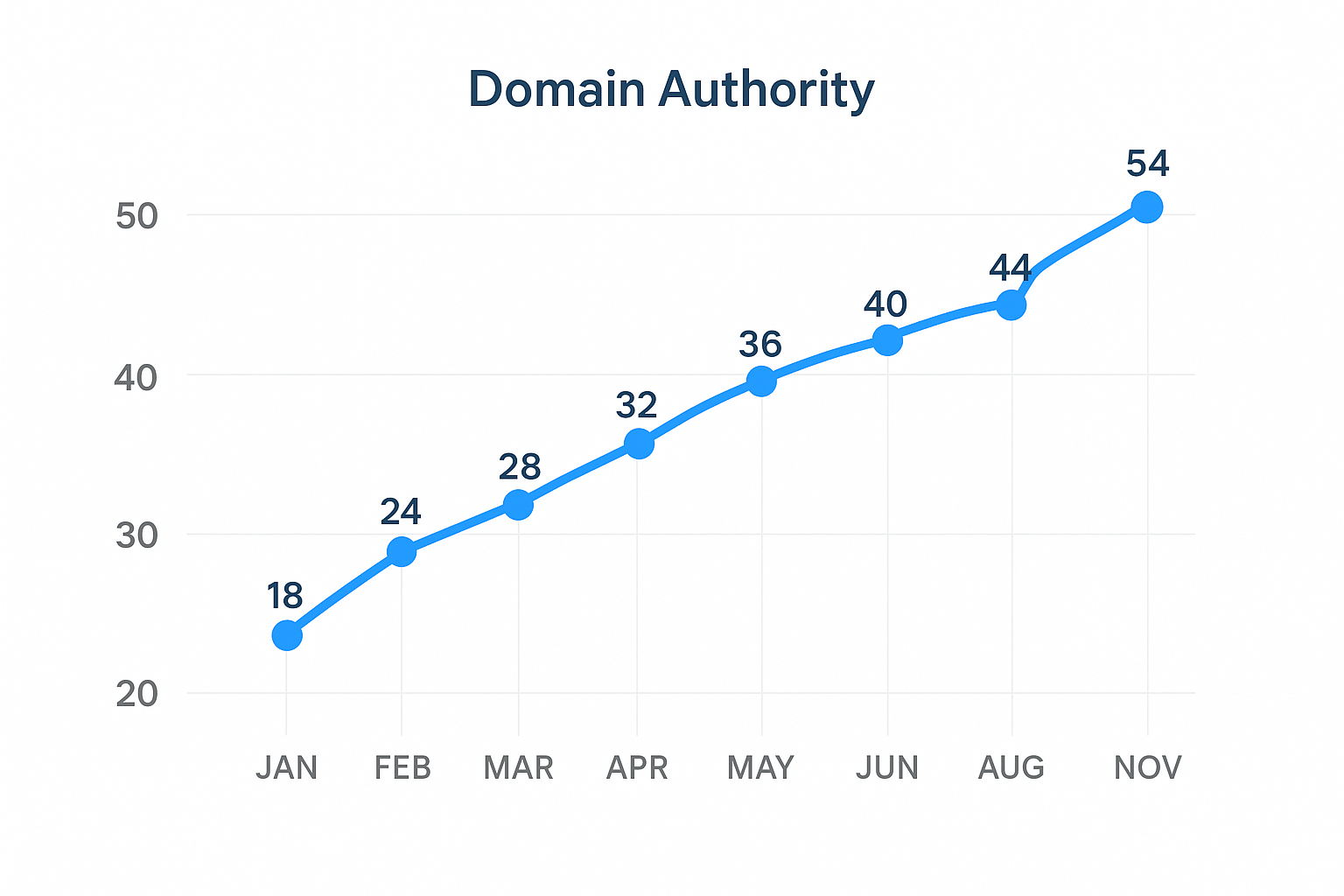
Consistent link-building efforts, tracked regularly with a DA checker, produce steady authority growth over time.
Choosing the Right Website Authority Checker for Your Needs
Not all Google DA Checker tools are built the same. The right choice depends on your budget, how often you check scores, and whether you need bulk analysis. Here is a quick comparison of what to look for.
Free tools work well for occasional checks and basic benchmarking. They are ideal for bloggers, SEO tools for small businesses, and anyone just getting started with SEO. However, they often use smaller link indexes and may lag behind premium databases by several weeks.
Premium tools like Moz Pro or Rank Authority offer bulk domain checks, historical score tracking, and deeper backlink analysis. For agencies and in-house SEO teams, these features are generally worth the investment.
Additionally, look for tools that show spam score alongside DA. A site with a DA of 50 but a spam score of 40% is far less valuable as a link partner than a site with a DA of 40 and a clean profile. According to Additionally, look for tools that show spam score alongside DA. A site with a DA of 50 but a spam score of 40% is far less valuable as a link partner than a site with a DA of 40 and a clean profile. According to Wikipedia’s overview of Domain Authority, the metric is best used comparatively rather than in isolation., the metric is best used comparatively rather than in isolation.
Frequently Asked Questions About DA Checker
What is a DA checker?
A DA checker is a tool that measures a website’s Domain Authority score, a metric developed by Moz that predicts how likely a site is to rank in search engine results. Scores range from 1 to 100, with higher scores indicating stronger authority.
How does a DA checker calculate the score?
It analyzes the quantity and quality of backlinks pointing to a domain using a logarithmic scale. The algorithm considers root domains linking to the site, total backlinks, and overall link profile strength.
What is a good Domain Authority score?
A DA score between 40 and 60 is generally considered good for most websites. Scores above 60 are strong, and scores above 80 are exceptional, typically reserved for major brands and high-traffic publications.
Is Domain Authority the same as Google PageRank?
No. DA is a proprietary metric created by Moz, while PageRank was Google’s original internal algorithm. However, both assess link-based authority in similar ways, so improving one tends to improve the other indirectly.
How often should I check my DA score?
Checking your DA score once a month is usually sufficient. If you are actively building links or running a campaign, checking every two weeks can help you track progress more closely.
Can I improve my Domain Authority score?
Yes. Earn high-quality backlinks from authoritative websites, fix broken links, and remove toxic links. Consistent content creation that attracts natural links also raises your score steadily over time.
Why did my DA score drop suddenly?
A sudden DA drop is often caused by Moz updating its index or algorithm. It can also result from competitors gaining stronger links faster than you, or from losing existing backlinks in your profile.
Can I check the DA of a competitor’s website?
Yes, most DA checker tools allow you to check any website’s score, not just your own. This makes competitive analysis straightforward and helps you set realistic link-building benchmarks.
Are free DA checker tools accurate?
Free DA checker tools can be accurate for general benchmarking, but they may use smaller link indexes than premium tools. For detailed analysis and bulk checks, a paid tool typically provides more reliable data.
How many URLs can I check at once with a bulk DA checker?
Most bulk DA checker tools allow 10 to 100 URLs at once for free. Premium plans often support checking thousands of domains in a single batch, which is ideal for agencies managing multiple client sites.
Does a high DA score guarantee top Google rankings?
No, a high DA score does not guarantee top Google rankings. DA is a predictive metric, not a direct Google ranking factor. However, sites with higher DA scores tend to rank more easily due to their stronger link profiles.
What is the difference between DA and PA (Page Authority)?
DA (Domain Authority) measures the ranking strength of an entire domain, while PA (Page Authority) measures the strength of a single page. Both are Moz metrics, but PA is more relevant when evaluating individual URLs for link prospecting.
Conclusion
In summary, using a DA checker regularly is one of the smartest habits any SEO professional or website owner can build. It gives you a clear, data-driven picture of your site’s authority, reveals where competitors are outpacing you, and guides your link-building priorities. Furthermore, by combining consistent backlink acquisition with smart content creation, you can move your score steadily upward over time. Start checking your domain authority today — and use those insights to make every SEO decision count. This article is written by the Rank Authority editorial team; see the author bio for credentials and publication details.

