

Finding keywords in text is the process of identifying the specific words and phrases within a piece of content that signal its topic, relevance, and intent to both readers and search engines. Whether you are auditing existing pages or analyzing competitor content, this skill sits at the core of effective SEO strategy.
According to Wikipedia’s overview of keyword research, the practice dates back to the earliest days of search engines and remains one of the most fundamental tasks in digital marketing. In fact, studies consistently show that pages aligned with clear keyword intent receive significantly more organic clicks than those that are not optimized.
What Is Finding Keywords in Text?
Finding keywords in text is the act of extracting meaningful terms from written content that represent the core subjects being discussed. These terms serve as signals that connect your content to the queries people type into search engines.
For example, if an article frequently mentions “running shoes,” “trail running,” and “cushioned soles,” those are clearly the keywords. Search engines read these signals to decide which queries the page should rank for. Therefore, understanding how to find them accurately is essential for any content strategy.

Manually reviewing text and marking prominent terms is one of the oldest and still effective methods of keyword identification.
Why Keyword Identification Matters for SEO Rankings
Search engines like Google use sophisticated algorithms to read and categorize content. However, at their foundation, these algorithms still rely heavily on term frequency and semantic relevance. Consequently, knowing which words appear in your text — and how prominently — directly influences your ranking potential.
Furthermore, keyword identification helps you spot gaps in your content. You may discover that a high-value term your audience searches for is missing entirely from your page. In that case, adding it naturally can improve both rankings and user experience.
Research from industry sources suggests that 75% of users never scroll past the first page of search results, making precise keyword targeting more important than ever. Platforms like RankAuthority provide actionable guidance on aligning your content with high-impact keyword signals.
Step-by-Step: How to Find Keywords in Text
Below is a clear, repeatable process you can apply to any piece of content — whether it is your own or a competitor’s page.
- Read the content and note repeated terms. Start by reading through the full text once. Highlight or jot down words and phrases that appear frequently or feel central to the topic. Pay special attention to the title, headings, and opening paragraph.
- Use a keyword extraction tool. Paste the text into a tool such as Google Search Console, Ahrefs, or an NLP-based extractor. These tools surface high-frequency and high-relevance terms automatically, saving significant time.
- Categorize keywords by intent and type. Group extracted terms into primary, secondary, and long-tail categories. Assign each a search intent label — informational, navigational, or transactional — to guide your optimization decisions.
- Check keyword density and placement. Calculate density by dividing the keyword’s occurrence count by total word count, then multiply by 100. Aim for 0.5% to 3%. Also verify that the keyword appears in strategic spots: the title, first paragraph, and at least one subheading.
- Optimize and update the content. Add missing high-value terms naturally. Replace over-repeated instances with semantic synonyms. Update your meta description and image alt tags to reflect your refined keyword strategy.
Manual vs. Automated Keyword Extraction Methods
There are two broad approaches to extracting keywords from text: manual review and automated tools. Both have distinct advantages depending on your goals and resources.
Manual Keyword Scanning
Manual scanning involves reading the text carefully and using your browser’s built-in Ctrl+F (or Cmd+F) search function to locate specific terms. This method works well for short documents. However, it becomes impractical for large volumes of content.
Additionally, manual methods rely heavily on your existing knowledge of what keywords matter. As a result, you may overlook semantically related terms that automated tools would catch instantly.
Automated Text Keyword Identification Tools
Automated tools use algorithms — often powered by natural language processing (NLP) — to analyze text structure, term frequency, and semantic context simultaneously. NLP, in simple terms, is a branch of artificial intelligence that helps computers understand human language patterns.
Tools like Ahrefs, SEMrush, and dedicated keyword extractors can process thousands of words in seconds. Furthermore, they identify not just exact matches but also related terms, synonyms, and topical clusters that strengthen your overall content relevance.

Automated keyword extraction tools visualize term frequency and relevance, making it easier to spot the most impactful words in your content.
Understanding Keyword Types Found in Text
Not all keywords carry equal weight. Specifically, you will encounter three main types when analyzing any piece of content.
Primary keywords are the central terms a page targets. They usually appear in the title, first paragraph, and main headings. Secondary keywords are closely related terms that support the primary topic and add depth. Long-tail keywords are longer, more specific phrases — for instance, “best running shoes for flat feet” rather than just “running shoes.” These typically have lower search volume but higher conversion intent.
Recognizing all three types when scanning text gives you a complete picture of what a page is trying to rank for. Similarly, it reveals opportunities to strengthen underrepresented keyword categories in your own content. For deeper guidance on keyword strategy, explore resources available at RankAuthority.
Common Mistakes When Extracting Keywords from Content
Even experienced SEOs make errors during keyword extraction. Being aware of these pitfalls helps you avoid them.
Ignoring semantic variants is perhaps the most common mistake. For example, treating “keyword extraction” and “finding keywords” as entirely different topics misses the semantic connection search engines clearly recognize. In contrast, grouping them as related terms creates a more complete strategy.
Over-stuffing the primary keyword is equally damaging. Repeating the same phrase unnaturally signals low-quality content to search algorithms. Therefore, always replace some instances with synonyms or pronouns to maintain a natural reading flow.
Neglecting user intent is another critical error. A keyword found frequently in text does not automatically mean it serves the reader’s actual goal. Consequently, always evaluate whether the keyword aligns with what someone searching that term truly wants to find.
How Keyword Placement Within Text Affects Rankings
Where a keyword appears within your content matters almost as much as whether it appears at all. Search engines assign greater weight to keywords found in specific positions.
Specifically, keywords in the page title, first 100 words, subheadings, and image alt text carry the strongest signals. In addition, keywords appearing in anchor text of internal links also contribute meaningful relevance signals. You can learn more about structuring content effectively by reading our guide on on-page SEO best practices.
Furthermore, spreading keywords naturally throughout the body — rather than clustering them at the top — signals to search engines that the entire document is relevant, not just the introduction.
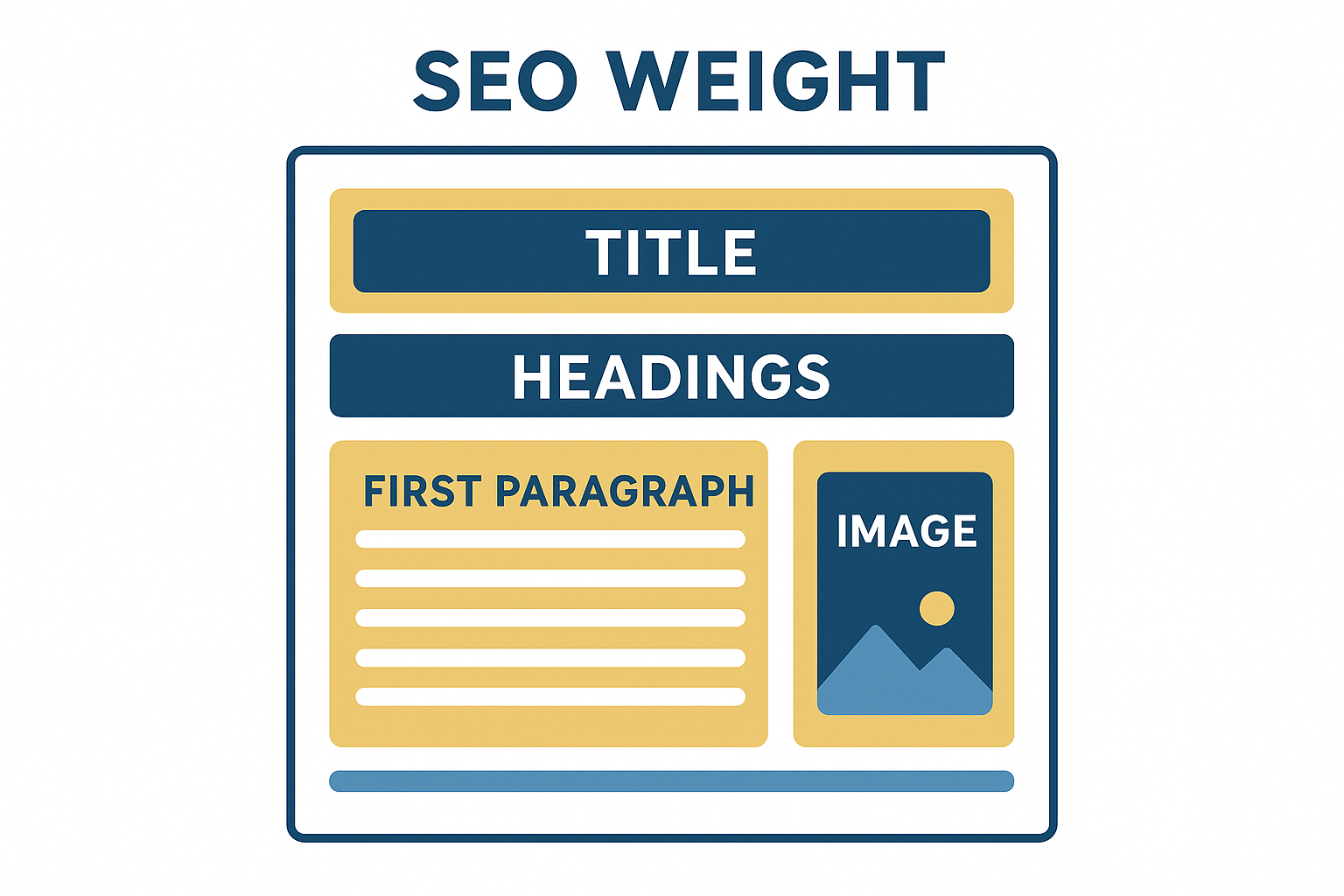
Strategic keyword placement across titles, headings, and opening paragraphs maximizes the SEO impact of your keyword analysis efforts.
Frequently Asked Questions About Finding Keywords in Text
What does finding keywords in text mean?
Finding keywords in text means identifying the specific words and phrases within content that signal its topic, intent, and relevance to search engines. These terms help both readers and algorithms understand what the content is about.
Why is finding keywords in text important for SEO?
Finding keywords in text is critical for SEO because search engines use these terms to match content with user queries. Proper keyword identification helps you rank higher and attract targeted organic traffic.
How do I find keywords in existing content?
You can find keywords in existing content by reading through the text manually, using browser Ctrl+F search, or running the content through keyword extraction tools. Google Search Console is a free and reliable starting point.
What tools are best for keyword extraction from text?
Top tools include Google Search Console, Ahrefs, SEMrush, and NLP-based extractors. Each offers different depth of analysis for identifying keyword opportunities within your content.
What is keyword density and why does it matter?
Keyword density is the percentage of times a keyword appears relative to total word count. Too high signals keyword stuffing; too low reduces relevance. Aim for 0.5% to 3% for best results.
What is the difference between primary and secondary keywords?
Primary keywords are the main terms a page targets, while secondary keywords are related terms that support the topic. Using both improves topical authority and content depth.
Can I find keywords in text without special tools?
Yes, you can find keywords manually by reading carefully and noting repeated or prominent terms. However, tools speed up the process and reveal patterns you might otherwise miss.
How does natural language processing help with keyword identification?
NLP analyzes text structure, context, and semantics to extract meaningful keywords automatically. It goes beyond simple word frequency to understand topic relevance and user intent at a deeper level.
What are long-tail keywords and how do I find them in text?
Long-tail keywords are specific multi-word phrases with lower search volume but higher conversion intent. Look for detailed descriptive phrases in text that answer specific questions rather than broad single-word terms.
How often should I perform keyword extraction on my content?
Perform keyword extraction whenever you publish new content and during content audits every 3 to 6 months. Search trends shift regularly, so refreshing your analysis keeps content competitive.
What common mistakes should I avoid when finding keywords in text?
Avoid ignoring semantic variants, over-stuffing the primary keyword, neglecting user intent, and failing to analyze competitor content. Focus on natural language and topical relevance above all.
How does keyword placement within text affect SEO?
Keywords in titles, first paragraphs, subheadings, and image alt text carry the most SEO weight. Placement in these positions sends stronger relevance signals to search engine crawlers than keywords buried in body text.
Conclusion
Finding keywords in text is a foundational SEO skill that directly influences how well your content performs in search results. By combining manual review with automated extraction tools, categorizing terms by type and intent, and placing keywords strategically throughout your content, you create pages that are both reader-friendly and search-engine-ready. Furthermore, avoiding common mistakes like keyword stuffing and ignoring semantic variants ensures your strategy remains sustainable long-term. Apply these techniques consistently, and you will build content that earns strong rankings and genuinely serves your audience.

