

To define SEO in plain terms: SEO, or search engine optimization, is the process of improving a website’s content, structure, and authority so that it ranks higher in unpaid search engine results. Because search engines like Google deliver billions of queries every day, understanding SEO is essential for anyone who wants their website to be found.
Search engine optimization is not a single tactic — it is a collection of strategies working together. Therefore, building a solid grasp of what SEO means, how it works, and why it matters is the logical first step before diving into any specific technique.
What Does SEO Actually Mean?
The acronym SEO stands for Search Engine Optimization. According to Google’s own Search documentation, SEO helps search engines understand your content while simultaneously making your site more useful for people. In practice, this means aligning what you publish with what your audience actually searches for.
Additionally, SEO is distinct from paid advertising. When you see results labeled “Sponsored” on Google, those are pay-per-click ads. Organic SEO results, by contrast, earn their position through relevance and authority — not budget.
For a deeper strategic perspective on how SEO fits into a broader digital marketing plan, Rank Authority provides practical guidance for businesses at every stage of their SEO journey.

Understanding how to define SEO is the first step toward building a strategy that earns lasting organic visibility.
The Three Core Pillars of Search Engine Optimization
SEO is typically divided into three interconnected disciplines. Each one addresses a different layer of how search engines evaluate and rank websites.
On-Page SEO
On-page SEO refers to everything you control directly on your web pages. This includes your title tags, headings, body content, keyword placement, internal linking, and meta descriptions. Because search engines read your page text to determine relevance, high-quality, well-structured content is the foundation of any on-page strategy.
For example, a page targeting the phrase “best running shoes” should naturally use that phrase in its title, headings, and body copy — without forcing it unnaturally. Additionally, covering related topics like cushioning, arch support, and durability signals deeper topical authority.
Off-Page SEO
Off-page SEO focuses on signals that originate outside your website. The most important of these is backlinks — links from other reputable websites pointing to yours. Search engines interpret these as endorsements, and therefore, earning links from authoritative sources can significantly boost your rankings.
However, not all backlinks are equal. A single link from a trusted industry publication often carries more weight than dozens of links from low-quality directories. Quality consistently outranks quantity in modern off-page SEO.
Technical SEO
Technical SEO ensures that search engine bots can efficiently crawl and index your site. Key areas include page load speed, mobile-friendliness, HTTPS security, structured data markup, and clean URL architecture. Even brilliant content can underperform if technical barriers prevent search engines from accessing it properly.
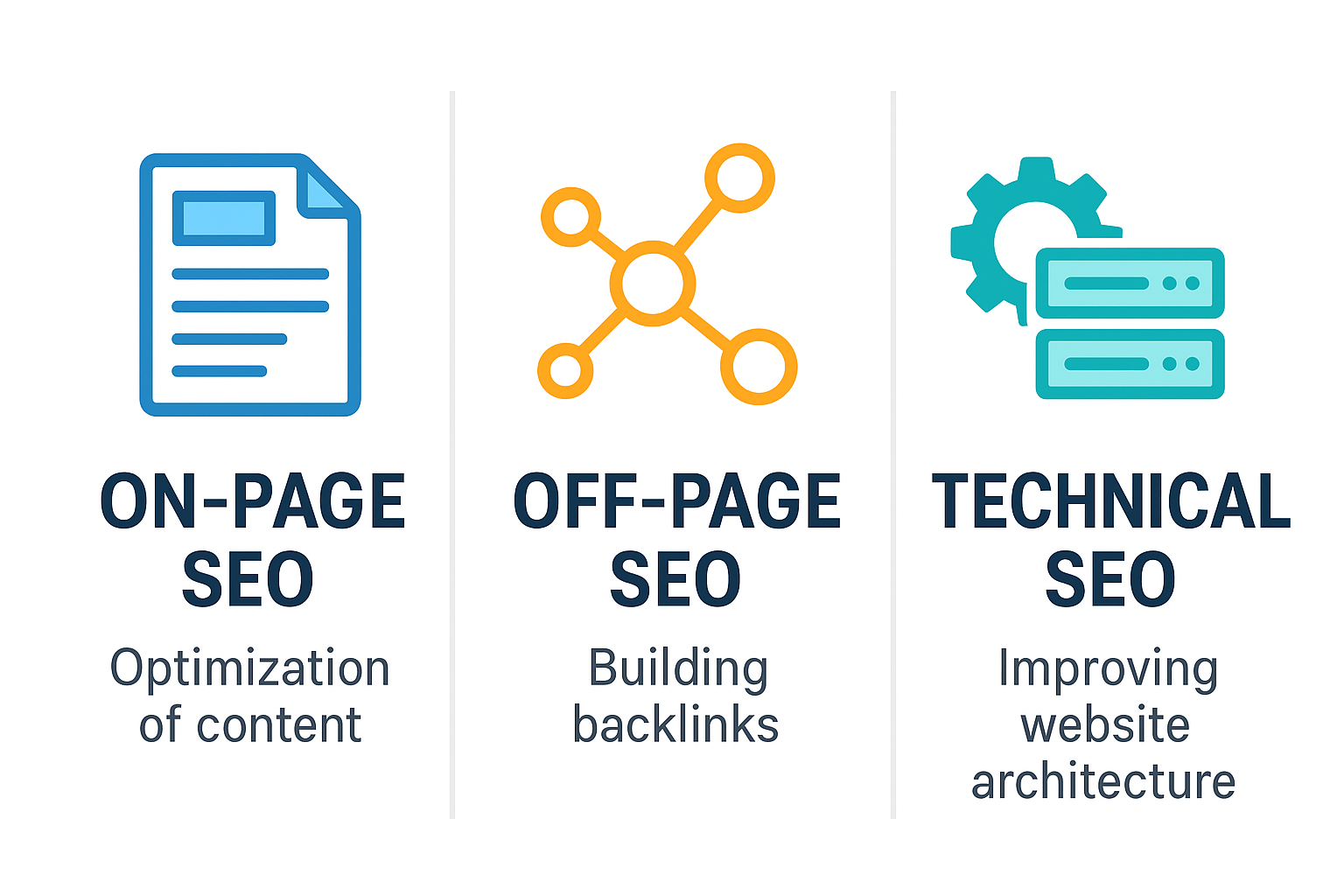
The three pillars of SEO work together to help search engines find, understand, and rank your content.
Why SEO Matters for Businesses and Creators
Organic search is consistently one of the highest-converting traffic channels available. In contrast to paid ads, which stop delivering results the moment your budget runs out, SEO builds compounding visibility over time. A well-optimized page can continue attracting visitors for months or even years after it is published.
Furthermore, users tend to trust organic results more than advertisements. Studies consistently show that searchers click organic listings at higher rates than paid placements for most informational and research-driven queries. As a result, SEO often delivers a stronger return on investment over the long term.
For small businesses especially, ranking on the first page of Google for local or niche keywords can be transformative. Meanwhile, larger brands use SEO to protect their market share and capture demand at every stage of the buying journey.
How Search Engines Rank Content
Search engines use complex algorithms with hundreds of ranking factors to decide which pages appear at the top of results. However, most of these factors fall into a few key categories: relevance, authority, and user experience.
Relevance means the content closely matches what the searcher is looking for. Authority reflects how much the broader web trusts your site, largely measured through backlinks. User experience encompasses page speed, mobile usability, and how long visitors stay engaged with your content.
Google also evaluates content quality through its E-E-A-T framework — Experience, Expertise, Authoritativeness, and Trustworthiness. According to Wikipedia’s overview of SEO, these quality signals have become increasingly important as search engines grow more sophisticated at detecting low-value content.
Common Mistakes That Undermine SEO Efforts
Even experienced marketers make avoidable SEO errors. First, keyword stuffing — forcing a keyword into content unnaturally — can trigger penalties rather than rankings. Next, ignoring mobile optimization is a critical oversight, since Google now uses mobile-first indexing for the majority of websites.
Additionally, publishing thin or duplicate content fails to satisfy search intent and wastes your site’s crawl budget. Finally, neglecting to build any backlinks leaves your site without the authority signals it needs to compete in most niches. Recognizing these pitfalls early saves considerable time and resources.
Getting Started: A Practical First Step
If you are new to SEO, start with keyword research. Identify the specific phrases your target audience types into search engines, then create content that genuinely answers those queries better than any competing page. Because search engines reward helpfulness, the best SEO strategy is also the best content strategy.
From there, audit your technical setup to ensure your site loads quickly, works on mobile devices, and uses HTTPS. Meanwhile, begin building relationships and earning backlinks by producing content worth citing. Resources like Rank Authority offer structured guidance to help you build and execute an SEO plan step by step.
Quick Definition: SEO (Search Engine Optimization) is the ongoing practice of improving a website’s content, authority, and technical structure so it earns higher rankings in organic search results — driving more relevant, unpaid traffic over time.
Conclusion: Why You Should Define SEO Before You Start
To truly define SEO is to understand that it is not a shortcut or a trick — it is a long-term investment in your website’s ability to be found, trusted, and chosen. By mastering its three core pillars, avoiding common mistakes, and consistently creating content that serves real people, any website can build meaningful organic visibility. Therefore, whether you are a business owner, blogger, or marketer, SEO is one of the most valuable skills you can develop for sustainable online growth.
Frequently Asked Questions About SEO
How do you define SEO in simple terms?
SEO, or search engine optimization, is the practice of improving a website so it ranks higher in unpaid search engine results. The goal is to attract more relevant visitors without paying for ads.
What are the three main types of SEO?
The three main types are on-page SEO, off-page SEO, and technical SEO. On-page covers content and keywords, off-page covers backlinks and authority, and technical SEO covers site speed, crawlability, and structure.
How long does SEO take to show results?
Most websites begin seeing measurable SEO results within three to six months. However, competitive industries may require six to twelve months of consistent effort before significant ranking improvements appear.
Is SEO free?
Organic SEO does not require paying for ad placements, but it is not entirely free. Time, tools, content creation, and sometimes professional services all represent real costs.
What is the difference between SEO and paid search?
SEO targets organic, unpaid search results, while paid search (PPC) involves bidding on keywords to display ads. SEO builds lasting visibility over time, whereas paid search delivers immediate but temporary traffic.
Why is keyword research important in SEO?
Keyword research reveals exactly what terms your audience searches for, allowing you to align your content with real demand. Without it, even well-written content may never reach the right readers.
What is a backlink and why does it matter for SEO?
A backlink is a link from another website pointing to yours. Search engines treat backlinks as votes of confidence, and earning high-quality backlinks is one of the strongest signals for ranking higher.
What is technical SEO?
Technical SEO refers to optimizations that help search engines crawl, index, and understand your website efficiently. It includes tasks like improving page speed, fixing broken links, using structured data, and ensuring mobile-friendliness.
Does social media affect SEO rankings?
Social media does not directly influence search rankings, but it can amplify content reach, which may lead to more backlinks and brand mentions. Indirectly, a strong social presence can support SEO growth.
What is E-E-A-T in SEO?
E-E-A-T stands for Experience, Expertise, Authoritativeness, and Trustworthiness. Google uses these quality signals to evaluate whether content is credible and helpful, especially for health, finance, and legal topics.
What is a meta description and does it affect SEO?
A meta description is a short summary of a page displayed in search results. While it is not a direct ranking factor, a compelling meta description improves click-through rates, which can indirectly benefit SEO.
What common SEO mistakes should beginners avoid?
Common mistakes include keyword stuffing, ignoring mobile optimization, neglecting page speed, publishing thin or duplicate content, and failing to build any backlinks. Avoiding these issues gives new sites a much stronger foundation.

