

Digital marketing automation tools are the engine behind every high-performing marketing team in 2025 — and if you’re not using them, you’re already falling behind. These platforms handle email campaigns, social scheduling, SEO optimization, lead scoring, and AI-powered search visibility without constant human input. Whether you’re a solo marketer or leading an agency, the right automation stack changes everything about how efficiently you compete online.
According to Salesforce research, businesses that adopt marketing automation see an average revenue increase of 10% to 30% within the first year. Consequently, adoption rates continue to climb across every industry — from e-commerce to B2B services.
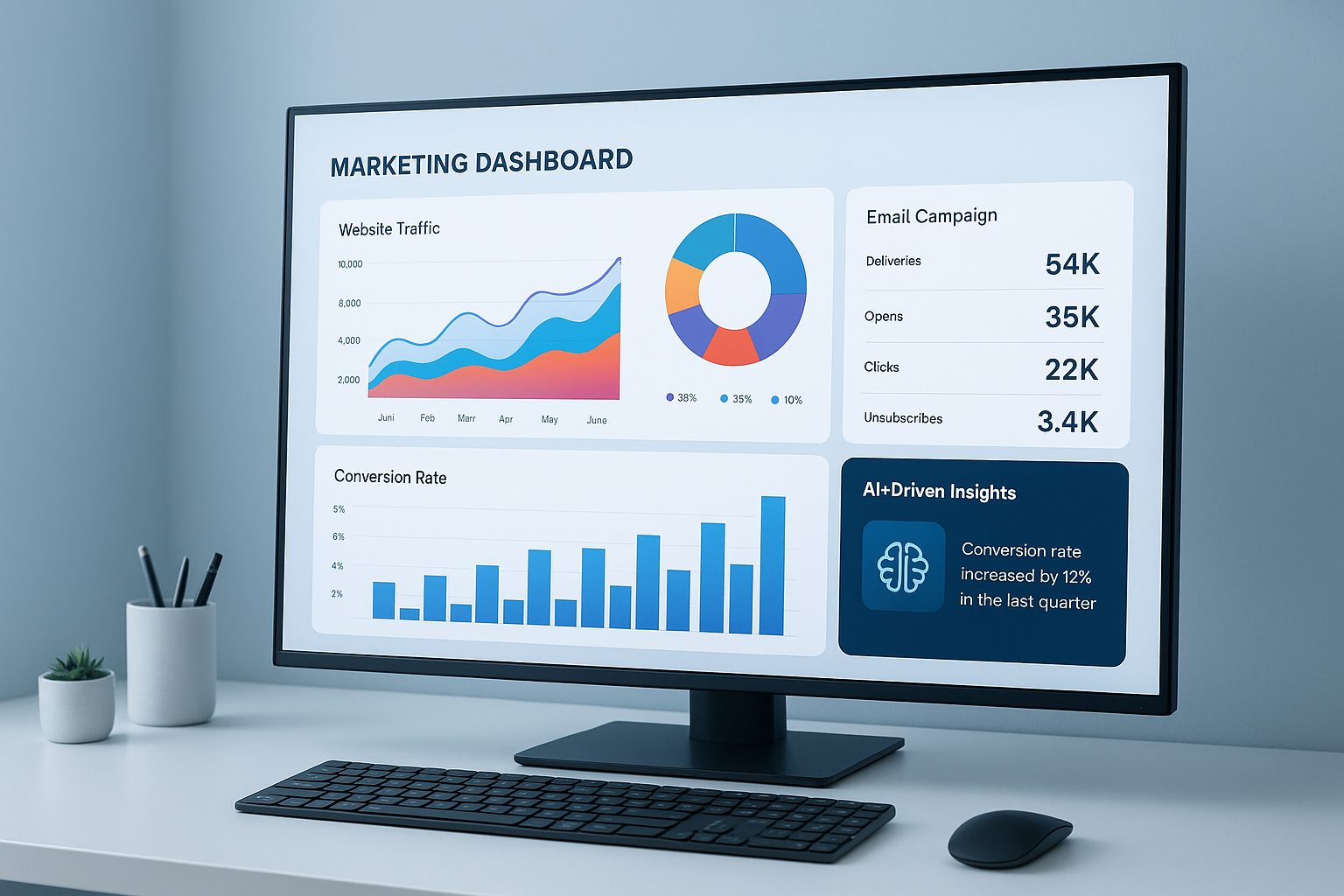
Modern digital marketing automation tools give marketers a real-time, unified view of campaign performance across every channel.
What Are Digital Marketing Automation Tools?
Digital marketing automation tools are software platforms that use AI, machine learning, and rule-based logic to run marketing tasks without constant manual input. Specifically, they automate email sequences, social media publishing, paid ad management, lead scoring, SEO audits, and increasingly, AI-powered search optimization. In short, they act as a tireless digital team member operating around the clock.
However, the real value isn’t just saved time. It’s the consistency and data-driven precision these tools apply to every campaign — ensuring that the right message reaches the right person at exactly the right moment, every time.
How Automation Tools Actually Work
Most platforms work through a trigger-action model. For example, when a visitor downloads a lead magnet, that action triggers a personalized email sequence automatically. Furthermore, AI layers monitor user behavior over time, adjusting send times, content, and channel selection to maximize engagement. As a result, campaigns improve continuously without requiring manual tweaks after every send.
Why Marketing Automation Is No Longer Optional in 2025
The search landscape has shifted fundamentally. Google’s AI Overviews, Bing Copilot, and voice assistants now answer queries directly — often without users clicking a single link. Therefore, marketers must optimize not just for traditional search rankings but also for AI-generated responses and answer engines.
Manual optimization simply cannot keep pace with these changes. In addition, consumer expectations have risen sharply. Personalized, timely communication is now the baseline — not a differentiator. Automation makes it possible to deliver that experience at scale without exhausting your team.
Key Stat: 76% of companies using marketing automation see positive ROI within 12 months. (Invespcro)
The AI Search Revolution Changes Everything
Automation tools that incorporate Generative Engine Optimization (GEO) — the practice of structuring content so AI models cite it in generated answers — and Answer Engine Optimization (AEO) — formatting content for voice search, featured snippets, and direct answer boxes — have become essential. For a deeper look at these disciplines, explore how AI tools can enhance your marketing strategy.
Key Categories of Digital Marketing Automation Tools
Not all automation tools serve the same purpose. Consequently, understanding the main categories helps you choose the right platform for your specific needs:
- Email Marketing Automation: Tools like Mailchimp automate list segmentation, drip sequences, behavioral triggers, and A/B testing at scale.
- CRM and Lead Nurturing: Platforms such as HubSpot score leads automatically and trigger personalized follow-up sequences based on contact behavior.
- SEO and Search Automation: Tools that continuously audit, optimize, and monitor search performance — including technical fixes, keyword tracking, and backlink analysis.
- Social Media Scheduling: Platforms that publish content at peak engagement times, monitor brand mentions, and track social metrics automatically.
- AI-Powered GEO and AEO Tools: Next-generation platforms that optimize content for AI search engines, voice assistants, and featured snippets simultaneously.
- Paid Advertising Automation: Smart bidding, automated ad rotation, and audience targeting tools that maximize ROI across Google Ads, Meta, and LinkedIn.
- Content Marketing Automation: AI writing assistants, editorial calendar tools, and automated distribution platforms that streamline the full content lifecycle.
- Analytics and Reporting Automation: Dashboards that pull data from all channels, generate reports automatically, and surface actionable insights without manual data wrangling.
All-in-One vs. Best-of-Breed Tools
You have two broad architectural choices. All-in-one platforms like HubSpot bundle CRM, email, social, and analytics into a single interface — ideal for teams that want simplicity and unified data. In contrast, best-of-breed stacks combine specialized tools (for example, Semrush for SEO, Mailchimp for email, and a dedicated social tool) into a customized workflow. Each approach has trade-offs in cost, complexity, and depth of capability.
Top Digital Marketing Automation Tools Reviewed for 2025
With hundreds of platforms competing for your budget, it helps to see the leading options compared side by side. Furthermore, knowing each tool’s primary strength helps you build a stack that covers every critical channel without overlap or waste. Read our 2026 buyer's guide for deeper comparisons.
1. HubSpot — Best All-in-One Marketing Hub
HubSpot remains one of the most widely adopted digital marketing automation platforms for good reason. It combines CRM, email automation, social publishing, landing page creation, and analytics into a single dashboard. Specifically, its workflow builder allows marketers to create complex lead nurturing sequences using a drag-and-drop interface — no coding required. Additionally, HubSpot’s AI-assisted content tools help optimize blog posts and email subject lines at the point of creation.
- Best for: Mid-sized businesses and agencies managing multiple clients
- Key strength: Unified CRM and marketing automation in one platform
- Pricing: Free tier available; paid plans from approximately $50/month
- Notable gap: Advanced SEO and AI search optimization require third-party tools
2. Mailchimp — Best for Email Marketing Automation
Mailchimp is the entry point for most small businesses beginning their automation journey. Its visual email builder, behavioral triggers, and list segmentation tools make it accessible even for non-technical users. Moreover, Mailchimp’s predictive send-time feature uses AI to deliver emails when individual subscribers are most likely to open them — a simple but powerful conversion lever.
- Best for: Small businesses and e-commerce stores
- Key strength: Ease of use combined with strong behavioral automation
- Pricing: Free plan up to 500 contacts; paid plans from approximately $13/month
- Notable gap: Limited CRM depth and no native SEO automation
3. Semrush — Best for SEO and Content Automation
Semrush is the industry standard for SEO automation — covering keyword research, site auditing, backlink monitoring, position tracking, and competitive analysis. However, its content marketing toolkit goes further, offering AI-powered content briefs, SEO writing assistants, and automated audit alerts. For teams with a heavy organic search focus, it’s an indispensable part of any digital marketing automation stack.
- Best for: Content marketers and SEO-focused teams
- Key strength: Comprehensive SEO automation with AI content tools
- Pricing: From approximately $130/month
- Notable gap: No email automation or CRM; focused purely on search and content
4. ActiveCampaign — Best for Advanced Email and CRM Automation
ActiveCampaign bridges the gap between email marketing and full CRM automation. Specifically, its machine learning-driven lead scoring, predictive content features, and deep segmentation options make it one of the most sophisticated email automation tools available at the mid-market price point. Additionally, its 900+ integrations mean it slots into almost any existing tech stack without friction.
- Best for: Growing businesses needing advanced segmentation and lead scoring
- Key strength: Machine learning-powered personalization at scale
- Pricing: From approximately $29/month
- Notable gap: Steeper learning curve than Mailchimp; limited social automation
5. Marketo Engage — Best for Enterprise Marketing Automation
Marketo Engage (by Adobe) is built for enterprise teams managing large contact databases and complex, multi-touch marketing programs. As a result, it offers unparalleled depth in lead management, account-based marketing, and cross-channel campaign orchestration. However, its complexity and price point make it unsuitable for small businesses or those without dedicated marketing operations staff.
- Best for: Enterprise organizations with large teams and complex programs
- Key strength: Account-based marketing and enterprise lead management
- Pricing: Custom enterprise pricing; typically starts at $1,000+/month
- Notable gap: High cost and steep setup requirements
6. RankAuthority — Best for AI Search Visibility Automation
RankAuthority addresses the fastest-growing gap in most automation stacks: AI-powered search visibility. Traditional SEO tools focus on Google’s algorithmic rankings. RankAuthority, however, goes further — its 1-Click AI AutoPilot technology automates the technical and strategic work required to rank in both traditional search and AI-powered answer engines like Google’s AI Overviews and Bing Copilot.
Specifically, the platform uses advanced algorithms to continuously strengthen search authority, improve content discoverability, and adapt to changes in how AI engines surface information. Furthermore, a risk-free seven-day trial means you can evaluate the platform’s real-world impact before committing. You can also explore effective tools for digital marketing in 2026 to understand how the landscape is shifting.
- Best for: Small businesses, digital marketers, and agencies wanting AI search dominance
- Key strength: Automated GEO and AEO optimization with 1-Click AI AutoPilot
- Pricing: Risk-free 7-day trial available
- Notable strength: Accessible for non-technical users; no developer required
How to Get Started with Digital Marketing Automation Tools
Getting started doesn’t have to feel overwhelming. In fact, following a clear, structured process makes the entire transition manageable. Here is a practical, step-by-step approach: For agency-specific workflows, see our agency tools guide.
- Define Your Marketing Goals: Identify specific, measurable outcomes — more leads, higher search rankings, better email open rates — before comparing any tools. Without clear goals, you’ll either buy too much or too little.
- Audit Your Current Marketing Stack: Review every existing tool, process, and manual task. Specifically, look for gaps where automation can save significant time, and flag redundancies where you’re paying for duplicate capabilities.
- Choose the Right Automation Platform: Compare platforms based on your goals, budget, team size, and technical comfort. Prioritize tools that offer AI-driven features, strong integration libraries, and a free or low-risk trial period.
- Set Up and Test Your Automation Workflows: Build email sequences, social posting schedules, lead scoring rules, and SEO monitoring tasks. Then test every trigger and workflow path thoroughly before going live — broken automations erode subscriber trust fast.
- Monitor Performance and Optimize Continuously: Use the platform’s built-in analytics to track open rates, conversion rates, search rankings, and engagement. Make data-driven adjustments regularly — automation is a system that improves with ongoing optimization, not a set-and-forget switch.
For a more detailed walkthrough of each stage, the complete guide to automating your digital marketing efforts goes deep on implementation tactics.

AI-powered analytics help marketers make faster, smarter decisions — reducing guesswork and improving campaign outcomes at every stage.
AI-Powered Search Optimization: The Next Frontier for Automation
Traditional SEO tools remain valuable for keyword research and technical audits. However, the most significant opportunity in 2025 lies in optimizing for AI-driven search environments. This is where GEO and AEO become the differentiating factors between brands that dominate search and those that gradually disappear from view.
Understanding GEO vs. AEO
Generative Engine Optimization (GEO) involves structuring content so that AI models — like those powering Google’s AI Overviews, ChatGPT’s browsing features, and Perplexity — cite your content in their generated responses. In contrast, Answer Engine Optimization (AEO) focuses on formatting content to appear in featured snippets, voice search results, and direct answer boxes on traditional search engine results pages.
Together, these two disciplines represent the future of search visibility. Therefore, any serious digital marketing automation strategy in 2025 must incorporate both. According to Wikipedia’s overview of search engine optimization, the field continues to evolve rapidly as AI transforms how search engines process, rank, and present information to users.
How RankAuthority Automates AI Search Visibility
RankAuthority’s 1-Click AI AutoPilot directly addresses this shift. The platform automatically strengthens content authority, improves structured data markup, and adapts content formatting to match how AI search engines evaluate and surface relevant answers. Moreover, it’s specifically designed for marketers who need results without a steep technical learning curve.
Content Marketing Automation: Building a Scalable Content Engine
Content remains the backbone of digital marketing. However, producing consistent, high-quality content at scale is one of the toughest challenges any team faces. Content marketing automation tools solve this by streamlining ideation, drafting, publishing, and multi-channel distribution in a single connected workflow. See examples of agency tools that power content operations.
For example, AI writing assistants can generate first drafts based on target keywords, while automated distribution tools push published content to social channels, email lists, and syndication networks simultaneously. Furthermore, performance data feeds back into the system, informing future content decisions automatically — creating a self-improving content loop.
Key Components of a Content Automation Workflow
- Topic Research Automation: Tools that surface trending topics and keyword gaps automatically, replacing manual research sessions.
- AI-Assisted Drafting: Platforms that generate content outlines or full drafts from keyword briefs, speeding up production significantly.
- Automated Publishing Calendars: Systems that schedule and publish content at optimal times across blog, social, and email channels.
- Performance Tracking and Redistribution: Tools that monitor which pieces perform best and automatically repurpose or redistribute top-performing content.
The complete guide to automated content marketing in 2025 provides a thorough breakdown of how to build a content engine that runs largely on autopilot.
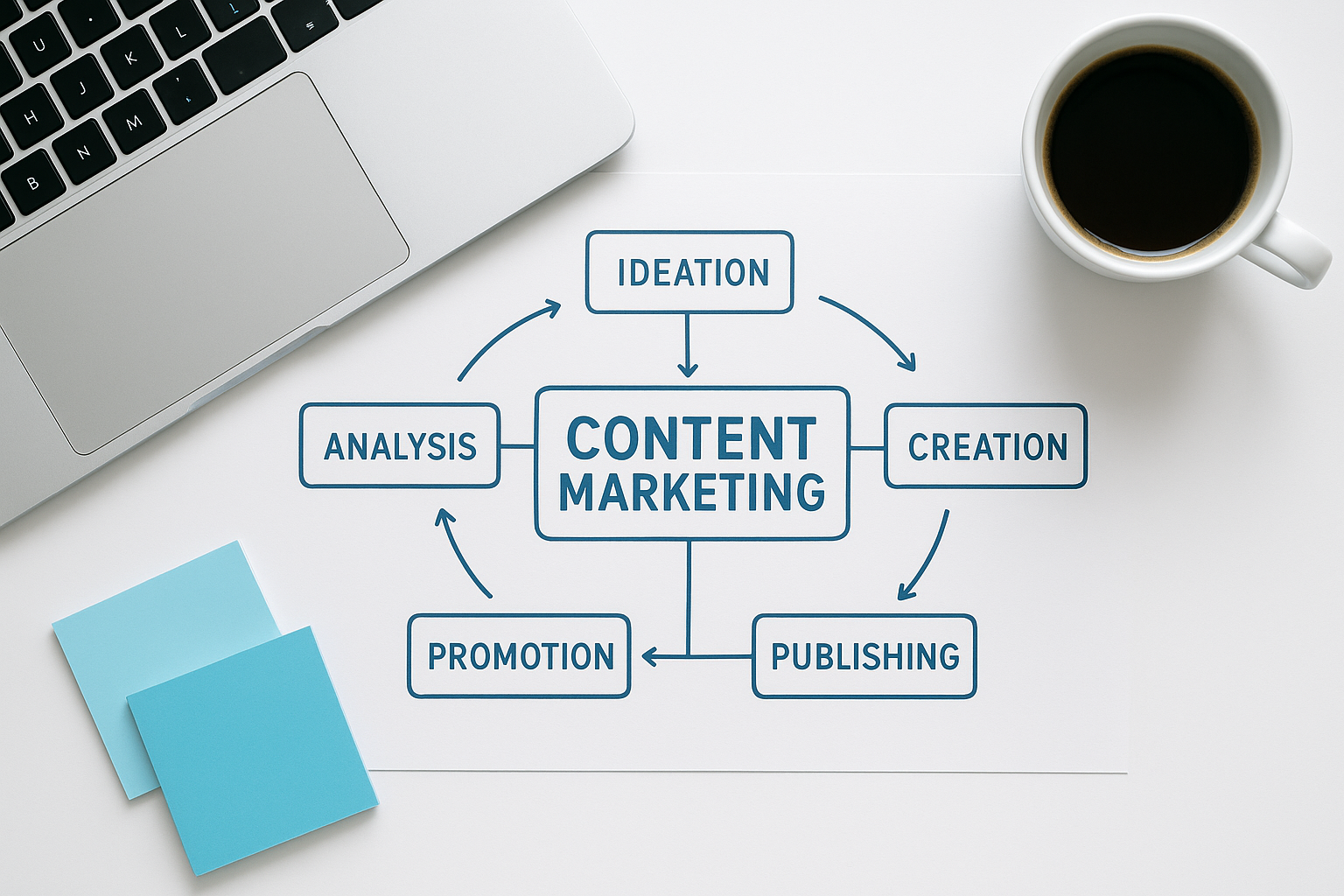
A structured content automation workflow ensures consistent publishing, distribution, and performance tracking — with minimal manual intervention.
How to Choose the Right Digital Marketing Automation Platform
With hundreds of tools available, choosing wisely is critical. Above all, your selection should align with your specific goals, team capacity, and technical skill level. Here are the most important evaluation criteria: See our AI in digital marketing guide for AI-driven evaluation tactics.
✔ AI Integration: Does the platform use AI to adapt and improve over time, or is it purely rule-based? AI-driven tools outperform static rule systems as audience behaviors shift.
✔ Multi-Channel Support: Can it manage email, social, SEO, paid ads, and content from one dashboard? Unified platforms reduce data fragmentation significantly.
✔ Ease of Use: Is the interface accessible for non-technical marketers, or does it require developer support to configure and maintain?
✔ Analytics and Reporting: Does it surface actionable insights, not just raw data? The best tools translate numbers into clear next steps.
✔ Integration Ecosystem: Does it connect natively with your CRM, CMS, ad platforms, and other tools in your existing stack?
✔ Scalability: Will the platform grow with your business, or will you be forced to switch platforms once you outgrow an entry-level tier?
What Does Marketing Automation Typically Cost?
Costs vary widely across the market. Specifically, entry-level tools like Mailchimp offer free plans for small contact lists. Mid-market platforms like ActiveCampaign and HubSpot range from $29 to $800 per month depending on contact volume and features. Enterprise solutions like Marketo Engage typically start above $1,000 per month. As a result, most small to mid-sized businesses can find effective solutions in the $50 to $500 per month range — a figure that delivers strong ROI when automation replaces even a fraction of manual labor. For pricing context and trends, read our AI marketing insights report.
For a curated comparison of leading options by use case and budget, the guide to effective tools for digital marketers breaks down the top contenders in detail.
Marketing Automation for Specific Business Types
Not every business automates the same workflows. In contrast to enterprise teams that focus on account-based marketing and complex lead programs, small businesses typically prioritize email nurturing and social scheduling. Here’s how automation applies across different contexts:
Small Business Marketing Automation
Small businesses benefit most from automating high-frequency, low-complexity tasks: welcome email sequences, appointment reminders, social post scheduling, and basic lead capture workflows. Tools like Mailchimp and HubSpot’s free tier offer entry-level automation that delivers real results without requiring a full marketing team. Furthermore, affordable SEO automation through tools like RankAuthority helps small businesses compete for search visibility against much larger competitors.
E-Commerce Marketing Automation
E-commerce brands lean heavily on automation for abandoned cart recovery, post-purchase sequences, product recommendation emails, and review request campaigns. Specifically, these workflows recover revenue that would otherwise be permanently lost. According to Shopify’s research on abandoned cart emails, automated recovery sequences recover an average of 15% of abandoned carts — a meaningful impact on bottom-line revenue.
B2B and Agency Marketing Automation
B2B marketers and agencies focus automation on lead nurturing sequences, account-based marketing programs, multi-client reporting, and pipeline acceleration workflows. In particular, platforms that combine CRM, email automation, and AI search optimization into a single dashboard — or integrate cleanly via API — dramatically reduce the operational overhead of managing multiple client accounts at once.
Common Mistakes to Avoid with Digital Marketing Automation
Even the best tools underperform when implemented incorrectly. Specifically, these are the most common pitfalls — and how to avoid each one:
- Over-automating without personalization: Generic, robotic messaging damages brand trust quickly. Therefore, use dynamic content fields and behavioral segmentation to keep automated messages feeling human.
- Neglecting contact list hygiene: Outdated or invalid contacts reduce email deliverability and skew your analytics. Clean lists regularly — monthly is a reasonable baseline for active senders.
- Ignoring performance data: Automation without analysis leads to stagnant, underperforming campaigns. Consequently, schedule weekly or bi-weekly reviews of your key automation metrics.
- Skipping workflow testing: Untested sequences frequently contain broken triggers, wrong audience conditions, or incorrect logic. Test every path — including edge cases — before activating any live workflow.
- Failing to align automation with strategy: Tools amplify your existing marketing strategy. However, they cannot create one from scratch. Start with a clear strategy, then use automation to execute it at scale.
- Automating too many channels at once: Trying to automate email, social, SEO, ads, and content simultaneously overwhelms most teams. Instead, start with one high-impact channel and expand from there.
In contrast, marketers who combine thoughtful strategy with the right tools consistently outperform those who rely on either alone. The Wikipedia article on marketing automation provides excellent context on how best practices in this discipline have evolved over the past decade.
The Future of Digital Marketing Automation
The trajectory is clear: AI will continue to absorb more of the tactical execution layer of marketing, while human marketers shift toward strategy, creative direction, and relationship management. Specifically, the next wave of digital marketing automation tools will feature deeper predictive analytics, real-time content personalization, and fully autonomous campaign management.
Furthermore, as AI search engines like Google’s AI Overviews become the primary interface for information retrieval, visibility in AI-generated answers will matter as much as — or more than — traditional page-one rankings. As a result, marketers who invest in GEO and AEO now will have a structural advantage that compounds over time.
Trends Shaping Automation in 2025 and Beyond
- Hyper-Personalization at Scale: AI models that tailor every touchpoint to individual user behavior in real time, going well beyond basic segmentation.
- Autonomous Campaign Management: Platforms that set budgets, adjust bids, test creatives, and reallocate spend automatically based on live performance data.
- AI Answer Engine Integration: Tools specifically designed to monitor and improve a brand’s presence in AI-generated search responses across Google, Bing, and emerging AI search platforms.
- Predictive Lead Scoring Evolution: Models that incorporate first-party behavioral data, intent signals, and firmographic factors to score leads with increasing accuracy over time.
- Zero-Party Data Automation: Workflows that collect and activate preferences directly from customers — especially important as third-party cookies continue to disappear.
Frequently Asked Questions About Digital Marketing Automation Tools
What are digital marketing automation tools?
Digital marketing automation tools are software platforms that automate repetitive marketing tasks including email campaigns, social media publishing, SEO optimization, paid ad management, and lead nurturing. They reduce manual labor, minimize human error, and allow businesses to scale marketing output efficiently without proportionally growing their team.
How do digital marketing automation tools improve ROI?
These tools improve ROI by cutting manual labor costs, delivering personalized messages at scale, maintaining campaign consistency, and providing data-driven insights that sharpen decision-making. Salesforce research shows businesses using marketing automation see up to a 30% revenue increase on average within the first year.
What is the difference between GEO and AEO in marketing automation?
GEO (Generative Engine Optimization) focuses on structuring content so AI models like Google’s AI Overviews and ChatGPT cite it in generated responses. AEO (Answer Engine Optimization) targets voice search results, featured snippets, and direct answer boxes in traditional search engines. Both go beyond classic SEO and are critical components of any modern digital marketing automation strategy.
Are digital marketing automation tools suitable for small businesses?
Yes. Many digital marketing automation tools offer free plans or affordable entry tiers designed specifically for small businesses. Mailchimp’s free plan, HubSpot’s starter tier, and RankAuthority’s seven-day trial all give small teams access to powerful automation without a large upfront investment. Furthermore, these platforms scale as your business grows.
How long does it take to see results from marketing automation?
Most businesses begin seeing measurable results within 30 to 90 days of implementing marketing automation. However, the speed depends on content quality, audience size, targeting precision, and which tools you use. Email automation typically delivers the fastest visible results, while SEO automation shows meaningful gains over three to six months.
What features should I look for in a marketing automation platform?
Look for email automation, CRM integration, AI-driven content optimization, analytics dashboards, multi-channel campaign management, and scalability. Additionally, prioritize platforms with strong integration ecosystems — especially if you’re connecting them to existing CRM or CMS tools. Ease of use and responsive customer support also matter significantly for non-technical teams.
Can marketing automation tools replace human marketers?
No. Automation tools handle repetitive, data-heavy tasks so human marketers can focus on strategy, creativity, and relationship building. In fact, the most effective marketing organizations use automation to amplify — not replace — human judgment. Creative direction, brand storytelling, and strategic pivots still require human expertise that no automation platform currently replicates.
What is 1-Click AI AutoPilot and how does it work?
1-Click AI AutoPilot is a feature offered by RankAuthority that automates the complex technical and strategic work of search optimization with a single activation. It uses AI-driven algorithms to continuously strengthen search authority, improve structured data, and adapt content to match how AI search engines evaluate and surface relevant answers — all without requiring deep technical expertise from the user.
How do I choose the right digital marketing automation tool for my business?
Start by identifying your primary goals (lead generation, search visibility, email engagement, etc.), your budget, and your team’s technical skill level. Then compare tools based on features, integration depth, trial options, and customer reviews. Above all, avoid choosing a platform based on brand recognition alone — always test with a free trial before committing to a paid subscription.
What does marketing automation software typically cost?
Costs range from free entry-level plans to enterprise solutions exceeding $1,000 per month. Most small to mid-sized businesses find effective solutions in the $50 to $500 per month range. Specifically, Mailchimp starts free, ActiveCampaign from $29/month, HubSpot from $50/month, and Semrush from $130/month. Enterprise platforms like Marketo Engage require custom pricing discussions.
What are the most common mistakes when using marketing automation?
The most frequent mistakes include over-automating without personalization, neglecting contact list hygiene, ignoring performance data, skipping workflow testing, failing to align automation with an overarching strategy, and trying to automate too many channels simultaneously. Each of these errors is avoidable with a methodical implementation approach and regular performance reviews.
How does AI enhance digital marketing automation?
AI enhances marketing automation through predictive analytics, real-time content personalization, natural language processing for chatbots, smarter audience segmentation, and adaptive campaign optimization. These capabilities allow campaigns to improve automatically based on live user behavior — without requiring manual intervention after every data cycle.
Conclusion: Building Your Digital Marketing Automation Advantage
Digital marketing automation tools have moved from competitive advantage to baseline requirement for any business serious about growth in 2025. The question is no longer whether to automate — it’s which tools to choose and how to deploy them strategically. From email and social automation to AI-powered GEO and AEO optimization, the right stack transforms your marketing output without proportionally increasing your workload or headcount. Last updated: 2026-08-14.
Platforms like RankAuthority make it easier than ever to get started with intelligent search automation — offering accessible, AI-powered solutions for businesses of every size. Start with clear goals, select tools aligned to your strategy, and commit to continuous optimization. Furthermore, invest in GEO and AEO now, before your competitors do. That combination — strategic clarity, the right digital marketing automation tools, and a commitment to AI-era search visibility — is precisely what separates the brands that dominate in 2025 from those that fall behind. Add an author byline and a 'Last updated' date to improve credibility and E-E-A-T signals.

