

Digital visibility optimization is the ongoing process of strengthening how easily your brand can be found, understood, and recommended across search engines, AI assistants, and answer engines. As search behavior shifts from typed queries to conversational prompts, businesses that ignore this shift risk fading into the background. In this guide, we will break down what digital visibility optimization actually involves, why it matters more in 2025, and how you can build a strategy that keeps your brand discoverable everywhere people search. By [Author Name]. Last updated: 2026-07-30.
In short: Digital visibility optimization combines search engine optimization, structured content, and AI-readiness techniques so your brand appears prominently in Google results, AI Overviews, and answer engines such as ChatGPT or Perplexity. It requires both technical fixes and clear, citable content.
What Is Modern Search Visibility?
Digital visibility optimization is the practice of improving how discoverable a website or brand is across every channel people use to find information, including traditional search engines, voice assistants, and generative AI tools. Unlike classic search engine optimization, which mainly targets ranked links, this broader discipline also focuses on being quoted, summarized, and recommended by AI systems.
According to Wikipedia’s overview of search engine optimization, the field has historically centered on keywords, backlinks, and technical crawlability. However, digital visibility optimization extends that foundation to include structured data, natural language clarity, and content formatted for machine extraction, since large language models now generate a growing share of search answers.
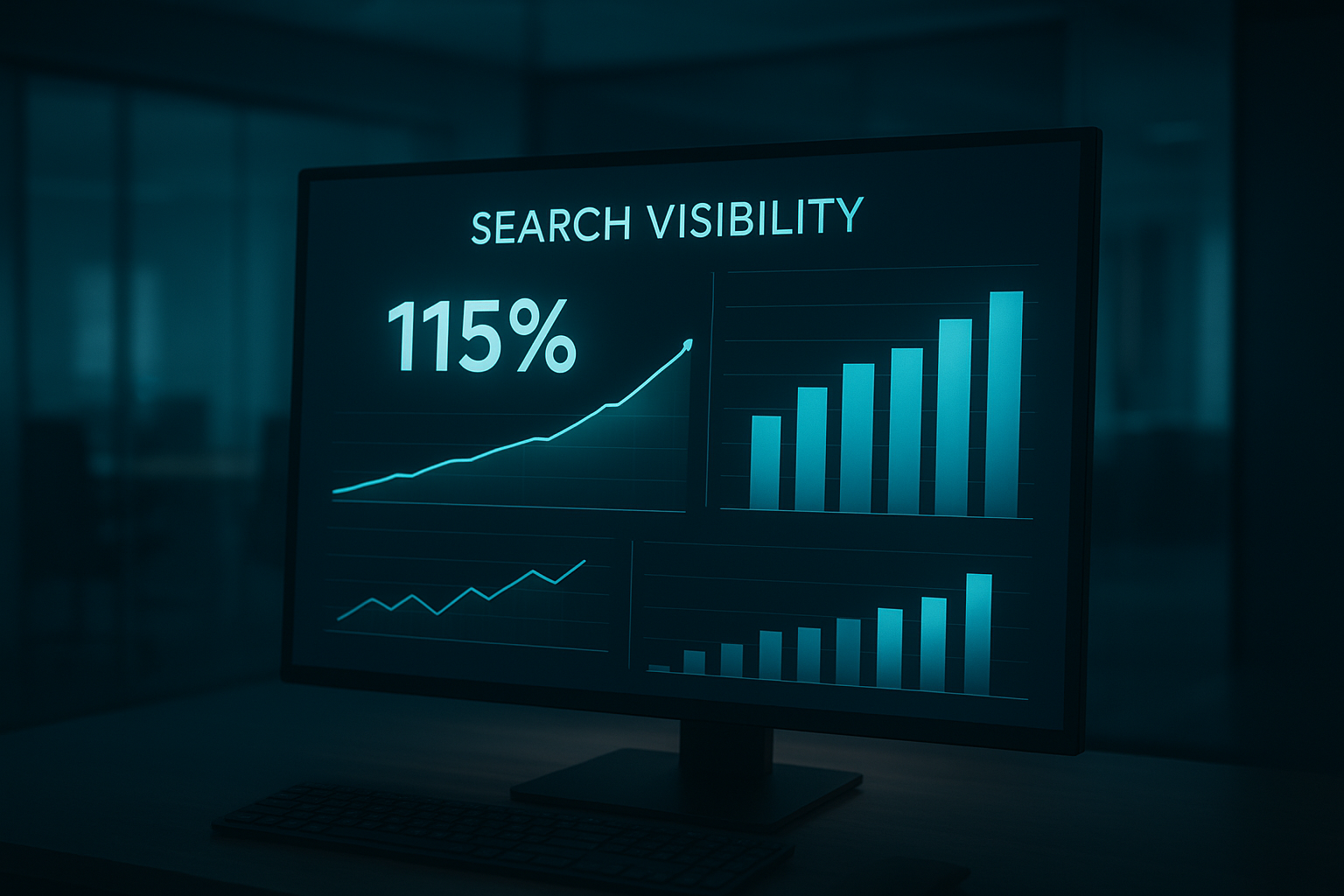
Tracking dashboards make digital visibility optimization measurable across search and AI channels.
Why Online Visibility Optimization Matters in the AI Search Era
Search behavior has changed dramatically in the past two years. For instance, Gartner has projected that traditional search engine volume could drop by roughly 25 percent by 2026 as more users turn to AI chatbots and virtual agents for answers. As a result, brands that only optimize for classic search results risk losing an entire generation of discovery traffic. For tactics on surfacing content in generative systems, see AI-driven content discovery.
Furthermore, AI answer engines do not simply list ten blue links; they synthesize a single response drawn from a handful of trusted sources. Consequently, being one of those trusted sources has become just as important as ranking on page one of Google. In particular, businesses that ignore this shift may find themselves technically “ranking” while remaining invisible to the growing number of AI-driven searches.
To understand this shift more deeply, resources like the guide on how AI-driven optimization improves online visibility explain the mechanics behind these changes in greater detail.
Core Components of a Search Visibility Strategy
A strong search visibility strategy rests on four pillars: technical health, structured data, content authority, and consistent brand signals. Each pillar reinforces the others, so neglecting one often undermines results elsewhere.
- Technical health: Fast load times and clean site architecture ensure both search engines and AI crawlers can access your pages.
- Structured data: Schema markup, similar to standards documented by MDN’s HTML documentation, helps machines interpret page content accurately.
- Content authority: Well-researched, clearly organized content earns citations from both search engines and generative AI tools.
- Brand consistency: Mentions across directories, reviews, and social platforms strengthen trust signals over time.
For a deeper breakdown of proven tactics, the resource on proven strategies for improving online visibility covers each pillar with practical examples.
How to Build a Digital Visibility Optimization Strategy
Building an effective digital visibility optimization strategy does not require guesswork. Instead, follow a structured, repeatable process: See the website visibility enhancement guide for implementation details.
- Audit current visibility. Review existing search rankings, AI citation presence, and technical site health to establish a clear baseline before making any changes.
- Fix technical foundations. Resolve crawlability issues, improve page speed, and confirm mobile usability so search engines and AI crawlers can access content easily.
- Structure content for AI extraction. Rewrite key pages with clear headings, direct answers, and structured data so AI models can easily quote and cite the content.
- Build topical authority. Publish interconnected content that thoroughly covers a subject area, linking related pages together to demonstrate depth of expertise.
- Automate ongoing monitoring. Use automated tools to track rankings, AI mentions, and technical changes continuously, since search and AI algorithms update frequently.
Notably, this same sequence applies whether you manage one website or dozens of client properties, which is why many agencies rely on automated platforms like RankAuthority to keep the process consistent at scale, and resources on AI-driven content discovery.
Common Mistakes That Hurt Search Rankings Optimization Efforts
Even experienced marketers make avoidable errors that quietly undermine visibility gains. In particular, three mistakes appear most often across audits. Also review multichannel SEO strategies to prevent channel-specific pitfalls.
First, many sites ignore structured data entirely, leaving search engines and AI models to guess at page context. Second, content is often written vaguely, using long, unstructured paragraphs that AI systems struggle to summarize or quote directly. Third, older content is frequently left untouched for years, even as facts, statistics, and best practices change. As a result, previously strong pages gradually lose authority and citation potential.
Similarly, businesses sometimes treat AI visibility as a one-time project rather than a continuous discipline. Because algorithms and AI training data update constantly, a strategy that worked last year may already be outdated. Therefore, ongoing monitoring is not optional; it is essential to maintaining momentum.
Tools That Power AI-Driven Visibility Optimization
Manual optimization is possible, but it is slow and prone to human error, especially across multiple properties. Automated platforms have therefore become essential for businesses that want consistent results without hiring a large specialist team.
RankAuthority’s 1-Click AI AutoPilot, for example, automates much of the technical and strategic work behind generative engine optimization (GEO) and answer engine optimization (AEO), including structured data setup, AI-readiness scoring, and continuous monitoring. This approach removes much of the steep learning curve typically associated with search optimization, making it accessible to small business owners, digital marketers, entrepreneurs, and agencies alike. A risk-free seven-day trial allows teams to test the platform before committing.
For a curated comparison of options, see the roundup of the best tools for digital visibility improvement, as well as the broader list of digital optimization tools for AI-powered search success.

AI answer engines connect brands to users through cited, trusted content sources.
How Does AI-Driven Optimization Improve Online Visibility?
AI-driven optimization improves online visibility by structuring content so language models can extract, summarize, and cite it accurately. This increases the odds that a brand appears inside AI-generated answers rather than being skipped entirely.
In addition, AI-driven tools continuously monitor how a brand is represented across search engines and answer platforms, flagging gaps before they affect traffic. This is explored further in the dedicated guide on how AI-driven optimization improves online visibility, which walks through real examples of AI citation behavior.
Measuring Success: Metrics for Tracking Digital Visibility Optimization
Without measurement, it is impossible to know whether digital visibility optimization efforts are working. Fortunately, several metrics provide a clear picture of progress over time.
Organic impressions and click-through rate reveal how often a site appears and gets clicked in traditional search. Meanwhile, AI citation frequency, though harder to track manually, shows whether a brand is being referenced in generative answers. Branded search volume growth is another strong indicator, since it suggests rising awareness driven by improved visibility. Tools like Google Search Central provide free data on impressions and rankings, while dedicated platforms track AI-specific signals automatically.
For small businesses specifically, the practical guide on how small businesses can improve their online visibility outlines which metrics matter most when budgets and time are limited.

Regularly reviewing analytics helps confirm that digital visibility optimization efforts are paying off.
Frequently Asked Questions About Digital Visibility Optimization
What is digital visibility optimization?
Digital visibility optimization is the practice of improving how easily a brand can be found across search engines, AI assistants, and answer engines. It combines traditional SEO with content structuring and AI-readiness techniques.
How does digital visibility optimization differ from traditional SEO?
Traditional SEO focuses mainly on ranking in Google’s blue links, while digital visibility optimization also targets AI Overviews, chatbots, and voice assistants. It requires structuring content so machines can extract and cite it directly.
Why is digital visibility optimization important for AI search?
AI search tools summarize answers instead of listing links, so brands need content that AI models trust enough to cite. Without optimization, a business can rank well on Google yet remain invisible in AI-generated answers.
How long does it take to see results from digital visibility optimization?
Most businesses notice early movement within 4 to 8 weeks, with stronger gains after 3 to 6 months. Timelines vary based on site authority, competition, and consistency of effort.
What are the main components of an online visibility strategy?
Core components include technical SEO health, structured data, authoritative content, and consistent brand mentions across the web. Together these signals help search engines and AI models trust a site.
How much does digital visibility optimization cost?
Costs range from a few hundred dollars monthly for automated tools to several thousand for full-service agencies. Automated platforms often reduce cost by handling technical work that would otherwise require specialist labor.
Can small businesses benefit from digital visibility optimization?
Yes, small businesses often see outsized gains because local competitors frequently neglect AI-readiness. Consistent optimization helps a small brand appear in answer engines alongside much larger competitors.
What tools help with digital visibility optimization?
Tools that automate technical audits, structured data, and content scoring are especially useful, including platforms like RankAuthority’s 1-Click AI AutoPilot. Manual tools like Google Search Console remain helpful for tracking baseline performance.
What common mistakes hurt digital visibility optimization efforts?
Common mistakes include ignoring structured data, writing vague content that AI cannot easily summarize, and neglecting page speed. Failing to update older content is another frequent oversight. See Multichannel SEO strategies for channel-specific tactics.
How do AI search engines evaluate content differently than Google?
AI search engines prioritize clear, well-structured answers that can be extracted and cited directly. Google traditionally weighs backlinks and keyword relevance more heavily, though both increasingly reward genuine expertise.
What metrics show whether digital visibility optimization is working?
Key metrics include organic impressions, AI citation frequency, click-through rate, and keyword rankings over time. Tracking branded search volume also reveals growing awareness.
Is digital visibility optimization a one-time task or ongoing process?
It is an ongoing process because search algorithms and AI models update constantly. Regular content refreshes and technical monitoring are necessary to maintain gains.
How does content quality affect digital visibility optimization?
High-quality, well-organized content is more likely to be cited by AI answer engines and ranked by traditional search. Thin or duplicate content undermines both traditional and AI-driven visibility.
What role does structured data play in visibility optimization?
Structured data, such as schema markup, helps search engines and AI systems understand page content precisely. It increases the likelihood of rich results and accurate AI-generated summaries.
How can agencies scale digital visibility optimization across multiple clients?
Agencies typically rely on automated platforms to handle repetitive technical work across many sites at once. This frees strategists to focus on content strategy and client reporting rather than manual audits.
Final Thoughts
Ultimately, digital visibility optimization is no longer optional for brands that want to be found in a search landscape shared by Google, chatbots, and answer engines alike. By auditing current performance, fixing technical foundations, structuring content for AI extraction, and monitoring results continuously, businesses of any size can strengthen their presence across every discovery channel. Whether you tackle this work manually or lean on automated platforms such as RankAuthority, the core principle remains the same: consistent, well-structured effort compounds into lasting visibility gains over time. Last updated: 2026-08-14. Author: RankAuthority Editorial Team.

