
Digital visibility tools for businesses are the software platforms that help a company get found across Google, Bing, and now AI answer engines like ChatGPT and Gemini. Instead of guessing why traffic is flat, these tools scan a website, flag the technical and content gaps holding it back, and often fix many of those gaps automatically. For small business owners and marketers juggling limited time, that automation matters more than ever, especially as search itself keeps changing shape.
Quick answer: Digital visibility tools for businesses combine SEO automation, schema markup, and AI content optimization to help a company rank in traditional search and get cited by AI answer engines. The best platforms handle audits, fixes, and monitoring in one dashboard, so owners without an SEO team can still compete.
What Are Digital Visibility Tools for Businesses?
Digital visibility tools for businesses are platforms designed to increase how often a company appears in search results, AI-generated answers, and other discovery channels. In particular, they typically bundle four functions: technical site auditing, content optimization, schema markup (a structured data format that helps machines read a page), and performance tracking.
For example, a tool might scan a site, detect a missing meta description, and generate one automatically. Similarly, it might flag pages without structured data and deploy the correct markup without requiring code knowledge. Consequently, business owners save the hours normally spent researching fixes manually.
According to Wikipedia’s overview of search engine optimization, ranking well has always depended on technical health, relevance, and authority signals. However, the newest tools extend that same logic to AI answer engines, not just traditional search.
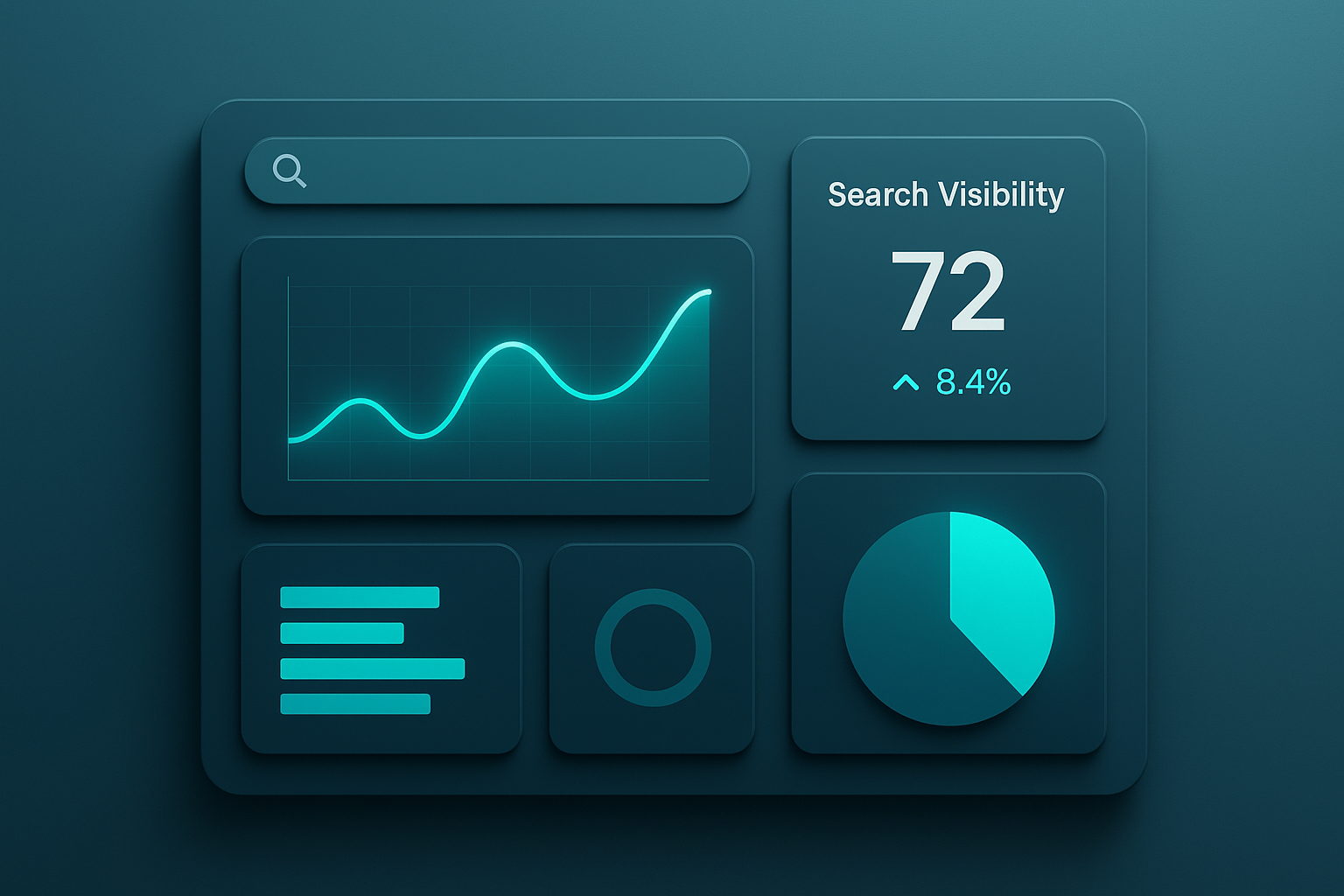
Modern digital visibility tools for businesses combine audits, schema, and tracking in one dashboard.
Why Online Visibility Matters More Than Ever
Search behavior has shifted quickly. Gartner has projected that traditional search engine volume could drop by roughly 25% by 2026 as consumers increasingly turn to AI chatbots and virtual assistants for answers (Gartner, 2024). As a result, businesses that only optimize for classic blue-link search risk losing visibility in a growing share of buyer journeys.
Furthermore, the U.S. Small Business Administration consistently highlights online discoverability as a top factor in small business survival and growth. In contrast to a decade ago, being “findable” now means appearing correctly in AI-generated summaries, not just search result pages.
This is precisely where Generative Engine Optimization (GEO) and Answer Engine Optimization (AEO) enter the picture. GEO structures content so AI models can confidently cite it, while AEO formats answers so they win snippet placements. Above all, businesses that treat these as separate disciplines from SEO, rather than an afterthought, tend to maintain stronger visibility as the search landscape keeps evolving.
Core Types of Online Visibility Solutions Every Business Needs
Not every visibility tool does the same job. Specifically, most fall into three categories that work best together rather than separately.
SEO Automation Tools
These tools handle the technical foundation: page speed, broken links, indexing, and metadata. To learn more about the specific tools in this category, see this guide to the best tools for digital visibility improvement.
GEO Tools for AI Citations
GEO tools build “artifact” style content, meaning concise, well-defined pages that AI models can quote directly. Meanwhile, they also track whether a brand is actually being cited inside AI-generated answers across major platforms.
AEO Tools for Direct Answers
AEO tools format content into question-and-answer structures with schema markup attached, which increases the odds of winning featured snippets. For a broader breakdown of options, this resource on tools for improving online visibility for small businesses is a helpful next read.

GEO and AEO tools help businesses get cited across AI answer engine networks.
How to Choose the Right Digital Visibility Tools for Businesses
Choosing the right digital visibility tools for businesses starts with clarity about current gaps. Therefore, a full audit should always come first, ideally one that produces a single benchmark score, such as a Rank Authority Score (RA Score), that condenses technical health, content strength, and AI visibility into one number.
In addition, look for competitor and keyword-gap intelligence. Knowing where rivals are gaining ground, and where their content is thin, makes it far easier to prioritize fixes with the highest impact. Platforms such as Rank Authority combine this competitive analysis with automated fixes through 1-Click AI AutoPilot, which reduces the manual workload that traditionally required a dedicated SEO specialist.
Similarly, CMS compatibility matters. A tool that deploys directly into WordPress, Shopify, Wix, GoDaddy, GoHighLevel, or Webflow saves significant setup time compared to manually copying code between systems. For a side-by-side look at what qualifies as essential, this article on tools that help improve online visibility for businesses breaks down the must-have features further.
5 Steps to Build a Complete Visibility Strategy
Building lasting visibility is a process, not a single action. Consequently, following a structured sequence produces more consistent results than tackling fixes at random.
- Run a full site audit. Scan the entire website to establish a baseline visibility score, identifying technical errors, missing metadata, and structural weaknesses that block search and AI discovery.
- Fix technical and on-page SEO issues. Resolve broken links, slow page speed, missing alt text, and thin content so search engines can crawl and index every important page correctly.
- Deploy structured schema markup. Add schema markup so answer engines and featured snippet algorithms can extract clear, structured facts directly from your pages without ambiguity.
- Build GEO-optimized content. Create dedicated content designed for AI citation, using clear definitions, direct answers, and factual structure that generative engines prefer to quote.
- Monitor visibility and competitors monthly. Track AI citations, ranking movement, and competitor keyword gaps every month, then adjust content and technical fixes based on the data collected.
For a walkthrough tailored specifically to smaller teams, this guide on how to boost online visibility for a small business covers each step in more depth.

Tracking progress monthly helps businesses see how visibility tools improve real-world traffic.
Common Mistakes Businesses Make With Online Visibility Tools
Even with the right software, results can stall. For instance, many businesses run one audit, apply a handful of fixes, and never return to check progress. Visibility is not a one-time project; it requires ongoing monitoring.
Another frequent mistake is ignoring schema markup entirely. Without it, AI systems have a harder time confirming facts about a business, such as services or location, which reduces the chance of being cited accurately. Likewise, some teams focus exclusively on keywords while neglecting the clear, answer-first structure that both readers and AI models prefer.
Finally, overlooking internal linking is common. Well-structured internal links, sometimes called topical siloing, help search engines understand how pages relate to one another. This guide on how small businesses can improve their online visibility covers this structural piece in more detail.
How Rank Authority Strengthens Business Search Visibility
Rank Authority brings SEO, GEO, and AEO automation together in a single platform. Its 1-Click AI AutoPilot scans a website, then streamlines approved technical fixes, schema deployment, and content improvements without requiring a technical background.
In addition, tools like RankFast analyze higher-ranking competitor pages and help rebuild content to compete more effectively, while RankLink automates internal linking and topical organization. The AI Blog Builder produces SEO- and AEO-formatted articles, and free diagnostic tools, including an AI Visibility Checker and Schema Markup Generator, let businesses test their standing before committing to anything further.
Businesses can explore the platform through a risk-free seven-day trial at rankauthority.com. As always, individual results vary; reviews reflect individual user experiences and are not guaranteed results for all users.
Frequently Asked Questions About Digital Visibility Tools for Businesses
What are digital visibility tools for businesses?
Digital visibility tools for businesses are software platforms that help companies get found across search engines, AI answer engines, and other online channels. They typically combine SEO automation, schema markup, and performance tracking in one dashboard.
How do digital visibility tools improve search rankings?
These tools improve rankings by identifying technical errors, missing schema, and content gaps, then automating or guiding the fixes. As a result, search engines can crawl and rank pages more effectively.
Why do businesses need AI visibility tools now?
Businesses need AI visibility tools because a growing share of searches are answered directly by AI chatbots rather than traditional links. Without AI-friendly structure, brands risk becoming invisible in those answers.
What is the difference between SEO, GEO, and AEO?
SEO focuses on ranking in traditional search results, while GEO structures content so AI models cite it in generated answers. AEO formats content to win featured snippets and direct-answer boxes.
How much do digital visibility tools cost?
Pricing varies widely, from free diagnostic scanners to monthly subscriptions ranging from roughly $50 to several hundred dollars. Many platforms, including Rank Authority, offer a free trial before committing.
How long does it take to see results from visibility tools?
Technical fixes and schema deployment can show measurable improvements within a few weeks, while broader ranking gains often take two to four months. Individual results vary based on site history and competition.
What common mistakes do businesses make with visibility tools?
Common mistakes include running one audit and never revisiting it, ignoring schema markup, and focusing only on keywords instead of clear content structure. Consistency matters more than a single fix.
What is a Rank Authority Score (RA Score)?
The Rank Authority Score is a diagnostic metric evaluating technical health, content strength, schema coverage, and AI visibility in one composite number. It gives businesses a clear benchmark for tracking progress.
Can small businesses use digital visibility tools without an SEO team?
Yes, most modern digital visibility tools for businesses are designed for owners without technical SEO experience. Automated platforms handle audits, fixes, and schema deployment directly.
What features should businesses look for in visibility tools?
Look for site auditing, automated technical fixes, schema generation, AI citation tracking, competitor analysis, and CMS integration. Clear progress reporting is also essential.
Do digital visibility tools help with AI search platforms like ChatGPT?
Yes, GEO-focused tools structure content so AI models can parse, trust, and cite it in generated responses. This includes clear definitions and answer-first formatting that AI systems favor.
Is automated visibility software better than manual SEO?
Automated software is generally faster and more consistent for technical fixes and schema deployment, while manual SEO offers deeper strategic nuance. Many businesses combine both for the best outcome.
Final Thoughts
Ultimately, digital visibility tools for businesses are no longer optional add-ons; they are becoming core infrastructure as search shifts toward AI-driven answers. In particular, combining technical SEO automation with GEO and AEO strategy gives a business the best chance of being found in both classic search results and generative AI responses. Therefore, whether managing one website or several client properties, starting with a full audit and steadily layering in schema, structured content, and monitoring will produce far stronger, more sustainable visibility than chasing quick fixes alone.

