

Domain Moz rank is a logarithmic score from 1 to 10 developed by Moz that quantifies the link authority of an entire domain based on the quality and quantity of backlinks pointing to it. Understanding this metric helps website owners and SEO professionals benchmark their link-building progress and prioritize strategies that genuinely move the needle.
What Is Domain Moz Rank and Why Does It Matter?
Domain Moz rank is modeled after the concept behind Google’s original PageRank algorithm, which assigned value to web pages based on the links they received. However, while PageRank is no longer publicly visible, Moz’s metric remains an accessible, transparent proxy for measuring link equity at the domain level.
Because the scale is logarithmic, each incremental point represents a dramatically larger increase in link authority. For example, moving from a score of 4 to 5 requires far more high-quality links than moving from 2 to 3. Therefore, understanding this non-linear progression is essential before setting realistic improvement goals.
In practice, domain Moz rank matters because it offers a consistent, comparable benchmark across websites. Whether you are evaluating a potential link partner, auditing a competitor, or tracking your own growth, this single number provides a fast signal of relative link strength.
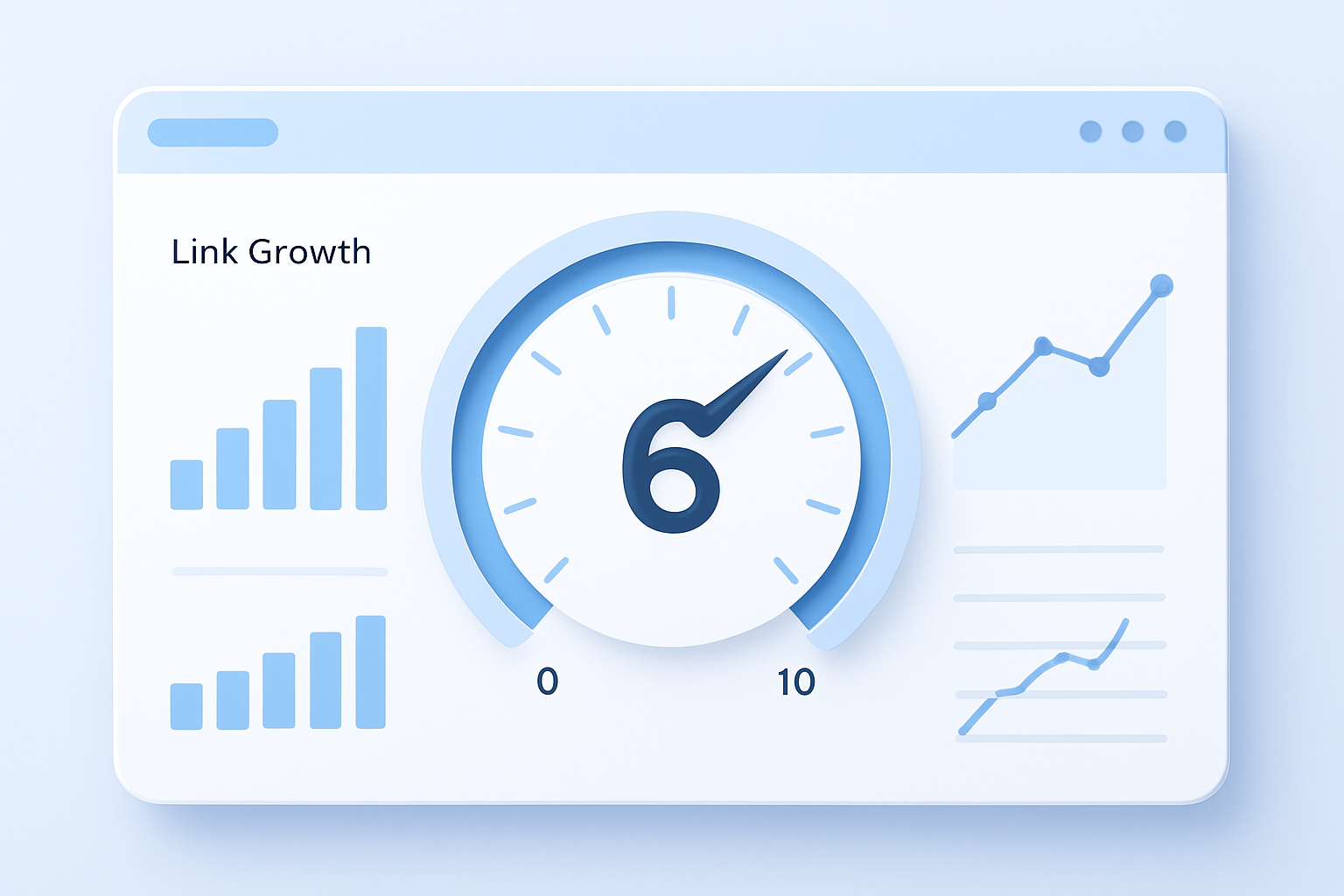
A visual representation of domain Moz rank scoring, showing how link authority accumulates over time on a 10-point scale. For a deeper walkthrough, see our Domain Authority Ahrefs: Complete Guide (2024).
How the Scoring Scale Works in Real Terms
Because the MozRank scale is logarithmic rather than linear, most websites cluster in the lower range. A score between 1 and 2 is common for brand-new or very small sites with few inbound links. Meanwhile, scores between 3 and 4 represent the average for established websites with a modest backlink profile.
Sites scoring 5 or above have typically invested significantly in link building or have earned substantial editorial coverage. Scores of 7 and higher are almost exclusively held by major institutional domains — think national newspapers, government portals, or globally recognized brands.
Additionally, it is worth noting that the score can fluctuate as Moz refreshes its link index. If high-authority sites linking to you drop a link or if new competitors earn more links, your score can shift accordingly. As a result, monitoring your score over time is more informative than any single snapshot.
MozRank vs. Domain Authority: Understanding the Difference
Many SEO practitioners use MozRank and Domain Authority (DA) interchangeably, but they measure slightly different things. MozRank focuses exclusively on the link profile — specifically the quality and quantity of backlinks. Domain Authority, in contrast, is a composite score that incorporates MozRank, MozTrust, linking root domains, and several additional signals.
In other words, Domain Authority is the broader, more holistic metric, while MozRank is a more targeted indicator of raw link equity. For link prospecting and competitive backlink analysis, MozRank often provides a cleaner, more direct signal.
Similarly, MozTrust is a related but distinct metric that measures how closely a domain is linked to trusted seed sites — such as .gov and .edu domains. A site can have a high MozRank from many popular links while still having a lower MozTrust if those links come from less authoritative sources.
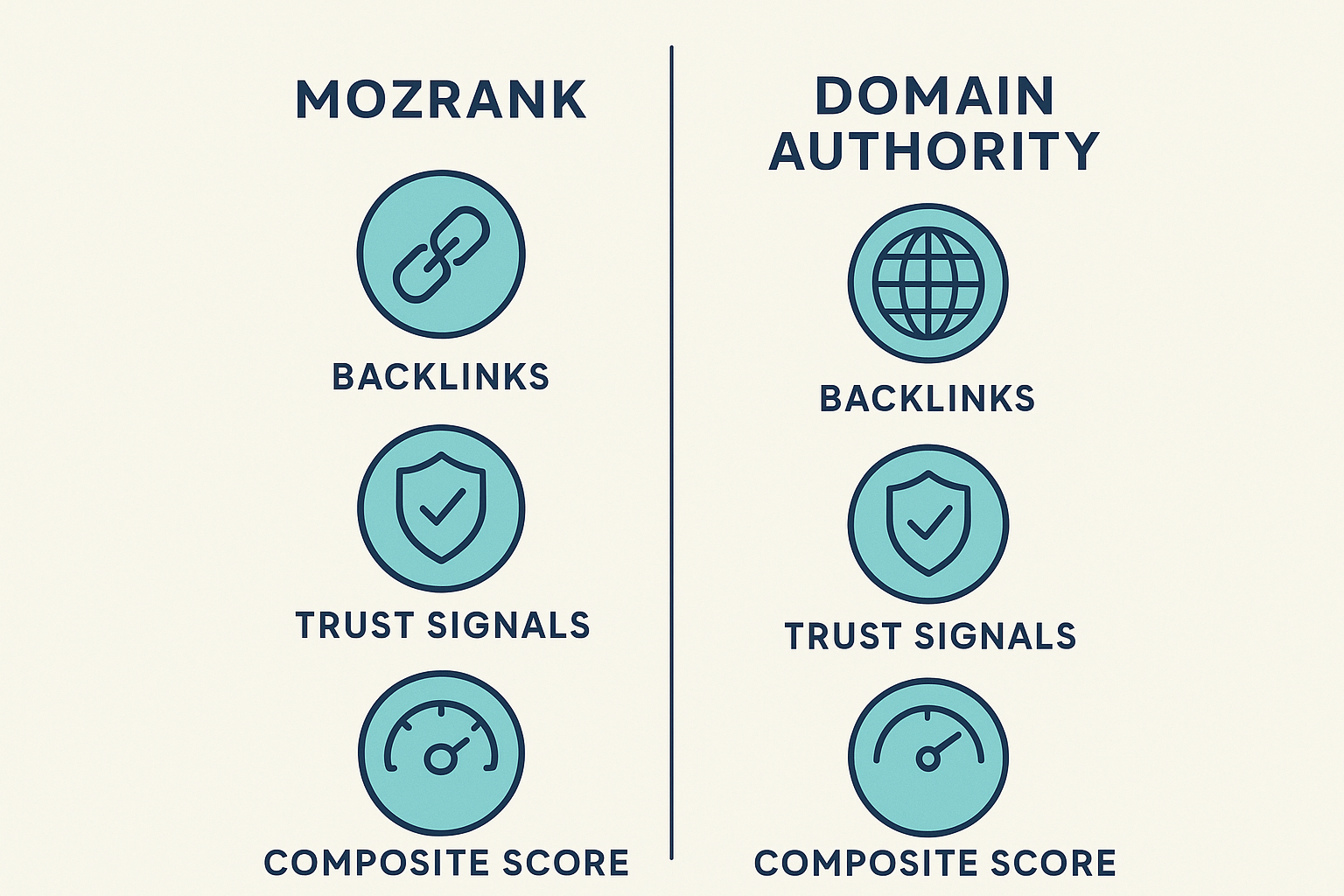
MozRank and Domain Authority measure related but distinct aspects of a site’s link profile and overall SEO strength.
Practical Steps to Improve Your Score
Improving your domain Moz rank requires a deliberate, quality-focused link-building strategy. The following steps outline a proven approach that works for sites at any stage of growth.
Step 1 — Audit Your Existing Backlink Profile
First, use Moz’s Link Explorer or a comparable tool to identify all domains currently linking to your site. Look for toxic or spammy links that may be diluting your score, and disavow them through Google’s Disavow Tool. A clean link profile is the foundation for sustainable MozRank growth.
Step 2 — Create Link-Worthy Content
Next, invest in producing original research, comprehensive guides, or data-driven articles that other websites naturally want to cite. Editorial links earned through genuinely useful content carry far more MozRank value than links acquired through low-quality directories or link exchanges. For additional guidance on building topical authority, resources like Rank Authority offer practical frameworks for content-driven link acquisition.
Step 3 — Pursue High-Authority Link Partnerships
Identify industry publications, relevant blogs, and authoritative directories where a link from your domain would be contextually appropriate. Outreach campaigns, guest posting on reputable sites, and digital PR efforts are all effective tactics. However, always prioritize relevance — a link from a topically related domain carries more weight than one from a high-DA site in an unrelated niche.
Step 4 — Monitor and Iterate Regularly
Finally, track your MozRank score monthly alongside metrics like linking root domains and spam score. Because the scale is logarithmic, progress may feel slow at first. Nevertheless, consistent effort compounds over time, and a structured tracking process helps you identify which link-building channels are delivering the best results. Tools like Rank Authority can help you maintain a clear view of your domain’s link health over time.
Common Mistakes That Stall Your Progress
Many site owners inadvertently plateau by focusing on link volume over link quality. Acquiring hundreds of links from low-authority or irrelevant domains adds minimal MozRank value and can actually attract spam score penalties. Instead, ten links from well-regarded, topically relevant sources will outperform a hundred from questionable directories.
Another common mistake is neglecting internal linking. Although MozRank is primarily influenced by external backlinks, a strong internal linking structure ensures that link equity flows efficiently throughout your site. As a result, pages deeper in your architecture can benefit from the authority your homepage accumulates.
Finally, many practitioners check their MozRank once and treat it as a fixed verdict. In reality, because Moz regularly crawls and recalculates its link index, your score is dynamic. Therefore, treating MozRank as an ongoing performance indicator — rather than a one-time audit result — leads to far better long-term outcomes.

Regular backlink audits are essential for maintaining a healthy link profile and steadily improving your domain’s link authority score.
Putting It All Together: Your Path Forward
Improving your domain Moz rank is ultimately a reflection of the quality and relevance of your link-building program. Because the metric is transparent and consistently measurable, it serves as a reliable compass for your SEO efforts over time.
Focus on earning links through excellent content, maintain a clean backlink profile, and pursue partnerships with genuinely authoritative domains in your niche. Additionally, pair MozRank monitoring with broader authority metrics like Domain Authority and referring domain counts to get a complete picture of your site’s competitive position.
In summary, domain Moz rank is not just a vanity number — it is a practical, actionable signal that, when tracked and improved consistently, correlates strongly with long-term organic search success.
Frequently Asked Questions About Domain Moz Rank
What is domain Moz rank?
Domain Moz rank is a logarithmic score from 1 to 10 developed by Moz that measures the link authority of a domain based on the quality and quantity of its inbound backlinks. A higher score indicates stronger link equity. It is widely used as a benchmark for comparing the relative link strength of competing websites.
How is MozRank calculated?
MozRank uses a link graph algorithm that evaluates both the number and quality of inbound links. High-authority links contribute more to the score than links from low-authority pages. The algorithm is conceptually similar to Google’s original PageRank system.
What is a good MozRank score?
A score of 3 to 4 is considered average for established websites. Scores of 5 and above reflect strong link authority, while scores of 7 or higher are typically held by major institutional or media domains. Because the scale is logarithmic, each additional point requires exponentially more link equity.
What is the difference between MozRank and Domain Authority?
MozRank focuses specifically on link quality and quantity, while Domain Authority is a broader composite metric that incorporates MozRank, MozTrust, linking root domains, and other signals. Domain Authority is generally the more comprehensive benchmark for overall SEO strength.
Does domain Moz rank directly affect Google rankings?
No, MozRank is a third-party metric not used directly by Google. However, because it measures backlink quality — a confirmed Google ranking factor — improvements in MozRank often correlate with better organic search performance. It is best treated as a proxy indicator rather than a direct ranking signal.
How can I check my domain Moz rank?
You can check it using Moz’s Link Explorer at moz.com or through third-party SEO platforms that integrate Moz data via API. Enter your domain URL and the tool will return your current MozRank alongside related metrics like spam score and linking root domains.
How long does it take to improve MozRank?
Improvement typically takes several weeks to several months depending on the quality and pace of your link-building efforts. Lower scores are easier to move quickly, while higher scores require significantly more high-quality links due to the logarithmic scale.
Can low-quality backlinks hurt my domain Moz rank?
Yes, spammy or irrelevant backlinks can dilute your MozRank and increase your spam score. Regular backlink audits and disavowing toxic links through Google’s Disavow Tool helps protect and improve your domain’s overall link health.
What types of links improve MozRank the most?
Editorial links from high-authority, topically relevant domains have the greatest positive impact. Links from reputable publications, trusted industry directories, and government or educational sites carry significantly more weight than links from unrelated or low-traffic websites.
Is MozRank still relevant in 2025?
Yes, MozRank remains a useful benchmarking tool, though many SEO professionals use it alongside Domain Authority and metrics from platforms like Ahrefs and Semrush. It is most valuable as one data point within a broader SEO analysis rather than as a standalone success metric.
What is the difference between MozRank and MozTrust?
MozRank measures the quantity and quality of all inbound links, while MozTrust evaluates proximity to trusted seed sites like government and university domains. A site can have a high MozRank but lower MozTrust if its links come from popular but less institutionally trusted sources.
How does content marketing help increase domain Moz rank?
Publishing high-quality, original content naturally attracts backlinks from sites that cite your work. Over time, these earned links accumulate and raise your MozRank by increasing both the number and authority of inbound links to your domain. This makes content marketing one of the most sustainable long-term strategies for improving link authority.

