

Generative Engine Optimization is the practice of structuring, writing, and signaling your content so that AI-powered search engines — such as Google AI Overviews, ChatGPT Search, and Perplexity AI — cite, quote, or summarize it in their generated responses. In short, it is SEO for the age of artificial intelligence.
Traditional search optimization gets you a blue link on a results page. However, AI answer engines increasingly skip that list entirely and synthesize a direct response from trusted sources. Therefore, if your content is not built for AI citation, you risk becoming invisible — even if you rank on page one.
According to a 2024 study published by researchers at Princeton, Georgia Tech, and IIT Delhi, certain content strategies — including adding statistics, citing authoritative sources, and using fluent, quotable language — can increase AI citation rates by up to 40%. That finding makes GEO one of the most urgent disciplines in digital marketing today.
What Is Generative Engine Optimization?
Generative Engine Optimization (GEO) is the discipline of making your web content the preferred source that large language models (LLMs) — AI systems trained on massive text datasets — draw from when constructing answers. Think of it as earning a citation in an AI’s response the same way you would earn a citation in an academic paper.
AI engines like Perplexity AI and Google AI Overviews do not simply rank pages. Instead, they read, interpret, and synthesize information from multiple sources into a single cohesive answer. Consequently, the content they favor is clear, factual, well-structured, and authoritative.
Furthermore, GEO is not a replacement for traditional SEO. Rather, it is a complementary layer that ensures your content performs well in both blue-link rankings and AI-generated responses simultaneously.

Generative Engine Optimization bridges the gap between traditional search rankings and AI-generated answer panels.
Why AI Search Optimization Is Changing Everything
Google’s AI Overviews now appear across billions of searches each month. Similarly, ChatGPT Search and Perplexity AI are growing rapidly, attracting users who prefer a synthesized answer over scrolling through ten blue links. As a result, the traffic model for many websites is shifting dramatically.
Sites that are cited inside AI answers often see increased brand awareness and qualified traffic — even when users do not click through. In contrast, sites that are ignored by AI engines may experience declining organic reach despite holding strong traditional rankings. This dynamic makes GEO a business-critical priority, not just a technical curiosity.
For a deeper look at how authority signals affect your visibility across both traditional and AI search, RankAuthority offers comprehensive resources on building the trust signals that matter most to modern search systems.
The Core Signals AI Engines Look For
AI models do not use a simple ranking algorithm. Instead, they evaluate content holistically. Specifically, they favor sources that demonstrate:
- Factual accuracy — verifiable claims supported by data or credible sources
- Clear structure — logical headings, short paragraphs, and direct answers near the top
- Topical authority — depth of coverage across a subject area, not just one page
- Quotability — sentences that can be extracted and used verbatim without losing meaning
- Trustworthiness signals — author credentials, outbound citations, and E-E-A-T alignment
How to Implement Generative Engine Optimization Step by Step
Implementing GEO effectively requires a deliberate, systematic approach. Below is a proven five-step process you can apply to new and existing content alike.
- Identify AI-targeted query types. Research the informational and question-based queries your audience asks AI engines. Use Google Search Console and Perplexity AI itself to discover how users phrase questions in your niche.
- Structure content with direct answers first. Place a concise, direct answer to the main query within the first 100 words. AI engines scan early content heavily when deciding what to cite.
- Add authoritative statistics and citations. Include specific data points and link to credible sources such as government sites, academic publications, or recognized industry reports. This strengthens credibility signals.
- Implement structured data markup. Add FAQPage, HowTo, and Article schema to your pages. This structured data — machine-readable code embedded in your HTML — helps AI systems parse and cite your content accurately.
- Build topical authority with supporting content. Create a cluster of related articles covering your topic in depth. AI engines favor sources that demonstrate comprehensive expertise across a subject area, not just isolated pages.
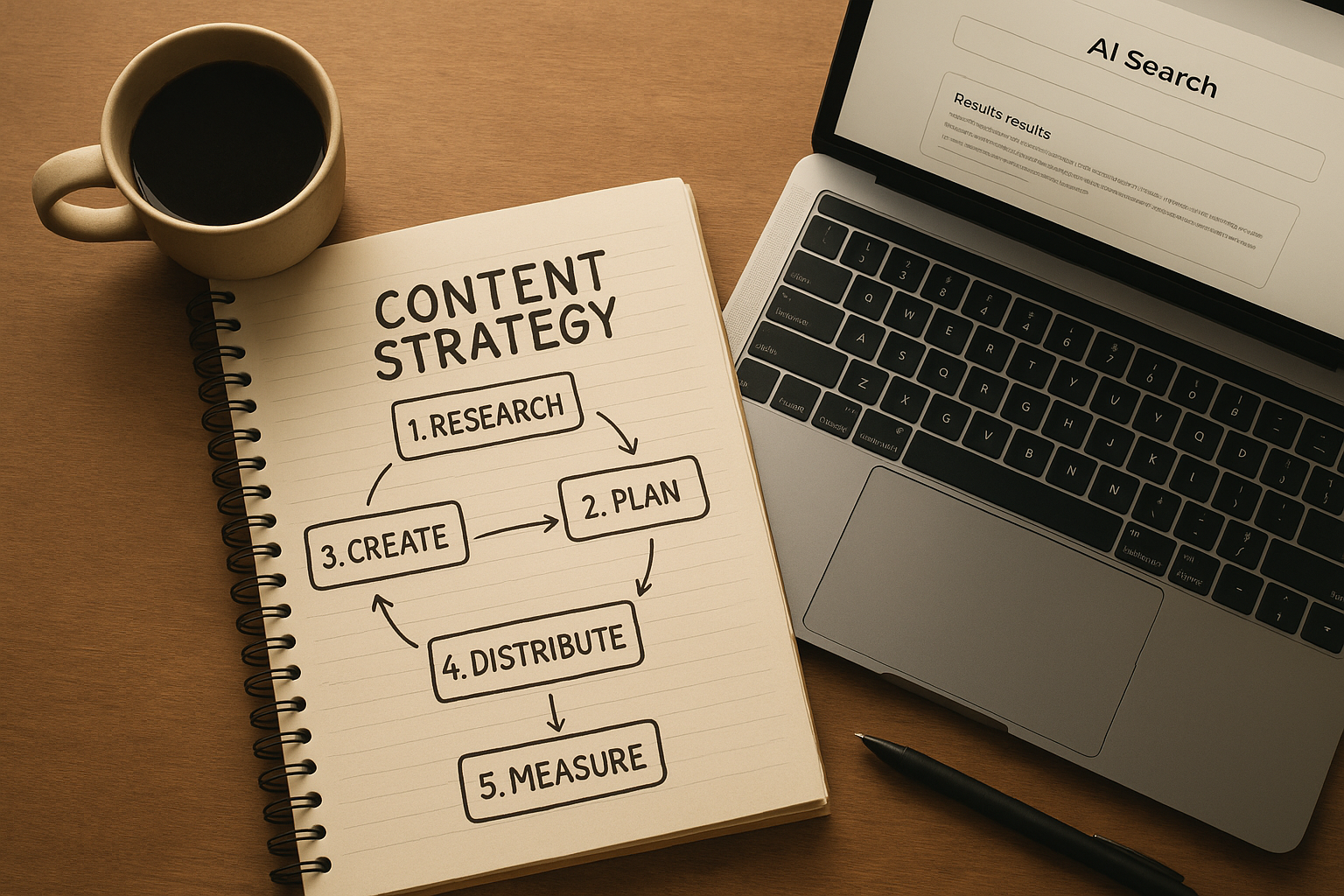
A structured content strategy is the foundation of effective AI search optimization.
Content Writing Tactics That Boost AI Citation Rates
Beyond structure, the way you write matters enormously for GEO. Specifically, AI models are trained to extract and reproduce high-quality, quotable text. Therefore, certain writing habits consistently outperform others.
Use Definitions and Direct Statements
Always define your core topic explicitly using the format “[term] is …”. AI engines are pattern-trained to recognize definitions and frequently pull them verbatim into generated answers. In addition, using plain language over jargon makes your definitions more likely to be selected.
Incorporate Specific Data Points
Vague claims are filtered out. Specific, sourced statistics, however, are highly citable. For example, instead of writing “many businesses use AI search,” write “over 40% of U.S. adults used an AI-powered search tool at least once in 2024, according to Pew Research Center.” Precision builds trust with both human readers and AI models.
Write Quotable, Self-Contained Sentences
Each key sentence should make sense on its own, without requiring the surrounding context to be understood. This is because AI engines often extract single sentences or short passages. Consequently, sentences that rely on pronouns like “it” or “they” without clear antecedents are less likely to be cited correctly.
Schema Markup and Technical GEO Signals
Technical signals remain important in Generative Engine Optimization, even though the focus shifts toward content quality. Schema markup — a form of structured data vocabulary defined by Schema.org — gives AI systems explicit machine-readable context about your content’s type, purpose, and entities.
For example, FAQPage schema signals that your content contains authoritative question-and-answer pairs. HowTo schema signals a step-by-step instructional process. Article schema provides authorship and publication metadata. Together, these signals help AI engines trust and parse your content more reliably.
Furthermore, page speed, mobile usability, and crawlability remain baseline requirements. An AI engine cannot cite content it cannot access. Therefore, ensure your technical SEO foundation is solid before layering GEO strategies on top. Resources at RankAuthority can help you audit both your technical and authority signals efficiently.
Building Topical Authority for Long-Term GEO Success
Single optimized pages are helpful, but topical authority — the depth and breadth of your expertise across a subject — is what drives sustained GEO performance. AI engines, similarly to human experts, trust sources that demonstrate consistent, comprehensive knowledge rather than isolated facts.
To build topical authority, create a content cluster: one comprehensive pillar page supported by multiple in-depth supporting articles. For example, a pillar page on GEO might link to supporting articles on AI schema markup, answer engine content writing, and AI citation tracking. This interconnected structure signals expertise to both traditional search engines and AI models.
In addition, earning mentions and links from authoritative external sources reinforces your site’s credibility. AI models are trained on web data, so sites that are frequently cited by trusted sources are more likely to be treated as trusted sources themselves. For more on building these authority signals, explore our guide on SEO authority building strategies.
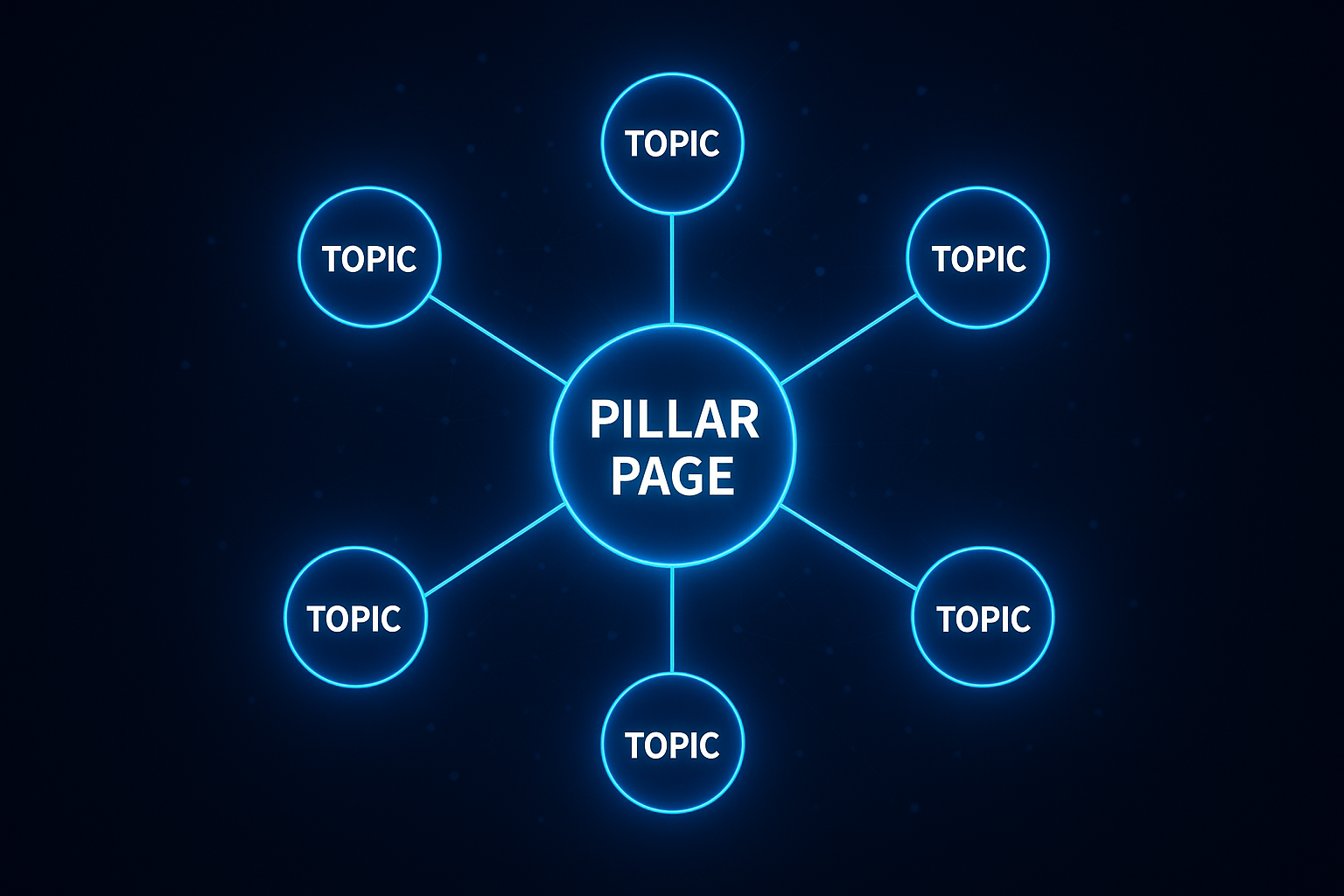
A well-structured content cluster signals deep topical authority to AI search engines.
Frequently Asked Questions About Generative Engine Optimization
What is Generative Engine Optimization?
Generative Engine Optimization (GEO) is the practice of structuring and writing content so that AI-powered search engines and answer engines cite, quote, or reference it in their generated responses. It targets large language models powering platforms like Google AI Overviews, ChatGPT, and Perplexity AI.
How is GEO different from traditional SEO?
Traditional SEO focuses on ranking in a list of blue links on a search results page. GEO focuses on getting your content cited or summarized inside AI-generated answers, which often appear above those traditional results.
Why does Generative Engine Optimization matter now?
AI-powered answer engines are rapidly replacing traditional search for many queries. Google’s AI Overviews now appear for billions of searches monthly, meaning content not optimized for AI citation may lose significant visibility and traffic.
Which AI search engines should I optimize for?
The most important platforms include Google AI Overviews, ChatGPT Search, Perplexity AI, and Microsoft Copilot. Each uses large language models to synthesize answers from web content, so GEO principles apply broadly across all of them.
What type of content performs best in AI-generated answers?
Content that is factual, clearly structured, and written in a direct question-and-answer format performs best. AI models favor content with specific statistics, step-by-step instructions, concise definitions, and authoritative citations.
Does structured data (schema markup) help with GEO?
Yes. Structured data like FAQPage, HowTo, and Article schema helps AI systems understand your content’s context and purpose. It increases the likelihood that your content is parsed and cited accurately in generated responses.
How long does it take to see results from GEO?
Results can vary widely. Some sites see AI citation improvements within weeks of publishing optimized content, while others take several months. Consistency, authority signals, and content quality all influence the timeline.
Can small websites compete in Generative Engine Optimization?
Yes. AI engines prioritize content quality, clarity, and topical authority over domain size alone. A focused, well-structured article from a smaller site can outperform a large site’s vague or poorly organized content in AI-generated answers.
What is E-E-A-T and how does it relate to GEO?
E-E-A-T stands for Experience, Expertise, Authoritativeness, and Trustworthiness — Google’s quality framework. AI models trained on web data inherit these preferences, so demonstrating E-E-A-T signals strongly supports GEO success.
Should I change my existing content for GEO?
Yes, auditing existing content is worthwhile. Add direct definitions, improve heading structure, insert relevant statistics, and add FAQ sections to pages targeting informational queries. These changes can significantly improve AI citation rates.
What common mistakes hurt GEO performance?
Common mistakes include writing vague introductions, burying key answers deep in content, using jargon without explanation, neglecting schema markup, and failing to cite credible sources. AI models reward clarity and authority above all.
Is keyword research still important for GEO?
Yes, but the focus shifts from exact-match keywords to topics, questions, and entities. Understanding what questions users ask AI engines — and structuring content to answer them directly — is the core of modern GEO keyword strategy. You can also explore our keyword research for AI search guide for deeper tactics.
Conclusion: Why Generative Engine Optimization Is Your Next Priority
Generative Engine Optimization is no longer a future concept — it is a present-day competitive necessity. As AI-powered answer engines reshape how billions of people find information, the sites that master GEO will capture visibility, trust, and traffic that traditional SEO alone cannot guarantee. By writing clear, factual, well-structured content, implementing schema markup, building topical authority, and citing credible sources, you give your content the best possible chance of being selected and cited by AI engines. Start applying these principles today, and position your site at the forefront of the AI search era.

