

If you want to improve online visibility SEO for your website, you need a plan that matches how people search today. Search behavior has changed a lot since five years ago. Online visibility means how often and how prominently your site appears when someone looks for what you offer. That visibility now includes featured snippets, local map packs, and AI-generated answers, not just classic blue links. A narrow, single-tactic approach leaves money on the table. This guide covers every layer of a modern visibility strategy in practical depth so you can act immediately instead of piecing together information from many tabs.
What It Really Means to Improve Online Visibility SEO
In simple terms, search engine optimization — often shortened to SEO — is the practice of shaping a website so that search engines can find it, understand it, and rank it above competing pages. According to Wikipedia’s overview of the discipline, SEO has evolved from a technical trick into a broad practice spanning content, user experience, and authority-building.
Consequently, to improve online visibility SEO means working on three interlocking pillars at once:
- Technical health — can search engines crawl, render, and index your pages without friction?
- Content quality — does your page actually answer the searcher’s question better than the alternatives?
- Authority signals — do other trusted sites, and increasingly AI systems, vouch for your content?
Google’s own documentation on how Search works confirms that hundreds of individual signals feed into ranking decisions. Therefore, chasing one isolated tactic rarely produces lasting results. A coordinated approach across all three pillars is what compounds over time.
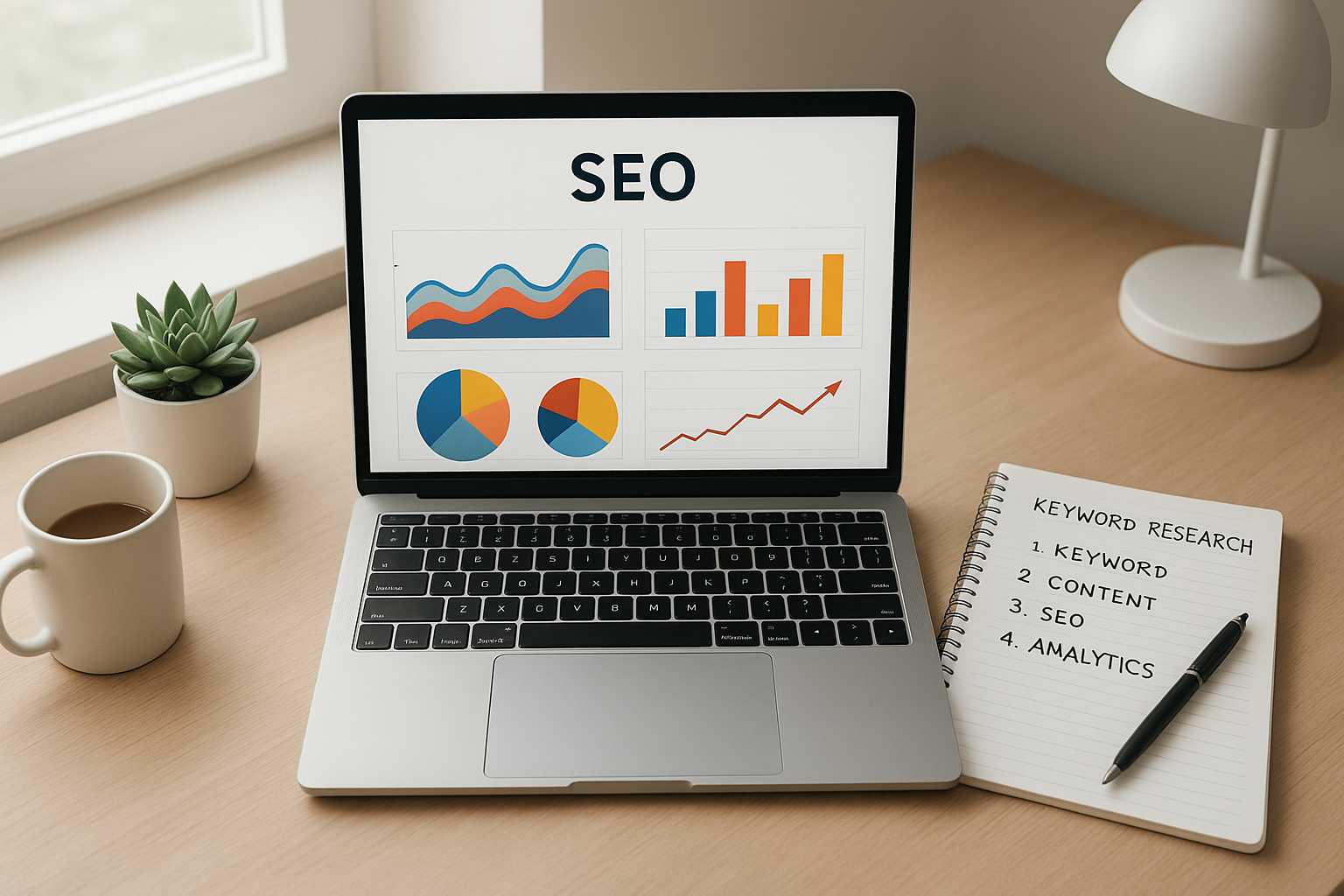
Tracking the right analytics dashboard regularly is one of the fastest ways to spot new opportunities to improve online visibility.
Why Search Visibility Now Decides Who Wins the Customer
Consider the numbers. Backlinko’s own click-through-rate research found that the first organic result captures roughly 27.6% of all clicks, while anything on page two collects less than 1%. In other words, the gap between rank one and rank ten is not cosmetic — it is a direct revenue gap.
Meanwhile, the battlefield has widened. AI overviews now sit above traditional results for many queries, pulling summaries from pages that search engines judge to be the most trustworthy. As a result, optimizing only for the “ten blue links” era leaves an entire new surface of visibility untouched.
For smaller companies, this shift is actually an advantage. Since AI answer engines reward clarity and directness over sheer domain size, a focused small business can outrank a much bigger competitor on specific questions. You can explore the best tools for improving online visibility for small businesses to find options that fit a modest budget.
The Complete Framework to Improve Online Visibility SEO, Step by Step
The steps below are ordered deliberately. Each one removes a blocker that would otherwise limit the impact of the steps that follow, so working through them in sequence produces faster, more compounding results.
- Run a full technical and content audit. Use Google Search Console and a crawler tool to uncover indexing errors, missing meta tags, broken links, and pages receiving zero impressions, since these issues silently cap every other effort you make.
- Research keywords around real user intent. Prioritize long-tail phrases of three or more words, such as “affordable plumber in Austin,” because they convert far better than broad single-word terms and face less competition.
- Optimize on-page elements for one primary keyword per page. Place the target phrase in the title tag, H1, opening paragraph, and at least one subheading, then write a meta description under 156 characters that clearly states the page’s value.
- Publish content that demonstrates real expertise. Answer the exact questions your audience is typing into search bars, back up claims with data or firsthand experience, and structure the page so both readers and AI systems can extract clear answers.
- Earn backlinks from genuinely relevant, trusted sites. Pursue guest posts, digital PR, and resource mentions on pages with real audience overlap, since one link from a respected source outweighs dozens from low-quality directories.
- Fix technical performance issues, especially Core Web Vitals. Compress images, eliminate render-blocking scripts, and confirm mobile responsiveness, because pages that fail these thresholds are held back in competitive results regardless of content quality.
- Extend your strategy to AI answer engines. Structure content with clear headings, direct answers, and structured data so it becomes eligible for AI overviews, featured snippets, and voice assistant results, not just traditional blue links.
- Measure results and iterate monthly. Track ranking movement, click-through rate, and organic traffic in Search Console and analytics, then redirect effort toward the pages and keywords showing the fastest growth potential.
Technical SEO: The Foundation You Cannot Skip
Technical SEO covers the behind-the-scenes work that lets search engines crawl and index your site efficiently. See best SEO strategies for an integrated approach. This includes page speed, mobile responsiveness, structured data markup (also called schema, a code layer that describes your content to machines), clean URL structures, and a secure connection through HTTPS.
Google’s Core Web Vitals measure loading speed, interactivity, and visual stability, and they influence rankings directly. Above all, pages that fail these thresholds get held back in competitive niches, no matter how strong the writing is. In short, technical debt quietly caps everything you build on top of it.

Search engine crawlers follow your internal links and code signals — making technical SEO the backbone of any visibility strategy.
Content Strategy: The Real Engine Behind Search Engine Visibility
Content is what attracts search traffic, earns backlinks naturally, and keeps visitors on the page long enough to convert. However, not all content performs equally. Thin, generic posts rarely rank, while pages that improve online search rankings tend to climb steadily.
If you want to compound your gains, pair on-site content with off-site brand building. See these proven ways to enhance brand visibility online for tactics that work alongside your SEO efforts rather than competing with them.
E-E-A-T Explained: What Google Actually Rewards
Search engines reward content that shows Experience, Expertise, Authoritativeness, and Trustworthiness — Google’s E-E-A-T framework. Practically, this means citing real data, showing firsthand experience where relevant, and keeping older pages updated so they stay accurate. Consequently, a content calendar should include revision passes, not just new publishing.
Using AI to Multiply Content Discoverability (GEO and AEO)
AI tools have changed how marketers approach optimization. Instead of guessing which topics to cover, AI-driven platforms analyze top-ranking competitors and surface concrete recommendations within seconds, which saves weeks of manual research. See SEO for AI-Driven Businesses for a detailed workflow and case studies.
Platforms such as rankauthority.com combine Generative Engine Optimization (GEO) and Answer Engine Optimization (AEO) into one automated workflow. GEO focuses on getting your content cited inside AI-generated answers, while AEO structures pages to win featured snippets and voice search results.
For a deeper breakdown of how these two techniques work together, see how to improve your online visibility using AI, which walks through the tools making the biggest difference right now.
Link Building: Earning the Authority Search Engines Trust
Backlinks remain one of the top three ranking factors in Google’s algorithm. Essentially, each quality backlink acts as a vote of confidence from another website, signaling that your content deserves recommendation.
Effective tactics include guest posting on authoritative industry sites, publishing linkable assets like original research or comprehensive guides, and earning coverage through digital PR. In addition, broken link building — finding dead links elsewhere and offering your content as the replacement — remains one of the most efficient, underused tactics available.
Similarly, internal linking distributes authority across your own site and clarifies structure for crawlers. As a rule of thumb, every new article should link to two or three relevant existing pages.
Local SEO: Visibility for Businesses With a Physical Presence
If your business serves a defined geographic area, local SEO deserves priority. According to Think with Google, 76% of people who search for something nearby on their phone visit a business within a day. Therefore, appearing in local map packs directly drives foot traffic.
The three highest-impact local actions are optimizing your Google Business Profile, collecting genuine customer reviews, and keeping NAP (Name, Address, Phone) details consistent across every directory that lists your business.
Mobile Experience and Core Web Vitals: The Silent Ranking Factors
Because Google indexes the mobile version of your site first, a clunky mobile layout limits visibility before a single word of content is even evaluated. Tap targets, font sizing, and layout shift all factor into the experience score.
Furthermore, slow-loading pages increase bounce rate, which indirectly signals poor relevance to search engines. In practice, compressing images, deferring non-critical scripts, and choosing lightweight hosting are the fastest ways to close this gap without a full redesign.
How to Measure and Track Your Online Visibility Gains
Improving rankings means little without a way to confirm progress. Consequently, set up tracking before you start optimizing so you have a clear before-and-after picture.
- Impressions and average position in Google Search Console show whether you are being seen, even before clicks happen.
- Organic traffic and conversion rate in your analytics platform reveal whether visibility is translating into real business value.
- Share of voice — the percentage of available clicks you capture for your target keywords compared to competitors — shows relative dominance over time.
- Backlink growth and referring domain count indicate whether your authority is compounding month over month.
Review these metrics monthly rather than daily. Search rankings fluctuate constantly in the short term, so judging progress over 30-day windows gives a far more accurate picture.
Quick Wins: Increasing Search Visibility Within Weeks
While SEO is fundamentally a long-term investment, several tactics produce visible movement within weeks. These include refreshing high-traffic pages with updated statistics, fixing broken internal links, compressing oversized images, and adding schema markup to eligible pages. For guidance on choosing tactics, see the best SEO strategy guide.
For a structured plan, see how to increase your online visibility quickly, or browse which tools help improve online visibility for businesses of every size.
💡 Direct Answer
To improve online visibility SEO, work on technical health, authoritative content, and quality backlinks at the same time — then extend that same discipline to AI answer engines through GEO and AEO. Automation platforms accelerate all of it by surfacing gaps competitors miss.
Common Mistakes That Quietly Kill Search Engine Visibility
Even strong content can underperform when basic mistakes go unnoticed. Watch for these patterns:
- Publishing thin or duplicate pages that offer no unique value over existing top results.
- Ignoring mobile layout issues that Google evaluates first, before desktop.
- Skipping structured data, which limits eligibility for rich results and AI citations.
- Letting older, once-strong pages go stale instead of refreshing them regularly.
- Chasing low-quality backlinks instead of a smaller number of genuinely relevant ones.
Frequently Asked Questions About Improving Online Visibility SEO
What does it mean to improve online visibility SEO?
To improve online visibility SEO means optimizing your site and content so search engines rank it higher, making it easier for potential customers to find you. It spans technical SEO, content strategy, link building, and AI-driven optimization.
How long does it take to see SEO results?
Most sites see measurable improvement within 3 to 6 months of consistent effort. Less competitive niches can show progress in as little as 4 to 8 weeks, while highly competitive markets may take longer.
What is the single most important ranking factor?
High-quality, relevant content remains the most important factor according to Google’s own guidelines. Paired with strong backlinks and solid technical SEO, it consistently drives the best long-term results.
How does AI help improve online visibility?
AI tools automate keyword research, content optimization, and technical audits far faster than manual methods. Platforms like rankauthority.com continuously monitor and adjust strategy, saving time and improving accuracy.
What is Generative Engine Optimization (GEO)?
GEO is the practice of optimizing content to appear inside AI-generated search answers, such as those produced by ChatGPT or Google AI Overviews. It extends traditional SEO into the next generation of search.
What is Answer Engine Optimization (AEO)?
AEO focuses on structuring content so it directly answers user questions, making it eligible for featured snippets and AI answer boxes. It prioritizes clear, concise responses to common queries.
Is local SEO important for small businesses?
Yes. Roughly 46% of all Google searches carry local intent. Optimizing your Google Business Profile, local citations, and location-based keywords can significantly increase foot traffic and leads.
Which free tools help track online visibility?
Google Search Console, Google Analytics, and Bing Webmaster Tools are strong free starting points. Ubersuggest and Ahrefs Webmaster Tools add free-tier keyword and backlink insights.
How do backlinks affect visibility?
Backlinks from authoritative sites signal trust and relevance, directly boosting rankings. A single high-quality backlink can outweigh dozens of low-quality ones.
What common mistakes hurt online visibility the most?
Ignoring mobile optimization, publishing thin content, neglecting page speed, and skipping backlink outreach are the most damaging, recurring mistakes seen across underperforming sites.
How often should content be updated for SEO?
Update key pages every 3 to 6 months to keep content fresh. High-traffic pages or those tied to fast-changing topics should be reviewed more often.
Does social media directly affect SEO rankings?
Not directly, but social media amplifies content reach, which can earn more backlinks and branded searches. Both of these indirectly strengthen SEO performance over time.
Conclusion: Turning SEO Into Lasting Online Visibility
Ultimately, to improve online visibility SEO for good, you need technical health, authoritative content, and link-earning working together — not in isolation. Furthermore, as AI search tools become mainstream, extending that same discipline to GEO and AEO formats is no longer optional; it is the present-day standard.
The encouraging part is that automation has made this far more achievable. Platforms like rankauthority.com combine traditional SEO with next-generation AI optimization in one accessible workflow, so your visibility keeps growing while you focus on running the business.
In short: audit first, target the right keywords, publish genuinely authoritative content, earn quality backlinks, and track your progress monthly. Follow this sequence consistently, and stronger rankings — along with the customers they bring — will follow. Last updated: 2026-07-30. Author: Rank Authority Editorial Team.

