

Real-time SEO tracking is the continuous, live monitoring of a website’s search engine performance metrics — including keyword rankings, organic traffic, crawl errors, and user engagement — as changes occur rather than on a delayed reporting schedule. In a search landscape where algorithm updates can shift rankings overnight, waiting weeks for a report is no longer acceptable. Last updated: July 2, 2026. Author: Rank Authority Editorial Team, experienced SEO practitioners. track website SEO progress.
For businesses of every size, understanding what is happening in search right now is the difference between staying competitive and falling behind. This guide explains how real-time SEO tracking works, why it matters, and how to implement it effectively. Last updated: 2026-07-02. Author: Rank Authority.
What Is Real-Time SEO Tracking?
Real-time SEO tracking is a method of collecting and displaying search performance data with minimal delay — often within minutes or hours of a change occurring. Traditional SEO reports, by contrast, typically aggregate data weekly or monthly, meaning critical issues can go undetected for far too long.
According to Wikipedia’s overview of SEO, search engine optimization involves improving a site’s visibility in organic search results. Real-time monitoring takes that goal further by giving practitioners the ability to respond to visibility changes the moment they happen.
In practice, real-time tracking covers several data streams simultaneously: keyword position changes, click-through rates, impressions, page speed signals, crawl errors, and backlink fluctuations. Together, these metrics create a living picture of your site’s search health.
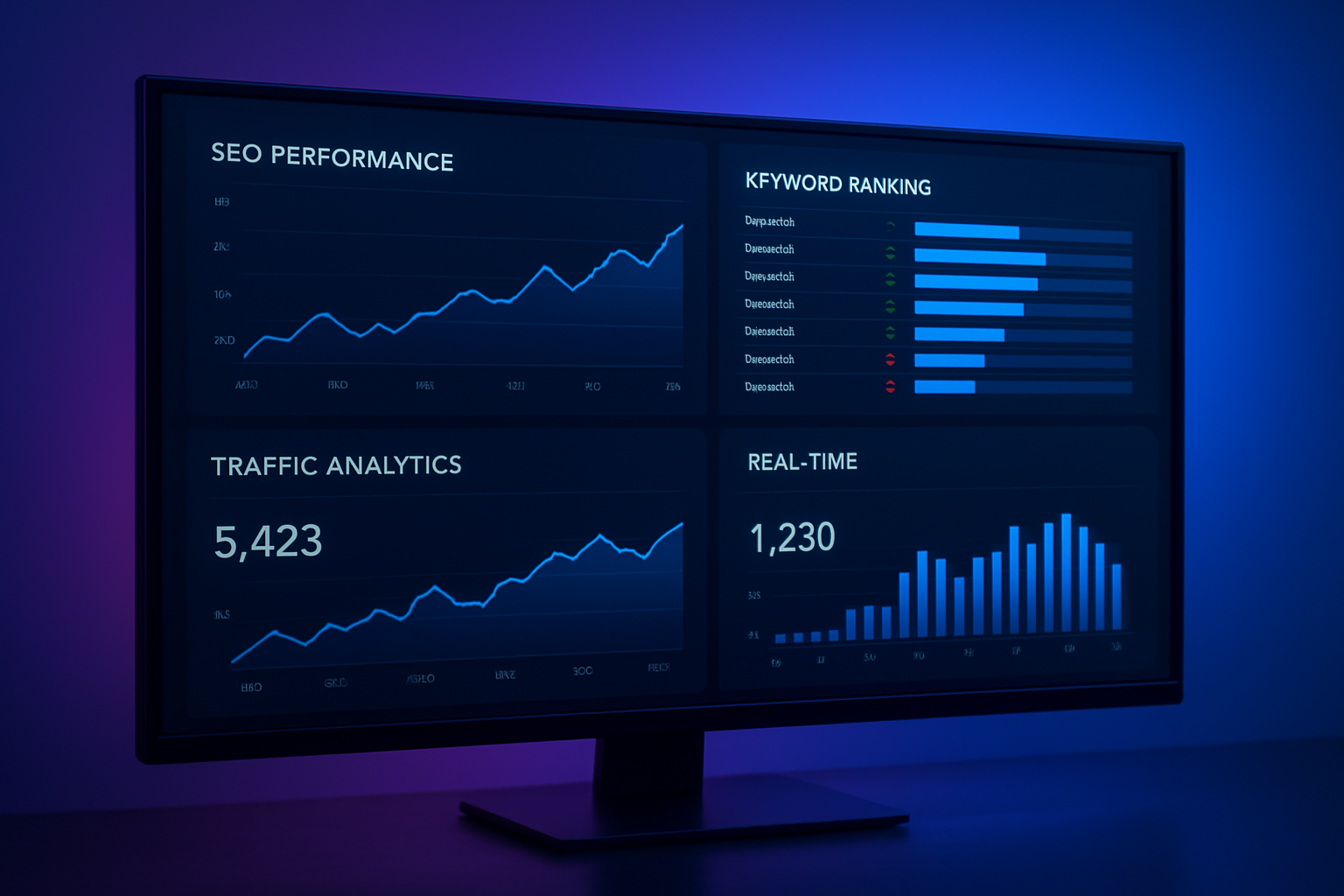
A live real-time SEO tracking dashboard helps teams spot ranking shifts and traffic changes instantly.
Why Live Search Monitoring Changes Everything
Google processes an estimated 8.5 billion searches per day, and its algorithm is updated thousands of times each year. As a result, even a small ranking drop can translate into significant traffic loss within hours. Therefore, monitoring your performance in real time is no longer a luxury — it is a strategic necessity.
Consider a scenario where a competitor publishes a stronger page targeting your primary keyword. Without live tracking, you might not notice the ranking drop for a week or more. With real-time monitoring, however, you receive an alert immediately and can begin your response the same day.
Furthermore, live monitoring is especially valuable during site migrations, major content updates, or after earning new backlinks. Each of these events can trigger rapid ranking changes — for better or worse — and real-time data lets you confirm outcomes quickly.
The Cost of Delayed SEO Data
Research from Semrush’s analysis of Google algorithm updates shows that sites detecting ranking drops within 24 hours recover significantly faster than those relying on weekly reports. Specifically, early detection allows teams to isolate affected pages, diagnose root causes, and deploy fixes before the traffic impact compounds.
In contrast, delayed data creates a lag between the problem and the solution. By the time a weekly report surfaces a ranking drop, the site may have already lost days of organic traffic. For e-commerce sites or lead-generation businesses, that delay can be costly.
Key Metrics to Monitor in Real Time
Effective real-time SEO tracking is not just about watching keyword positions. Instead, it requires a multi-signal approach that captures both performance and technical health simultaneously.
Core metrics to track in real time:
- Keyword rankings — position changes for target search terms
- Organic click-through rate (CTR) — percentage of impressions that result in clicks
- Organic impressions — how often your pages appear in search results
- Crawl errors — broken links, 404s, and indexing issues
- Core Web Vitals — page speed and user experience signals
- Backlink changes — new links gained or lost
- Bounce rate and session quality — engagement signals that influence rankings
For a deeper look at how to track SEO performance effectively across all these dimensions, the guide on tracking SEO performance effectively offers practical frameworks you can apply immediately.
How to Set Up Real-Time SEO Tracking
Setting up a live monitoring system does not have to be complicated. Follow these five steps to get started: track SEO performance.
- Connect Google Search Console and Google Analytics. Verify your site in Google Search Console and link it to your GA4 property. This unlocks unified organic performance data in one place.
- Define your target keywords and pages. Compile a focused list of priority search terms and the landing pages associated with them. Prioritize terms that drive revenue or leads.
- Choose a dedicated SEO tracking platform. Tools like Ahrefs, Semrush, or an automated solution such as rankauthority.com provide live dashboards with instant ranking alerts and AI-driven insights.
- Configure automated alerts. Set threshold-based notifications so you are alerted immediately when a keyword drops or rises beyond a defined range. This removes the need for constant manual checks and helps evaluate whether automated SEO investment is appropriate for scale.
- Review your live dashboard daily. Schedule at least one dedicated review each day to interpret trends, diagnose anomalies, and prioritize optimization actions based on the freshest data available.
Daily review of live SEO monitoring data helps teams act on insights before small issues become major setbacks.
Choosing the Right Tools for Continuous Rank Monitoring
Not all SEO tools offer the same depth of real-time data. Some update rankings daily; others refresh weekly. When selecting a platform, prioritize update frequency, alert capabilities, and integration with your existing analytics stack.
For a comprehensive breakdown of the leading options, the comparison of tools best for tracking SEO progress covers key features, pricing tiers, and use cases to help you make an informed choice.
Additionally, for agencies managing multiple client sites, the demands of real-time monitoring multiply quickly. In that context, automation becomes essential. Platforms built around AI-powered automation — like rankauthority.com — can simultaneously track dozens of properties, surface priority issues, and suggest fixes without requiring a team member to manually sift through data.
If you are managing multiple sites, the technical SEO monitoring guide for agencies provides a structured approach to scaling your tracking operations efficiently.
Automation and AI: The Future of Search Performance Tracking
Manual SEO monitoring has a ceiling. There are only so many dashboards a person can check before important signals get missed. Consequently, AI-driven automation is rapidly becoming the standard approach for serious SEO practitioners. automated SEO tools
Automated platforms continuously crawl your site, compare current performance against historical baselines, and surface anomalies that warrant attention. Moreover, they can identify patterns — such as recurring drops on certain days or after specific content changes — that would be nearly impossible to detect manually.
For those wondering whether automation can also accelerate results, the article on seeing quick results from SEO automation addresses realistic timelines and what to expect from AI-powered tools. Similarly, learning how to simplify your website’s SEO with automation can help you reduce manual workload while improving monitoring coverage.
Common Mistakes in Real-Time SEO Tracking
Even with the right tools in place, several mistakes can undermine the value of your monitoring efforts. Understanding these pitfalls helps you avoid them.
Watch out for these common tracking errors:
- Tracking too few keywords and missing long-tail opportunities
- Ignoring technical crawl errors in favor of ranking data alone
- Failing to set up alerts, leading to delayed issue discovery
- Confusing rank fluctuations with actual traffic trends
- Overlooking mobile vs. desktop ranking differences
- Not segmenting data by device, location, or search intent
Above all, the most costly mistake is treating SEO tracking as a passive activity. Real-time data is only valuable when it drives timely action. Therefore, pair your monitoring setup with a clear response protocol so your team knows exactly what to do when an alert fires.
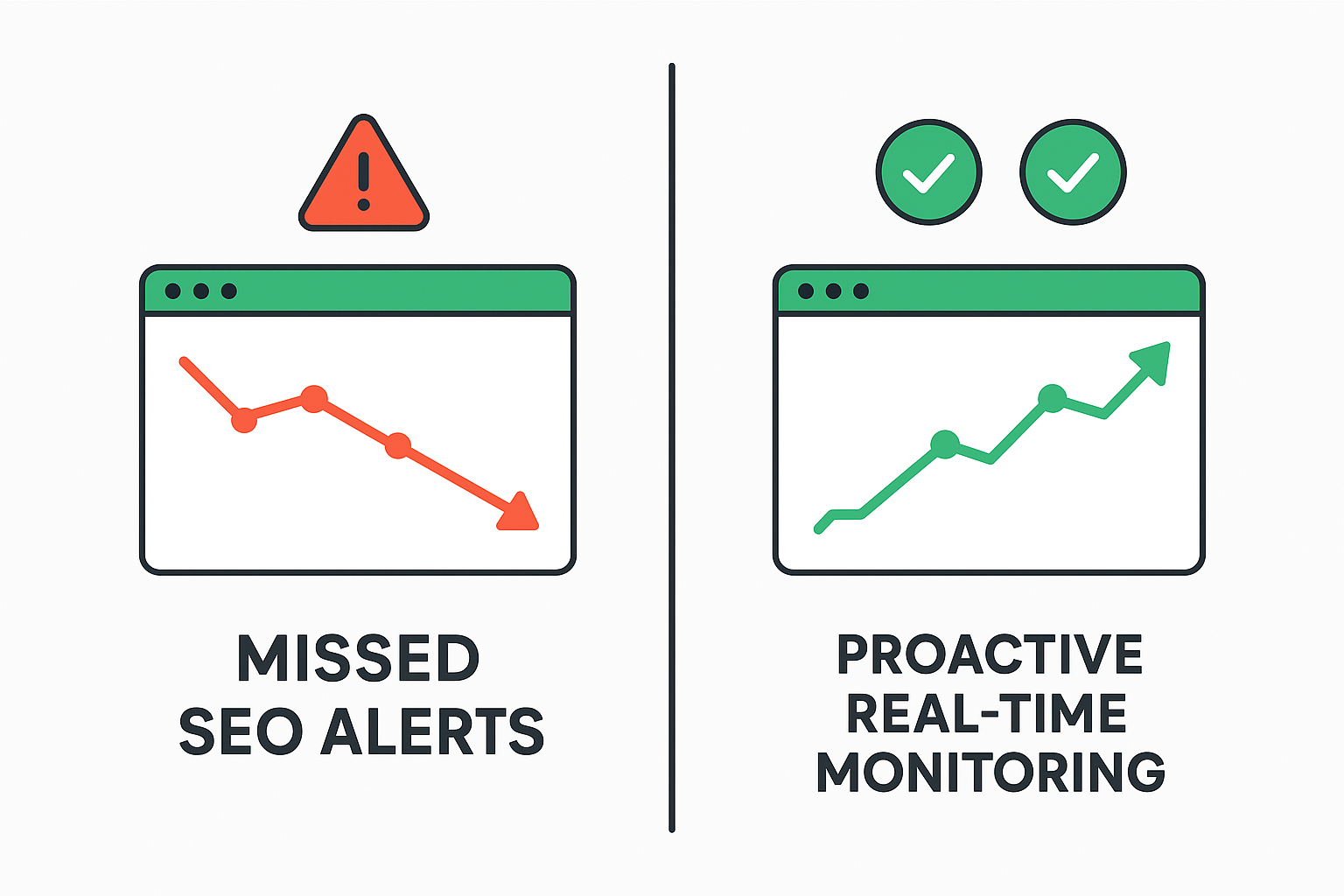
Proactive real-time SEO tracking consistently outperforms delayed reporting when it comes to protecting and growing organic traffic.
Frequently Asked Questions About Real-Time SEO Tracking
What is real-time SEO tracking?
Real-time SEO tracking is the continuous monitoring of a website’s search engine performance metrics as they happen, rather than on a delayed schedule. It includes live data on keyword rankings, organic traffic, crawl errors, and user behavior, enabling faster and more informed optimization decisions.
How does real-time SEO tracking differ from traditional SEO reporting?
Traditional SEO reporting aggregates data on a weekly or monthly basis, meaning critical issues can go undetected for days. Real-time tracking surfaces changes immediately, allowing teams to respond to ranking drops or algorithm updates before traffic losses escalate.
Which tools are best for real-time SEO tracking?
Google Search Console, Google Analytics 4, Ahrefs, and Semrush are among the most widely used tools for near-real-time SEO monitoring. Automated platforms like rankauthority.com also offer AI-driven tracking with instant alerts and automated insights.
How often should I check my SEO tracking data?
For most websites, a daily review of key metrics is sufficient. However, during site migrations, major content launches, or known algorithm update periods, checking data multiple times per day is strongly recommended to catch issues early.
What metrics should real-time SEO tracking include?
Core metrics include keyword rankings, organic click-through rates, impressions, crawl errors, page load speed (Core Web Vitals), and backlink changes. Together, these provide a comprehensive view of your site’s search health at any given moment.
Can real-time SEO tracking help recover from a Google algorithm update?
Yes. Real-time monitoring enables you to detect ranking drops the moment they occur, helping you isolate affected pages and begin recovery actions before traffic losses compound. Early detection is consistently linked to faster recovery times.
Is real-time SEO tracking useful for small businesses?
Absolutely. Small businesses benefit from knowing immediately when rankings shift so they can act quickly without wasting marketing budget. Automated platforms make real-time tracking accessible even without a dedicated SEO team or technical expertise.
What is the difference between rank tracking and SEO monitoring?
Rank tracking specifically measures where your pages appear in search results for target keywords. SEO monitoring is broader and encompasses technical site health, backlink profiles, traffic patterns, and user engagement signals — giving a fuller picture of overall search performance.
How does automation improve real-time SEO tracking?
Automation removes the need for manual data checks by continuously collecting and analyzing SEO signals in the background. It can trigger instant alerts and surface optimization recommendations without requiring constant human oversight, making monitoring scalable for any team size.
What are common mistakes in SEO performance monitoring?
Common mistakes include tracking too few keywords, ignoring technical crawl errors, relying solely on rankings without considering traffic quality, and failing to configure alerts for sudden changes. Each of these gaps can result in slow response times and avoidable ranking losses.
How long does it take to see results from improved SEO tracking?
Tracking itself does not directly improve rankings, but acting on the insights it surfaces can yield noticeable improvements within weeks. Faster issue detection typically leads to faster recovery and more consistent organic growth over time.
Does real-time SEO tracking work for AI-powered search engines?
Yes. Modern tracking platforms are evolving to monitor visibility within AI-generated search results and answer engines, not just traditional blue-link results. As AI search adoption grows, tracking your presence in these environments is increasingly important for sustained discoverability.
Conclusion: Make Real-Time SEO Tracking a Core Practice
Real-time SEO tracking is no longer an advanced tactic reserved for enterprise teams — it is a foundational practice for any business that depends on organic search traffic. By monitoring your keyword rankings, technical health, and user signals as they evolve, you gain the ability to protect your visibility, respond to algorithm changes, and capitalize on opportunities faster than competitors who rely on outdated reports.
The combination of the right tools, automated alerts, and a consistent review routine transforms SEO from a reactive discipline into a proactive growth strategy. Furthermore, as AI-powered search continues to reshape how consumers find information, having live visibility into your performance across both traditional and next-generation search environments becomes even more critical.
Whether you are just getting started or looking to scale your monitoring across multiple properties, platforms like rankauthority.com offer the automated intelligence needed to make real-time SEO tracking both accessible and actionable — without the steep learning curve. Start monitoring smarter, and your rankings will reflect it. Add an author byline and brief credentials here (name, role, 1–2 credentials). Last updated: 2026-08-14.

