

Intelligent SEO tools have become the deciding factor between websites that dominate search results and those that quietly sit on page three. These AI-powered platforms combine machine learning, natural language processing, and real-time data analysis to automate the technical and strategic work of ranking higher — in classic search engines and in the new wave of AI-driven answer engines. By 2025, intelligent SEO tools are no longer a luxury reserved for enterprise marketing teams; they are the baseline every competitive business needs.
Search behavior has shifted dramatically over the past two years. According to Statista, more than 27% of global internet users were already using AI-powered search tools by early 2024, and that figure keeps climbing. As a result, businesses that lean only on outdated SEO tactics are losing visibility fast, while those adopting intelligent SEO tools are pulling ahead in both traditional rankings and AI-generated answers.
What Are Intelligent SEO Tools, Exactly?
Intelligent SEO tools are software platforms that use machine learning, natural language processing (NLP — technology that lets software understand human language patterns), and AI-driven data analysis to automate and enhance search optimization. Unlike traditional SEO software, which hands you raw data and expects manual interpretation, these tools surface prioritized, ready-to-act recommendations automatically.
Furthermore, intelligent SEO tools adapt in real time to search engine algorithm changes, competitor movements, and shifting user intent signals. This makes them far more responsive than any spreadsheet-driven workflow. For a closer look at what separates good tools from great ones, explore this guide on the features of a good SEO tool.
How Intelligent SEO Tools Actually Analyze Your Website
Under the hood, these platforms crawl your site much like a search engine bot does, then layer machine learning models on top of that raw crawl data. Specifically, they score content for topical depth, compare heading structure against top-ranking pages, and flag technical issues such as slow load times or broken internal links. In particular, natural language processing models evaluate whether your phrasing matches how real users ask questions, which matters enormously now that voice search and conversational AI queries are mainstream.
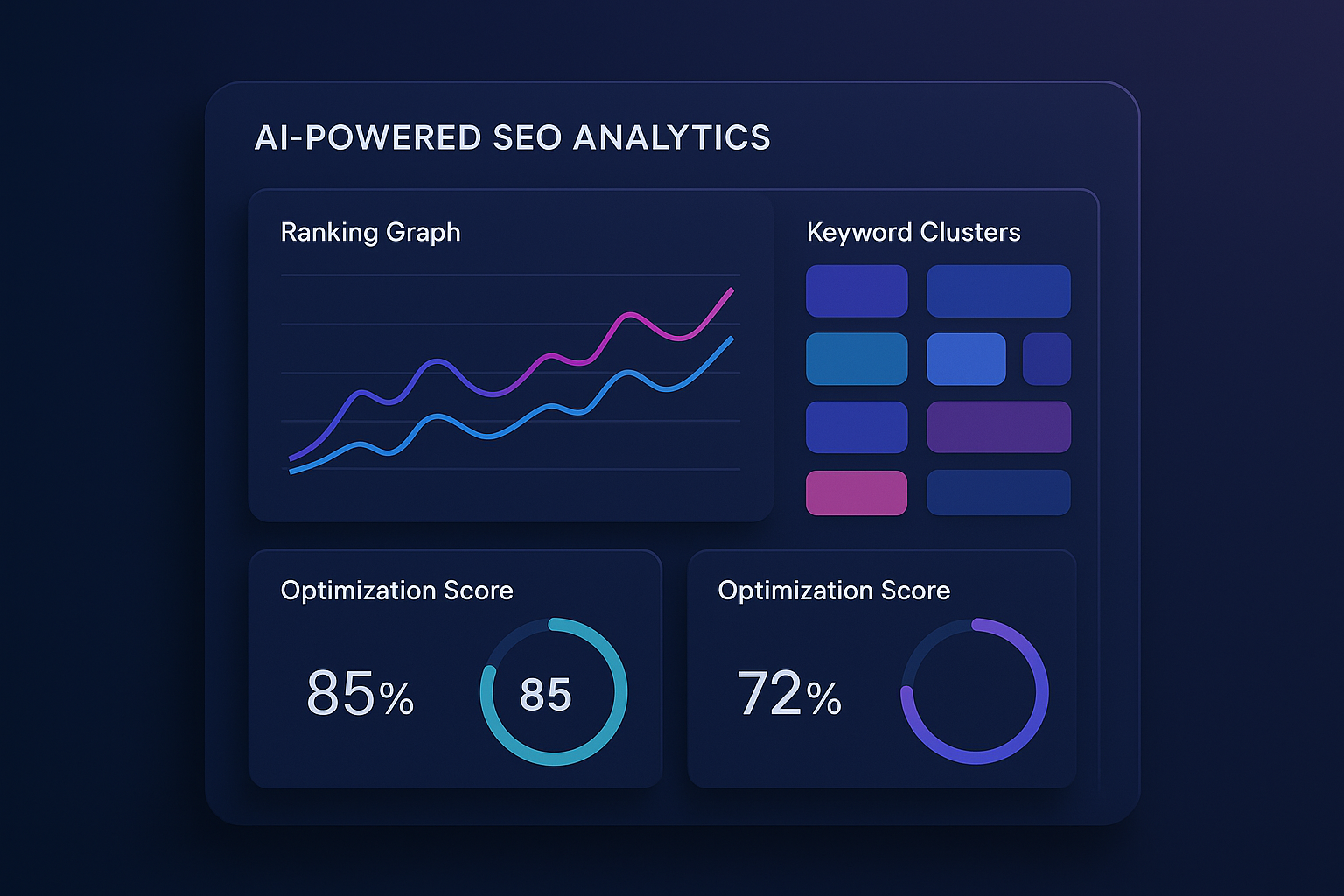
Modern intelligent SEO tools present complex ranking data in clear, actionable dashboards that guide optimization decisions.
Intelligent SEO Tools vs. Traditional SEO Software
It helps to see the difference side by side. In contrast to legacy toolsets that simply report numbers, AI-driven platforms interpret those numbers and tell you what to do next.
| Capability | Traditional SEO Software | Intelligent SEO Tools |
|---|---|---|
| Keyword research | Manual volume/CPC lists | AI-scored intent clusters, conversational queries |
| Technical audits | Periodic manual crawls | Continuous automated monitoring with alerts |
| Content guidance | Generic keyword density tips | Semantic gap analysis and answer-engine formatting |
| AI search readiness | Not supported | Built-in GEO and AEO optimization |
Why AI-Powered Search Optimization Matters Right Now
Google’s Search Generative Experience, along with platforms like ChatGPT and Perplexity, is reshaping how people find information. Consequently, businesses must optimize not just for blue-link results, but also for AI-generated answer summaries and conversational responses.
This shift has given rise to two critical disciplines. Generative Engine Optimization (GEO) is the practice of making content visible within AI-generated search responses. Answer Engine Optimization (AEO), meanwhile, focuses on structuring content so answer engines can extract and present it directly to users. Together, these approaches extend the reach of traditional SEO into next-generation search.
In practice, intelligent SEO tools handle both disciplines simultaneously. They analyze how AI search engines interpret content, identify gaps in semantic coverage, and recommend structural changes that improve discoverability across every search environment — not just Google’s classic results page.
The Core Advantage: Automation Without Sacrificing Quality
Traditionally, effective SEO required a team of specialists: technical auditors, keyword researchers, content strategists, and link builders. However, intelligent SEO tools consolidate these functions into a single automated workflow. As a result, small business owners and solo marketers can compete with larger organizations that have dedicated SEO departments.
Platforms like Rank Authority exemplify this approach, offering 1-Click AI AutoPilot technology that handles the technical complexity behind the scenes. The result is continuous optimization without a steep learning curve or a drained budget.

Intelligent SEO tools put enterprise-grade optimization capabilities within reach of individual business owners and small teams.
The Five Categories of AI SEO Platforms You Should Know
Not every intelligent SEO tool does the same job. Instead, the market has organized itself into five distinct categories, each solving a different piece of the optimization puzzle. Understanding these categories — rather than chasing individual brand names — helps you choose a platform that fits your actual needs.
| Category | What It Does | Best For |
|---|---|---|
| All-in-one AI SEO suites | Combines audits, keywords, content, and tracking | Small teams wanting one dashboard |
| AI content optimization engines | Scores and rewrites content for relevance | Content-heavy publishers and blogs |
| Technical SEO automation tools | Finds and fixes crawl and site-health issues | Large or complex websites |
| AI rank tracking and analytics | Monitors position changes and forecasts trends | Agencies reporting to clients |
| AI backlink intelligence tools | Evaluates link quality and outreach targets | Authority-building campaigns |
Well-known names such as Surfer SEO, Semrush, and Frase each specialize in one or two of these categories. In contrast, all-in-one platforms like Rank Authority aim to remove the guesswork by folding every category into a single automated workflow, which is particularly valuable for businesses that don’t have time to juggle five separate logins.
How to Get Started With Intelligent SEO Tools
Getting started is more straightforward than most businesses expect. Follow these five steps to build a strong, repeatable foundation.
- Audit your current SEO baseline. Run a full technical audit to identify crawl errors, page speed issues, broken links, and missing metadata, which gives you a clear starting point and reveals quick-win opportunities immediately.
- Conduct AI-powered keyword research. Use the tool’s AI engine to discover high-intent, low-competition keywords, including conversational queries that surface in AI search platforms like Perplexity and ChatGPT.
- Optimize existing content with AI recommendations. Apply semantic relevance improvements, readability enhancements, and answer-engine formatting to your top-performing and underperforming pages alike, rather than only your newest posts.
- Strengthen technical SEO and your backlink profile. Let the platform automatically flag Core Web Vitals problems and evaluate your link profile, then prioritize the fixes and outreach targets that carry the most ranking weight.
- Monitor rankings and adjust continuously. Set up automated rank tracking and performance alerts so you can respond quickly to algorithm updates, competitor movements, and emerging keyword opportunities as they appear.
For a comprehensive walkthrough of content-specific strategies, the complete guide to AI-based SEO content tools covers each phase in far greater detail.
Key Features That Define Powerful AI SEO Platforms
Not all tools are created equal. Specifically, the most effective intelligent SEO tools share several defining capabilities.
- Semantic keyword analysis: Goes beyond raw search volume to evaluate user intent, topic clusters, and conversational query patterns.
- Automated technical auditing: Continuously scans for crawlability issues, Core Web Vitals problems, and structured data errors.
- Content gap identification: Compares your content against top-ranking competitors to reveal missing topics and angles.
- GEO and AEO optimization: Structures content for AI-generated answer boxes, featured snippets, and conversational AI responses.
- Backlink intelligence: Monitors link profile health and identifies high-value link-building opportunities automatically.
- Unified reporting: Presents every metric that matters in one dashboard instead of five disconnected exports.
In addition, the best platforms integrate these features into a single workflow rather than forcing users to switch between disconnected tools. This integration is what truly separates intelligent SEO platforms from legacy software suites.
Content Optimization: Where AI Makes the Biggest Difference
Content remains the foundation of search visibility. However, creating content that satisfies both human readers and AI search algorithms requires a nuanced approach. Intelligent SEO tools analyze top-ranking content at a structural level, examining heading hierarchies, semantic keyword distribution, answer formatting, and entity coverage.
As a result, these tools can tell you not just what topics to cover, but precisely how to structure and phrase your content for maximum impact. For a deep dive into this area, the complete guide to AI tools for content optimization is an excellent next read.
Technical SEO Automation: Catching Problems Before They Cost You Rankings
Technical issues such as slow-loading pages, orphaned URLs, or malformed structured data quietly erode rankings long before anyone notices a traffic drop. Intelligent SEO tools run continuous background scans, in contrast to the quarterly manual audits many teams still rely on. Consequently, problems get flagged and often fixed within days rather than months.
Backlink Intelligence and Authority Building
Link quality still influences how search engines and AI models weigh authority signals. Therefore, AI-driven backlink monitoring flags toxic links, tracks competitor link velocity, and surfaces realistic outreach opportunities instead of vanity-metric wish lists.
Choosing the Right Intelligent SEO Platform for Your Business
Selecting the right tool depends on your business size, technical comfort level, and specific goals. For example, a solo entrepreneur needs a different solution than a digital agency managing fifty client websites. Therefore, it is worth evaluating platforms based on scalability, ease of use, and the depth of their AI capabilities.
According to Search Engine Journal, businesses that adopt AI-integrated SEO platforms see an average 30–50% reduction in time spent on routine optimization tasks. That time savings translates directly into faster publishing, quicker responses to algorithm changes, and ultimately stronger rankings.
Matching Tools to Business Size and Team Structure
Solo entrepreneurs generally benefit most from guided, all-in-one platforms that need little manual configuration. In contrast, agencies managing multiple client sites should prioritize tools with white-label reporting and multi-site dashboards. Meanwhile, mid-size in-house marketing teams often land somewhere between the two, needing both automation and granular control.
Furthermore, for business owners who want practical, jargon-free guidance on applying these tools effectively, the SEO secrets for business owners resource breaks down strategies that consistently drive results.
Risk-Free Evaluation: Why Trial Periods Matter
Before committing to any platform, it is worth taking advantage of trial periods. Rank Authority, for instance, offers a risk-free seven-day trial that lets users experience the full power of its AI AutoPilot technology without upfront commitment. This approach removes financial risk from the evaluation process and lets businesses verify results firsthand.
Similarly, if you want a curated comparison of leading options, the guide to the best tools for SEO in 2025 provides a well-researched overview of platforms worth considering.
Measuring ROI From Intelligent SEO Tools
Investing in intelligent SEO tools only makes sense if you can measure the payoff. Above all, track organic traffic growth month over month rather than obsessing over daily rank fluctuations, which are normal and often meaningless in isolation.
- Organic traffic growth: Compare sessions from search over rolling 90-day windows.
- Ranking movement for target keywords: Track average position, not just top-3 hits.
- Time saved on manual tasks: Log hours previously spent on audits and research.
- Conversion rate from organic visits: Confirm that increased traffic actually drives revenue.
Consequently, businesses that review these four metrics quarterly tend to make better decisions about which features to lean into and which to ignore.
Common Mistakes Businesses Make With Intelligent SEO Tools
Even the best AI-powered platform will underperform if used incorrectly. The most common mistake is treating recommendations as a one-time fix rather than an ongoing process, since search algorithms change constantly. Consequently, continuous monitoring and iterative optimization remain essential for sustained ranking improvements.
Another frequent error is ignoring brand voice while over-optimizing for AI scoring. In particular, content that reads as robotic may satisfy an algorithm’s checklist while failing to convert an actual human reader. Therefore, use AI recommendations as a framework, not a script to follow word for word.
Quick Answer: Intelligent SEO tools use AI and machine learning to automate keyword research, technical auditing, content optimization, and ranking analysis. They are designed to improve visibility in both traditional search engines and AI-powered platforms like Google AI Overviews, ChatGPT, and Perplexity, making them essential for competitive digital marketing in 2025.
Frequently Asked Questions About Intelligent SEO Tools
What are intelligent SEO tools?
Intelligent SEO tools are AI-powered platforms that automate keyword research, content optimization, technical audits, and ranking analysis. They use machine learning to surface actionable insights faster than manual methods, helping businesses improve search visibility with less effort.
How do intelligent SEO tools differ from traditional SEO software?
Traditional SEO software requires manual input and interpretation, while intelligent SEO tools use AI algorithms to automate analysis and recommendations. They adapt continuously to algorithm changes and emerging AI search environments like Google’s Search Generative Experience.
Can intelligent SEO tools help with AI-powered search engines?
Yes. Modern intelligent SEO tools are built to optimize content for both traditional search engines and AI-driven platforms like ChatGPT, Perplexity, and Google’s AI Overviews, using GEO and AEO strategies.
How much do intelligent SEO tools typically cost?
Costs vary widely, ranging from free tiers with limited features to enterprise plans exceeding $500 per month. Many platforms, including Rank Authority, offer risk-free trial periods so users can evaluate results before committing to a paid plan.
How long does it take to see results from intelligent SEO tools?
Most users notice measurable improvements in rankings and traffic within 4 to 12 weeks of consistent use. However, competitive niches may take longer, and results depend on content quality, domain authority, and how actively recommendations are implemented.
What features should I look for in an intelligent SEO tool?
Key features include automated keyword research, content gap analysis, technical SEO auditing, backlink monitoring, competitor tracking, and AI-generated content recommendations. Support for GEO and AEO is increasingly important as AI search grows.
Are intelligent SEO tools suitable for small businesses?
Absolutely. Many intelligent SEO tools are designed with non-technical users in mind, offering guided workflows and automation that reduce the need for deep SEO expertise. Platforms like Rank Authority specifically target small business owners and entrepreneurs.
What is the biggest mistake businesses make when using SEO tools?
The most common mistake is treating SEO tool recommendations as a one-time fix rather than an ongoing process. Search algorithms change constantly, so continuous monitoring and iterative optimization are essential for sustained ranking improvements.
Do intelligent SEO tools replace the need for an SEO expert?
They significantly reduce the need for deep technical expertise by automating complex tasks. However, strategic oversight, brand voice decisions, and creative content direction still benefit from human judgment alongside AI-powered tools.
How do intelligent SEO tools handle keyword research?
They analyze search volume, competition, user intent, and semantic relevance simultaneously using AI models. This allows them to surface high-opportunity keywords much faster than manual research, including long-tail and conversational queries used in AI search.
What is Generative Engine Optimization (GEO) and why does it matter?
GEO is the practice of optimizing content to appear in AI-generated search responses from platforms like ChatGPT and Google AI Overviews. It matters because AI-driven search is rapidly reshaping how consumers discover information, and traditional SEO tactics alone are no longer sufficient.
Can I use intelligent SEO tools to manage multiple websites?
Yes. Many enterprise and agency-tier platforms support multi-site management from a single dashboard, which is especially useful for digital marketing agencies managing SEO for multiple clients simultaneously.
What industries benefit most from intelligent SEO tools?
E-commerce, local services, SaaS, and content publishing tend to see the fastest gains because they rely heavily on organic discovery. That said, virtually any business with a website benefits from faster technical fixes and better-targeted content.
How do you measure ROI from intelligent SEO tools?
Track organic traffic growth, average keyword position, hours saved on manual audits, and conversion rate from organic visits on a quarterly basis. Together these four metrics show whether the tool is paying for itself.
Conclusion: Intelligent SEO Tools Are the New Competitive Baseline
The shift toward AI-powered search is not a future trend; it is the present reality. Intelligent SEO tools give businesses of every size the ability to compete effectively by automating complex optimization work, adapting to algorithm changes in real time, and extending visibility into the new generation of AI search platforms. Whether you run a solo consultancy or an agency managing dozens of client sites, adopting intelligent SEO tools in 2025 is one of the highest-leverage investments you can make in your digital presence. Above all, the businesses that act now will build the search authority that sustains them as AI continues to reshape how the world finds information online.

