

LLM visibility monitoring is the ongoing process of tracking how large language models (LLMs) — the AI systems behind tools like ChatGPT, Google AI Overviews, and Perplexity — mention, cite, or recommend your brand when people ask related questions. As AI-powered search reshapes how consumers find information, understanding this kind of visibility has become just as important as watching traditional search engine rankings.
Direct answer: LLM visibility monitoring tracks whether, how often, and how accurately AI answer engines cite a business in response to user questions. It combines automated scanning, citation tracking, and reporting so businesses can see their standing across both AI search and traditional search in one place.
Consequently, businesses that ignore this shift risk becoming invisible to a growing segment of searchers who now ask an AI assistant instead of typing a query into Google. In addition, agencies managing multiple client sites need a reliable way to prove visibility gains across both traditional and AI-driven channels.
What Is LLM Visibility Monitoring?
LLM visibility monitoring is the practice of checking, on a recurring basis, whether an AI model surfaces your brand name, products, or content when answering relevant prompts. Unlike a single manual search, this process repeats the check across multiple AI platforms and prompt variations to build a reliable picture over time.
For example, a local bakery might ask: does ChatGPT recommend us when someone requests “best bakery near me”? Similarly, a software company might track whether Perplexity cites its documentation when users ask comparison questions. Because AI platforms update their training data and retrieval methods frequently, a one-time check is not enough — monitoring needs to be continuous.
Furthermore, this discipline sits alongside two related practices: Generative Engine Optimization (GEO), which focuses on creating content specifically designed for AI citation, and Answer Engine Optimization (AEO), which structures answers and schema so they are easier for AI systems to extract. Monitoring tells you whether those efforts are working.
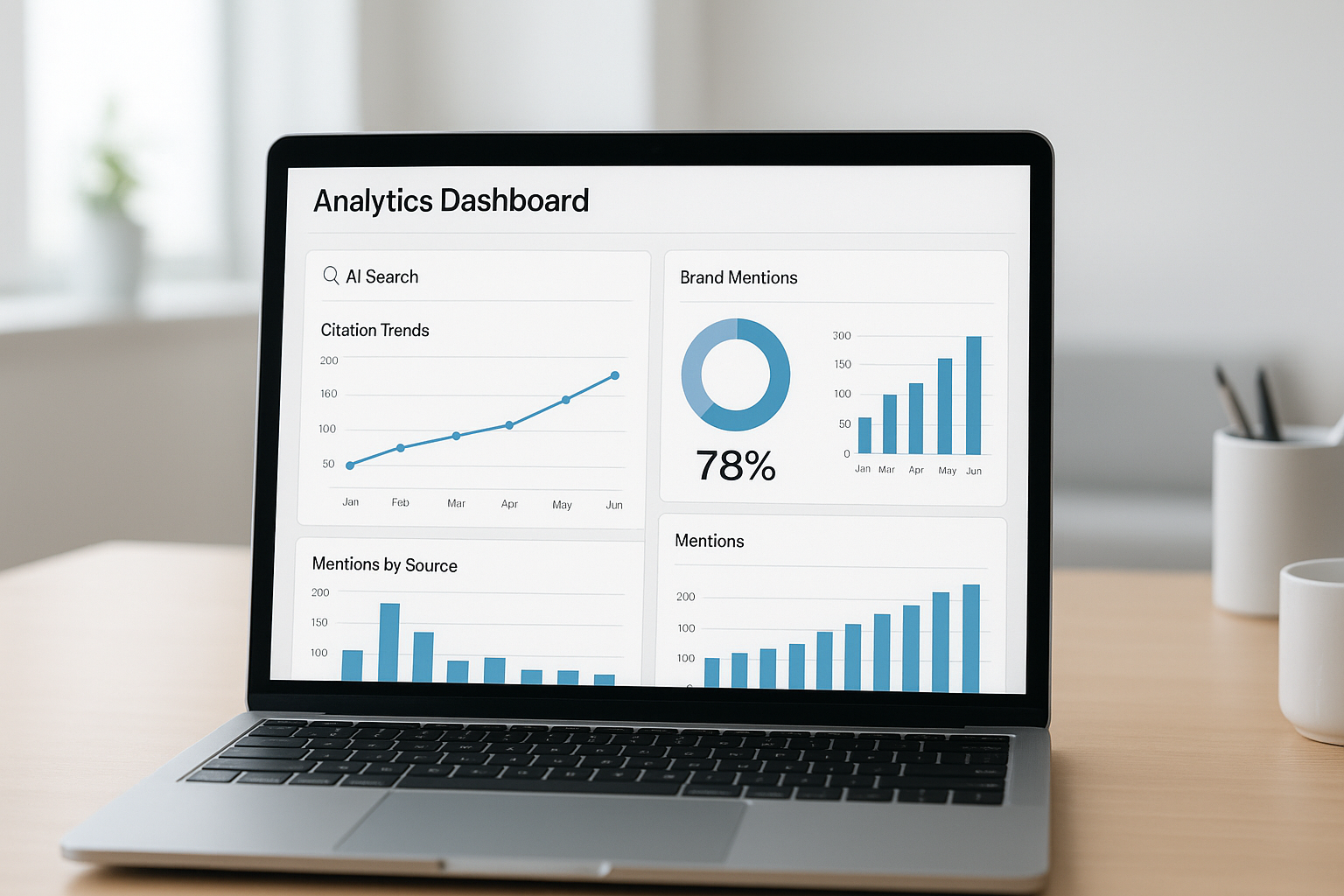
LLM visibility monitoring dashboards track citation trends across multiple AI platforms in one view.
Why AI Search Monitoring Matters Now
The shift toward AI-mediated search is not a minor trend. Gartner, a widely cited research firm, has projected that traditional search engine volume could drop by roughly 25% by 2026 as users increasingly rely on AI chatbots and virtual agents for answers. As a result, a brand that ranks well on Google but never appears in AI answers is already losing a meaningful share of discovery opportunities.
Moreover, AI answer engines often summarize information from only a handful of sources per query. If a competitor is cited instead of your business, that visibility gap compounds every time a relevant question is asked. Therefore, tracking large language model citations is no longer optional for businesses that depend on organic discovery.
In particular, agencies face added pressure to prove value across both channels. Many now rely on structured AI search performance reporting to show clients exactly where their visibility stands and how it is changing month over month.
How to Set Up LLM Visibility Monitoring: A Step-by-Step Process
Setting up a reliable monitoring process does not require deep technical expertise. However, it does require consistency. Below is a practical sequence businesses can follow.
- Identify target AI platforms. List the AI answer engines most relevant to your audience, such as ChatGPT, Google AI Overviews, Perplexity, and Copilot, since each platform sources and ranks citations differently.
- Establish a baseline. Run a diagnostic scan using a tool such as an AI Visibility Checker to document current citation frequency, accuracy, and competitor mentions before making changes.
- Deploy structured data. Add or update schema markup (structured code that helps machines read your content) across key pages so AI systems can more easily extract accurate business details.
- Track citations on a recurring schedule. Set up automated or weekly manual checks to record how often your brand appears in AI-generated answers and whether competitors are gaining ground.
- Adjust content based on findings. Update underperforming pages, add clarifying answer-style content, and resubmit important pages for indexing when monitoring reveals visibility gaps. Note that Rank Authority can submit pages for indexing, but Google alone determines whether and when a page is indexed.
Similarly, this process pairs well with broader automated SEO monitoring, since traditional ranking signals and AI citations often influence each other.
Key Metrics to Track in AI Answer Monitoring
Not every data point carries equal weight. In particular, four metrics tend to matter most when evaluating AI answer monitoring results.
- Citation frequency: how often your brand appears across a set of relevant prompts.
- Accuracy: whether the AI correctly describes your products, pricing, or services.
- Share of voice: how your citation rate compares to direct competitors on the same prompts.
- Sentiment: whether the tone of the mention is neutral, positive, or unfavorable.
Consequently, tracking these metrics over time — rather than as a single snapshot — reveals whether GEO and AEO efforts are actually moving the needle. This mirrors the logic behind real-time SEO tracking, where trend lines matter more than isolated data points.

Reviewing citation trends regularly helps businesses catch AI visibility drops early.
LLM Visibility Monitoring vs. Traditional SEO Monitoring
Traditional search engine optimization monitoring focuses on keyword position, backlinks, and page speed within classic search results pages. LLM visibility monitoring, by contrast, measures presence inside generated answers, which may draw from different sources entirely than those ranking on page one of Google.
That said, the two disciplines are complementary rather than competing. Strong technical SEO and clean schema.org structured data often improve a page’s odds of being parsed correctly by AI crawlers as well. As a result, businesses that invest in both tend to see steadier visibility across the full search landscape.
Best Practices for Monitoring AI Citations
First, monitor multiple prompt variations rather than a single phrase, since AI answers can shift based on wording. Second, compare results against direct competitors so gaps become visible early. Third, document every change made to content or schema alongside monitoring data, which makes it easier to connect cause and effect.
In addition, many businesses combine monitoring with automated tools rather than manual checks, since manually querying multiple AI platforms across dozens of prompts is time-consuming. Platforms such as Rank Authority centralize this work through its AI Visibility Checker and ongoing citation tracking, paired with 1-Click AI AutoPilot for applying fixes once gaps are identified. For a broader comparison of available options, see this overview of tools for content optimization and visibility.
Finally, pair monitoring with a full technical review. A detailed AI visibility audit often uncovers structural issues — missing schema, thin content, weak internal linking — that quietly suppress AI citations even when traditional rankings look healthy. Individual results vary, and ongoing monitoring is the only reliable way to confirm whether fixes are working.
Common Mistakes in LLM Citation Tracking
One frequent mistake is checking only one AI platform and assuming the results apply everywhere. However, ChatGPT, Perplexity, and Google AI Overviews each pull from different sources and update on different schedules. Another common error is treating a single good result as proof of lasting visibility, when in reality AI answers can change from week to week.
Likewise, some businesses optimize content for AI citation but skip structured data entirely, which makes it harder for AI crawlers to verify key facts. Addressing both content and technical signals together tends to produce more consistent results than focusing on either alone.
Frequently Asked Questions
What is LLM visibility monitoring?
LLM visibility monitoring is the process of tracking how often and how accurately AI chatbots and answer engines mention, cite, or recommend a business when users ask related questions. It helps businesses understand their presence in AI-generated answers, not just traditional search results.
How does LLM visibility monitoring differ from traditional SEO tracking?
Traditional SEO tracking focuses on keyword rankings in search engine results pages, while LLM visibility monitoring tracks whether a brand appears inside AI-generated answers from tools like ChatGPT or Google AI Overviews. Both matter, but they measure different discovery paths.
Which AI platforms should you monitor for visibility?
Most businesses should monitor ChatGPT, Google AI Overviews, Perplexity, and Microsoft Copilot, since these platforms drive the largest share of AI-assisted search traffic. Additional platforms can be added as their user bases grow.
How often should you check LLM visibility monitoring data?
Checking AI visibility data weekly is typically sufficient for most small businesses, while agencies managing multiple clients often review it daily. Frequent monitoring helps catch citation drops before they affect lead flow.
What metrics matter most in AI visibility tracking?
Key metrics include citation frequency, answer accuracy, competitor share of voice, and sentiment of the mention. Tracking these over time reveals whether optimization efforts are improving AI search presence.
How much does LLM visibility monitoring cost?
Costs vary widely, from free diagnostic tools that offer a basic snapshot to paid platforms with continuous monitoring and reporting. Rank Authority offers a free AI Visibility Checker along with a seven-day trial of its full monitoring suite.
Can small businesses benefit from monitoring AI citations?
Yes, small businesses often benefit the most because AI answer engines can level the playing field against larger competitors with bigger ad budgets. Monitoring citations helps small businesses find and fix visibility gaps quickly.
What is the biggest mistake businesses make with AI visibility?
The most common mistake is ignoring AI answer engines entirely and focusing only on traditional keyword rankings. This leaves businesses unaware when AI platforms misrepresent, omit, or cite competitors instead of them.
Does LLM visibility monitoring guarantee higher AI citations?
No monitoring tool can guarantee specific citation outcomes, since AI platforms control how and when content is surfaced. Individual results vary, and monitoring should be paired with ongoing content and schema improvements for the best chance of gains.
How does schema markup affect LLM visibility monitoring results?
Structured data such as schema markup helps AI systems parse and understand page content more reliably, which can support more accurate citations. Monitoring results often improve when schema is deployed alongside clear, well-organized content.
What tools can automate LLM visibility monitoring?
Platforms like Rank Authority automate AI visibility tracking through tools such as the AI Visibility Checker, Site Audit Checker, and continuous citation monitoring dashboards. Automation reduces the manual effort of checking multiple AI platforms individually.
How long does it take to see results from AI visibility optimization?
Many businesses begin noticing shifts in AI citation patterns within a few weeks of structured optimization, though timelines vary based on site history and competition. Individual results vary, and consistent monitoring is needed to confirm sustained improvement.
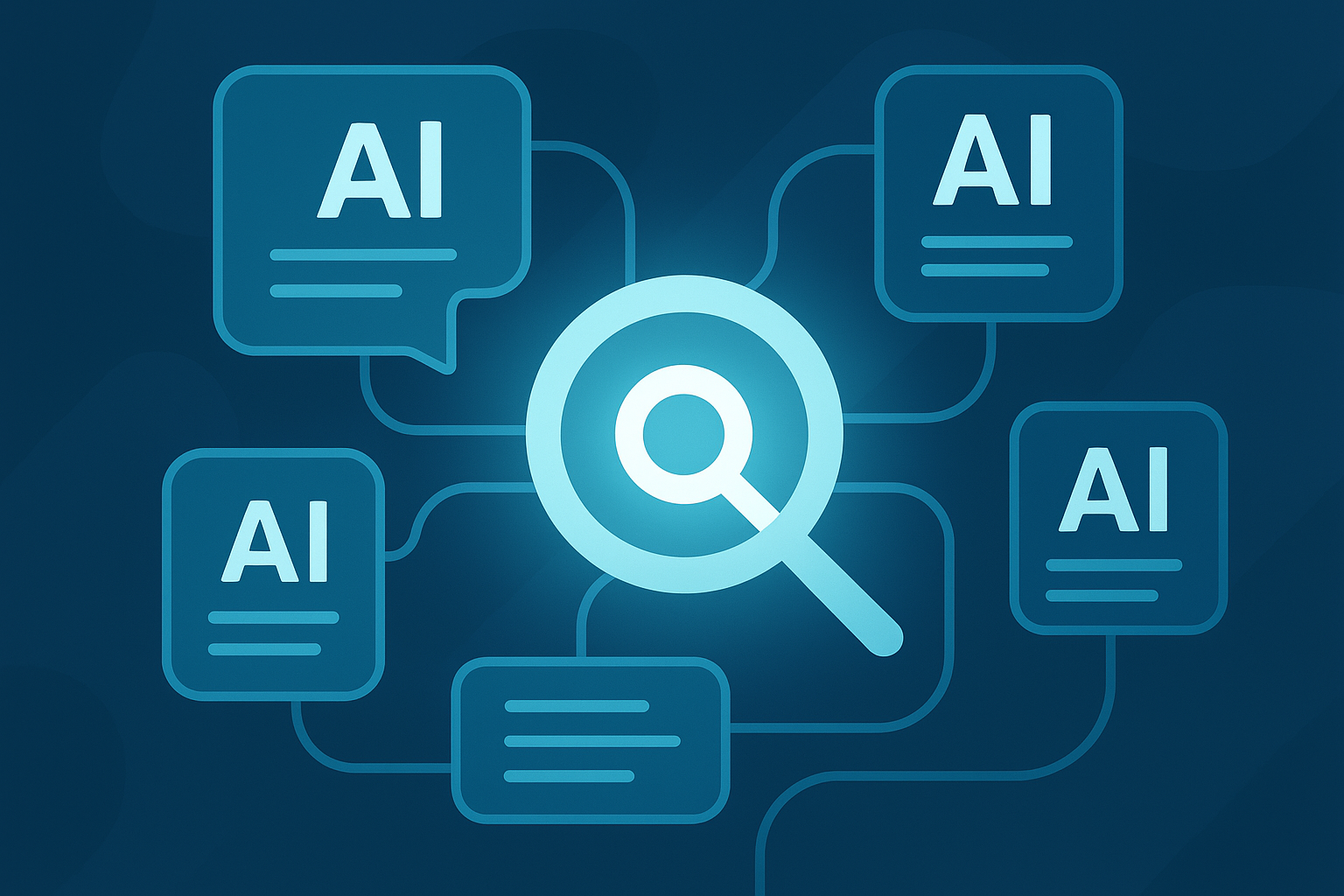
LLM visibility monitoring connects data from several AI platforms into one visibility picture.
Bringing It All Together
In summary, LLM visibility monitoring gives businesses a clear view of how AI answer engines represent them, a view that traditional rank tracking alone cannot provide. By combining baseline diagnostics, structured data, recurring checks, and content adjustments, businesses can respond quickly when citations drop or competitors gain ground. As AI search continues to grow alongside traditional search, treating LLM visibility monitoring as a core, ongoing practice — rather than an occasional check — positions a brand to stay discoverable wherever its customers are asking questions. Explore Rank Authority to see how automated monitoring, GEO, and AEO tools can work together on one dashboard.

