

Search visibility AI tools help brands understand exactly how well their content performs across Google, Bing, and AI-driven answer engines like ChatGPT, Perplexity, and Google’s AI Overviews. As a result, marketers no longer rely on rankings alone; they also need to know whether AI systems are citing their pages at all. In particular, these platforms combine traditional SEO tracking with newer Generative Engine Optimization (GEO) and Answer Engine Optimization (AEO) monitoring. This guide explains what these tools do, how to choose one, and how to put the technology to work quickly.
Quick answer: Search visibility AI tools are platforms that track, analyze, and improve how a website appears in both classic search results and AI-generated answers. They combine rank tracking, schema markup automation, and AI citation monitoring into a single dashboard.
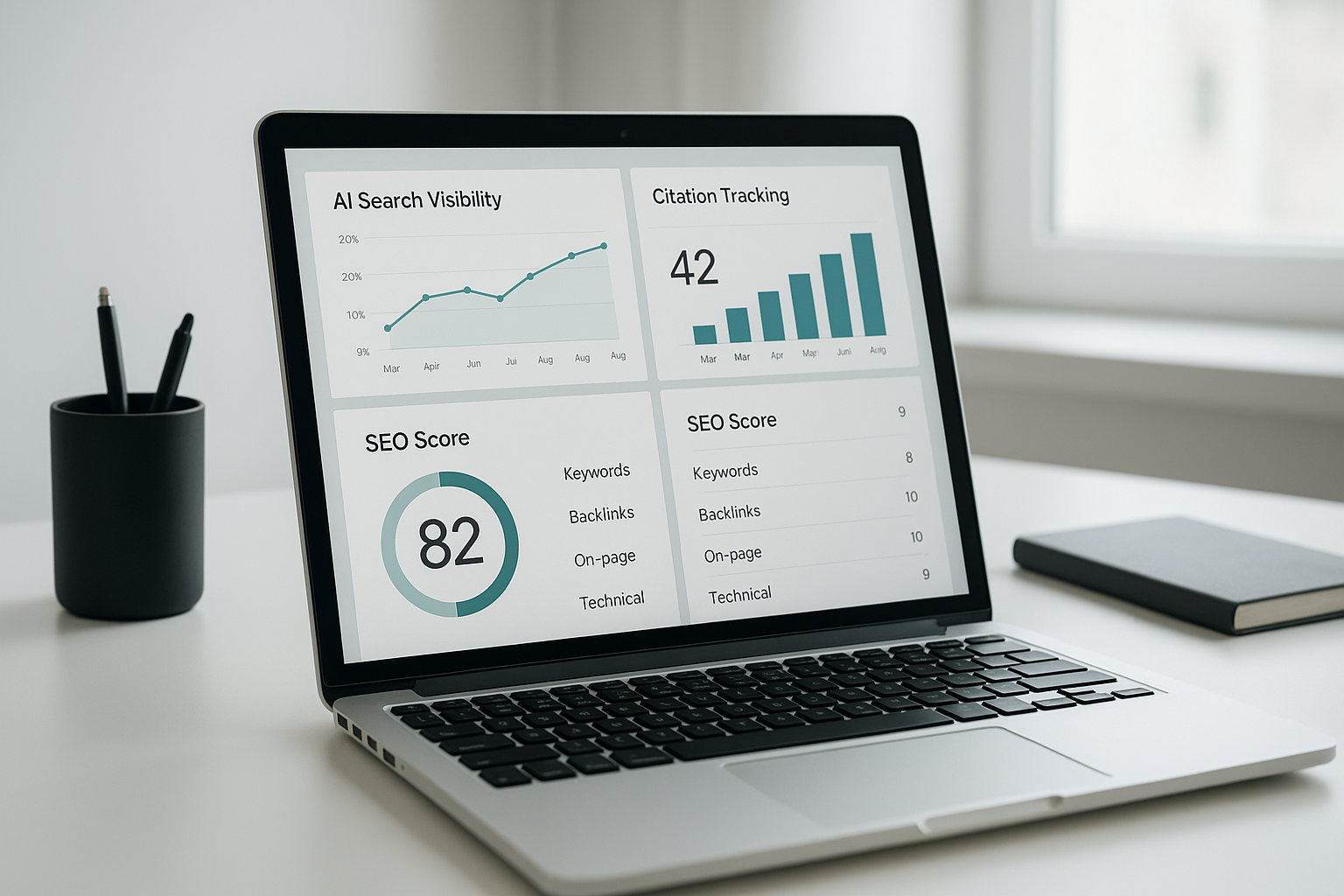
A typical dashboard used by search visibility AI tools to combine rankings, schema health, and AI citation data.
What Are Search Visibility AI Tools?
Search visibility AI tools are platforms that measure and improve a brand’s presence across search engines and AI answer systems at the same time. Specifically, they combine technical SEO audits, schema markup generation, and AI citation tracking so marketers see one accurate picture of visibility instead of several disconnected reports.
Traditional rank trackers only measured position on a search results page. However, generative engines such as ChatGPT and Google’s AI Overviews now summarize answers instead of simply listing links, a shift documented in ongoing research on generative artificial intelligence. Therefore, modern platforms also monitor whether a brand’s content gets cited, quoted, or referenced inside those AI-generated answers.
In addition, many of these tools automate fixes. Rather than manually rewriting meta tags or adding schema by hand, automated systems apply technical and on-page corrections directly. As a result, small teams can compete with agencies that have far larger budgets. You can learn more about how these systems work in this overview of AI-based search tools and rankings.
Why AI-Powered Search Visibility Matters Now
Search behavior has changed quickly. A growing share of users now ask questions directly inside AI chat interfaces instead of typing queries into a traditional search box, a trend tracked closely by research groups like the Pew Research Center. Consequently, a page that ranks well on Google but is never cited by an AI engine may still lose meaningful traffic.
Furthermore, AI Overviews and chat-based assistants often synthesize information from only a handful of sources per query. In contrast, traditional search results display ten or more links, giving more brands a chance to appear. This narrower selection makes AI visibility more competitive, not less important.
Above all, brands that ignore this shift risk becoming invisible to an entire generation of searchers. For instance, a well-optimized product page might rank third on Google yet never appear in a ChatGPT answer because it lacks structured data or a clear, citable answer format. That is exactly the gap search visibility AI tools are built to close, as explored further in this 2025 AI search strategy guide.
Core Features to Look for in an AI Visibility Platform
Not every platform offers the same depth of monitoring. Therefore, it helps to compare options against a consistent checklist before committing budget.
Look for these core capabilities:
- AI citation tracking across major answer engines, including ChatGPT, Perplexity, and Google AI Overviews
- Automated schema markup generation and deployment, following Google’s structured data guidelines
- Technical SEO audits with a clear authority or health score
- Competitor gap analysis showing where rivals earn AI citations
- Content tools built for structured, quotable answers, sometimes called AEO formatting
- CMS integrations for WordPress, Shopify, Wix, and similar platforms

Automated schema generation is one of the core features shared by leading search visibility AI tools.
For example, a consolidated platform can bundle most of these features into a single authority score, so teams do not need five separate subscriptions to cover the full search visibility AI tools ecosystem. Similarly, free diagnostic tools such as a backlink checker or page speed analyzer can reveal quick wins before investing in a paid subscription. You can compare specific options in this breakdown of top AI solutions for search visibility.
How to Use Search Visibility AI Tools: A 5-Step Process
Getting value from search visibility AI tools does not require a complicated rollout. Instead, most teams can follow this five-step process to start seeing measurable improvements within a month.
- Run a baseline AI visibility scan. Start by scanning your domain with a free AI Visibility Checker to see how often AI engines already cite your pages, giving you a clear starting point before making changes.
- Audit technical SEO and schema markup. Review your site’s structured data, page speed, and crawlability, then correct any broken schema so search engines and AI crawlers can read your content accurately.
- Optimize content for AEO with structured answers. Rewrite key pages so the opening paragraph directly answers the target question, then add FAQ schema so answer engines can extract a clean, quotable response.
- Build GEO-focused artifact pages for AI citation. Create dedicated resource pages that summarize data, statistics, and comparisons in a format generative engines can easily quote and attribute back to your site.
- Monitor citations and rankings continuously. Track both traditional rankings and AI mentions weekly, then adjust content and schema based on which pages are gaining or losing visibility over time.
For a deeper walkthrough of this exact workflow, see this AI search visibility tool AEO guide and 30-day plan. You can also review the official RankAuthority platform for an automated version of this process.
GEO vs AEO vs Traditional SEO: What These Tools Cover
Search visibility AI tools typically manage three overlapping disciplines, and understanding the difference helps teams prioritize their work.
Traditional SEO focuses on ranking web pages higher in classic search results through backlinks, keywords, and technical health. Generative Engine Optimization (GEO), in contrast, focuses on getting content cited inside AI-generated summaries, often through dedicated artifact pages built for extraction, a concept closely related to schema.org structured data standards. Answer Engine Optimization (AEO) sits between the two, structuring content and schema so featured snippets and voice assistants can pull a direct answer.
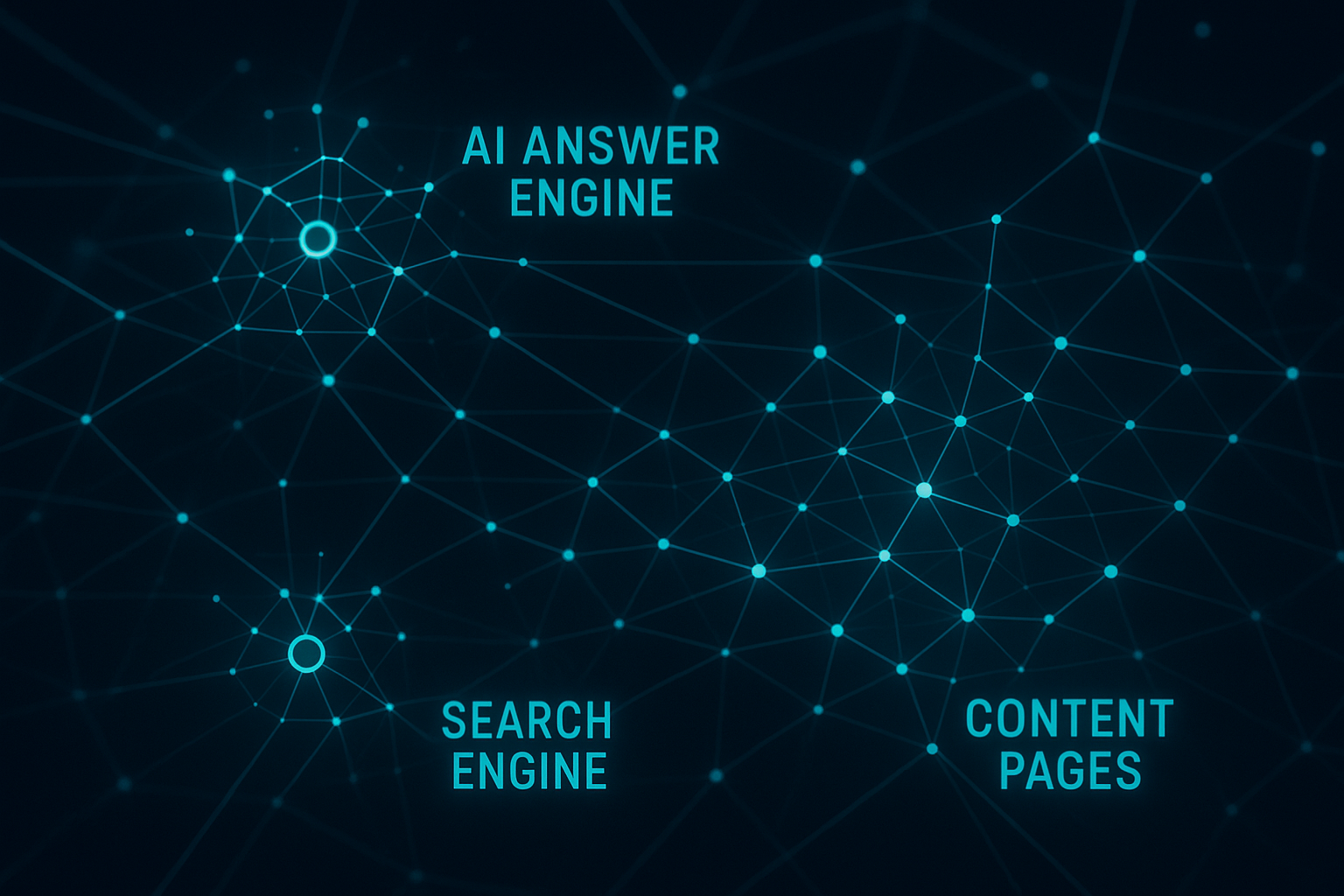
GEO, AEO, and traditional SEO overlap inside most modern search visibility AI tools.
For example, a single blog post might rank on page one of Google through SEO, get quoted inside a ChatGPT answer through GEO, and appear in a Google featured snippet box through AEO, all at once. As a result, the most effective platforms are built to satisfy all three disciplines from one piece of content rather than treating them as separate projects. This digital optimization tools resource covers this overlap in more detail.
Common Mistakes When Choosing AI Search Visibility Tools
Even experienced marketers make avoidable errors when adopting new platforms. Recognizing these mistakes early can save both time and budget.
- Relying only on keyword rank trackers while ignoring AI citation data
- Adding schema markup manually without validating it, which often introduces errors
- Treating GEO and AEO as one-time projects instead of ongoing processes
- Choosing a platform based on price alone rather than feature depth
- Ignoring page speed and crawlability, which can block AI crawlers entirely
Consequently, brands that skip a full site audit before choosing a platform often discover technical issues months later. In contrast, running a free diagnostic first, such as a site audit checker or domain authority checker, helps set realistic expectations and a clear starting benchmark. Roughly 40% of marketers surveyed in recent industry reports say they discovered major schema or crawlability errors only after their content had already stopped ranking, underscoring why an early audit matters.
Frequently Asked Questions About Search Visibility AI Tools
What are search visibility AI tools?
Search visibility AI tools are software platforms that track how well a website performs in both traditional search engines and AI-powered answer engines. They typically combine rank tracking, schema automation, and citation monitoring in one dashboard.
How do search visibility AI tools differ from traditional SEO software?
Traditional SEO software mainly tracks keyword rankings and backlinks. In contrast, search visibility AI tools also monitor whether AI systems like ChatGPT and Google AI Overviews cite or reference a site’s content.
Why do businesses need AI search visibility tracking in 2025?
As more searchers ask questions directly inside AI chat tools, pages that never get cited by those systems can lose traffic even while ranking well on Google. Tracking AI visibility helps brands catch that gap early.
How much do AI visibility platforms typically cost?
Pricing varies widely, from free diagnostic scans to monthly subscriptions ranging from roughly $50 to several hundred dollars depending on features. Most reputable platforms offer a free scan before requiring payment.
How long does it take to see results from AI search optimization?
Technical fixes like schema markup can show measurable improvement within a few weeks. However, earning consistent AI citations for competitive topics often takes one to three months of ongoing optimization.
What is the difference between GEO and AEO?
Generative Engine Optimization (GEO) focuses on getting content cited inside AI-generated summaries, while Answer Engine Optimization (AEO) structures content so featured snippets and voice assistants can extract a direct answer. Many platforms address both at once.
Can small businesses benefit from search visibility AI tools?
Yes, small businesses often benefit the most, since automated platforms handle technical work that would otherwise require a specialized agency. Free tools like a backlink checker or keyword checker are a practical starting point.
What common mistakes do brands make with AI search visibility?
The most common mistake is relying only on keyword rankings while ignoring whether AI engines actually cite the content. Another frequent error is adding schema markup without validating it, which can create indexing problems.
Do AI visibility tools work with WordPress and Shopify sites?
Most modern platforms integrate directly with popular CMS platforms, including WordPress, Shopify, Wix, GoDaddy, and Webflow. This allows automated fixes to deploy without manual coding.
How often should you check AI search visibility scores?
Weekly monitoring is a reasonable baseline for most sites, since AI engines update their sources frequently. Larger sites or competitive industries may benefit from daily tracking.
What is an RA Score and why does it matter?
An RA (Rank Authority) Score is a composite metric that blends technical SEO health, schema completeness, and AI citation frequency into a single number. It gives teams a quick benchmark for comparing progress over time.
Can AI visibility tools replace human content writers?
No, these tools automate technical and structural work, but they cannot replace original expertise, brand voice, or subject-matter accuracy. The most effective approach pairs automated optimization with human-reviewed content.
Are free AI visibility checkers accurate enough to rely on?
Free checkers are useful for an initial baseline and spotting obvious issues, but they typically offer less depth than paid platforms. Pairing a free scan with a full paid audit gives a more complete picture.
Final Thoughts
In summary, search visibility AI tools have become essential as search shifts from ranked links to AI-generated answers. Consequently, brands that combine technical SEO, schema automation, and AI citation tracking gain a clearer picture of their real visibility than rank position alone can show. Above all, starting with a free diagnostic scan, then following a structured process like the five-step plan above, makes the transition manageable rather than overwhelming. Whether a business builds its own workflow or uses an automated platform such as RankAuthority, the goal remains the same: staying visible wherever people search, ask, or chat.

