

SEMrush's SEO and marketing platform gives marketers, SEO professionals, and business owners the data and tools they need to grow their online visibility. First launched in 2008, it has grown into one of the most trusted names in the industry, with over 10 million users worldwide relying on it for keyword research, competitor analysis, site auditing, and much more. Authored by an experienced SEO strategist — add a visible byline, short author bio with credentials, and an author page link for E‑E‑A‑T.
Whether you are a solo blogger trying to rank your first article or an enterprise marketing team managing dozens of campaigns, understanding what SEMrush offers — and how to use it effectively — can dramatically change your results. In this guide, we break down every major feature, explain who benefits most, and share practical tips for getting the most from the platform.
What Is the SEMrush Marketing Platform and How It Works?
At its core, SEMrush is a SaaS (Software as a Service) platform that aggregates data from search engines, web crawlers, and third-party data providers to give users actionable marketing intelligence. According to Wikipedia’s overview of SEMrush, the platform began primarily as a keyword research tool and has since expanded into a full marketing suite covering SEO, PPC, social media, and content marketing. See our Semrush rank calculation guide for details on how Semrush metrics are computed.
The platform works by continuously crawling the web, indexing backlink data, and tracking keyword rankings across multiple search engines. As a result, users get near-real-time insights into how their website — and their competitors’ websites — are performing in organic and paid search.
Because SEMrush centralizes so many data sources into a single dashboard, it eliminates the need to switch between multiple tools. Therefore, many marketing teams use it as their primary intelligence hub for day-to-day decisions.
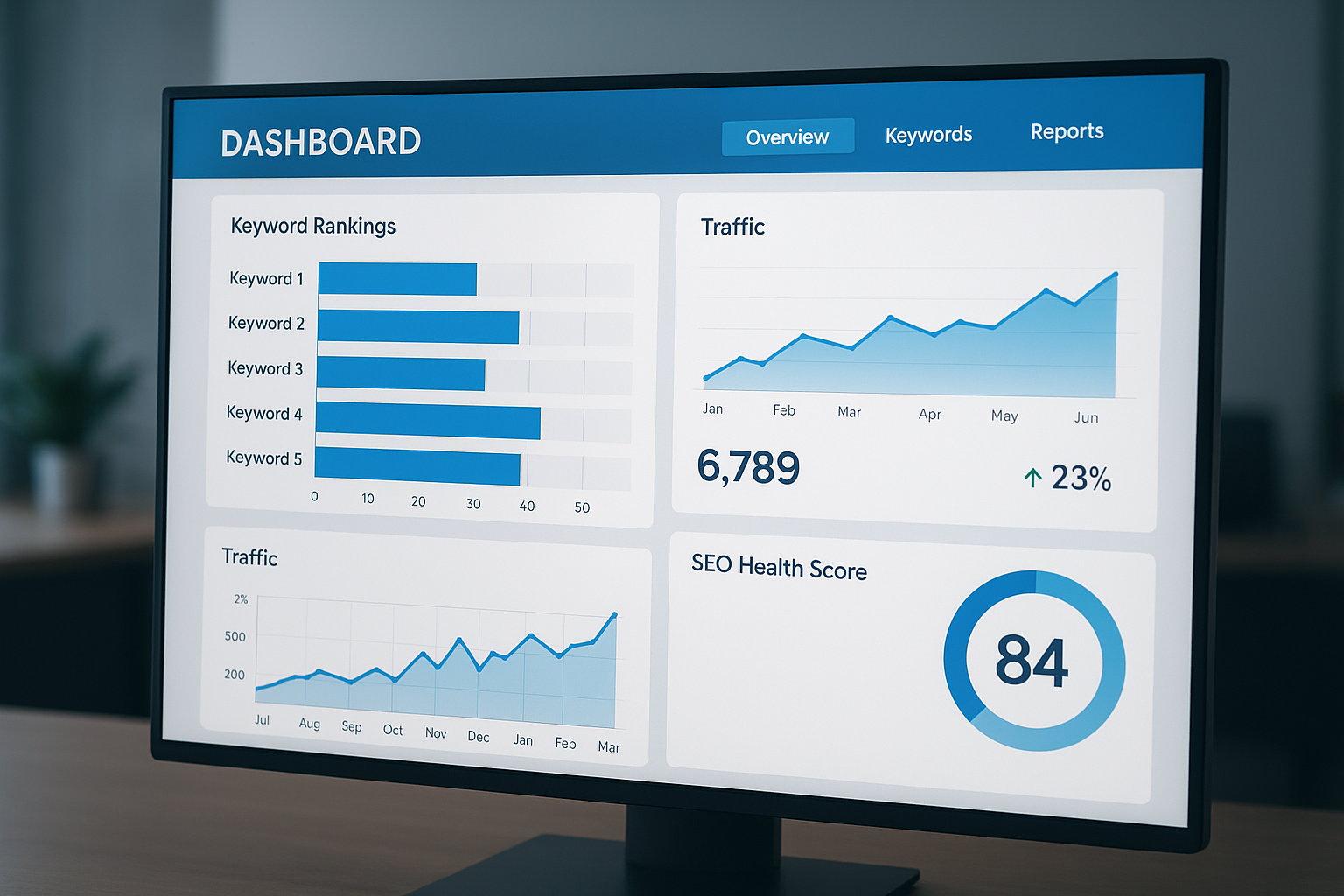
The SEMrush dashboard brings together keyword data, traffic analytics, and site health scores in one centralized view.
Core SEMrush SEO and marketing Features That Drive Results
SEMrush is built around several SEO marketing tools, each designed to address a specific area of digital marketing. Together, they form a workflow that takes you from research to execution to measurement.
Keyword Magic Tool
The Keyword Magic Tool is arguably SEMrush’s most popular feature. You enter a seed keyword, and the tool returns thousands of related search terms grouped by topic clusters. Each result includes search volume, keyword difficulty (KD%), cost-per-click (CPC), and search intent classification.
For example, entering “content marketing” might surface long-tail variations like “content marketing strategy for small business” with lower competition scores. Additionally, the intent filter lets you separate informational queries from transactional ones, helping you match content to the right stage of the buyer journey.
Site Audit and Technical SEO
The Site Audit tool crawls your entire website and produces a health score based on the number and severity of technical issues it finds. These issues are categorized as errors, warnings, and notices, so you can prioritize fixes effectively.
Common issues flagged include broken internal links, slow-loading pages, missing canonical tags, duplicate meta descriptions, and crawl depth problems. Because Google’s ranking algorithms heavily favor technically sound websites, resolving these issues often leads to measurable ranking improvements.
Backlink Analytics
Backlinks remain one of the strongest ranking signals in SEO. SEMrush’s Backlink Analytics tool lets you examine any domain’s full link profile, including the number of referring domains, authority scores, anchor text distribution, and the ratio of follow to nofollow links.
Furthermore, the Backlink Audit feature identifies toxic or spammy links pointing to your site. You can then generate a disavow file directly within the tool and submit it to Google Search Console, protecting your domain from potential penalties. Learn how to check backlink profile and manage toxic links effectively.
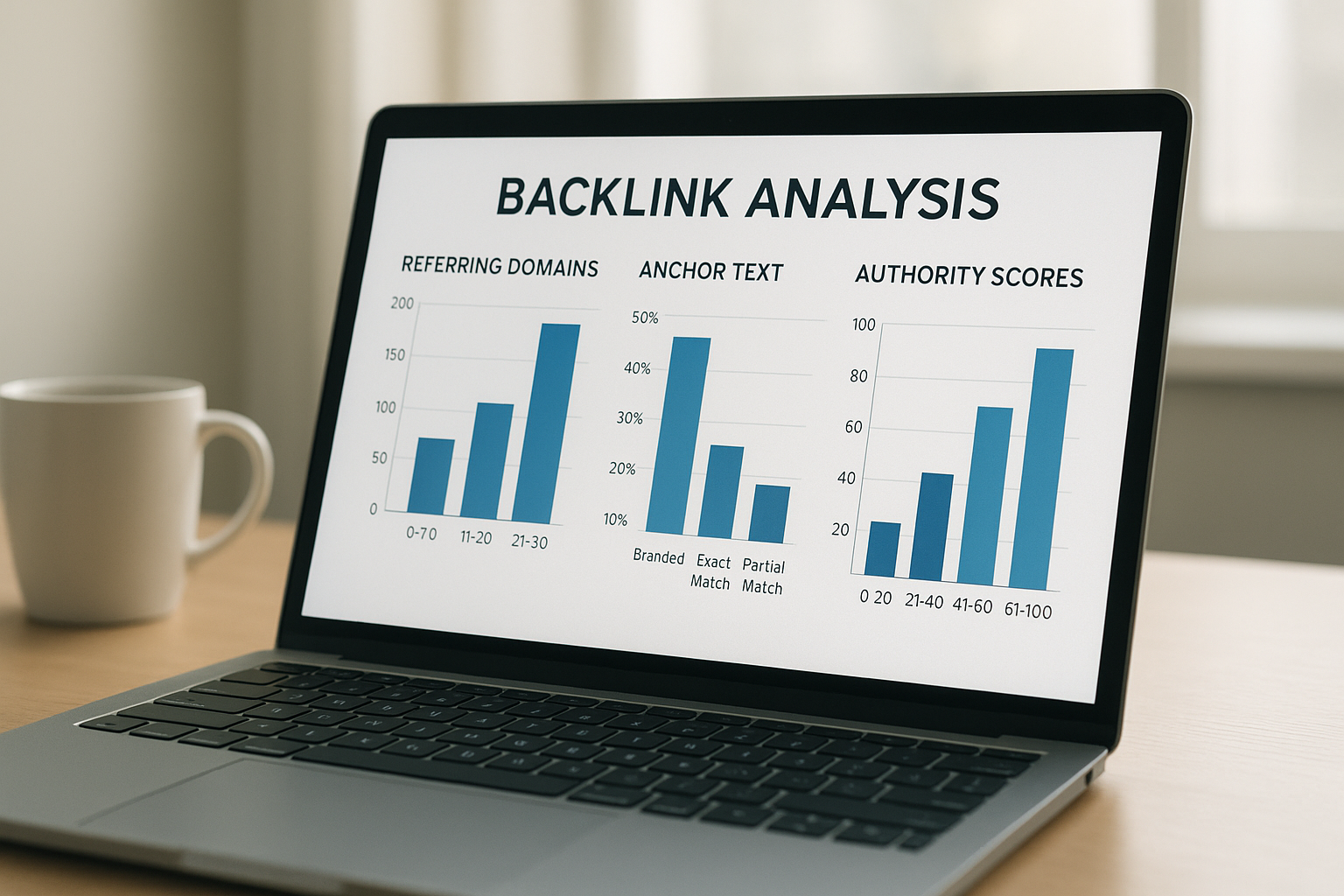
Backlink Analytics in SEMrush reveals the full link profile of any domain, including toxic link identification.
Competitor Research and Market Intelligence
One of SEMrush’s most powerful capabilities is its competitor intelligence suite. The Domain Overview report gives you an instant snapshot of any competitor’s estimated monthly traffic, top organic keywords, paid keywords, and backlink count. For AI-driven methods and ongoing monitoring, see our competitor tracking guide.
The Traffic Analytics tool goes even deeper, estimating the number of unique visitors, pages per visit, and bounce rate for competitor domains. In practice, this data helps you benchmark your own performance and identify gaps where a competitor is outranking you on keywords you should own.
The Keyword Gap tool is particularly valuable for competitor gap analysis. It compares your keyword rankings against up to four competitors simultaneously, highlighting keywords your rivals rank for but you do not. This, in turn, surfaces immediate content opportunities you might otherwise miss.
Pricing Plans and Who They Are For
SEMrush offers three primary subscription tiers. The Pro plan (~$139.95/month) is designed for freelancers and small teams, offering five projects, 500 tracked keywords, and 10,000 results per report. The Guru plan (~$249.95/month) adds historical data, content marketing tools, and 15 projects — making it ideal for growing agencies. The Business plan (~$499.95/month) is built for large enterprises with API access, white-label reporting, and extended limits. See our cheaper SEMrush alternatives for lower-cost options.
Annual billing reduces costs by approximately 17% across all plans. A free account is also available, although it comes with strict daily query limits that make it more of a preview than a working solution. For teams evaluating the platform, resources like Rank Authority provide in-depth comparisons to help you decide which tier matches your needs. See our best SEO platform for agencies.
Content Marketing and the Writing Assistant
Beyond technical SEO, SEMrush includes a full Content Marketing Toolkit available on Guru and Business plans. The Topic Research tool generates content ideas based on trending subtopics and questions your audience is asking. This helps you build topical authority rather than publishing isolated articles. See our useful content guide.
The SEO Writing Assistant integrates directly with Google Docs and WordPress. As you write, it scores your content in real time based on readability, keyword usage, originality, and tone of voice — all benchmarked against the top 10 ranking pages for your target keyword. As a result, writers can optimize content without needing a separate SEO review step. Learn about AI in SEO benefits for entrepreneurs.
Getting Started: A Practical First Workflow
If you are new to the platform, starting with these steps will give you the fastest return on investment. First, run a Site Audit on your domain to understand your current technical health. Next, use the Keyword Magic Tool to find 10 to 20 target keywords with manageable difficulty. Then, set up Position Tracking so you have a baseline before making any changes.
After establishing that baseline, run a Domain Overview on your top two or three competitors. Finally, use the Keyword Gap tool to identify quick-win keywords you are missing. This five-step workflow alone can surface enough actionable data to keep your team busy for weeks. For additional strategic guidance, Rank Authority offers expert resources on applying SEMrush data to real-world SEO campaigns.

A structured workflow — starting with a site audit and ending with competitor gap analysis — helps new users extract maximum value from SEMrush quickly.
Common Mistakes to Avoid
Many users make the mistake of targeting keywords with the highest search volume without considering keyword difficulty. In contrast, choosing mid-volume keywords with a KD% below 50 often produces faster ranking results, especially for newer domains.
Another common error is ignoring the Site Audit findings after the initial crawl. Technical issues compound over time, so running a fresh audit monthly — and acting on the results — is essential for maintaining and improving rankings. Additionally, users sometimes overlook the Backlink Audit tool, leaving toxic links unaddressed and risking a manual penalty from Google.
Quick Answer: Is SEMrush Worth It?
SEMrush is worth the investment for any business that relies on organic search traffic, runs paid advertising, or needs to understand its competitive landscape. The platform’s breadth of tools — from keyword research and site auditing to content optimization and PPC analysis — makes it one of the highest-ROI marketing tools available when used consistently.
Frequently Asked Questions About SEMrush
What is SEMrush?
SEMrush is an all-in-one digital marketing platform that provides tools for SEO, PPC, content marketing, social media, and competitive research. It is used by over 10 million marketing professionals worldwide to improve online visibility and grow organic traffic.
How much does SEMrush cost?
SEMrush offers three main pricing tiers: Pro at approximately $139.95/month, Guru at $249.95/month, and Business at $499.95/month. Annual billing typically reduces the cost by around 17%, and a limited free account is also available.
Is SEMrush good for beginners?
Yes, SEMrush is suitable for beginners because it offers guided workflows, visual dashboards, and an extensive knowledge base. However, beginners may initially find the number of tools overwhelming and should start with keyword research and site audit features before exploring advanced capabilities.
How does SEMrush keyword research work?
You enter a seed keyword into the Keyword Magic Tool, which returns thousands of related terms with data on search volume, keyword difficulty, CPC, and competitive density. You can then filter results by intent, word count, and difficulty to find the best opportunities for your content strategy.
Can SEMrush track my keyword rankings?
Yes, the Position Tracking tool monitors your website’s daily keyword rankings across specific locations and devices. You can also track competitor rankings for the same keywords side by side, making it easy to benchmark your progress.
How does SEMrush compare to Ahrefs guide?
SEMrush offers broader digital marketing coverage including PPC, social media, and content tools, while Ahrefs is often preferred for its backlink database depth. The best choice depends on whether your focus is purely SEO or a wider marketing workflow that includes paid and content channels.
What is the SEMrush Site Audit tool?
The Site Audit tool crawls your website and identifies technical SEO issues such as broken links, slow page speed, duplicate content, missing meta tags, and crawlability problems. It provides a health score and prioritized recommendations so you know exactly what to fix first.
Does SEMrush offer a free trial?
SEMrush offers a limited free account with basic features and daily query limits. Paid plan free trials have been available historically, but availability varies — checking the SEMrush website directly is recommended for the most current trial offers.
What is the SEMrush Backlink Analytics tool?
Backlink Analytics allows you to analyze the full backlink profile of any domain, including referring domains, anchor text distribution, authority scores, and toxic link identification. It helps both in building a stronger link profile and in disavowing harmful links to protect your domain.
Can I use SEMrush for competitor analysis?
Yes, competitor analysis is one of SEMrush’s strongest features. The Domain Overview and Traffic Analytics tools reveal a competitor’s top keywords, estimated traffic, backlink sources, and paid advertising strategy, giving you actionable intelligence for outranking them in search results.
What is the SEMrush Content Marketing Toolkit?
The Content Marketing Toolkit includes tools for topic research, SEO content templates, a real-time writing assistant, and content audit features. It helps marketers plan, create, and optimize content that ranks well and resonates with their target audience.
Does SEMrush integrate with Google Search Console?
Yes, SEMrush integrates directly with Google Search Console, allowing you to import verified search performance data into SEMrush dashboards. This integration enriches keyword tracking and helps identify ranking gaps more accurately than using either tool alone.
Final Thoughts
SEMrush remains one of the most comprehensive and widely used platforms in digital marketing for good reason. Its combination of keyword research, technical auditing, backlink analysis, competitor intelligence, and content optimization tools covers virtually every aspect of an SEO and marketing strategy. Whether you are just starting out or managing a large-scale campaign, investing time in learning SEMrush consistently pays dividends in rankings, traffic, and revenue.
Because the platform continues to evolve — adding AI in SEO, deeper integrations, and expanded data sets — staying current with its capabilities is just as important as mastering the fundamentals. Therefore, treat SEMrush not just as a tool, but as an ongoing strategic asset for your business growth.

