

SEO automation software is a category of digital tools that automatically handle repetitive, time-intensive AI optimization tools — from keyword research and technical audits to rank tracking and on-page fixes. In short, it replaces hours of manual work with intelligent, continuous processes that keep your site competitive around the clock.
As search engines grow more sophisticated, businesses that rely solely on manual SEO strategies are falling behind. Fortunately, modern automation platforms have made it easier than ever to maintain strong rankings without a dedicated in-house team. According to Statista, the global marketing automation market is projected to exceed $13.7 billion by 2030 — and SEO automation is one of its fastest-growing segments.
What Is SEO Automation Software?
AI SEO automation software is a platform that uses algorithms and AI to execute optimization tasks without constant manual input. Rather than requiring an expert to run audits, monitor rankings, or update meta tags individually, these tools handle those processes automatically and continuously.
Furthermore, the best platforms now extend beyond traditional search into GEO explained — the practice of optimizing content for AI-generated search results — and Answer Engine Optimization (AEO), which targets featured snippets and voice search responses. These emerging disciplines are rapidly reshaping how consumers discover information online.
In essence, SEO automation software bridges the gap between complex technical strategy and practical, scalable execution. It is particularly valuable for small business owners, digital marketers, and agencies who need results without the steep learning curve of traditional SEO.
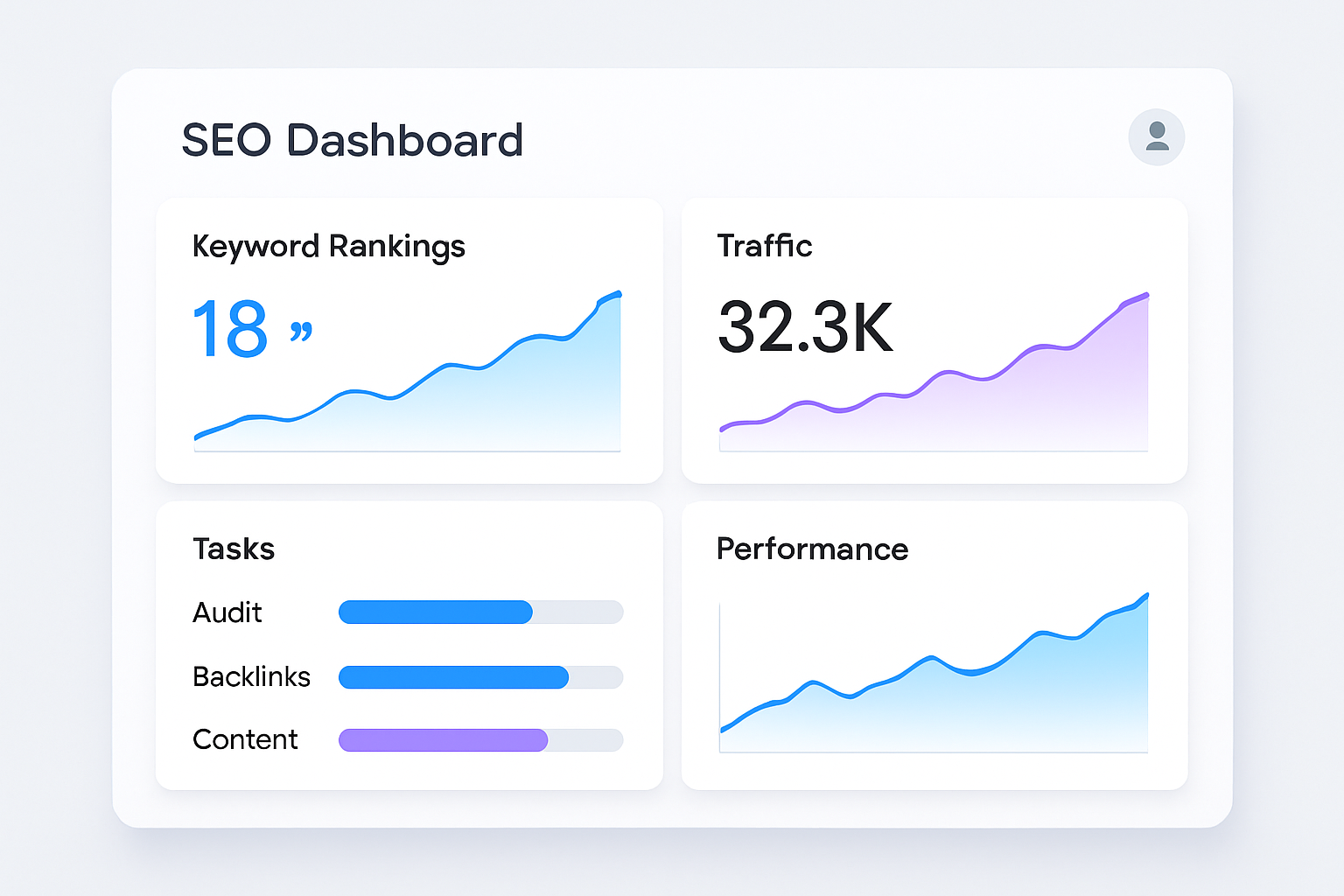
A well-designed SEO automation software dashboard gives you real-time visibility into rankings, site health, and automated task completion.
Key Features to Look for in an Automated SEO Platform
Not all SEO tools are created equal. Therefore, understanding which features matter most will help you choose a platform that genuinely moves the needle. For a concise checklist, see our Top SEO tool features. The strongest platforms typically include the following capabilities.
- Automated site audits: Continuously scans for broken links, crawl errors, slow pages, and missing metadata.
- Keyword research and clustering: Identifies high-opportunity keywords and groups them by intent automatically.
- Rank tracking: Monitors your positions across search engines daily without manual queries.
- On-page optimization: Suggests or applies title tag, meta description, and heading improvements automatically.
- GEO and AEO support: Optimizes content for AI-powered search environments and answer boxes.
- Reporting and alerts: Delivers scheduled performance reports and flags urgent issues instantly.
For a deeper breakdown of what to evaluate before choosing a tool, the guide on what to look for in SEO automation software covers the criteria in detail.
How to Get Started with SEO Automation Software
Getting started is more straightforward than most people expect. Follow these five steps to launch your automated SEO strategy effectively using the best AI SEO software.
- Audit your current SEO performance. platform selection checklist, run a baseline audit to identify existing technical issues, keyword rankings, and content gaps. This gives you a clear picture of where you stand and what the software needs to fix first.
- Define your optimization goals. Clearly outline what you want to achieve — whether that is improving organic traffic, fixing technical errors, targeting new keyword clusters, or gaining visibility in AI-powered search results. Specific goals lead to better configuration choices.
- Select and configure your platform. Choose an SEO automation software solution that matches your goals, budget, and technical environment. For evidence-based performance expectations, read Is Automated Search Optimization Effective? to see case-study outcomes and timelines. Then connect it to your site via API, plugin, or crawl access and configure your target keywords and preferences accordingly.
- Activate automated workflows. Enable rank tracking, site health monitoring, on-page optimization, and content recommendation workflows so the software begins working continuously in the background without requiring daily attention.
- Review reports and refine your strategy. Regularly check the platform’s performance reports to measure progress, identify areas needing human input, and adjust automation settings to maximize long-term ranking improvements.
For a more comprehensive walkthrough, the resource on how to leverage automation for better SEO results provides additional tactical guidance.
AI-Powered Search: Why Automation Is No Longer Optional
Search has fundamentally changed. future of AI in SEO has transformed how Google and other engines surface information, with AI Overviews and conversational answers now appearing at the top of many search results pages. As a result, ranking in traditional blue-link results is no longer sufficient on its own.
Consequently, the most forward-thinking SEO automation platforms now incorporate GEO and AEO capabilities alongside traditional optimization. This dual approach ensures your content remains visible whether a user is browsing standard results or receiving an AI-generated answer. Platforms like rankauthority.com are purpose-built for this new reality, offering 1-Click AI AutoPilot technology that handles both dimensions simultaneously.
Moreover, Search Engine Journal reports that AI-generated overviews now appear in a significant percentage of informational queries, making AEO-focused automation a strategic priority for any brand seeking sustained visibility.

Modern SEO automation software must account for AI-powered search environments, not just traditional ranking factors; learn more about the future of AI in SEO.
Comparing Leading Automated SEO Tools
Several established platforms dominate the traditional SEO tool landscape. Ahrefs and Semrush are widely recognized for their comprehensive keyword and backlink data. However, both platforms still require significant manual interpretation and action — meaning they are powerful data tools rather than true automation engines. See which solutions excel at automation in our AI SEO automation software guide.
In contrast, next-generation platforms like rankauthority.com automate not just the data collection but the strategic execution itself. Rather than simply showing you what to fix, these tools actively implement optimizations, monitor outcomes, and adjust their approach based on performance data. This distinction is critical for businesses that lack dedicated SEO staff.
Additionally, for ecommerce businesses managing large product catalogs, the difference between a data tool and a true automation engine becomes even more pronounced. See our Website optimization automation guide to learn how automation handles bulk optimization at scale.
Automation Depth: The Critical Differentiator
When evaluating platforms, consider how deeply each one automates the full SEO workflow. Specifically, look for tools that move beyond reporting into active optimization — platforms that fix issues, not just flag them. This depth of automation is what separates transformative tools from glorified dashboards.
For a detailed comparison of approaches, the article on the best way to automate SEO walks through the strategic trade-offs between different automation models.
Best Practices for Maximizing Your SEO Automation Investment
Automation is powerful, but it works best when paired with sound strategy. Therefore, keep these best practices in mind as you deploy your chosen platform.
Review outputs regularly. Even the best SEO automation software benefits from periodic human oversight. Check reports monthly to ensure recommendations align with your broader business goals and brand voice.
Prioritize technical health first. Automated site audits typically surface quick wins in technical SEO — broken links, missing tags, slow load times — that deliver fast ranking improvements. Address these before focusing on content-level optimizations.
Integrate GEO and AEO from the start. As AI search continues to grow, configuring your platform to optimize for generative and answer engine environments from day one positions you ahead of competitors still focused exclusively on traditional ranking signals.
Furthermore, the comprehensive resource on automating your SEO strategy provides additional frameworks for building a sustainable, automation-first approach to search visibility.
Quick Answer: SEO automation software saves time by automatically executing optimization tasks that would otherwise require manual effort. The best platforms handle technical audits, keyword tracking, on-page fixes, and AI-search optimization simultaneously — delivering consistent ranking improvements without constant hands-on management.
Frequently Asked Questions About SEO Automation Software
What is SEO automation software?
SEO automation software is a category of digital tools that automate repetitive and time-intensive search engine optimization tasks such as keyword research guide, site audits, rank tracking, and content optimization. These platforms use algorithms and AI to perform work that would otherwise require significant manual effort, helping businesses improve their search visibility faster and more consistently.
How does SEO automation software improve search rankings?
It improves rankings by continuously monitoring technical issues, identifying keyword opportunities, and optimizing on-page elements without requiring manual intervention. Many platforms also provide AI-driven recommendations that adapt to algorithm changes, keeping your site competitive over time.
Is SEO automation software suitable for small businesses?
Yes, it is especially valuable for small businesses because it reduces the need for large in-house SEO teams. Platforms like rankauthority.com offer accessible, results-oriented automation tools that level the playing field against larger competitors.
What tasks can automated SEO tools handle?
These tools can handle keyword research, technical site audits, rank tracking, backlink monitoring, on-page optimization suggestions, content gap analysis, and reporting. Advanced platforms also automate GEO and AEO tasks to improve visibility in AI-powered search environments.
What is the difference between SEO automation software and traditional SEO tools?
Traditional SEO tools provide data and insights but require users to manually act on recommendations. SEO automation software goes further by executing optimizations automatically, saving time and reducing human error while delivering more consistent results.
How much does SEO automation software typically cost?
Costs vary widely depending on the platform and feature set. Entry-level tools may start at $30 to $100 per month, while enterprise-grade platforms can cost several hundred to thousands of dollars monthly. Many providers offer free trials so you can evaluate the platform before committing.
Can SEO automation software handle AI-powered search optimization?
Yes, modern platforms increasingly include Generative Engine Optimization (GEO) and Answer Engine Optimization (AEO) capabilities. These features help content appear in AI-generated search results and featured answer boxes, which are becoming a major source of organic traffic.
What should I look for when choosing an automated SEO platform?
Look for platforms that offer comprehensive automation coverage, AI-driven recommendations, easy integration with your existing tools, transparent reporting, and support for both traditional and AI-powered search environments. A risk-free trial period is also a strong indicator of a provider’s confidence in their product.
How long does it take to see results from SEO automation software?
Most users begin to see measurable improvements within 30 to 90 days of consistent use. Timelines vary depending on your site’s existing authority, competition level, and how comprehensively the software is deployed. Technical fixes often show faster results than content-based optimizations.
Can agencies use SEO automation software for multiple clients?
Absolutely. Many platforms are built with agency workflows in mind, offering multi-site management, white-label reporting, and scalable pricing tiers. This makes it practical to manage dozens of client properties from a single dashboard.
What are common mistakes to avoid when using SEO automation software?
Common mistakes include over-relying on automation without reviewing outputs, ignoring the strategic context behind recommendations, and failing to update content regularly. Automation works best when paired with periodic human oversight to ensure quality and relevance.
Does SEO automation software work for ecommerce websites?
Yes, it is highly effective for ecommerce sites where product page optimization, category structure, and technical health are critical. Automated audits and bulk optimization features save enormous time when managing large product catalogs.
Conclusion: Why SEO Automation Software Is the Smart Choice
In today’s rapidly evolving search landscape, SEO automation software is no longer a luxury — it is a strategic necessity. Whether you are a small business owner looking to compete with larger rivals, a marketer managing multiple campaigns, or an agency scaling client results, the right automation platform removes the manual bottlenecks that slow growth and erode rankings. Last updated: 2026-07-02. By Rank Authority editorial team.
Above all, the shift toward AI-powered search means that automation must now cover both traditional ranking signals and next-generation GEO and AEO optimization. Platforms built for this dual reality — like rankauthority.com — give businesses the competitive edge needed to remain visible as search continues to evolve. Start with a clear audit of your current performance, choose a platform aligned with your goals, and let intelligent automation do the heavy lifting from there. Last updated: 2026-07-02. Author: Rank Authority editorial team.

