
SEO marketing tools are software platforms designed to help businesses research keywords, audit websites, analyze backlinks, and track search rankings — all with the goal of increasing organic visibility. Whether you are launching a new site or scaling an established brand, choosing the right tools can dramatically accelerate your growth in search results.
In practice, the SEO landscape is crowded with dozens of platforms, each promising transformative results. Therefore, understanding what each category of tool actually does — and which specific platforms deliver the most value — is essential before investing time or money.
What Are SEO Marketing Tools and Why Do They Matter?
SEO marketing tools are the backbone of any data-driven digital strategy. Without them, optimizing a website is essentially guesswork. These platforms collect and surface data that search engines use to rank pages — including keyword search volume, domain authority, crawl errors, and content gaps.
According to Wikipedia’s overview of search engine optimization, SEO encompasses both technical and creative elements that improve rankings, drive traffic, and increase brand awareness. Tools operationalize each of those elements at scale.
Additionally, modern SEO tools go beyond simple rank tracking. They now incorporate AI-driven content recommendations, competitive gap analysis, and real-time site health monitoring — making them indispensable for marketers at every level.
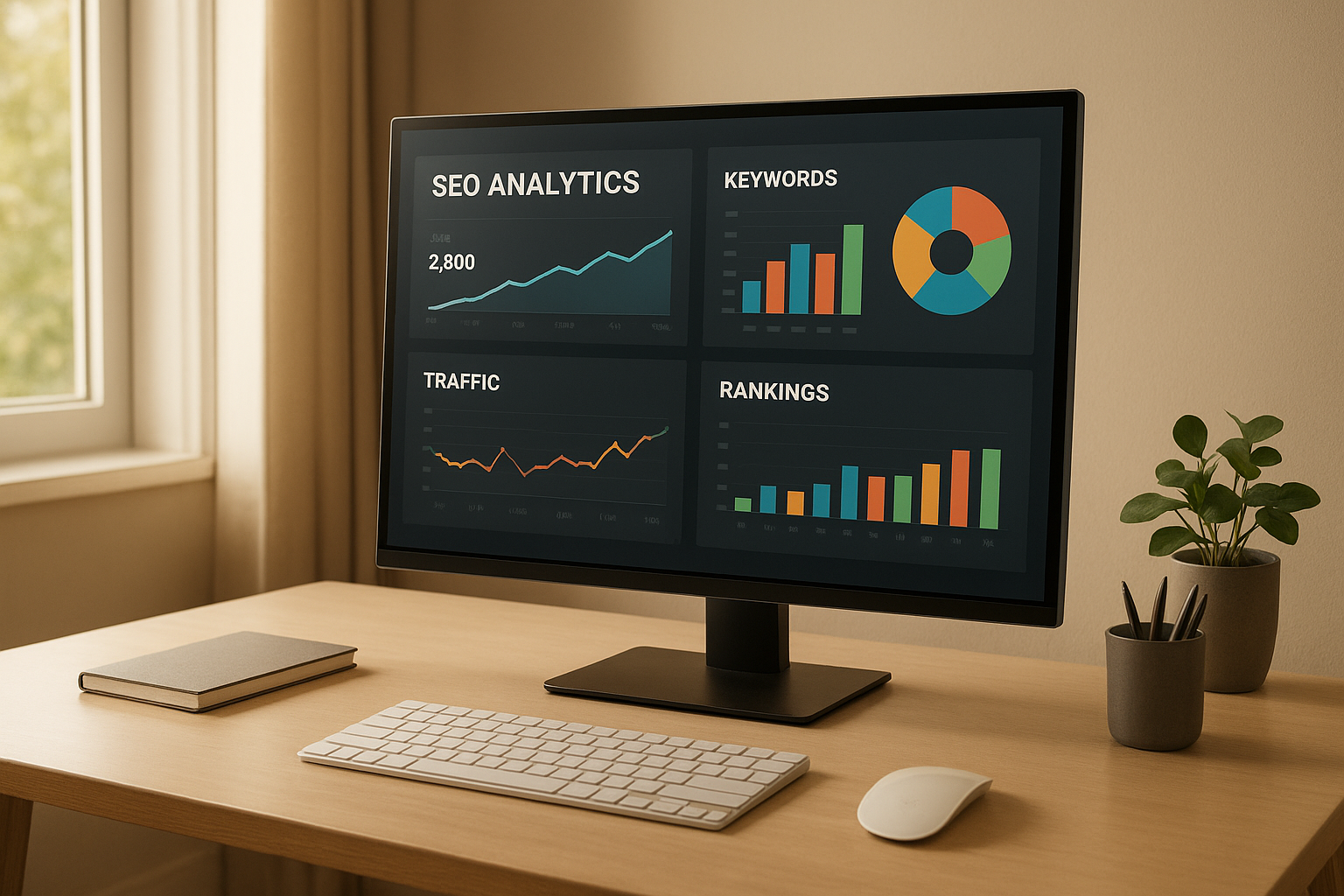
A well-configured SEO marketing tools dashboard gives marketers instant visibility into rankings, traffic trends, and site health.
The Core Categories Every Marketer Should Know
Before diving into specific platforms, it helps to understand the four primary categories of SEO tools. Each serves a distinct function, and together they form a complete optimization workflow.
🔍 Keyword Research
Identifies high-value search terms, search volume, and keyword difficulty to guide content creation.
🔗 Backlink Analysis
Maps your link profile and competitor links to uncover link-building opportunities and toxic links.
⚙️ Technical Auditing
Scans your site for crawl errors, broken links, slow load times, and indexing issues that hurt rankings.
📈 Rank Tracking
Monitors keyword positions over time so you can measure the impact of your optimization efforts.
Best Platforms for Keyword Research
Keyword research is where every successful SEO campaign begins. As a result, choosing a reliable keyword tool is your single most impactful decision early on.
Ahrefs Keywords Explorer is widely regarded as the gold standard for keyword data depth. It provides accurate search volume estimates, keyword difficulty scores, and click-through rate projections — all from a massive global index. However, it comes at a premium price point starting around $99 per month.
SEMrush Keyword Magic Tool is a strong alternative, particularly because it integrates keyword data directly with competitive analysis. For example, you can instantly see which competitors rank for a given term and what content they use to achieve that ranking.
Meanwhile, Google Search Console remains a free and indispensable resource. Although it lacks the depth of paid tools, it provides first-party data straight from Google — including actual impressions, clicks, and average positions for your existing pages.
Top Choices for Backlink and Authority Analysis
Backlinks remain one of Google’s most important ranking signals. Therefore, understanding your link profile — and your competitors’ — is non-negotiable for competitive SEO.
Ahrefs Site Explorer is consistently rated as having the largest and most frequently updated backlink index. In contrast, Moz Link Explorer is a more budget-friendly option that still provides solid domain authority metrics and link intersection data useful for prospecting.
For teams focused on link outreach, SEMrush’s Backlink Analytics integrates seamlessly with its outreach and content tools, making it a convenient all-in-one choice. Additionally, platforms like RankAuthority offer strategic guidance on building authority through ethical, sustainable link-building practices.
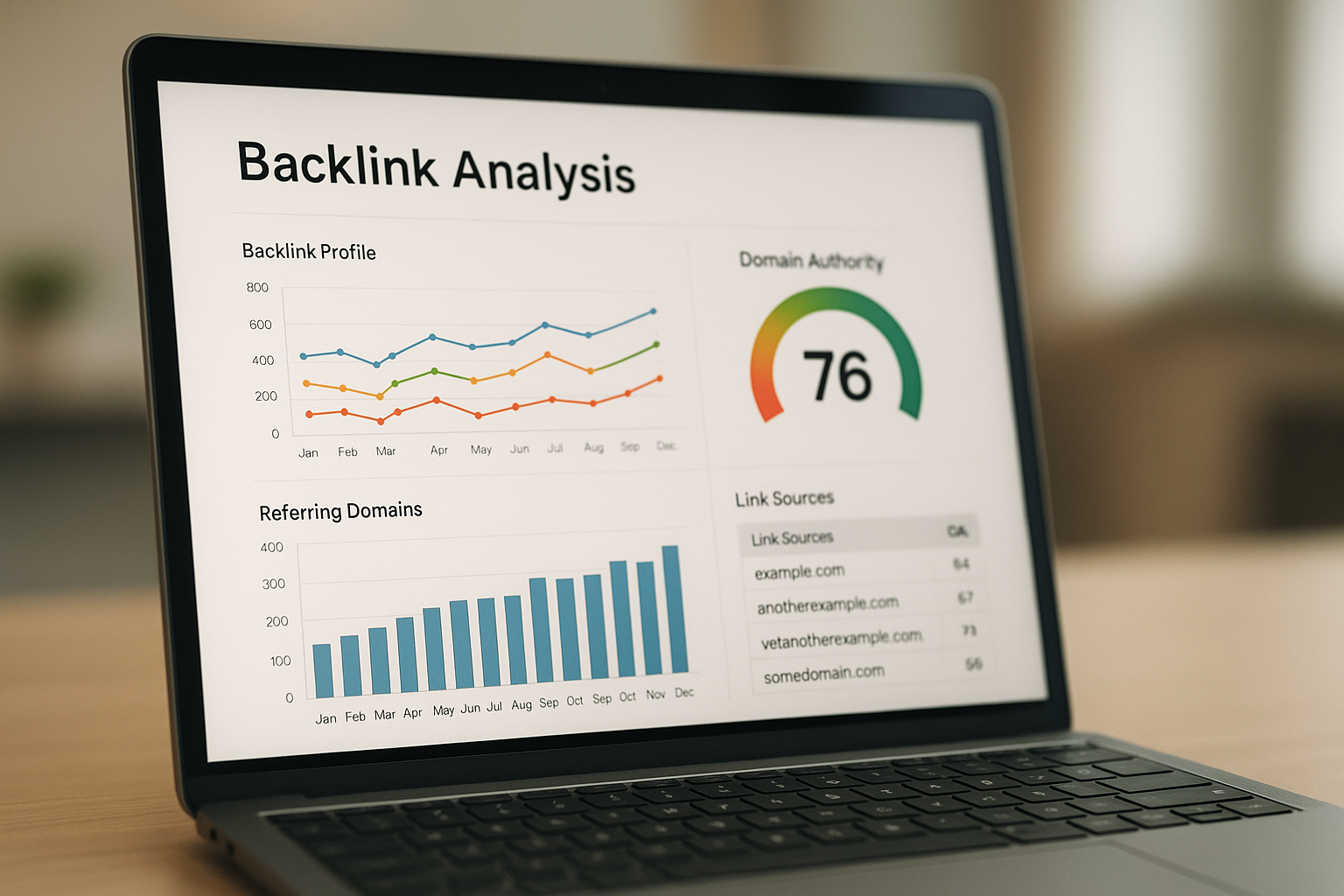
Backlink analysis tools reveal the full landscape of inbound links, helping marketers build stronger, cleaner link profiles.
Technical Auditing: Finding What Holds Your Site Back
Technical SEO issues are often invisible to the naked eye but have a profound impact on rankings. Fortunately, dedicated audit tools surface these problems quickly.
Screaming Frog SEO Spider is the industry-standard desktop crawler. It maps every URL on your site, flags broken links, identifies duplicate content, and checks metadata completeness. The free version handles up to 500 URLs, which is sufficient for small sites.
For larger websites, SEMrush Site Audit and Ahrefs Site Audit both offer cloud-based crawling with prioritized issue reports. As a result, your team can focus on fixing the problems most likely to move the ranking needle first.
How to Choose the Right Stack for Your Budget
Choosing the right combination of tools depends on your goals, team size, and budget. Below is a practical framework to guide your decision.
- Start with free tools. Set up Google Search Console and Google Analytics first. These provide essential baseline data at no cost and should always be active regardless of what else you use.
- Add a mid-tier all-in-one platform. Once you need deeper keyword and competitor data, invest in SEMrush or Ahrefs. Both offer trial periods so you can test before committing.
- Layer in a technical crawler. Add Screaming Frog for on-demand site audits, especially before major content launches or site migrations.
- Track and iterate. Use your rank tracking module consistently. Because SEO results compound over time, regular monitoring ensures you catch drops early and double down on what works.
In practice, most growing businesses spend between $150 and $300 per month on their core SEO tool stack. That investment typically pays for itself many times over when organic traffic replaces paid acquisition costs.
For additional strategic direction on building a high-performance SEO program, RankAuthority provides expert resources and consulting tailored to businesses at every growth stage.
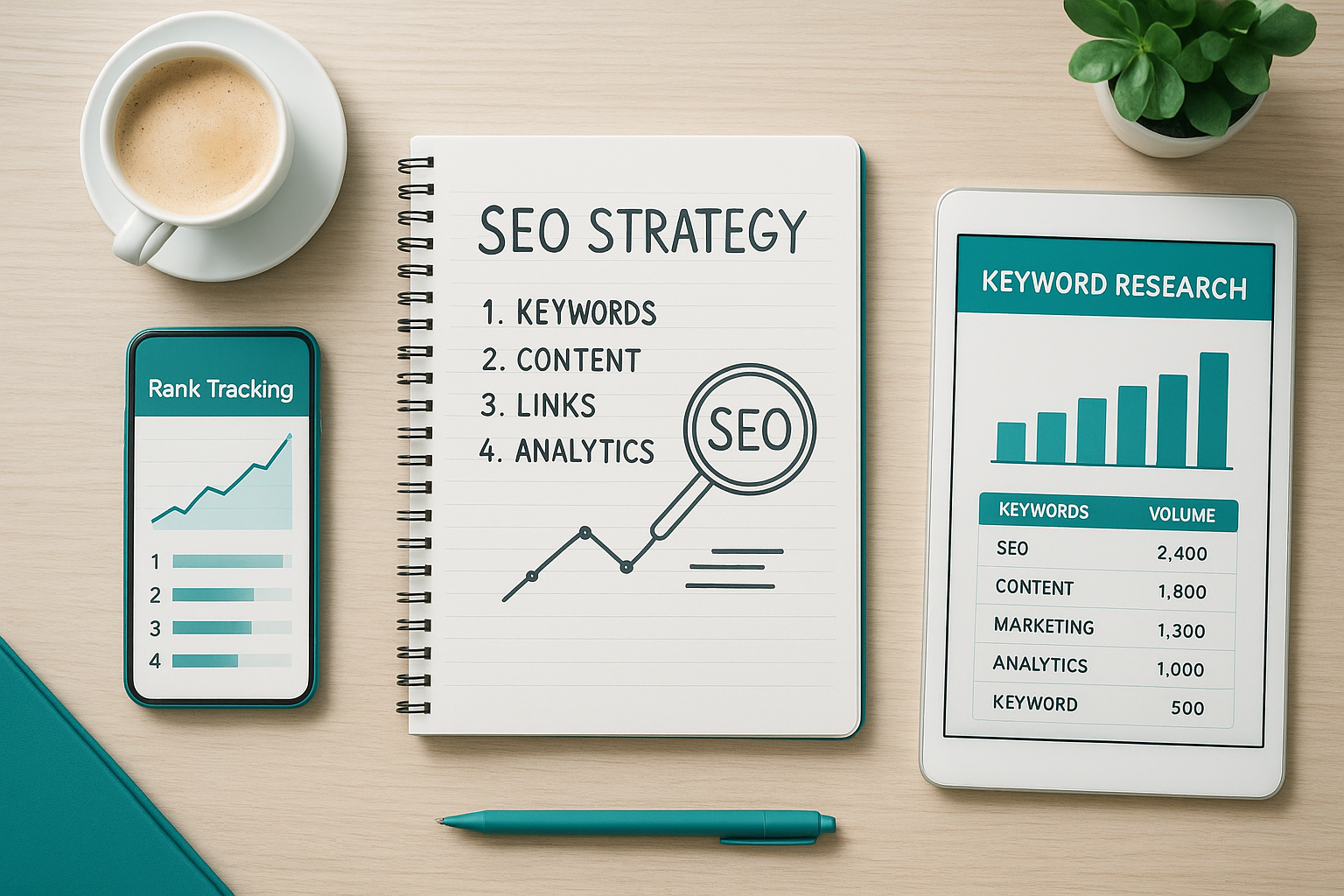
A structured SEO strategy supported by the right tools makes it far easier to prioritize actions and measure results consistently.
Common Mistakes When Using SEO Platforms
Even with powerful tools available, many marketers fall into predictable traps. First, they chase high-volume keywords without evaluating search intent, resulting in traffic that never converts. Second, they run technical audits but fail to act on the findings — leaving critical errors unresolved for months.
Another common mistake is relying on a single tool as a source of truth. Because each platform uses different data methodologies, cross-referencing two or more tools leads to more reliable conclusions. Finally, neglecting to monitor rankings after publishing new content means you miss early signals of whether your strategy is working.
Conclusion: Building a Smarter SEO Tool Strategy
The right seo marketing tools do not replace strategic thinking — they amplify it. By combining free foundational tools like Google Search Console with robust paid platforms for keyword research, backlink analysis, and technical auditing, you create a complete data ecosystem that drives consistent, compounding growth.
Start with the stack that fits your current budget, act consistently on the data you collect, and scale your toolset as your traffic and revenue grow. In doing so, you will build an organic search presence that outperforms competitors and delivers lasting returns.
Frequently Asked Questions
What are SEO marketing tools?
SEO marketing tools are software platforms that help website owners research keywords, analyze backlinks, audit technical issues, and track rankings. They provide data-driven insights to improve a site’s visibility in organic search results.
Which SEO marketing tools are best for beginners?
Google Search Console and Moz are widely recommended for beginners because they offer intuitive interfaces and free or low-cost tiers. Both provide foundational data on keyword performance, crawl errors, and link profiles without requiring advanced technical knowledge.
How much do SEO tools typically cost?
Costs range from free (Google Search Console) to $100–$500 per month for professional platforms like Ahrefs or SEMrush. Enterprise plans can exceed $1,000 per month, but most small businesses find mid-tier plans sufficient for growth.
Can I use multiple SEO tools at the same time?
Yes, combining tools is a common best practice because each platform has unique strengths. For example, you might use Ahrefs for backlink analysis, Screaming Frog for technical audits, and Google Search Console for click-through rate data simultaneously.
What is the difference between on-page and off-page SEO tools?
On-page SEO tools analyze content quality, keyword placement, metadata, and internal linking within your own website. Off-page SEO tools focus on external factors like backlink profiles, domain authority, and competitor link-building strategies.
How long does it take to see results from using SEO tools?
Most websites begin seeing measurable ranking improvements within 3 to 6 months of consistently acting on SEO tool recommendations. Highly competitive niches may require 6 to 12 months of sustained effort before significant gains appear.
Do SEO tools work for local search optimization?
Yes, many SEO tools include dedicated local SEO features such as local keyword tracking, Google Business Profile insights, and citation monitoring. Tools like Moz Local and BrightLocal are specifically designed for local search optimization.
What is keyword research and why is it important?
Keyword research is the process of identifying the search terms your target audience uses to find products, services, or information. It is foundational to SEO because targeting the right keywords ensures your content reaches people actively searching for what you offer.
What is a technical SEO audit and which tools perform it?
A technical SEO audit examines a website’s infrastructure for issues like broken links, slow page speed, duplicate content, and crawlability problems. Tools such as Screaming Frog, SEMrush Site Audit, and Ahrefs Site Audit are popular choices for comprehensive technical analysis.
How do backlink analysis tools help improve rankings?
Backlink analysis tools reveal which websites link to your domain and your competitors, helping you identify link-building opportunities and toxic links to disavow. A stronger, cleaner backlink profile directly correlates with higher search engine rankings.
Is Google Search Console enough on its own?
Google Search Console is an essential free tool but has limitations in competitor analysis, deep keyword research, and backlink data. Pairing it with a third-party platform like Ahrefs or SEMrush gives a far more complete picture of your SEO performance.
What common mistakes should I avoid when using SEO tools?
Common mistakes include chasing high-volume keywords without considering search intent, ignoring technical audit recommendations, and failing to track progress over time. Over-relying on a single tool without cross-referencing data is also a frequent pitfall.

