

SEO juice is the informal term for the ranking power or authority that flows from one webpage to another through hyperlinks. In practice, when a trusted page links to your content, it transfers a portion of its credibility to you — and search engines like Google use that signal to decide how highly your page should rank. This article is written by the Rank Authority editorial team, combining practical agency experience and audit-based recommendations.
Understanding how this power moves across the web is, therefore, one of the most valuable skills any site owner or digital marketer can develop, like mastering SEO ranking factors. Because even a modest improvement in how you manage link equity can produce meaningful gains in organic visibility.
The Science Behind SEO Juice and Link Equity
The concept of SEO juice is rooted in Google’s original PageRank algorithm, developed by Larry Page and Sergey Brin in the late 1990s. PageRank treated each link on the web as a vote of confidence. However, not all votes carried equal weight — a link from a highly trusted page counted far more than one from an obscure corner of the internet.
Today, Google’s ranking systems have grown far more sophisticated. Nevertheless, the fundamental principle remains: links still transfer authority, and that authority still influences rankings. The term “link juice” — or SEO juice — emerged as a plain-language way to describe this flow of ranking power.
Additionally, the amount of juice passed through any single link depends on several variables. These include the linking page’s overall authority, how many other outbound links share that page, and whether the link carries a follow or nofollow attribute.

SEO juice flows through links like electricity through a circuit — stronger sources send more power to connected pages.
Follow vs. Nofollow: What Actually Passes Power
Not every link on the internet transfers SEO juice. By default, a standard hyperlink — called a dofollow link — passes ranking authority to the destination page. In contrast, a rel="nofollow" attribute tells search engine crawlers to ignore the link for ranking purposes.
Google also introduced two additional link attributes in 2019: rel="sponsored" for paid links and rel="ugc" for user-generated content. Both are treated similarly to nofollow in that they do not reliably pass link equity.
Therefore, when building your backlink strategy, prioritize earning dofollow links from authoritative sources. Meanwhile, nofollow links are still worth pursuing because they drive referral traffic and contribute to a natural, diverse link profile that Google trusts.
How Internal Linking Distributes SEO Juice
Internal links are one of the most underused tools for managing SEO juice on your own site. See our internal linking guide for tactical examples. Because you control every internal link, you have direct influence over how ranking power flows between your pages.
For example, if your homepage earns strong backlinks from external sites, it accumulates substantial authority. By linking from that homepage to a key product page or a cornerstone blog post, you pass a share of that authority downward through your site architecture. See how this can improve search visibility for priority pages. As a result, pages that might otherwise struggle to rank can benefit from the power of your most trusted pages.
Effective internal linking also helps search engine crawlers discover and index your content more efficiently. In practice, a well-structured site with logical internal links is easier to crawl, which means your important pages get indexed — and ranked — faster.
Pro Tip: Aim to link from your highest-traffic pages to your most strategically important pages. This simple habit consistently improves how SEO juice is distributed across your entire site.
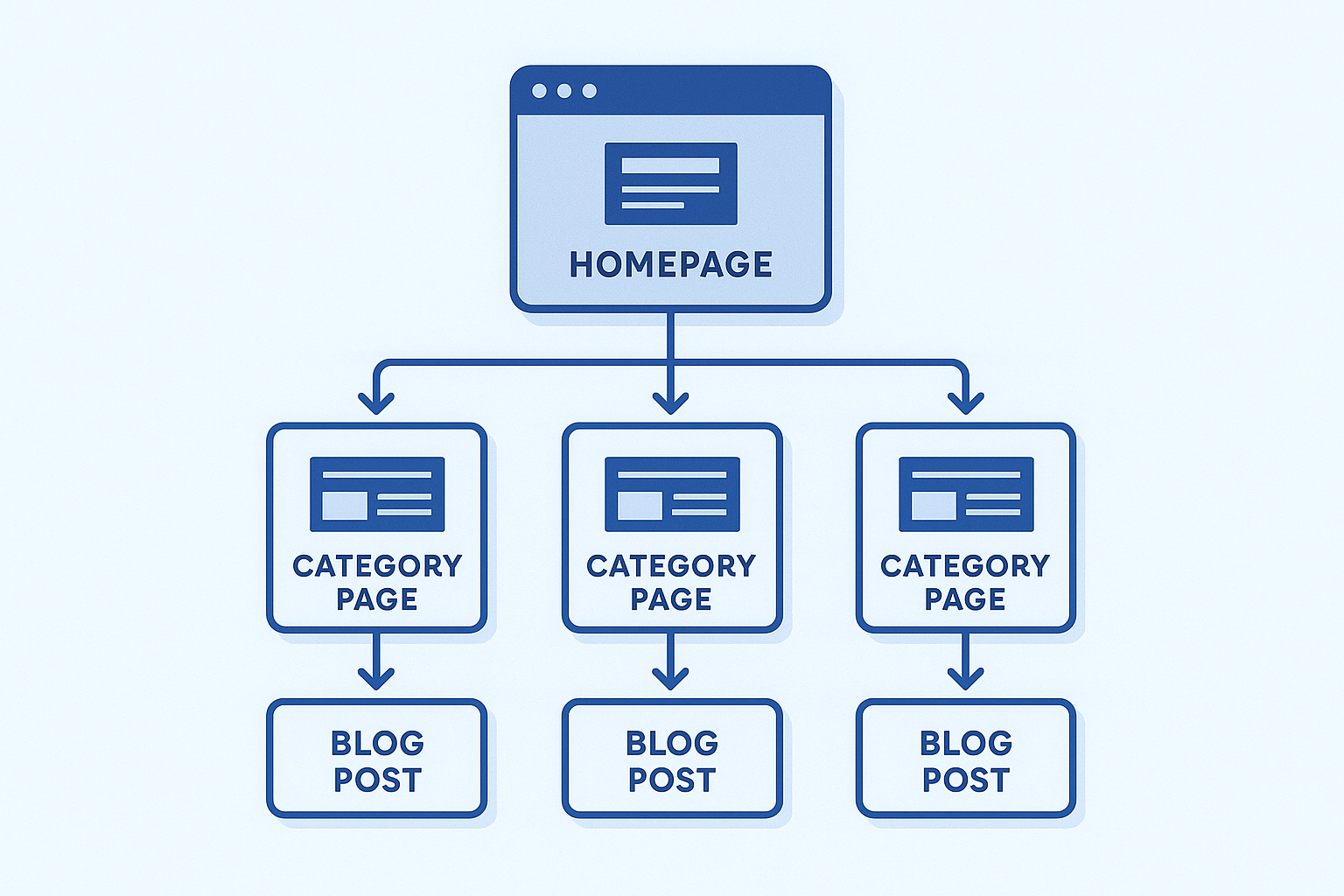
A thoughtful internal linking structure ensures that authority earned by top-level pages reaches deeper, more specific content.
Backlinks: The Primary Source of Incoming Power
While internal linking helps you distribute authority you already have, backlinks are how you acquire new authority from the wider web. A backlink from a high-authority domain — such as a major news outlet, a respected industry publication, or a government website — transfers far more SEO juice than a link from a brand-new or low-trust site.
Quality consistently outweighs quantity in this equation. For instance, a single link from a domain with strong topical relevance and high trust can outperform fifty links from irrelevant or spammy sites. In fact, toxic backlinks can actively harm your rankings, so periodic link audits are essential. You can check your backlink profile to prioritise high-quality links.
Resources like Rank Authority provide guidance on building sustainable backlink profiles that pass genuine SEO juice without risking penalties. Additionally, focusing on earning links through original research, expert content, and digital PR tends to produce the most durable results over time. See our SEO quality recommendations for improving link value.
Five Mistakes That Drain Your Ranking Power
Even sites with strong backlink profiles can waste their accumulated authority through avoidable errors. Here are the most common ways SEO juice leaks away:
- Broken internal links — These create dead ends where authority simply disappears instead of flowing to a live page. Learn how to fix broken links.
- Redirect chains — Each redirect in a chain dilutes the juice being passed, so a three-hop redirect loses significantly more power than a direct link.
- Excessive outbound links — Linking to too many external pages from a single post divides the available authority into smaller and smaller fractions.
- Orphaned pages — Pages with no internal links pointing to them receive no SEO juice from the rest of your site, regardless of how good the content is.
- Linking to low-value pages — Sending internal links toward thin or duplicate content wastes authority that could strengthen your most competitive pages.
Anchor Text and Topical Relevance
Anchor text — the clickable words in a hyperlink — plays a supporting role in how SEO juice is interpreted. When a link uses descriptive, relevant anchor text, it gives search engines additional context about the topic of the destination page. As a result, the authority transferred is more precisely targeted to the right keyword signals.
However, over-optimized anchor text — where every link uses the exact same keyword phrase — can trigger spam signals. Therefore, the best practice is to vary your anchor text naturally, using a mix of branded terms, descriptive phrases, and occasional exact-match keywords.
Topical relevance between the linking page and the destination page also amplifies the value of the juice passed. A link about digital marketing from a marketing-focused website carries more targeted authority than the same link from an unrelated cooking blog.
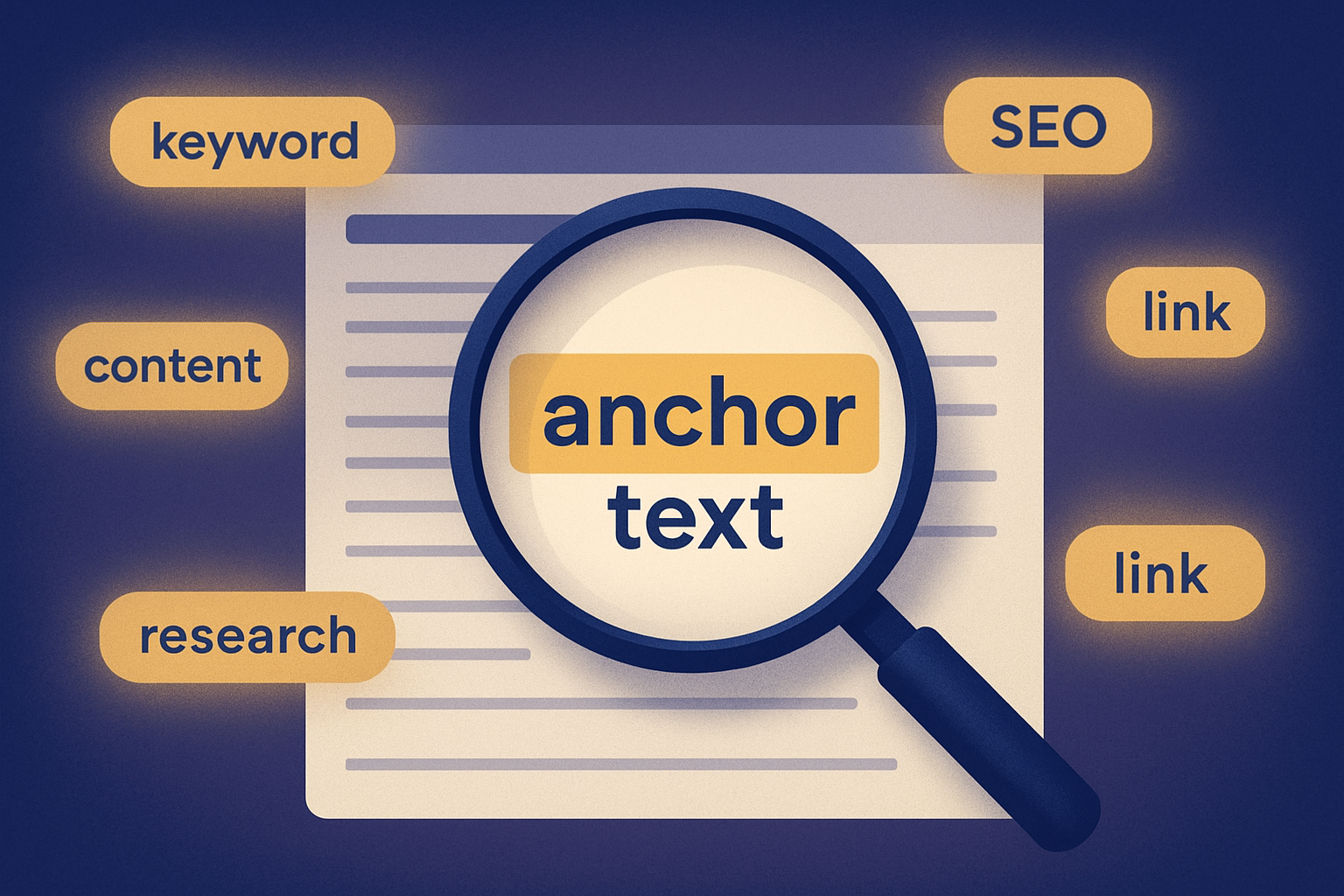
Descriptive anchor text sharpens the topical signal carried alongside the authority a link transfers.
Practical Steps to Maximize Your Link Equity
Building and preserving SEO juice requires consistent, deliberate effort. Follow these steps to get the most from your existing authority and the links you earn going forward: Learn more about what Rank Authority does to measure and distribute site authority.
- Audit your internal links quarterly. Use a crawl tool to identify broken links, redirect chains, and orphaned pages. Fix these issues promptly to stop authority from leaking.
- Map your most authoritative pages. Identify which pages have the strongest backlink profiles, then ensure they link out to your strategically important content.
- Build topically relevant backlinks. Focus outreach on sites that cover your niche. A relevant link from a mid-authority site often outperforms an irrelevant link from a high-authority one. Learn how AI can improve authority by identifying outreach targets and content gaps.
- Vary your anchor text profile. Maintain a natural mix of branded, generic, and keyword-rich anchors to avoid over-optimization penalties.
- Disavow toxic links. If your site has accumulated spammy or manipulative backlinks, use Google’s Disavow Tool to prevent those links from harming your authority.
Putting It All Together: SEO Juice Best Practices
SEO juice is not a mysterious force — it is a measurable, manageable asset that every website accumulates and distributes through its link structure. By understanding how authority flows from page to page, you gain a clearer picture of why some pages rank easily while others struggle despite having strong content.
In practice, the sites that rank consistently well are those that earn high-quality backlinks, maintain clean internal link structures, and deliberately direct their accumulated power toward the pages that matter most. For deeper strategies on building authority that lasts, Rank Authority is a valuable resource worth bookmarking.
Finally, remember that SEO juice compounds over time. Every quality link you earn today adds to a growing reservoir of authority that continues working for your rankings long into the future.
Frequently Asked Questions About SEO Juice
What is SEO juice?
SEO juice is the ranking power or authority that passes from one page to another through hyperlinks. It is also called link juice or link equity, and it influences how well a page ranks in search engine results. The stronger and more relevant the linking page, the more juice it transfers.
Is SEO juice the same as PageRank?
SEO juice is closely related to Google’s PageRank algorithm, which measures page importance based on the quality and quantity of inbound links. However, SEO juice is a broader informal concept that also includes trust signals, anchor text relevance, and topical authority beyond what PageRank alone captures.
How do internal links pass SEO juice?
Internal links pass SEO juice by connecting pages within the same website, allowing authority from high-ranking pages to flow to lower-authority ones. Strategic internal linking helps search engines discover content and distributes ranking power across your entire site architecture.
Does a nofollow link pass SEO juice?
A nofollow link does not pass SEO juice in the traditional sense because it instructs search engines not to follow or credit the link. However, nofollow links still drive referral traffic and contribute to a natural, diverse link profile that search engines view favorably.
How many links on a page affect the SEO juice each one passes?
The more links on a page, the more the available SEO juice is divided among them. Therefore, fewer outbound links from a high-authority page means each linked page receives a larger share of the ranking power available on that page.
Can you lose SEO juice over time?
Yes, SEO juice can diminish if linking pages lose authority, are removed, or if your site accumulates broken links. Regularly auditing your link profile helps preserve and strengthen your accumulated ranking power before it erodes.
What is link equity sculpting?
Link equity sculpting is the practice of directing SEO juice toward your most important pages by using nofollow tags on less critical links or by restructuring internal linking patterns. It helps concentrate ranking power where it will have the greatest competitive impact.
Does anchor text affect how SEO juice is passed?
Yes, anchor text provides context to search engines about the topic of the linked page, which shapes how the transferred SEO juice is interpreted. Relevant, descriptive anchor text strengthens the topical signal delivered alongside the authority transfer.
How do backlinks from authoritative sites boost SEO juice?
Backlinks from high-authority domains pass significantly more SEO juice than links from low-authority sites. A single link from a trusted, well-established publication can have a greater ranking impact than dozens of links from obscure or irrelevant sources.
What common mistakes waste SEO juice?
Common mistakes include linking to low-value or irrelevant pages, having too many outbound links on a single page, using redirect chains that dilute power, and failing to fix broken internal links. Each of these issues leaks ranking authority away from your most important pages.
How long does it take for SEO juice to affect rankings?
The effect of SEO juice on rankings can take anywhere from a few days to several weeks, depending on how frequently Google crawls your site. Newly acquired backlinks from authoritative sources tend to produce ranking improvements faster than links from newer or less-crawled domains.
Does site speed affect SEO juice?
Site speed does not directly affect how SEO juice flows between pages, but it is an independent ranking factor that works alongside link equity. A fast, well-optimized page is more likely to retain and fully benefit from the authority it receives through links.

