
What is a search engine optimisation is one of the most searched questions by website owners, marketers, and entrepreneurs just beginning their digital journey. Search engine optimisation (SEO) is the practice of improving a website’s visibility in unpaid, organic search results on platforms like Google and Bing, so the right audience finds it at the right moment.
Understanding SEO is no longer optional for anyone operating online. In fact, organic search consistently drives more than half of all website traffic globally, making it one of the most powerful and cost-effective channels available to businesses of any size.
How Search Engines Actually Work
Before diving into strategy, it helps to understand the mechanics behind search engines. Platforms like Google use automated programs called crawlers or spiders to continuously browse the web. These crawlers follow links from page to page, collecting data about each URL they visit.
Once a page is crawled, it enters a process called indexing, where the search engine stores and organises the content. Finally, when a user types a query, the engine’s ranking algorithm evaluates hundreds of signals to decide which indexed pages are most relevant and trustworthy, then displays them in order.
Therefore, SEO is essentially the art of making your website easy to crawl, easy to index, and highly relevant to the queries your target audience searches for. Each of those three goals corresponds to a distinct branch of optimisation.
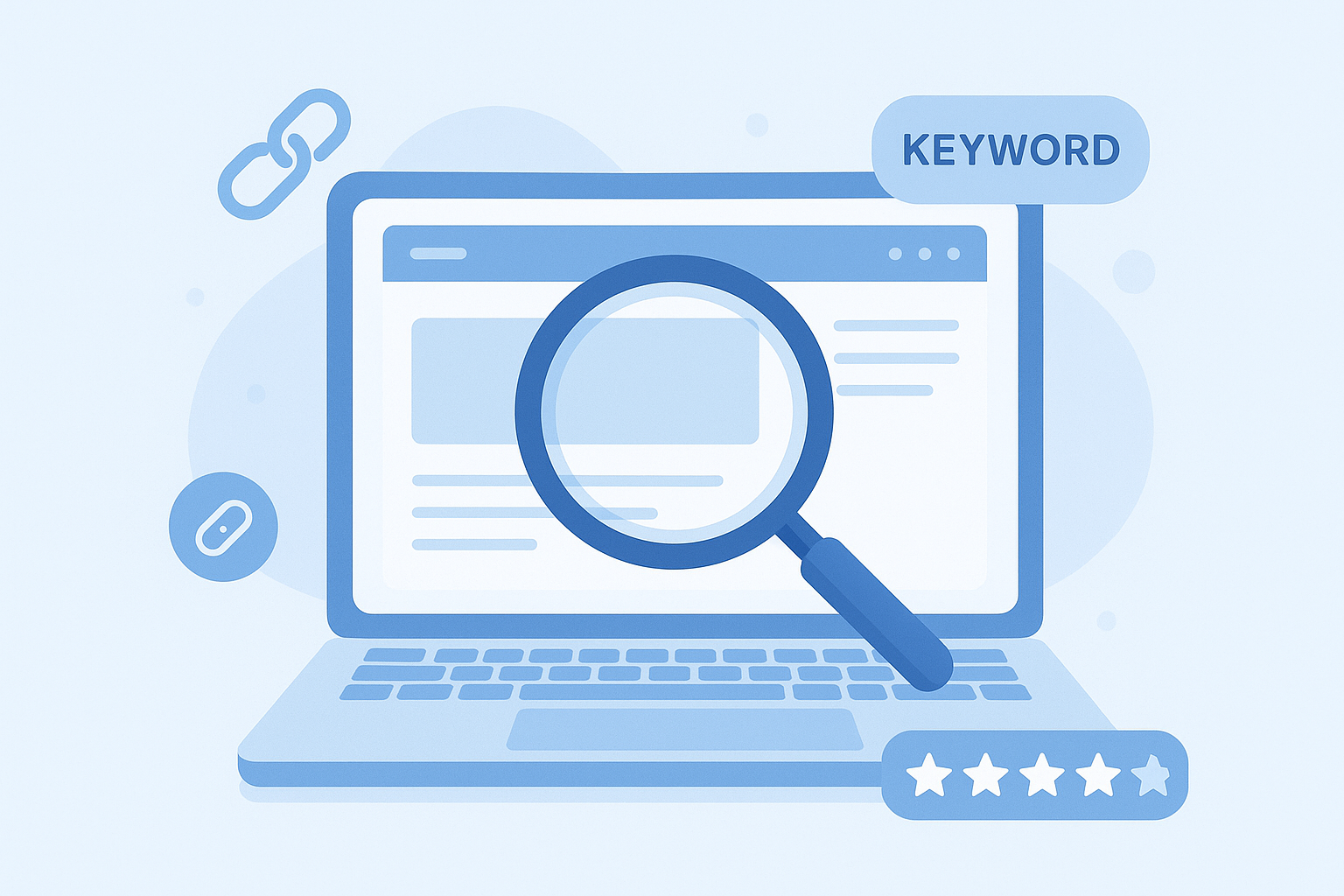
A visual breakdown of what a search engine optimisation strategy covers, from keywords to links and technical health.
The Three Core Pillars of SEO
SEO professionals typically divide their work into three interconnected disciplines. Each pillar addresses a different layer of how search engines evaluate a website, and together they form a complete optimisation strategy.
On-Page SEO: Optimising Your Content
On-page SEO focuses on everything visible and editable within your own website. This includes the quality and depth of your written content, the strategic placement of keywords, title tags, meta descriptions, header structure, and internal linking between related pages.
For example, a well-optimised blog post answers a specific question thoroughly, uses relevant keywords naturally, and links to other helpful pages on the same site. As a result, search engines can better understand the topic and relevance of each page.
Off-Page SEO: Building Authority
Off-page SEO refers to signals that originate outside your website. The most important of these is the backlink — a link from another website pointing to yours. Search engines interpret backlinks as endorsements, so earning links from reputable, relevant sources increases your domain authority.
Additionally, social signals, brand mentions, and guest posting on industry publications all contribute to your site’s perceived trustworthiness. However, quality consistently matters more than quantity when it comes to building a healthy backlink profile.
Technical SEO: The Foundation Beneath the Surface
Technical SEO ensures that search engine crawlers can access and understand your site without obstacles. Key areas include page loading speed, mobile responsiveness, a secure HTTPS connection, clean URL structures, and structured data markup such as Schema.org annotations.
Meanwhile, issues like broken links, duplicate content, and slow server response times can actively suppress rankings even when your written content is excellent. Technical SEO, therefore, acts as the infrastructure that allows every other optimisation effort to function properly.
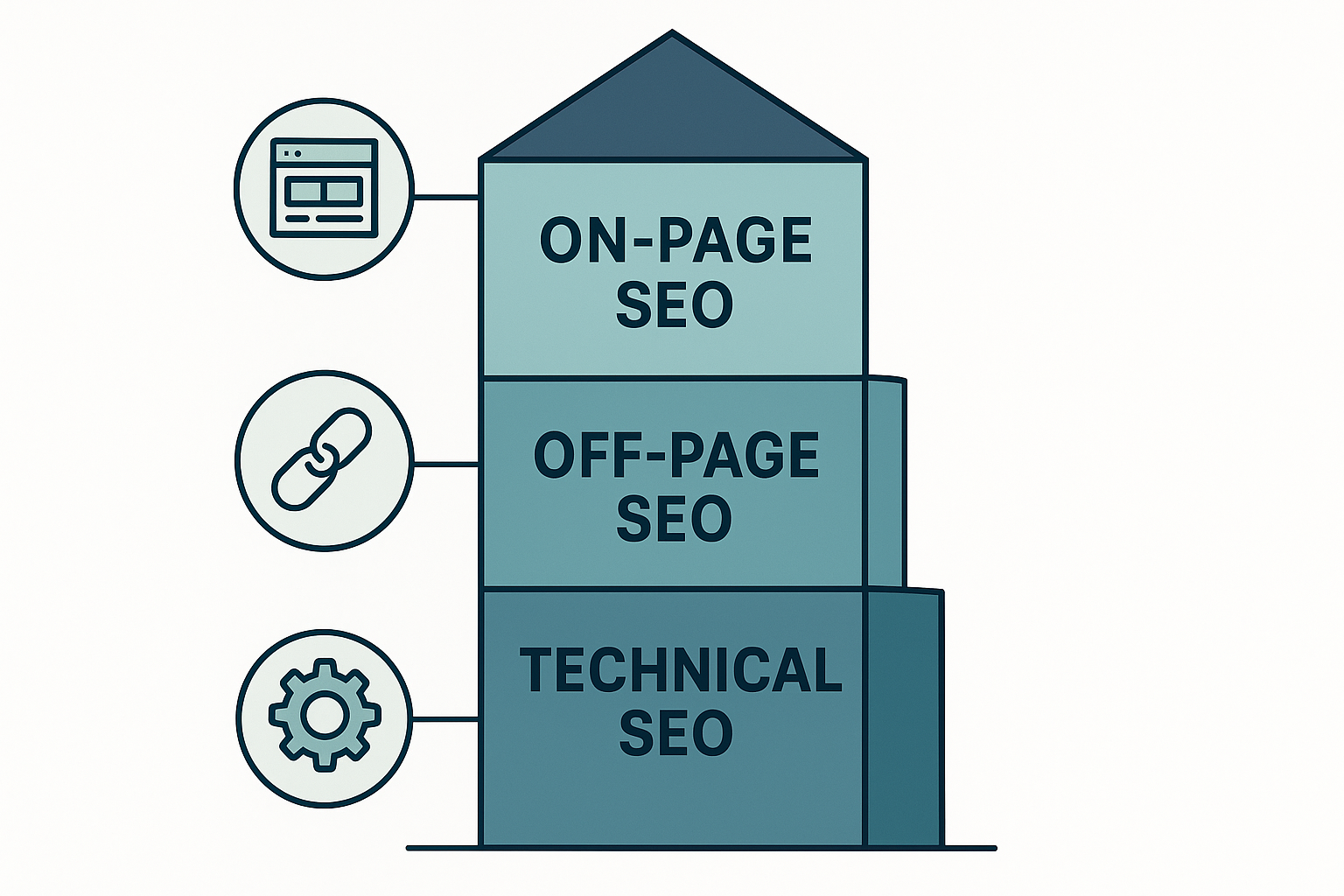
The three pillars of SEO work together to build lasting search visibility and organic traffic growth.
Why Keyword Research Is the Starting Point
Every effective SEO campaign begins with keyword research. Keywords are the exact words and phrases your potential audience types into a search engine when they have a question or need. Choosing the right keywords ensures you create content that matches real demand rather than guessing what people want.
There are two primary keyword categories. Short-tail keywords, such as “SEO,” attract enormous search volume but are intensely competitive. Long-tail keywords, such as “what is a search engine optimisation for small businesses,” attract more specific, motivated searchers and are generally easier to rank for.
In practice, a balanced strategy targets a mix of both, prioritising long-tail terms early in an SEO campaign to build momentum and authority before competing for broader terms.
Common Mistakes That Undermine Rankings
Even well-intentioned SEO efforts can backfire when certain mistakes are made. Understanding these pitfalls helps you avoid wasted effort and potential penalties from search engines.
Keyword stuffing is the practice of overloading a page with repetitive keywords in an unnatural way. Although it was effective in early search engine history, modern algorithms penalise it heavily. Instead, write for humans first and let keywords appear naturally.
Ignoring mobile users is another critical error. Because Google uses mobile-first indexing, a site that performs poorly on smartphones will rank lower across all devices. Similarly, neglecting page speed frustrates users and signals poor quality to search engines.
Finally, publishing thin or duplicate content dilutes your authority. Each page should serve a distinct, valuable purpose. Resources like RankAuthority provide practical guidance on building content strategies that avoid these common traps.
SEO vs. Paid Search: Understanding the Difference
A frequent point of confusion is the distinction between SEO and paid search advertising (often called PPC or pay-per-click). Both appear on search engine results pages, but they operate very differently.
Paid ads occupy labelled positions at the top or bottom of results and charge you each time someone clicks. SEO, in contrast, earns placement in the organic (unpaid) results through relevance and authority. As a result, SEO builds compounding value over time, while paid ads deliver immediate but temporary traffic.
For long-term growth, most digital strategists recommend investing in both channels simultaneously. However, SEO typically delivers a higher return on investment over a 12-month horizon compared to paid advertising alone.
Quick Answer: Search engine optimisation is the process of improving a website’s content, authority, and technical structure so it ranks higher in unpaid search results. It works by aligning your pages with what search engines and users are looking for, driving consistent organic traffic without paying for every click.
How to Start Implementing SEO on Your Website
Getting started with SEO does not require an enormous budget or a team of specialists. The following steps outline a practical sequence for building organic visibility from the ground up.
- Conduct keyword research — Identify the terms your target audience uses and prioritise those with manageable competition and clear intent.
- Audit your technical foundation — Check site speed, mobile responsiveness, HTTPS security, and crawlability before publishing new content.
- Create high-quality content — Publish thorough, accurate, and original pages that genuinely answer your audience’s questions better than existing results.
- Optimise on-page elements — Write compelling title tags, meta descriptions, and use headers logically to structure each page.
- Build internal links — Connect related pages within your site so crawlers and users can navigate your content ecosystem efficiently.
- Earn backlinks — Reach out to relevant publications, create link-worthy resources, and build relationships with other content creators in your niche.
- Monitor and refine — Use tools like Google Search Console to track performance, identify opportunities, and continuously improve underperforming pages.
Additionally, consulting expert resources such as RankAuthority can accelerate your learning curve and help you avoid costly strategic errors early on.
Measuring SEO Success: Key Metrics to Track
SEO progress is measurable, which makes it one of the most accountable digital marketing disciplines. Several core metrics reveal whether your strategy is working or needs adjustment.
Organic traffic measures how many visitors arrive via unpaid search. Keyword rankings show where your pages appear for target terms. Click-through rate (CTR) indicates how compelling your title and meta description are to searchers. Meanwhile, bounce rate and time on page reveal whether visitors find your content valuable once they arrive.
According to Wikipedia’s overview of search engine optimisation, the practice has evolved significantly since the mid-1990s, shifting from simple keyword matching to complex relevance and authority assessments. Tracking the right metrics ensures your efforts remain aligned with how modern algorithms actually evaluate quality.
Conclusion: Why SEO Remains Essential in 2025
Understanding what is a search engine optimisation is the first step toward building a sustainable digital presence. SEO is not a one-time task but an ongoing investment in visibility, credibility, and audience trust. Because search engines continue to evolve, so must your strategy.
Whether you are launching a new website or improving an established one, the principles remain consistent: create valuable content, earn authoritative links, and ensure your technical foundation is solid. As a result, the businesses that commit to SEO today are the ones that dominate organic search tomorrow.
Frequently Asked Questions
What is a search engine optimisation in simple terms?
Search engine optimisation (SEO) is the process of improving a website so it ranks higher in organic search results on engines like Google or Bing. It involves adjusting content, technical structure, and earning backlinks so search engines understand and trust your site.
How long does SEO take to show results?
Most SEO efforts take 3 to 6 months before significant ranking improvements become visible. However, highly competitive keywords or newer websites may require 12 months or more to see substantial organic traffic growth.
What is the difference between on-page and off-page SEO?
On-page SEO refers to optimisations made directly on your website, such as improving content, title tags, and internal links. Off-page SEO involves external factors like backlinks from other websites that signal authority to search engines.
Is SEO free or does it cost money?
Organic SEO does not require paying for ad placements, but it does require an investment of time, tools, and sometimes professional expertise. Costs vary widely depending on whether you handle it yourself or hire an agency.
What is technical SEO?
Technical SEO is the practice of optimising a website’s infrastructure so search engine crawlers can efficiently access, index, and understand its pages. It covers site speed, mobile-friendliness, structured data, and secure HTTPS connections.
Why do search engines change their ranking algorithms?
Search engines update their algorithms to deliver more relevant, accurate, and trustworthy results to users. Google alone makes thousands of algorithm changes per year to combat spam and improve search quality.
What are keywords and why do they matter in SEO?
Keywords are the words and phrases people type into search engines when looking for information. Using relevant keywords strategically in your content helps search engines match your pages to the right audience queries.
What is a backlink and how does it help SEO?
A backlink is a link from one website pointing to another. Search engines treat backlinks as votes of confidence, so earning high-quality backlinks from authoritative sites signals that your content is trustworthy and relevant.
Can a small business benefit from SEO?
Yes, small businesses can benefit significantly from SEO, especially through local SEO strategies that target nearby customers. Ranking well for local search terms can drive consistent foot traffic and leads without ongoing ad spend.
What is the difference between SEO and paid search advertising?
SEO targets organic (unpaid) search results, while paid search advertising places your site at the top of results for a fee per click. SEO builds long-term visibility, whereas paid ads stop driving traffic the moment you stop paying.
What common SEO mistakes should beginners avoid?
Common beginner mistakes include keyword stuffing, ignoring mobile optimisation, neglecting page speed, and failing to build internal links. Additionally, publishing thin or duplicate content can cause search engines to rank your pages lower.
How does Google decide which pages rank first?
Google uses hundreds of ranking factors including content relevance, page authority, user experience signals, and technical health. Its algorithm aims to surface the most helpful and trustworthy result for each search query.

