

Your SEO optimization score is a numeric measurement — typically on a 0 to 100 scale — that reflects how well a webpage is configured to rank in search engine results. Because it consolidates dozens of ranking signals into one figure, it gives site owners a fast, actionable snapshot of their overall search performance.
However, a score alone does not guarantee rankings. Instead, think of it as a diagnostic tool: a low score flags problems worth fixing, while a high score confirms that your foundational work is solid. In this guide, you will learn exactly how scores are calculated, which factors carry the most weight, and how to raise your number systematically.
What Does an SEO Optimization Score Actually Measure?
An SEO optimization score is a composite metric. Most tools divide it into three broad categories: on-page signals, technical health, and off-page authority. Each category contributes a weighted portion of the final number, although the exact weighting varies by platform.
On-page signals include keyword placement, title tag length, meta description quality, header structure, and image alt text. Technical health covers page speed, mobile responsiveness, crawlability, HTTPS status, and structured data. Off-page authority, meanwhile, reflects the quality and quantity of backlinks pointing to your domain.
According to Wikipedia’s overview of search engine optimization, modern SEO encompasses both technical and creative elements, which is why a single score must balance such a wide range of factors.
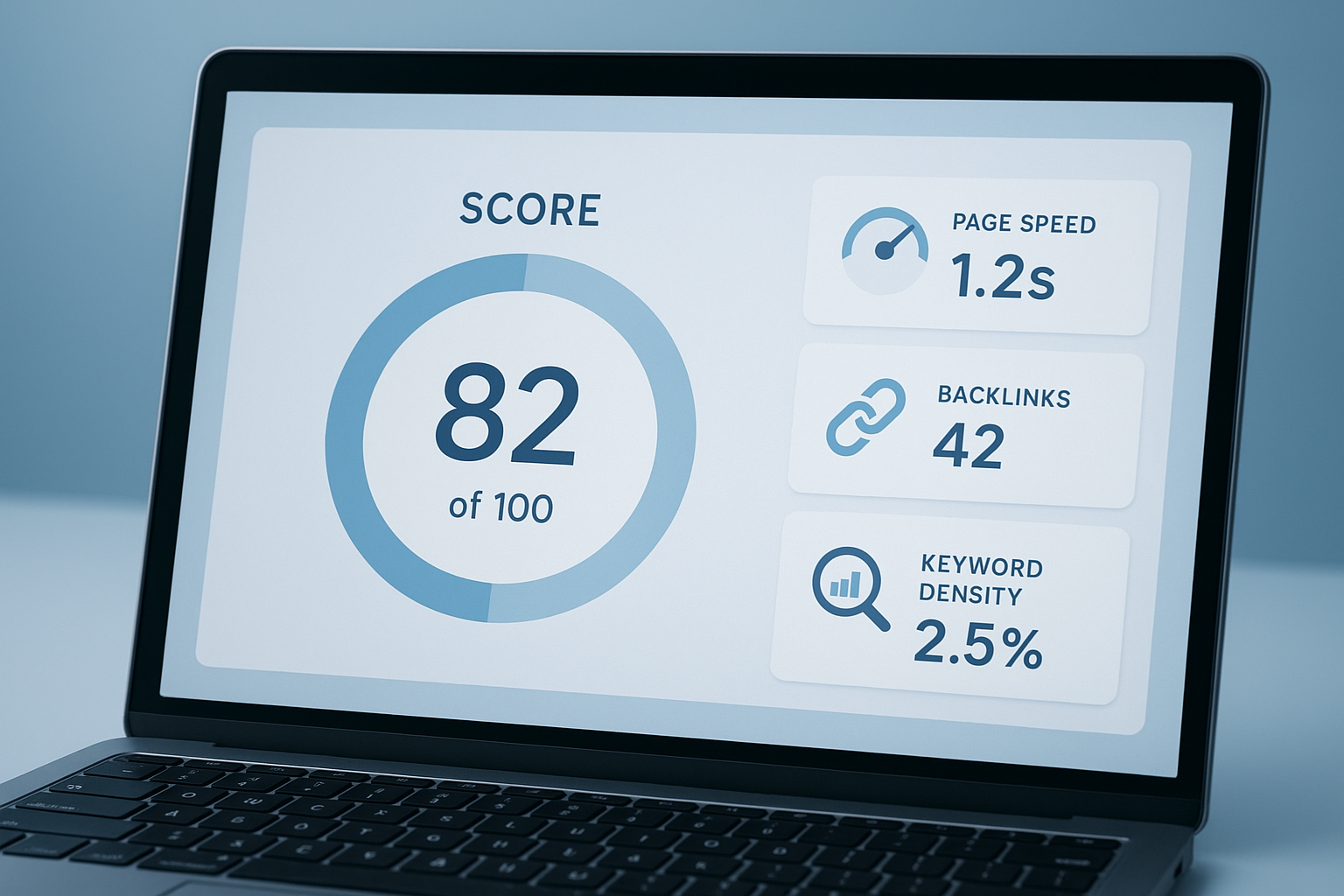
A typical SEO optimization score dashboard consolidates on-page, technical, and off-page signals into one actionable number. For a deeper walkthrough, see our What Are the Costs Associated with SEO Optimization Services?.
The Core Factors That Shape Your Score
On-Page Elements
Title tags are one of the highest-weighted on-page factors. Therefore, every page should have a unique, keyword-rich title within 50 to 60 characters. Meta descriptions, while not a direct ranking signal, influence click-through rates and are still evaluated by most scoring tools.
Header structure matters too. Using a logical H1 through H3 hierarchy helps search engines understand content depth. Additionally, image alt text serves both accessibility and keyword relevance, contributing a small but meaningful boost to your overall score.
Technical Health Signals
Page speed is a confirmed Google ranking factor, and slow load times can significantly drag down your score. Tools like Google Search Console surface Core Web Vitals data, which most SEO scoring platforms incorporate directly.
Mobile-friendliness is equally critical. Because Google uses mobile-first indexing, pages that fail responsiveness tests receive lower scores regardless of their desktop performance. Furthermore, HTTPS security, canonical tags, and a clean XML sitemap all contribute to a higher technical baseline.
Off-Page Authority
Backlinks remain one of the most influential ranking signals. High-authority links from relevant domains raise your domain authority and, as a result, lift your overall SEO score. In contrast, toxic or spammy backlinks can actively lower it, making regular link audits essential.
How to Improve Your SEO Optimization Score Step by Step
Improving your score requires a structured approach. First, establish a baseline by running a full audit. Then, prioritize fixes by potential impact rather than ease of implementation.
Step 1 — Run a Full SEO Audit
Use a dedicated SEO platform to generate your baseline score. Note every flagged issue, categorized by severity. Tools like Rank Authority provide detailed breakdowns that make this prioritization straightforward.
Step 2 — Fix Critical Technical Issues First
Resolve broken links, crawl errors, missing canonical tags, and slow page speed before touching content. These fixes often produce the fastest score gains because they remove active penalties dragging your number down.
Step 3 — Optimize On-Page Elements
Update every title tag and meta description to be unique, relevant, and within recommended character limits. Additionally, ensure your primary keyword appears naturally in the first paragraph, at least one heading, and the image alt text.
Step 4 — Improve Content Quality and Depth
Thin content — pages with fewer than 300 words or that fail to answer user intent — consistently scores lower. Expand these pages, add structured data markup, and align each page with a specific, well-researched search query.
Step 5 — Build Quality Backlinks
Earn links through guest posting, original research, and creating genuinely useful resources. Because off-page authority is weighted heavily, even a handful of high-quality links can meaningfully lift your score.
Step 6 — Monitor and Iterate Monthly
Re-run your audit every month to track progress and catch new issues. Algorithm updates and content changes can introduce fresh problems, so ongoing monitoring is non-negotiable.
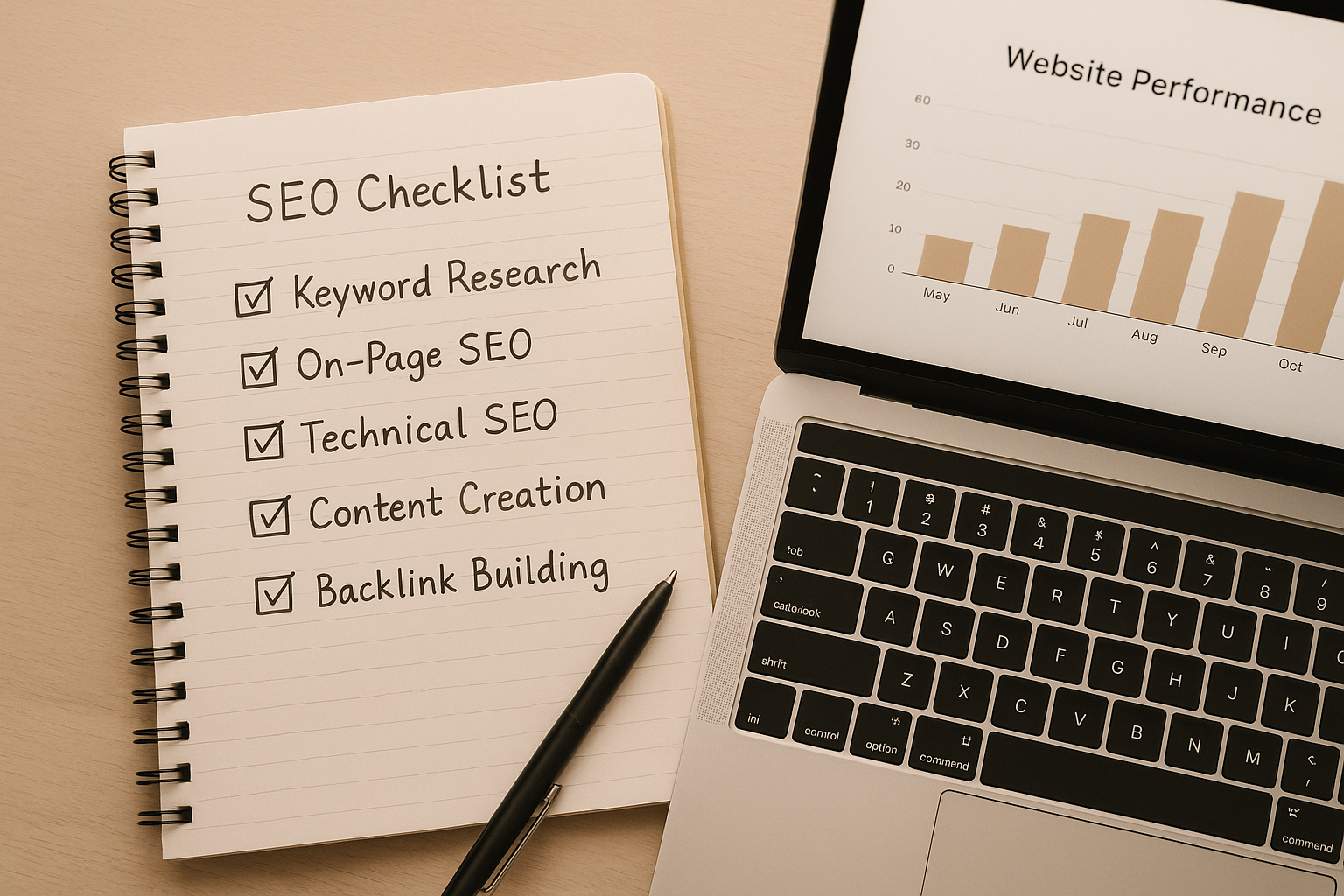
Tracking your progress monthly helps you connect specific optimizations to measurable score improvements.
Common Mistakes That Lower Your Score
Many site owners make the mistake of chasing the score rather than optimizing for users. For example, keyword stuffing raises keyword density metrics but triggers spam filters and lowers content quality signals. Similarly, duplicating meta descriptions across multiple pages is a frequent oversight that tools penalize heavily.
Another common error is neglecting mobile performance. Although a site may look perfect on desktop, failing Core Web Vitals on mobile devices will suppress the score significantly. Finally, ignoring internal linking leaves page authority concentrated on a few URLs instead of distributed across the site.
How Different Tools Score the Same Page Differently
It is important to understand that no universal SEO score standard exists. Ahrefs, SEMrush, Moz, and other platforms each use proprietary algorithms with different factor weightings. Therefore, a page scoring 75 on one tool might score 62 on another — not because one is wrong, but because they prioritize different signals.
The practical takeaway is to choose one primary tool, establish your baseline with it, and track changes consistently within that same platform. Switching tools mid-campaign introduces comparison errors that make progress difficult to measure accurately. Resources like Rank Authority offer consolidated scoring that helps reduce this cross-tool confusion.
Putting Your Score in Context
A score above 70 is generally considered healthy by most platforms. Scores between 50 and 70 indicate moderate issues that are worth addressing. Anything below 50 suggests foundational problems — often technical — that are actively suppressing your search visibility.
However, always compare your score against competitors in the same niche rather than against an abstract ideal. A score of 65 in a low-competition local market may be sufficient to rank on page one, while a score of 80 in a highly competitive industry might still leave you on page three.
Frequently Asked Questions About SEO Optimization Score
What is an SEO optimization score?
An SEO optimization score is a numeric metric, typically on a 0 to 100 scale, that reflects how well a webpage is optimized for search engines. It evaluates factors such as keyword usage, page speed, metadata, backlinks, and technical health. Most tools generate this score automatically during a site audit.
Is a higher SEO score always better?
Generally, a higher score indicates better optimization, but no single score guarantees top rankings. Search engines use hundreds of signals, so a high score should be one goal among many, not the only measure of success.
How is an SEO optimization score calculated?
Different tools calculate SEO scores differently, but most analyze on-page factors like title tags and meta descriptions, technical factors like page speed and mobile-friendliness, and off-page factors like backlink quality. Each factor is weighted and combined into a single composite number.
What is a good SEO optimization score?
A score above 70 out of 100 is generally considered good by most SEO tools. Scores above 80 are strong, while anything below 50 suggests significant optimization issues that need attention.
How long does it take to improve an SEO score?
Technical fixes like correcting metadata or improving page speed can raise your score within days. However, ranking improvements from those changes typically take several weeks to a few months to appear in search results.
Which tools measure SEO optimization score?
Popular tools include Rank Authority, Ahrefs, SEMrush, Moz, and Google Search Console. Each uses a different methodology, so scores may vary across platforms. For consistency, stick to one tool when tracking progress over time.
Does page speed affect the SEO optimization score?
Yes, page speed is a confirmed Google ranking factor and is included in most SEO score calculations. Slow-loading pages hurt both user experience and search engine performance, often lowering the score by a meaningful margin.
What is the biggest mistake people make when trying to improve their SEO score?
The most common mistake is over-optimizing for the score itself rather than for users. Keyword stuffing, duplicate meta descriptions, and ignoring content quality can temporarily raise a score while actually hurting rankings in the long run.
How does mobile-friendliness impact an SEO score?
Mobile-friendliness is a core ranking signal for Google and is weighted heavily in most SEO score tools. Pages that fail mobile usability tests will score significantly lower, particularly since Google switched to mobile-first indexing.
Can internal linking improve my SEO optimization score?
Yes, strategic internal linking distributes page authority across your site and helps search engines understand your content structure. Most audit tools reward well-linked pages with a higher score, especially when anchor text is descriptive and relevant.
How often should I check my SEO optimization score?
For active websites, checking monthly is a practical baseline. After major content updates, site migrations, or algorithm changes, you should audit your score immediately to catch any regressions early.
Do backlinks influence the SEO optimization score?
Yes, backlink quality and quantity are off-page factors included in many SEO scoring tools. High-authority links from relevant domains raise your score and signal trustworthiness to search engines, while spammy links can lower it.
Conclusion
Your SEO optimization score is one of the most practical diagnostic tools available to any site owner or marketer. It translates a complex web of technical, content, and authority signals into a single, trackable number. Therefore, use it as a starting point for prioritizing improvements, not as a final verdict on your site’s performance.
By systematically addressing technical issues first, then refining on-page elements, and finally building authoritative backlinks, you create a compounding effect where each improvement reinforces the next. As a result, your score rises alongside your actual search visibility — which is ultimately the outcome that matters most.

