
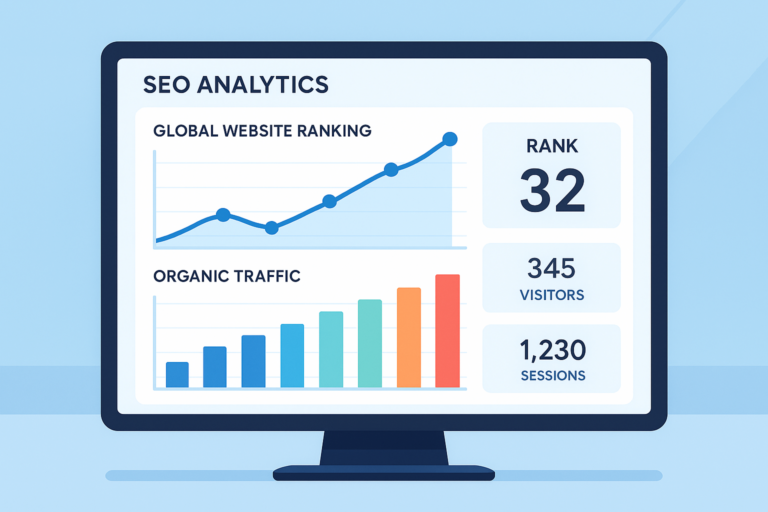
What is Semrush Rank is a question every SEO professional encounters early in their journey — it is a proprietary global metric assigned by Semrush that ranks every website in its database by estimated monthly organic search traffic, where rank 1 belongs to the site receiving the most organic visits. Understanding this metric helps you benchmark your site’s performance and make smarter competitive decisions.
Unlike raw traffic numbers, Semrush Rank gives you a relative position among millions of websites worldwide. As a result, it becomes a powerful compass for gauging how your domain compares against both direct competitors and industry giants.
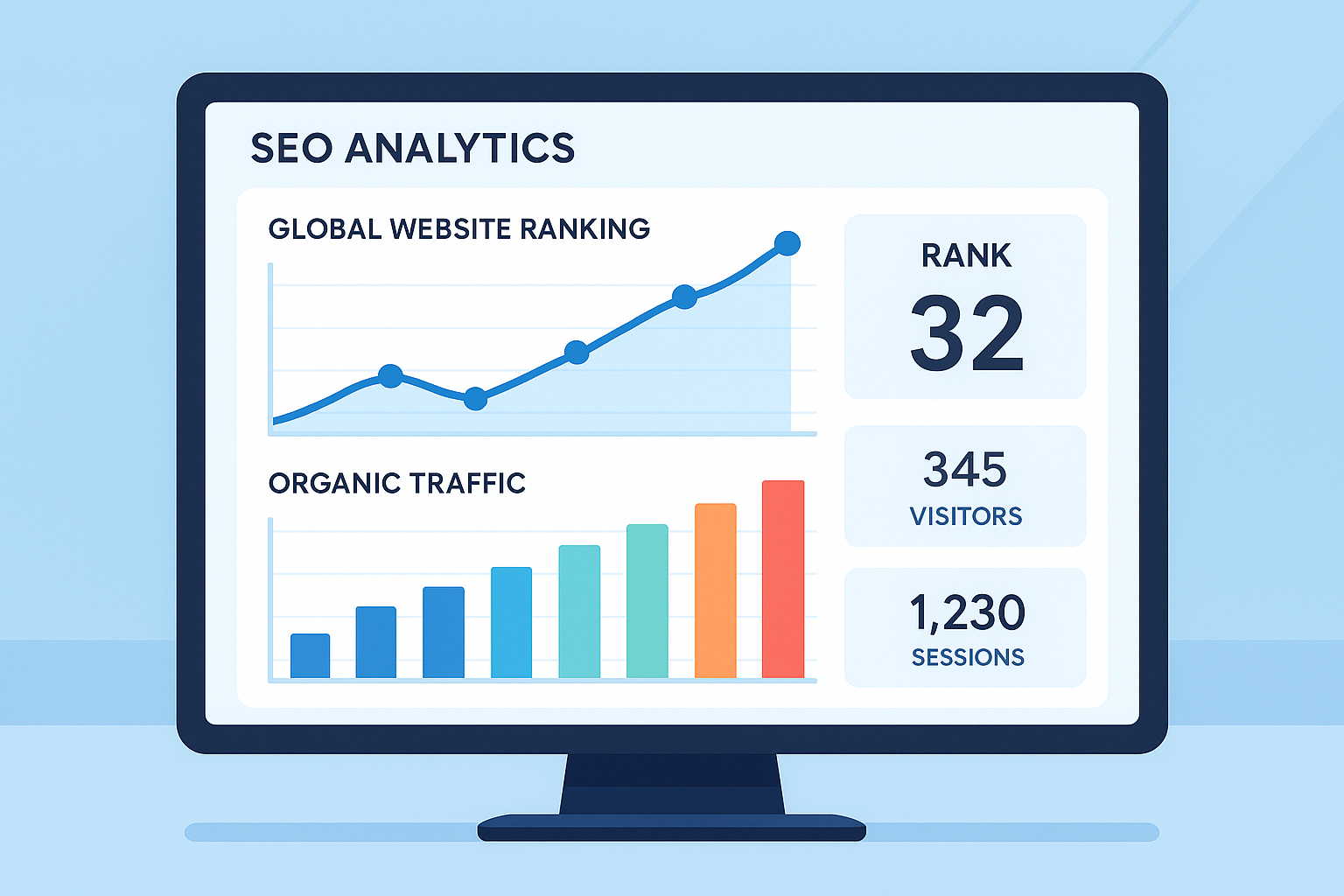
A typical Semrush Rank overview reveals estimated organic traffic position alongside keyword and backlink data.
What Is Semrush Rank and How Does It Work?
Semrush Rank is calculated by estimating the total monthly organic traffic a domain receives from Google’s search results. Semrush cross-references its keyword database — containing billions of search queries — with each domain’s tracked SERP positions and applies click-through rate models to produce a traffic estimate. Websites are then sorted from highest to lowest estimated traffic, and each is assigned a sequential rank number.
Therefore, the lower your Semrush Rank number, the more organic traffic Semrush estimates your site receives. For example, a domain ranked #500 is estimated to receive far more organic traffic than a domain ranked #500,000. This inverse relationship is important to keep in mind when interpreting results.
According to search engine optimization principles, traffic estimation models rely on keyword volume data combined with average position-based click rates. Semrush applies this methodology at scale across its entire domain database, which currently includes over 800 million domains.
Why This Metric Matters for Your SEO Strategy
Many SEOs focus exclusively on individual keyword rankings, however Semrush Rank provides a macro-level view of your entire domain’s organic health. This bird’s-eye perspective is especially valuable when reporting to clients or stakeholders who need a single, digestible number to understand progress.
Additionally, tracking your Semrush Rank over time reveals momentum. A steadily decreasing rank number signals that your content and SEO efforts are compounding into real traffic growth. In contrast, a rising rank number is an early warning sign that organic visibility is eroding, even before you notice it in Google Search Console.
For agencies and consultants, Semrush Rank also serves as a quick competitive filter. Before investing hours in a full competitor audit, a glance at rank numbers helps prioritize which rivals deserve the deepest analysis. Resources like Rank Authority provide additional guidance on interpreting these metrics within a broader SEO framework.
Semrush Rank vs. Other SEO Metrics
It is easy to confuse Semrush Rank with other popular SEO metrics, but each measures something fundamentally different. Understanding these distinctions prevents misinterpretation and leads to better strategic decisions.
Semrush Rank vs. Domain Authority (Moz): Domain Authority is a link-based score from 1 to 100 that predicts ranking potential. Semrush Rank, meanwhile, reflects actual estimated traffic performance rather than link strength alone.
Semrush Rank vs. Ahrefs Domain Rating: Ahrefs Domain Rating measures backlink profile strength on a logarithmic scale. In contrast, Semrush Rank is purely traffic-based and does not directly factor in link quality.
Semrush Rank vs. Authority Score: Semrush also offers its own Authority Score, which blends backlinks, organic traffic, and spam signals. Semrush Rank, however, focuses solely on the traffic dimension of that equation.
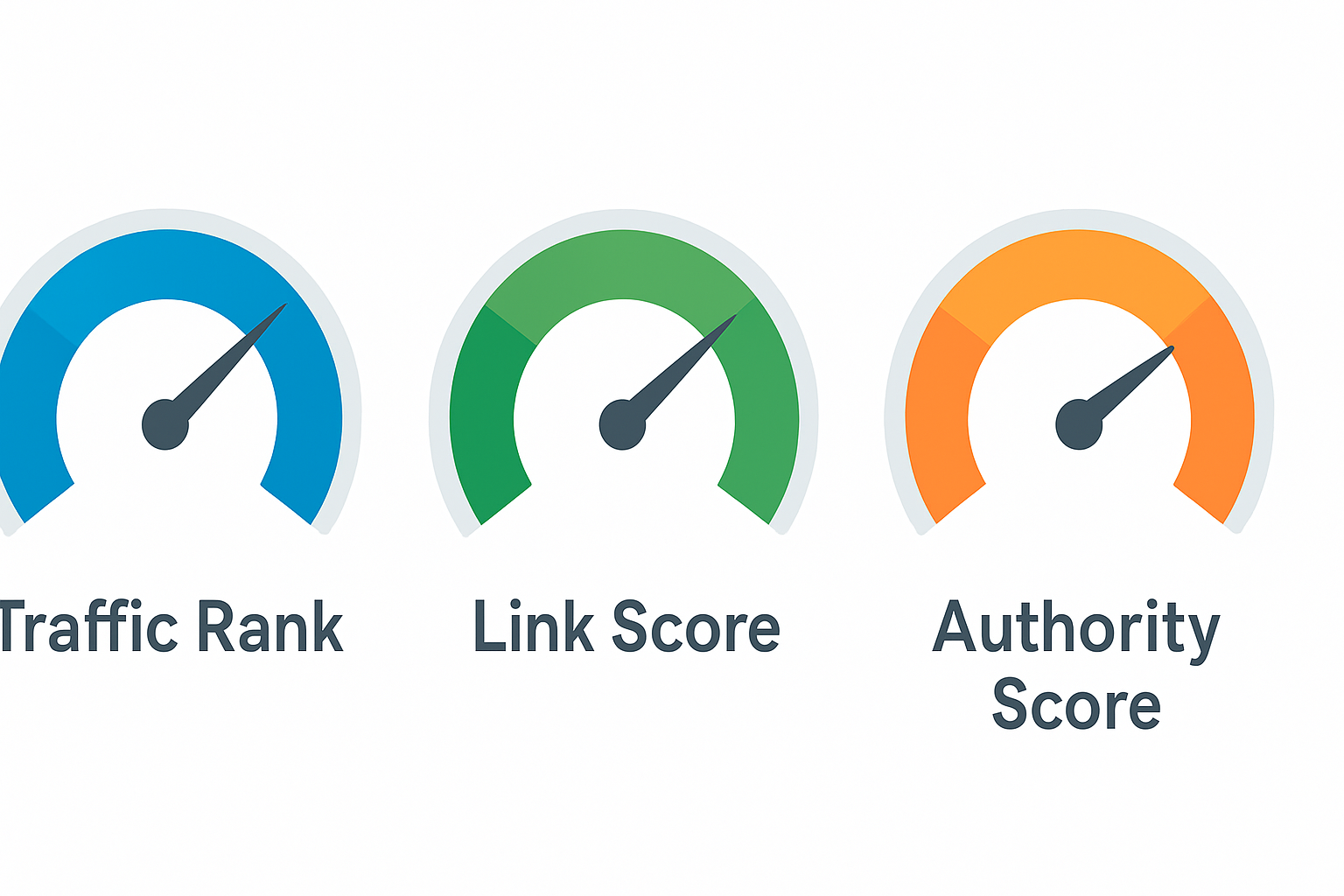
Different SEO metrics measure distinct dimensions of website performance — traffic rank, link strength, and authority are not interchangeable.
What Counts as a Good Rank Score?
The definition of a “good” Semrush Rank depends heavily on your industry, niche, and goals. Because millions of websites are included in the database, context is everything.
- Top 10,000: Major media outlets, global e-commerce platforms, and dominant SaaS brands typically occupy this tier.
- 10,000 – 100,000: Strong regional or niche authority sites with substantial organic audiences.
- 100,000 – 500,000: Growing websites with solid content strategies and consistent keyword rankings.
- 500,000 – 2,000,000: Small business and niche sites with meaningful but limited organic traffic.
- Above 2,000,000: New or low-traffic sites still building their organic presence.
Therefore, a local service business ranking at 800,000 may be performing extremely well for its market, while a national e-commerce site at the same rank would have significant room for improvement. Always benchmark against direct competitors rather than absolute numbers.
How to Find and Track Your Score in Semrush
Finding your Semrush Rank is straightforward. First, log into your Semrush account and navigate to the Domain Overview tool. Next, enter your domain name and select your target database — either global or a specific country. Finally, your rank appears prominently near the top of the results, alongside estimated traffic, keyword count, and backlink totals.
For ongoing tracking, add your domain to a Semrush project and monitor rank changes over time using the Traffic Analytics module. Additionally, you can compare your rank trend against up to four competitor domains simultaneously, which makes it easy to spot shifts in relative competitive strength.
Semrush updates its rank data on a monthly cycle, so significant improvements in keyword positions may take several weeks to reflect in your rank number. Because of this delay, use Semrush Rank as a monthly health check rather than a day-to-day performance indicator.
Practical Steps to Improve Your Organic Standing
Improving your Semrush Rank requires growing your estimated organic traffic, which in turn means earning more keyword rankings and higher positions in Google. The following strategies are the most effective levers available.
- Conduct a keyword gap analysis. Use Semrush’s Keyword Gap tool to identify high-volume keywords your competitors rank for but you do not. Targeting these gaps creates quick traffic opportunities.
- Optimize existing content for featured snippets. Featured snippets and top-3 positions generate disproportionately high click-through rates, which directly boosts estimated traffic and therefore improves your rank.
- Build topical authority through content clusters. Publishing comprehensive pillar pages supported by related cluster articles signals deep expertise to Google, leading to broader keyword coverage across your domain.
- Earn high-quality backlinks. Because backlinks remain a core Google ranking signal, acquiring links from authoritative domains lifts your keyword positions and, consequently, your organic traffic estimates.
- Fix technical SEO issues. Crawl errors, slow page speed, and poor Core Web Vitals can suppress rankings across your entire site. Resolving these issues allows Google to fully index and rank your content.
For a deeper breakdown of building the kind of domain authority that moves this metric, Rank Authority offers structured guidance on sustainable organic growth strategies.

Consistently reviewing traffic trends and keyword gaps is essential for improving your site’s organic performance over time.
Common Mistakes When Interpreting This Metric
Even experienced SEOs sometimes misread Semrush Rank data. First, many practitioners treat it as a direct measure of Google’s opinion of their site, which it is not. Semrush Rank is an estimate built on third-party data, and it can differ from actual Google Search Console traffic figures.
Additionally, comparing ranks across wildly different industries without context leads to false conclusions. A niche B2B software company will naturally have a higher rank number than a general news website, even if the B2B site is the undisputed leader in its space.
Finally, obsessing over short-term rank fluctuations is counterproductive. Because the metric updates monthly and reflects a rolling estimate, small changes of a few thousand positions are often statistical noise rather than meaningful signals.
Frequently Asked Questions
What is Semrush Rank exactly?
Semrush Rank is a proprietary metric that ranks every website in the Semrush database by estimated organic search traffic, with rank 1 going to the site that receives the most organic visits. The lower the number, the stronger the site’s organic performance.
How is Semrush Rank calculated?
Semrush Rank is calculated based on the estimated monthly organic traffic a domain receives from Google search results. Semrush uses its keyword database, tracked SERP positions, and click-through rate models to estimate traffic and assign a global rank accordingly.
What is a good Semrush Rank score?
A Semrush Rank below 100,000 is generally considered strong, indicating a site with significant organic traffic. For most niche or small business websites, a rank between 500,000 and 2,000,000 is typical and still meaningful.
Is Semrush Rank the same as Domain Authority?
No, Semrush Rank and Domain Authority are different metrics. Domain Authority, created by Moz, is a link-based score from 1 to 100, while Semrush Rank is a traffic-based global ranking position with no fixed upper limit.
How often does Semrush Rank update?
Semrush updates its rank data regularly, typically on a monthly basis as part of its database refresh cycle. However, significant ranking changes can sometimes reflect sooner depending on data crawl intervals.
Can a new website have a Semrush Rank?
Yes, but only once Semrush detects organic keyword rankings for the domain. New websites with no indexed pages or keyword positions will not yet appear in the Semrush Rank database.
How does Semrush Rank differ from Alexa Rank?
Semrush Rank is based purely on estimated organic search traffic from Google, while Alexa Rank (now discontinued) measured total website traffic from all sources using browser toolbar data. Semrush Rank is therefore more relevant for SEO analysis.
Why did my Semrush Rank drop suddenly?
A sudden drop in Semrush Rank usually means your estimated organic traffic declined, which can result from a Google algorithm update, lost keyword rankings, or a technical SEO issue like a crawl block. Auditing your top keyword positions is the best first step.
Does Semrush Rank affect actual Google rankings?
No, Semrush Rank is a third-party metric and has no influence on how Google ranks your pages. It is an analytical tool for benchmarking and competitive research, not a ranking signal used by Google’s algorithm.
How can I improve my Semrush Rank?
To improve your Semrush Rank, focus on increasing your organic keyword rankings through quality content creation, on-page SEO optimization, and earning authoritative backlinks. As your estimated organic traffic grows, your rank number will decrease, indicating improvement.
Where can I find my website’s Semrush Rank?
You can find your Semrush Rank by entering your domain into the Semrush Domain Overview tool. The rank appears near the top of the report alongside estimated traffic, keywords, and backlink data.
Is Semrush Rank useful for competitor analysis?
Yes, Semrush Rank is highly useful for competitor analysis because it lets you compare your organic traffic performance against competitors at a glance. Tracking rank changes over time reveals which competitors are gaining or losing organic visibility.
Key Takeaway
Understanding what is Semrush Rank empowers you to benchmark your site’s organic performance, identify competitive gaps, and prioritize SEO investments with confidence. Use it as a monthly directional indicator alongside keyword rankings and actual traffic data for the most complete picture of your domain’s health.

