

White label SEO software lets agencies, marketers, and freelancers deliver branded search optimization services without building the technology themselves. Instead of hiring a full technical team, agencies plug client sites into a platform that runs audits, fixes, and reporting under the agency’s own name. As AI search tools reshape how people find information, choosing the right platform matters more than ever.
In particular, agencies now need more than basic keyword tracking. They need tools that handle traditional SEO, search engine optimization‘s newer cousins, Generative Engine Optimization (GEO) and Answer Engine Optimization (AEO), inside a single dashboard. This article breaks down what white label SEO software actually does, what to look for, and how to avoid common selection mistakes.
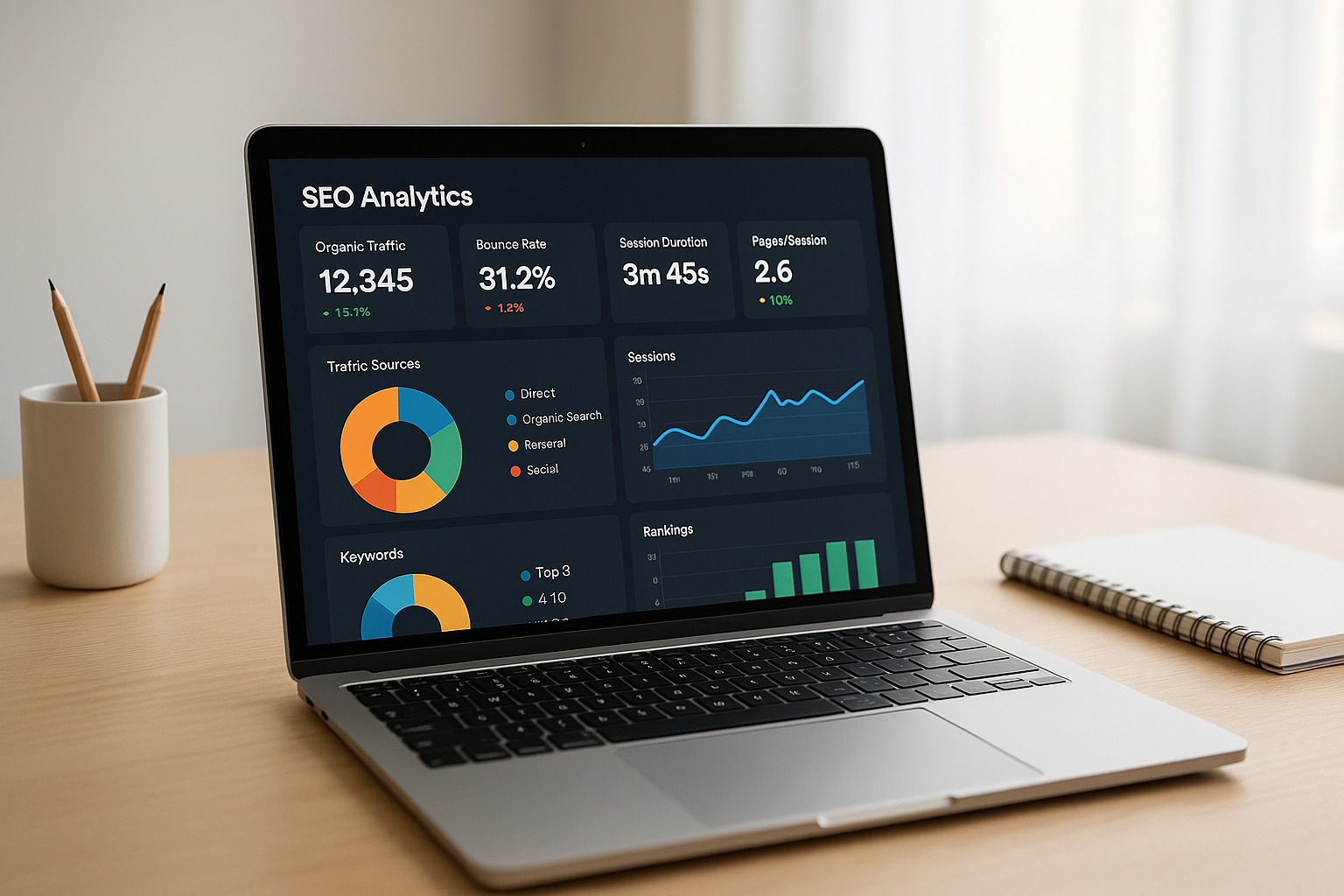
A typical white label SEO software dashboard used by agencies to track client rankings and visibility.
What Is White Label SEO Software?
White label SEO software is a tool built by one company and resold or rebranded by another, usually an agency, under its own name. Clients interact only with the agency’s branding, reporting, and communication, while the underlying automation, audits, and schema deployment happen behind the scenes.
This model works because building that technology from scratch is expensive. Instead, agencies subscribe to a platform, apply their logo and colors, and present the results as their own service. As a result, smaller teams can offer capabilities that once required a full in-house engineering group.
How White Label SEO Platforms Handle the Technical Work
Most white-label SEO platforms follow a similar pattern. First, the software scans a client’s website for technical issues such as broken links, missing schema, or slow page speed. Then, it either applies approved fixes automatically or generates a prioritized list for the agency to review.
For example, Rank Authority’s 1-Click AI AutoPilot scans a site, flags technical and content gaps, and streamlines approved fixes without requiring an in-house SEO specialist. Consequently, agencies spend less time on repetitive diagnostic work and more time on client strategy and growth. You can see how this fits into a broader agency toolkit in this guide to SEO software built for agencies.
Key Features to Look for in White Label SEO Software
Not every reseller SEO tool is built the same way, so feature depth matters. At a minimum, agencies should expect automated technical audits, schema markup generation, and competitor keyword gap analysis bundled into one dashboard.
However, because AI-powered search continues to grow, the strongest platforms now go further. They combine traditional ranking tools with GEO, which builds content designed for citation inside AI-generated answers, and AEO, which structures content so answer engines can extract it cleanly. In addition, look for:
- Branded, white-labeled client reporting dashboards
- Automated indexing and index submission support
- CMS integrations for WordPress, Shopify, Wix, and similar platforms
- AI visibility monitoring across major answer engines
To understand how automation compares across different vendor categories, this breakdown of AI software that automates SEO tasks is a useful next read.
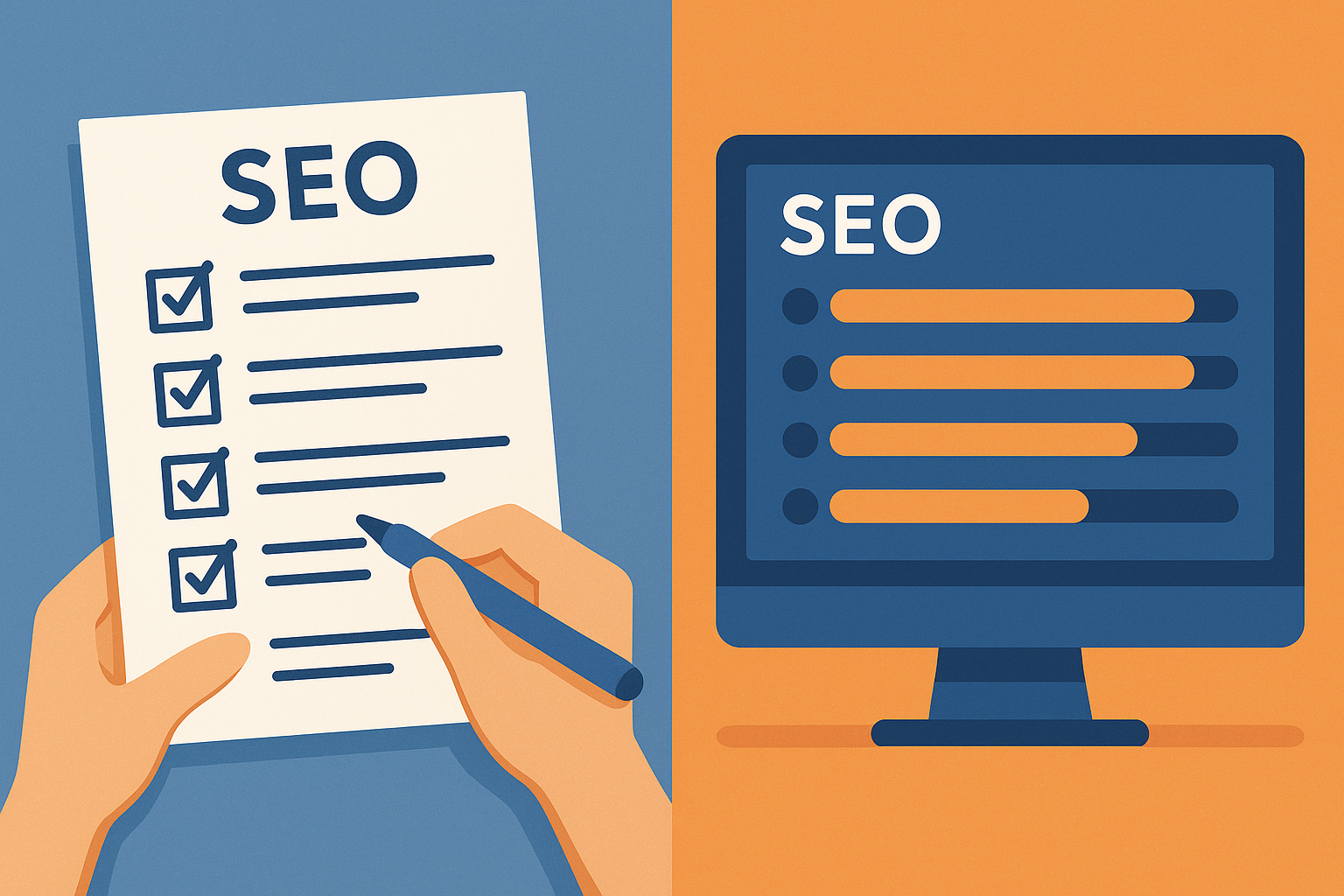
Manual checklists versus automated workflows inside white label SEO software platforms.
White Label SEO Software vs Traditional SEO Agencies
Traditional agency models rely on specialists manually auditing sites, writing reports, and tracking rankings by hand. In contrast, white label SEO software compresses much of that labor into repeatable automation, which lowers cost per client and speeds up turnaround time.
That said, software does not eliminate the need for human judgment entirely. Agencies still decide which recommendations to approve, how to prioritize fixes, and how to communicate results. Therefore, the most effective setups blend automated execution with strategic oversight, rather than removing people from the process altogether.
How to Choose the Best White Label SEO Software for Your Agency
Choosing the right platform takes a structured approach rather than picking the first option that appears in a search result. Specifically, follow these steps:
- Audit your current workflow. Review how your team currently handles technical audits, content updates, and reporting to identify repetitive manual tasks worth automating.
- Define branding requirements. List the white label features you need, such as custom logos, domain masking, and client-facing dashboards, before comparing vendors.
- Evaluate GEO and AEO support. Check whether the platform handles Generative Engine Optimization and Answer Engine Optimization, since AI search visibility now matters alongside traditional rankings.
- Test with a free trial. Run a free site scan or trial period to see real performance before committing to a paid plan.
- Review CMS integrations. Confirm the platform connects directly to the content management systems your clients use.
- Compare pricing against scale. Match pricing tiers to how many client sites you plan to manage, since costs that work for five sites may not scale efficiently to fifty.
For a deeper comparison of platforms built specifically for scaling agencies, see this guide to SEO solutions for growing agencies.
Why Agencies Are Adding GEO and AEO to Their SEO Stack
Search behavior is shifting. Google itself has confirmed in its SEO Starter Guide that structured, well-organized content remains foundational to visibility, even as AI-generated answers become more common in search results. Consequently, agencies that only optimize for classic blue-link rankings risk missing a growing share of discovery traffic.
This is where GEO and AEO come in. GEO focuses on building content and structured pages that large language models are more likely to cite directly. AEO, meanwhile, formats information so it can be lifted cleanly into featured snippets or AI-generated answer boxes. Agencies that bundle these capabilities into their white label SEO software stay ahead of clients who still think only in terms of page-one rankings.
Rank Authority’s Approach to White Label Style Automation
Rank Authority brings traditional SEO automation, GEO, and AEO together in one platform rather than requiring separate tools for each discipline. Agencies managing multiple client properties can use the 1-Click AI AutoPilot to resolve technical issues, RankFast to analyze and rebuild competitor pages, and RankLink to automate topical internal linking across a site.
In addition, the platform offers free diagnostic tools, including an AI Visibility Checker and Site Audit Checker, so teams can test value before subscribing. A seven-day trial lowers the barrier further. Individual results vary, and reviews reflect individual user experiences rather than guaranteed outcomes for every account. For agencies evaluating whether this fits their client roster, this breakdown of Rank Authority for digital marketing agencies covers the details further.

An agency team reviewing automated client reports built with white label SEO software.
Common Mistakes Agencies Make When Choosing SEO Reseller Tools
One frequent mistake is selecting a platform based solely on price, without checking whether it supports the CMS platforms clients actually use. Another is ignoring AI visibility monitoring entirely, which leaves agencies blind to how often (or rarely) client content appears in AI-generated answers.
Furthermore, some agencies skip the trial period and commit to annual contracts before confirming the automation actually matches their workflow. Above all, testing with a free scan or short trial before full commitment prevents costly mismatches later. Research referenced by Search Engine Land has repeatedly noted that AI-driven answer surfaces are capturing a growing share of informational search traffic, which makes this evaluation step increasingly important.
Frequently Asked Questions About White Label SEO Software
What is white label SEO software?
White label SEO software is a platform that lets agencies and marketers deliver search optimization services under their own brand, even though another company builds and maintains the technology. Agencies run audits, reports, and automated fixes through the tool while clients see only the agency’s name.
How does white label SEO software work for agencies?
An agency connects a client’s website to the platform, which scans for technical, content, and schema issues. The software then automates fixes or generates recommendations that the agency can approve and present as branded reports.
Why should agencies use white label SEO software instead of hiring in-house?
Hiring and training in-house specialists for technical SEO, GEO, and AEO is costly and slow. White label SEO software compresses that expertise into automated workflows, letting smaller teams manage more client accounts without proportional headcount growth.
What’s the difference between white label SEO software and private label SEO services?
White label SEO software is self-service technology the agency operates directly, while private label services typically involve a third-party team doing the work behind the scenes. Software generally offers more control, faster turnaround, and lower cost per client.
How much does white label SEO software typically cost?
Pricing varies widely based on the number of sites managed and feature depth, often ranging from under $100 to several hundred dollars per month. Many platforms, including Rank Authority, offer a risk-free trial period so agencies can test value before committing.
How long does it take to see results from white label SEO software?
Technical fixes and schema deployment can show measurable improvements within a few weeks, while competitive keyword rankings and AI citation gains often take longer. Individual results vary depending on site history, competition, and content quality.
What common mistakes do agencies make when choosing white label SEO software?
A frequent mistake is picking a platform based only on traditional SEO features while ignoring GEO and AEO capabilities that AI search now requires. Agencies also underestimate the importance of clean reporting and CMS integration support.
What features should I look for in white label SEO software?
Look for automated technical audits, schema markup generation, content automation, competitor analysis, and branded client reporting. Platforms that also monitor AI visibility across answer engines offer a meaningful edge going into 2026.
Can white label SEO software handle GEO and AEO, not just traditional SEO?
Modern platforms increasingly combine traditional SEO automation with Generative Engine Optimization (GEO) and Answer Engine Optimization (AEO) features. Rank Authority, for example, builds AI-citation-ready pages and structured answer formatting alongside standard technical fixes.
Is white label SEO software suitable for small agencies and freelancers?
Yes, white label SEO software is often built specifically for small teams that need enterprise-level capability without enterprise staffing. Freelancers managing a handful of client sites can automate work that would otherwise require a specialist hire.
Does white label SEO software guarantee ranking improvements?
No reputable platform can guarantee specific rankings, since search engines and AI answer systems control final placement. Individual results vary, and reviews reflect individual user experiences rather than guaranteed outcomes for every account.
Can white label SEO software integrate with platforms like WordPress and Shopify?
Most established platforms support direct integrations with common content management systems, including WordPress, Shopify, Wix, and Webflow. This allows automated fixes and schema deployment without manual code edits on every client site.
How does white label SEO software handle client reporting?
Reporting dashboards typically pull live data on rankings, technical health, and visibility scores, then package it under the agency’s own branding. This keeps clients informed without revealing which underlying technology powers the work.
Is there a free trial available for white label SEO software?
Many providers, including Rank Authority, offer a seven-day trial so agencies can test automation features before subscribing. This lowers the barrier to evaluating whether a platform fits an agency’s existing workflow.
Does white label SEO software replace the need for an SEO strategist?
Software automates execution, but strategic decisions about positioning, messaging, and priority still benefit from human judgment. The best setups pair automation with a strategist who reviews recommendations before they go live.
Final Thoughts on Choosing White Label SEO Software
Choosing the right white label SEO software comes down to matching automation depth with how your agency actually works. In particular, agencies that only check traditional ranking boxes risk falling behind as AI answer engines capture more search traffic. Therefore, prioritizing platforms that combine SEO, GEO, and AEO in one dashboard, as outlined in this 2026 buyer’s guide to smart SEO automation, sets up a more durable visibility strategy.
Ultimately, white label SEO software works best when it removes repetitive manual work without removing human oversight. By testing a platform like Rank Authority through its free trial and diagnostic tools, agencies and marketers can confirm fit before scaling it across a full client roster. Individual results vary, and reviews reflect individual user experiences rather than guaranteed outcomes for all users.

