An AI checker is a tool that analyzes written text to determine whether it was produced by a human or generated by an artificial intelligence model such as ChatGPT, GPT-4, or Claude. As AI writing tools become more widespread, understanding how these detectors work — and when to trust them — is essential for writers, educators, publishers, and SEO professionals alike.
Why AI Content Detection Matters Right Now
The volume of AI-generated content on the internet has grown dramatically since the public release of large language models. As a result, platforms and institutions need reliable ways to distinguish machine output from genuine human writing. Publishers want to protect editorial integrity, teachers need to uphold academic standards, and SEO teams must ensure their content meets quality benchmarks.
Additionally, search engines are increasingly focused on rewarding original, helpful content. Because AI tools can produce polished but generic text at scale, the ability to identify and audit that content has become a professional skill in itself.
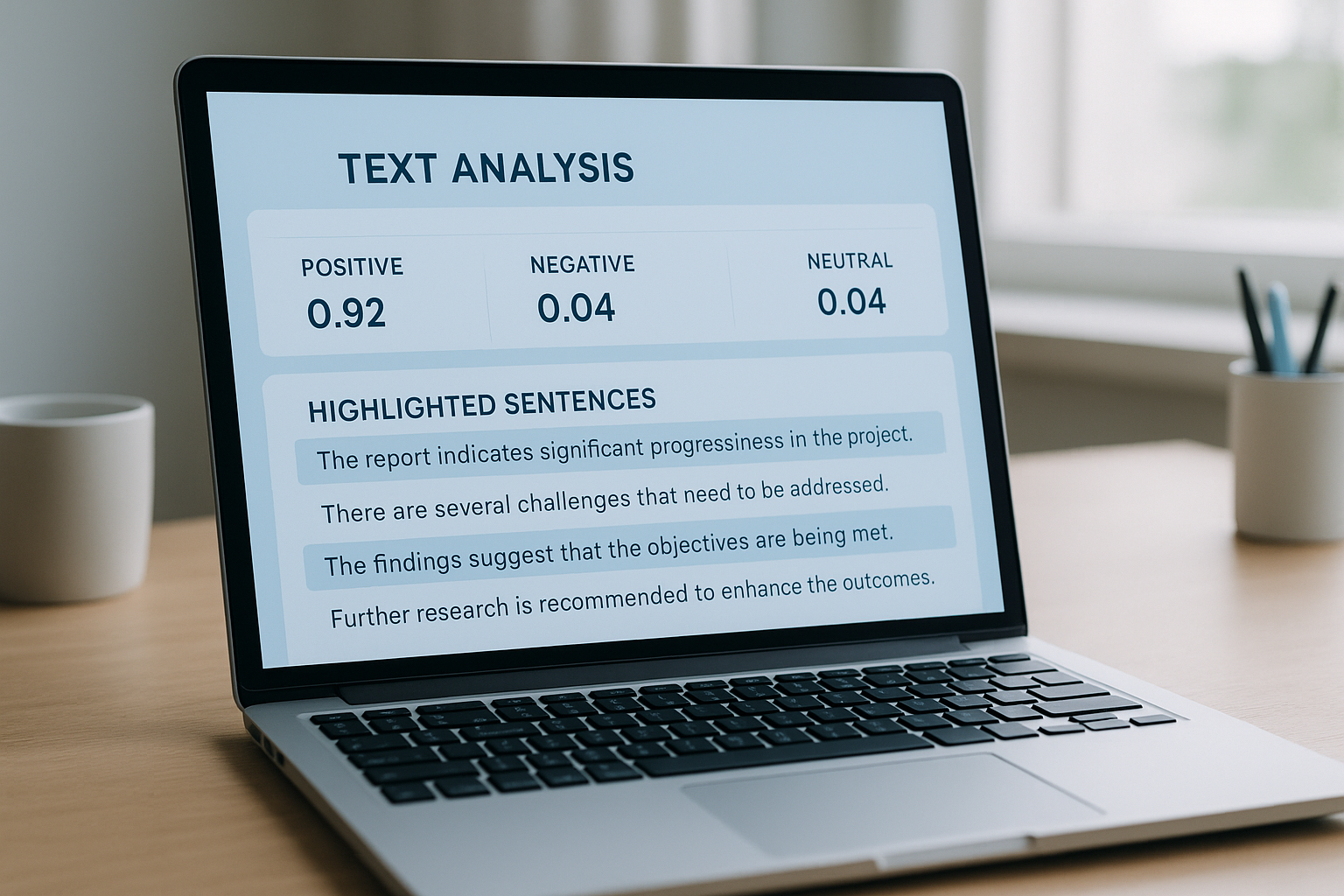
An AI checker dashboard highlights linguistic patterns that distinguish machine-generated text from human writing.
How Does an AI Checker Work?
At its core, an AI checker measures two key linguistic properties: perplexity and burstiness. Perplexity refers to how unpredictable the word choices are within a given passage. Human writers tend to make surprising word choices, while AI models favor statistically likely sequences — resulting in low perplexity scores.
Burstiness, meanwhile, describes variation in sentence length and complexity. Humans naturally mix short punchy sentences with longer, more complex ones. AI-generated text, however, tends to maintain a more uniform rhythm, which detection models can identify with high confidence.
Modern AI checkers also use neural classifiers trained on large datasets of both human and AI-written text. These classifiers learn subtle stylistic fingerprints that go beyond simple word frequency analysis. For a deeper technical overview of how language models generate text, Wikipedia’s article on large language models provides excellent foundational context.
The Role of Training Data in Detection Accuracy
The accuracy of any AI checker depends heavily on the quality and diversity of its training data. Tools trained on a narrow slice of AI outputs may struggle to detect newer models or domain-specific writing styles. Therefore, the best detectors are continuously retrained as new AI models are released.
In practice, leading tools such as GPTZero, Originality.ai, and Turnitin report accuracy rates between 85% and 98% under controlled conditions. However, those numbers can drop significantly when content has been heavily paraphrased or manually edited after AI generation.
Who Should Use an AI Checker — and Why
Different audiences rely on AI detection for distinct reasons. Understanding your own use case helps you choose the right tool and interpret results correctly.
Educators and Academic Institutions
Teachers and professors use AI checkers to identify student submissions that may violate academic integrity policies. Tools like Turnitin have integrated AI detection directly into their existing plagiarism workflows, making adoption straightforward.
Content Publishers and Editors
Editorial teams at media organizations and blogs use detection to verify that freelance submissions are authentically human-written. This protects brand reputation and maintains reader trust.
SEO Professionals and Digital Marketers
For SEO teams, content quality is directly tied to search rankings. Running an AI checker before publishing helps ensure that content meets originality standards and avoids potential algorithmic penalties.
Hiring Managers and Recruiters
As AI writing tools become accessible to job applicants, some employers use detection tools to evaluate whether cover letters and writing samples reflect genuine candidate ability.

Teams across education, publishing, and SEO use AI checkers to maintain content standards and authenticity.
Common Mistakes When Using AI Detection Tools
Even the best AI checker can be misused. One of the most frequent errors is treating a detection score as an absolute verdict. Because false positives do occur — particularly with highly formal or technical human writing — a high AI probability score should prompt further review, not immediate punishment or rejection.
Another common mistake is checking only a small excerpt of a document. AI checkers perform more reliably on longer passages, typically 300 words or more, because they need sufficient text to identify consistent statistical patterns. Therefore, always submit the full document when possible.
Finally, relying on a single tool is risky. Different detectors use different models and training data, so cross-referencing two or three tools provides a more balanced picture. Resources like RankAuthority offer guidance on integrating AI detection into broader content quality workflows for SEO teams.
What to Do When Detection Results Are Unclear
When an AI checker returns a borderline result — say, 40% to 60% AI probability — context becomes critical. Consider the source, the writer’s history, and whether the writing style is consistent with their previous work. In academic settings, a follow-up conversation or oral examination can clarify authorship far more reliably than any automated tool.
Choosing the Right Tool for Your Needs
The market for AI detection tools has expanded rapidly, and each platform has distinct strengths. Here is a practical comparison of the most widely used options.
Ultimately, the best choice depends on your volume, budget, and whether you need detection alone or a combined detection-and-plagiarism workflow. For teams managing large content pipelines, investing in a paid tool with API access is typically worth the cost.
The Future of AI Detection Technology
AI detection is an arms race. As language models become more sophisticated, they produce text that is increasingly difficult to distinguish from human writing. In response, detection tools are incorporating more advanced techniques, including watermarking — where AI-generated text is embedded with invisible statistical signatures during generation.
Researchers at major institutions are also exploring provenance-based approaches, where content carries cryptographic metadata about its origin. Although these systems are still in early development, they represent a promising long-term solution beyond probabilistic detection.
In the meantime, the most practical approach is to combine AI checker results with human editorial judgment. No automated tool should be the sole arbiter of content authenticity. You can also explore additional strategies for content quality assurance through RankAuthority’s SEO content resources.
Conclusion: Getting the Most from an AI Checker
An AI checker is one of the most practical tools available for anyone who cares about content authenticity, academic integrity, or SEO quality. However, it works best as part of a layered strategy — not as a standalone judge. Use detection scores as a starting point for deeper review, cross-reference multiple tools when stakes are high, and always apply human context to borderline results.
As AI writing technology continues to evolve, staying informed about the capabilities and limitations of detection tools will remain a critical skill for professionals across every field that depends on authentic, original content.
Frequently Asked Questions About AI Checkers
What is an AI checker?
An AI checker is a software tool that analyzes text to determine whether it was written by a human or generated by an AI model such as ChatGPT or GPT-4. It uses statistical and linguistic signals to assign a probability score indicating the likelihood of AI authorship. For a deeper walkthrough, see our AI Citation Score Checker: The Complete 2025 Guide.
How accurate are AI checkers?
Accuracy varies by tool, but leading AI checkers typically report 85% to 98% accuracy under ideal conditions. However, heavily edited or paraphrased AI content can reduce detection rates significantly.
Can an AI checker detect ChatGPT content?
Yes, most modern AI checkers are trained specifically to detect output from large language models including ChatGPT, GPT-4, Claude, and Gemini. Detection quality depends on how much the content has been edited after generation.
Do AI checkers produce false positives?
Yes, false positives can occur, especially with highly formal or repetitive human writing styles. Therefore, AI checker results should be treated as probabilistic signals rather than definitive verdicts.
What signals does an AI checker look for?
AI checkers analyze perplexity (how unpredictable the word choices are) and burstiness (variation in sentence length and complexity). Low perplexity and low burstiness are strong indicators of machine-generated text.
Is using an AI checker free?
Many AI checkers offer a free tier with limited word counts per scan, while premium plans unlock bulk scanning, API access, and plagiarism checks. GPTZero offers free basic access, whereas Originality.ai operates on a credit-based paid model.
Which AI checker is best for SEO teams?
For SEO teams, tools that combine AI detection with plagiarism checking and bulk URL scanning are most valuable. Originality.ai and content quality resources from RankAuthority are frequently recommended for professional content workflows.
Can AI checkers be fooled by paraphrasing tools?
Paraphrasing tools can reduce detection scores on some AI checkers, but advanced detectors that analyze deep semantic patterns are harder to bypass. The gap between detection and evasion continues to narrow as models improve.
Should educators rely solely on AI checkers for academic integrity?
No, educators should use AI checkers as one layer of a broader academic integrity strategy. Combining detection tools with assignment design, oral discussions, and process portfolios provides more reliable results.
How does an AI checker differ from a plagiarism checker?
A plagiarism checker compares text against a database of existing sources to find copied content, while an AI checker analyzes linguistic patterns to detect machine-generated writing. They solve different problems and are most powerful when used together.
Does Google penalize AI-generated content?
Google’s guidelines focus on content quality and helpfulness rather than the method of creation. However, low-quality, mass-produced AI content that lacks original value can be penalized under Google’s spam and helpful content systems.
How long does it take to run an AI checker scan?
Most AI checker tools return results within seconds for standard article lengths. Bulk scanning of multiple documents may take a few minutes depending on the platform and file size.

