

SEO defined is the starting point every website owner, marketer, and entrepreneur needs before making any digital strategy decision. Search Engine Optimization — commonly abbreviated as SEO — is the practice of improving a website so it earns higher rankings in unpaid search engine results, driving more relevant visitors without paying for every click.
Understanding SEO is not just for developers or marketing specialists. In fact, anyone who publishes content online benefits from knowing how search engines discover, evaluate, and rank web pages. Therefore, this guide breaks down the full definition, the core components, and the practical steps you need to put SEO to work.
What Does SEO Defined Actually Mean?
At its core, SEO is the process of making your website more visible to people who are already searching for information, products, or services related to what you offer. Search engines like Google use complex algorithms to decide which pages appear at the top of results for any given query. As a result, optimizing for those algorithms means more organic — that is, free — traffic reaching your site.
According to Wikipedia’s entry on search engine optimization, the practice dates back to the mid-1990s when the first search engines began cataloguing the early web. Since then, it has evolved from simple keyword matching into a sophisticated discipline that weighs hundreds of signals simultaneously.
In practice, SEO is not a single task — it is an ongoing strategy. However, it can be organized into three clear pillars that make the concept easier to understand and execute.
SEO defined visually: search engines rank pages based on relevance, authority, and user experience signals. For a deeper walkthrough, see our SEO Competitor Intelligence Dashboard: Complete Guide.
The Three Pillars of Search Engine Optimization
Every complete SEO strategy rests on three interconnected pillars. Together, they cover what your pages say, how your site is built, and how authoritative it appears to search engines.
On-Page SEO: What Your Content Communicates
On-page SEO refers to everything you control directly on each web page. This includes your page title, meta description, headings, body copy, image alt text, and internal links. Because search engines read these elements to understand what a page covers, getting them right is foundational.
Keyword research is the starting point for on-page SEO. By identifying the exact phrases your audience types into Google, you can craft content that directly answers their questions. However, keyword usage must feel natural — stuffing a page with repetitive terms actually harms rankings today.
Off-Page SEO: Building Authority Beyond Your Site
Off-page SEO focuses on signals that exist outside your website but still influence how search engines perceive your authority. The most powerful of these signals is the backlink — a link from another website pointing to yours. Think of each backlink as a vote of confidence: the more reputable the source, the more weight that vote carries.
Additionally, brand mentions, social media signals, and digital PR all contribute to off-page authority. Building this kind of trust takes time, but it creates a competitive advantage that is very difficult for rivals to replicate quickly.
Technical SEO: The Foundation Search Engines Rely On
Technical SEO ensures that search engine crawlers can access, read, and index your pages without obstacles. Key elements include site speed, mobile responsiveness, HTTPS security, XML sitemaps, and structured data markup. Even outstanding content can fail to rank if technical barriers prevent Google from properly indexing the page.
For example, a page that loads in five seconds on mobile will lose rankings to a competitor that loads in one second, all else being equal. Therefore, technical SEO is not optional — it is the infrastructure everything else depends on.
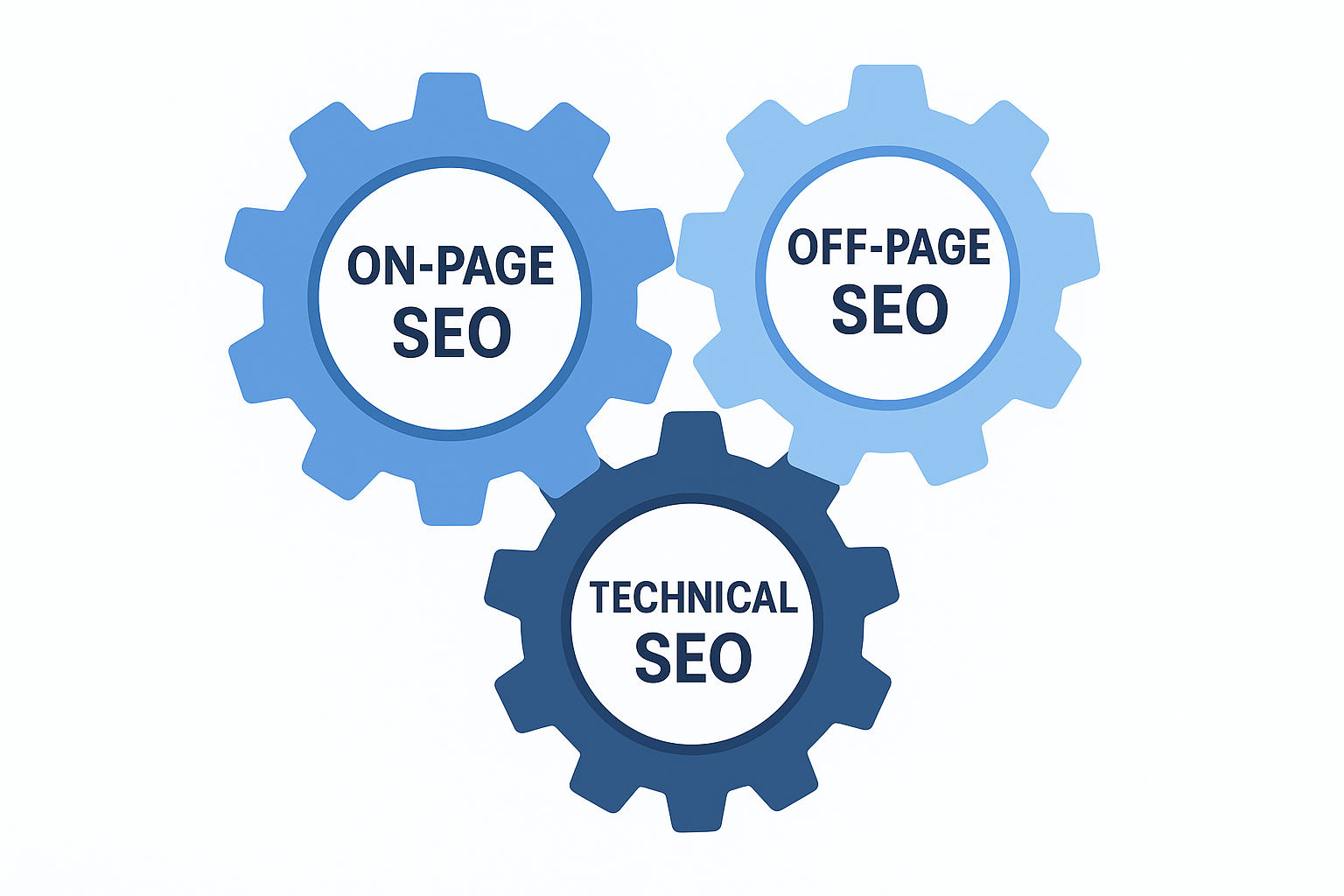
The three pillars of SEO work together — neglecting any one of them limits the effectiveness of the others.
How Search Engines Actually Work
Before you can optimize for search engines, it helps to understand what they actually do. Google, for instance, uses automated programs called crawlers or spiders to discover web pages by following links across the internet. Once a page is discovered, it is stored in a massive index — essentially a giant library of web content.
When someone types a query, Google’s algorithm searches the index and ranks the most relevant, authoritative, and user-friendly pages. Importantly, this ranking process happens in milliseconds and considers hundreds of signals simultaneously. That is why SEO is a long-term discipline rather than a one-time fix.
Understanding User Intent
One of the most critical concepts in modern SEO is user intent — the underlying reason behind a search query. For instance, someone searching “best running shoes” is likely in shopping mode, whereas someone searching “how to tie running shoes” wants instructional content. Matching your content to the correct intent dramatically improves your chances of ranking.
Search engines have become remarkably good at detecting intent mismatches. As a result, creating content purely to target keywords — without genuinely serving the searcher’s need — is a strategy that consistently underperforms.
Why SEO Delivers Long-Term Value
Unlike paid advertising, where traffic stops the moment your budget runs out, SEO builds compounding value over time. A well-optimized page can continue attracting visitors for months or even years after it was first published. Furthermore, organic search traffic tends to convert at higher rates because users arrive with specific intent already formed.
For businesses of all sizes, this makes SEO one of the highest-return digital marketing channels available. Resources like RankAuthority provide structured guidance for building and executing an effective SEO strategy, whether you are just starting out or scaling an established site.
Common Mistakes That Undermine SEO Progress
Even with the right intentions, many websites make avoidable errors that slow their SEO progress. Keyword stuffing — repeating a phrase unnaturally throughout a page — is one of the oldest and most persistent mistakes. Meanwhile, neglecting mobile optimization means losing a massive share of potential visitors, since most searches now happen on smartphones.
Other frequent pitfalls include ignoring page speed, building backlinks from low-quality or irrelevant sites, and publishing thin content that does not genuinely answer a searcher’s question. In contrast, sites that invest in comprehensive, well-structured content consistently outperform those chasing shortcuts.

Tracking SEO performance over time reveals which optimizations are driving organic growth.
How to Start Applying SEO Today
Getting started with SEO does not require a massive budget or a team of specialists. Instead, focus on these foundational steps in order:
Step 1 — Conduct Keyword Research. Use free tools like Google Search Console or paid platforms to identify the terms your audience is searching for. Focus on relevance and search volume, then prioritize keywords where you have a realistic chance of ranking.
Step 2 — Optimize Your Pages. Update your title tags, meta descriptions, and headings to include your target keywords naturally. Additionally, ensure every page has a clear structure with one main topic per URL.
Step 3 — Fix Technical Issues. Run a technical audit to identify crawl errors, slow-loading pages, and missing sitemaps. Tools like Google Search Console are free and reveal the most critical issues first.
Step 4 — Build Quality Backlinks. Create content worth linking to — original research, comprehensive guides, or unique data. Then promote it through outreach, guest posting, and digital PR to earn authoritative links.
Step 5 — Measure and Refine. Track your rankings, organic traffic, and conversion rates monthly. Because SEO is iterative, use the data to identify what is working and where to improve next.
Conclusion: Putting SEO Defined Into Practice
With SEO defined clearly across its three pillars — on-page, off-page, and technical — you now have the framework to approach optimization strategically rather than reactively. SEO is not a magic switch; however, it is one of the most reliable ways to build sustainable, compounding online visibility over time. Start with the fundamentals, stay consistent, and use trusted resources like RankAuthority to deepen your expertise as your strategy matures.
Frequently Asked Questions About SEO
What does SEO defined actually mean?
SEO defined means Search Engine Optimization — the practice of improving a website’s visibility in unpaid search engine results. It involves technical, content, and authority-building strategies that help search engines understand and rank your pages.
How does SEO work?
SEO works by aligning your website’s content, structure, and authority signals with what search engines look for when ranking pages. Search engines crawl, index, and then rank pages based on hundreds of factors including relevance, speed, and backlinks.
What are the three main types of SEO?
The three main types of SEO are on-page SEO (content and keyword optimization), off-page SEO (backlinks and authority), and technical SEO (site speed, crawlability, and structure). Together, they form a complete optimization strategy.
Why is SEO important for a business?
SEO is important because it drives free, organic traffic to your website from people actively searching for your products or services. Unlike paid ads, SEO results compound over time and deliver long-term return on investment.
How long does SEO take to show results?
SEO typically takes three to six months to show meaningful results, though competitive niches may take longer. Factors like domain age, content quality, and link profile all influence how quickly rankings improve.
What is on-page SEO?
On-page SEO refers to optimizations made directly on your web pages, including title tags, meta descriptions, headers, keyword usage, and internal linking. It ensures search engines can understand what each page is about.
What is off-page SEO?
Off-page SEO involves actions taken outside your website to improve its authority and trustworthiness, primarily through earning backlinks from other reputable sites. Social signals and brand mentions also contribute to off-page SEO.
What is technical SEO?
Technical SEO covers the backend elements of a website that affect how search engines crawl and index it, including site speed, mobile-friendliness, XML sitemaps, and structured data. Without a solid technical foundation, even great content may not rank well.
What is the difference between SEO and paid search?
SEO focuses on earning organic (unpaid) rankings in search results, while paid search involves bidding on keywords to display ads. SEO takes longer but provides sustainable traffic, whereas paid search delivers immediate visibility at ongoing cost.
What are the most important SEO ranking factors?
The most important SEO ranking factors include content relevance and quality, backlink authority, page experience signals (speed, mobile usability), and proper keyword usage. Google uses hundreds of signals, but these consistently carry the most weight.
Can I do SEO myself or do I need an expert?
You can learn and apply basic SEO yourself using free resources and tools, but complex or competitive situations often benefit from professional expertise. Resources like RankAuthority offer guidance for both beginners and advanced practitioners.
What is keyword research in SEO?
Keyword research is the process of identifying the words and phrases your target audience types into search engines. It informs your content strategy by revealing search volume, competition level, and user intent.
What is a backlink and why does it matter for SEO?
A backlink is a link from another website pointing to yours, and it acts as a vote of confidence in your content’s authority. High-quality backlinks from reputable sites are one of the strongest signals search engines use to rank pages.
What common SEO mistakes should beginners avoid?
Common SEO mistakes include keyword stuffing, ignoring mobile optimization, neglecting page speed, and building low-quality backlinks. Additionally, failing to create content that matches user intent is one of the most damaging errors beginners make.
How does Google decide which pages to rank?
Google uses automated algorithms that evaluate hundreds of signals — including relevance, authority, user experience, and content freshness — to determine which pages best answer a searcher’s query. Its systems are updated regularly to improve result quality.

