

SEO search keywords are the exact words and phrases people type into search engines to find information, products, or services — and choosing the right ones is the single most important decision you make when building a content strategy. Without targeting the right keywords, even the best-written content can go completely unnoticed.
In practice, keyword research shapes everything: your blog topics, your page titles, your internal linking structure, and how you measure success. Therefore, understanding how to find, evaluate, and deploy keywords is a foundational skill every site owner needs.

Effective SEO search keywords research combines data tools with a clear understanding of your audience’s intent.
What Are SEO Search Keywords and Why Do They Matter?
SEO search keywords are the terms that connect a user’s question to your content. When someone types “how to fix a leaky faucet” into Google, that phrase is the keyword — and every page competing for that position has deliberately targeted it. According to Wikipedia’s overview of search engine optimization, keyword relevance remains one of the core ranking signals search engines use to evaluate content.
Additionally, keywords reveal exactly what your audience wants. They tell you which problems people are trying to solve, which products they are comparing, and which questions they need answered. As a result, a well-researched keyword list is essentially a map of your audience’s mind.
Short-Tail vs. Long-Tail Keywords
Not all keywords are created equal. Short-tail keywords — like “shoes” or “marketing” — attract enormous search volume but come with fierce competition. Long-tail keywords, however, are more specific phrases such as “affordable running shoes for wide feet” that attract smaller but highly targeted audiences.
For most websites, long-tail keywords offer the fastest path to ranking. Because they are more specific, they face less competition, and they tend to attract visitors who are closer to making a decision. Therefore, building a keyword strategy around a mix of both types is the smartest approach.
How to Research Keywords Step by Step
The first step is defining your core topics. Start by listing the five to ten main themes your business or website covers. These become your seed keywords — broad terms you will expand into specific keyword ideas using research tools.
Next, enter those seed topics into a keyword research tool. Google Keyword Planner is free and provides monthly search volume directly from Google’s data. Tools like Ahrefs and Semrush go further, offering keyword difficulty scores, competitor gap analysis, and click-through rate estimates. Resources like Rank Authority also provide practical guidance on applying keyword data to real content strategies.
After generating a list of candidates, evaluate search intent for each keyword. Look at the top five results on Google for that term. Are they blog posts, product pages, or comparison guides? That pattern tells you what format your content needs to take in order to compete.
Quick Answer: What makes a keyword worth targeting?
A keyword is worth targeting when it has meaningful search volume, a difficulty score your site can realistically compete with, and a search intent that aligns with the content you can genuinely provide. All three factors must align — volume alone is not enough.
Then, prioritize your keyword list by opportunity. For newer sites, focus on keywords with a difficulty score below 30. For more established domains, moderate-difficulty terms in the 30 to 60 range become realistic targets. Meanwhile, track your existing rankings in Google Search Console to find keywords you already appear for but have not yet fully optimized.
Finally, place your chosen keywords strategically throughout your content — in the title, meta description, first paragraph, at least one subheading, and naturally within the body. Avoid repeating the keyword so frequently that it reads unnaturally, as over-optimization can actually harm your rankings.
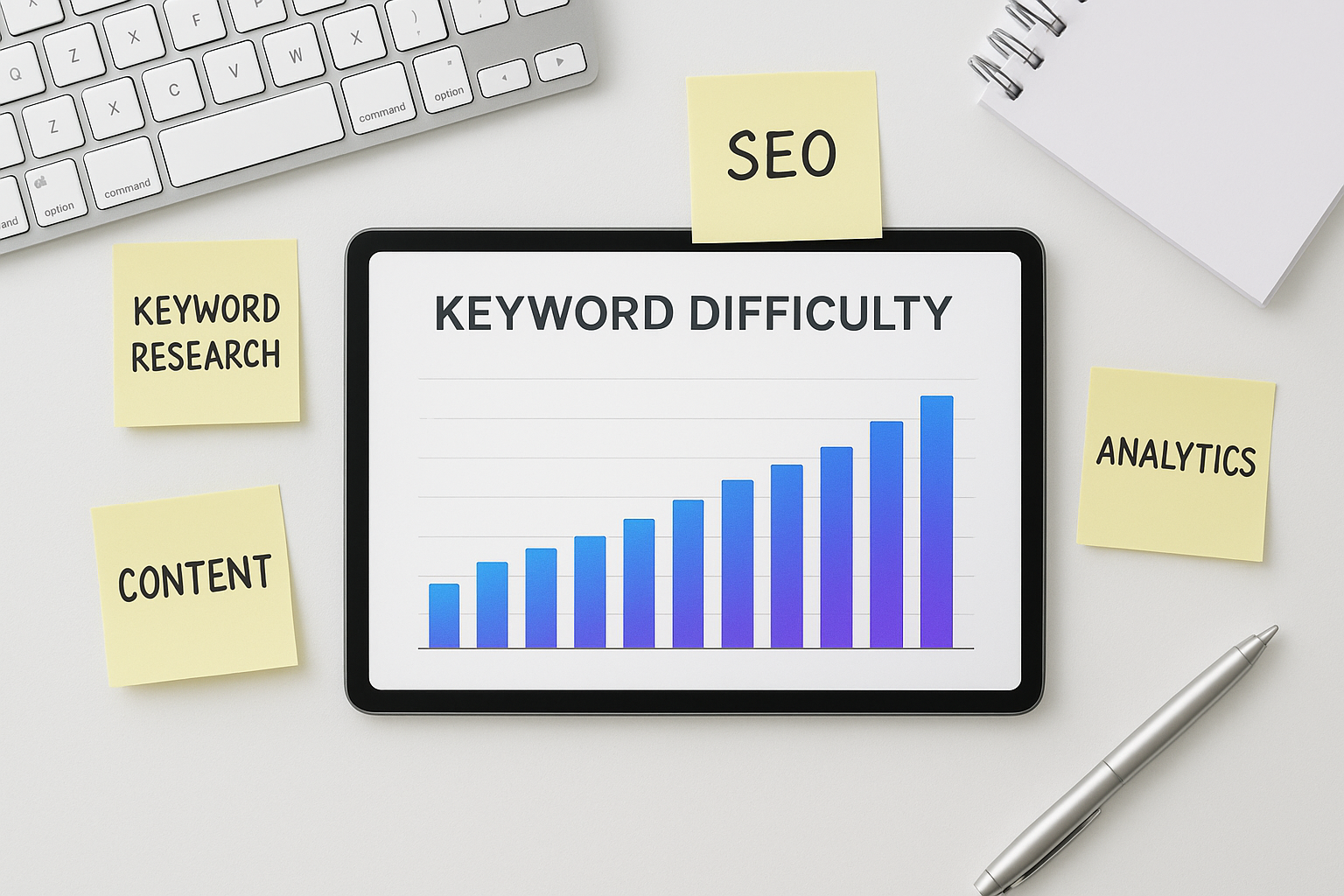
Prioritizing keywords by difficulty score helps you target achievable rankings and build momentum over time.
Understanding Search Intent
Search intent is the “why” behind every query. Google categorizes intent into four main types: informational (the user wants to learn), navigational (the user wants to find a specific site), transactional (the user wants to buy), and commercial investigation (the user is comparing options before buying).
Matching your content format to the correct intent is, in many cases, more important than keyword placement itself. For example, if a keyword has transactional intent but you publish an informational blog post, you are unlikely to rank — because Google recognizes the mismatch between your content and what users actually want.
Avoiding Keyword Cannibalization
Keyword cannibalization occurs when multiple pages on your site compete for the same keyword. As a result, Google splits ranking signals between those pages, weakening both. To avoid this, assign each target keyword to exactly one page and consolidate any overlapping content through redirects or merges.
A simple keyword map — a spreadsheet listing each page alongside its primary keyword — prevents this problem before it starts. Additionally, auditing your site every few months helps you catch cannibalization issues before they quietly drain your rankings.
Common Mistakes to Avoid
One of the most frequent errors is chasing high-volume keywords without considering competition. A site with 20 pages has almost no chance of ranking for a keyword that established sites with thousands of pages dominate. Instead, focus on realistic wins first and build authority over time.
Another common mistake is ignoring secondary keywords. While your primary keyword drives the page’s focus, semantically related terms — also called LSI keywords — signal to Google that your content covers a topic thoroughly. For instance, an article about keyword research might also naturally include terms like “search volume,” “SERP analysis,” and “content gap.”
Finally, many site owners set their keyword strategy once and never revisit it. However, search trends evolve constantly. A keyword that was low-competition six months ago may now be saturated, while new opportunities emerge regularly. Therefore, scheduling quarterly keyword audits is a best practice that pays dividends over time. Tools and guidance at Rank Authority can help you stay current with these shifts.

Every search engine results page is a competition — and the right keywords determine whether your content appears at the top.
Putting It All Together: Building a Keyword-Driven Content Plan
Once you have a prioritized keyword list, the next step is mapping each keyword to a specific content piece. Group related keywords into clusters — for example, all keywords related to “email marketing” might feed into a pillar page and several supporting blog posts. This cluster model strengthens topical authority and helps search engines understand the depth of your expertise.
In conclusion, mastering SEO search keywords is not a one-time task — it is an ongoing discipline that rewards consistency and curiosity. By researching with purpose, matching intent, avoiding common pitfalls, and revisiting your strategy regularly, you build a content engine that compounds in value over time and delivers sustained organic growth.
Frequently Asked Questions About SEO Search Keywords
What are SEO search keywords?
SEO search keywords are the specific words and phrases people type into search engines when looking for information, products, or services. Targeting the right keywords in your content helps search engines match your pages to relevant queries, increasing organic visibility. For a deeper walkthrough, see our SEO Services for Small Businesses: 2026 Buyer’s Guide to Sustainable Growth.
How do I find the best keywords for my website?
Start by brainstorming topics your audience cares about, then use tools like Google Keyword Planner, Ahrefs, or Semrush to discover search volume and competition data. Look for keywords with moderate difficulty and clear search intent that matches your content goals.
What is keyword search intent?
Search intent is the underlying goal a user has when typing a query — whether they want to learn something, buy something, or navigate to a specific site. Matching your content to the correct intent is critical for ranking and reducing bounce rates.
What is the difference between short-tail and long-tail keywords?
Short-tail keywords are broad, high-volume terms that are very competitive. Long-tail keywords are more specific phrases with lower volume but higher conversion potential and less competition. Most content strategies benefit from targeting both types strategically.
How many keywords should I target per page?
Focus on one primary keyword per page, supported by two to five semantically related secondary keywords. Targeting too many unrelated keywords dilutes relevance and confuses search engines about the page’s main topic.
What is keyword difficulty and why does it matter?
Keyword difficulty is a score that estimates how hard it is to rank on the first page of Google for a given keyword. Higher difficulty means more established competitors are targeting that term, so newer sites should prioritize lower-difficulty opportunities first.
Where should I place keywords in my content?
Include your primary keyword in the page title, meta description, first paragraph, at least one subheading, and naturally throughout the body. Avoid keyword stuffing, as Google penalizes over-optimization that harms readability.
How often should I update my keyword strategy?
Review your keyword strategy at least every three to six months. Search trends shift, new competitors emerge, and your site’s authority grows — all of which open new ranking opportunities you should actively capture.
Can I rank for keywords without backlinks?
Yes, especially for low-competition long-tail keywords where content quality and relevance can outweigh link authority. However, for competitive terms, a strong backlink profile significantly improves your chances of ranking on page one.
What tools are best for keyword research?
Popular options include Google Keyword Planner for free search volume data, Ahrefs and Semrush for comprehensive competitive analysis, and Google Search Console for discovering keywords your site already ranks for. Each tool serves a different stage of the research process.
What is keyword cannibalization and how do I avoid it?
Keyword cannibalization happens when multiple pages on your site compete for the same keyword, splitting ranking signals and weakening both. Avoid it by assigning each keyword to a single dedicated page and consolidating overlapping content through redirects or merges.
How does search volume affect keyword selection?
Search volume tells you how many times a keyword is searched per month. High-volume keywords bring more potential traffic but are usually harder to rank for, while lower-volume keywords can still drive meaningful results if they align precisely with your audience’s intent.

