

Search authority optimization is the systematic process of building a website’s credibility, topical expertise, and trust signals so that search engines — and increasingly, AI-powered answer engines — rank it higher and more consistently. See our AI-powered SEO guide for deeper tactics. In 2025, this discipline has become the single most important lever for sustainable online visibility.
According to Backlinko’s click-through rate research, the top result in Google captures an average of 27.6% of all clicks. Furthermore, sites ranking in positions 1 through 3 collectively receive over 50% of all organic traffic. These numbers make it clear: authority is not optional — it is the foundation of every successful digital strategy.
However, building that authority is no longer as simple as collecting backlinks. Today’s search landscape demands a holistic approach that spans content depth, technical precision, structured data, and AI-readiness. This guide breaks down exactly how to achieve it.
What Is Search Authority Optimization?
Search authority optimization is a multi-dimensional strategy that signals to search engines — and AI platforms — that your website is the most credible, relevant, and trustworthy source for a given topic. It combines three core pillars: domain authority (the overall strength of your backlink profile), topical authority (how comprehensively you cover a subject), and technical authority (how well your site is built and maintained).
In contrast to traditional SEO, which often focused narrowly on keyword placement, search authority optimization takes a broader view. Specifically, it treats your entire digital presence — content, links, structured data, and brand signals — as interconnected components of a single trust ecosystem.
Domain authority, a concept popularized by Moz, remains one of the most widely referenced proxy metrics for measuring this strength. However, it is important to understand that domain authority is a predictive score, not a direct ranking factor used by Google itself.
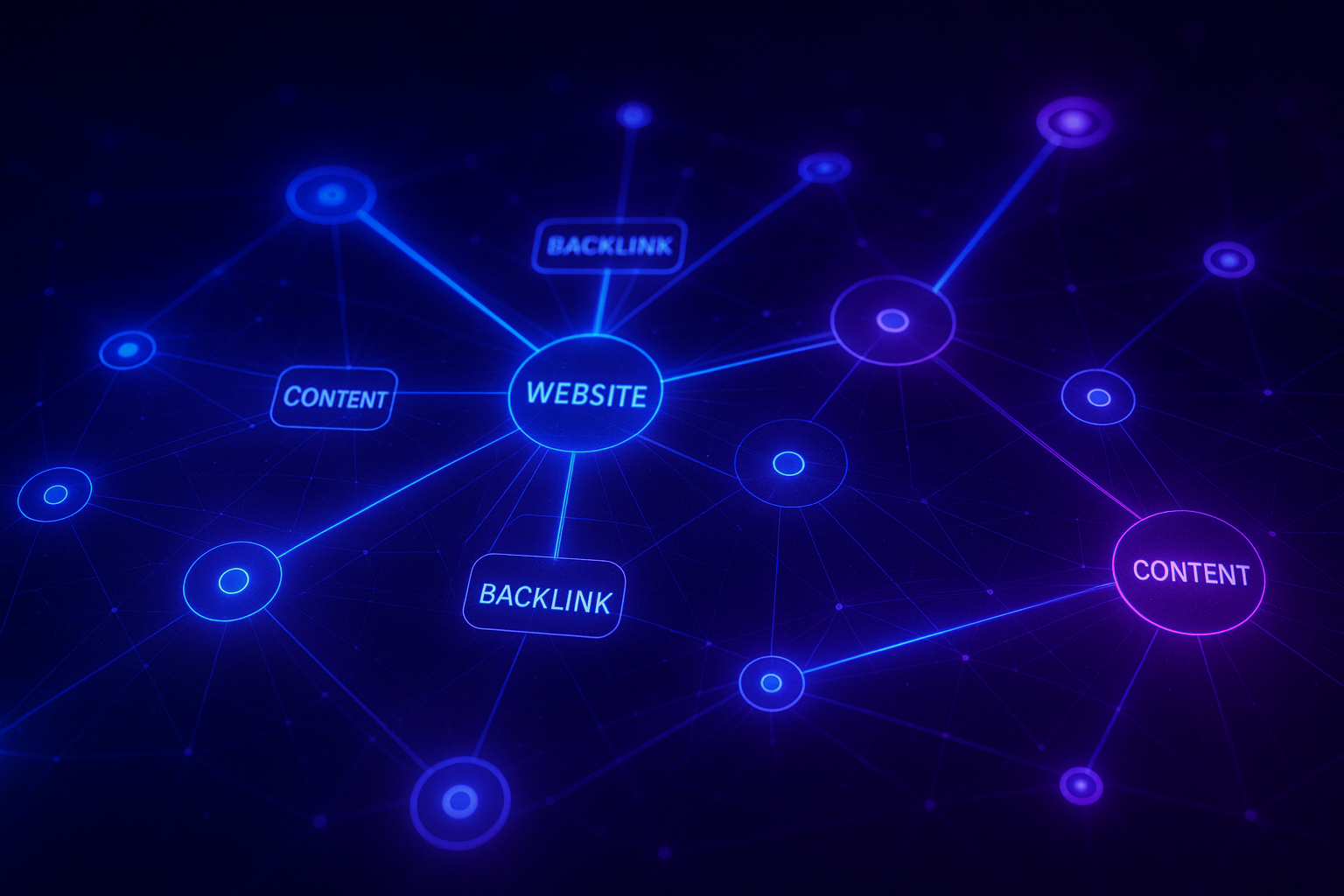
Search authority optimization depends on building a strong, interconnected web of credibility signals across your entire digital presence.
Why Search Authority Matters More Than Ever in 2025
The rise of AI-powered search tools has fundamentally changed what it means to rank. Platforms like Google’s Search Generative Experience and other generative engine optimization (GEO) environments do not simply match keywords to pages. Instead, they evaluate the trustworthiness of entire domains and the depth of their topical coverage.
As a result, websites that have invested in genuine authority signals are far more likely to appear in AI-generated summaries, featured snippets, and answer boxes. Conversely, sites that rely on thin content or manipulative link schemes are increasingly filtered out of these high-visibility placements.
Therefore, the question is no longer simply “how do I rank for this keyword?” but rather “how do I become the most authoritative source on this topic?” That shift in thinking is what separates modern search authority optimization from outdated SEO tactics.
The Role of E-E-A-T in Modern Authority Building
Google’s quality evaluator guidelines place enormous weight on E-E-A-T — Experience, Expertise, Authoritativeness, and Trustworthiness. These are the human-readable signals that underpin algorithmic authority scoring. In practice, demonstrating E-E-A-T means publishing content written by credentialed authors, citing reputable sources, maintaining accurate business information, and earning mentions from trusted publications.
For a deeper understanding of how algorithmic signals translate into ranking outcomes, explore how advanced algorithm optimization impacts search rankings — a resource that breaks down the technical mechanics behind these quality assessments.
How to Build Search Authority: A Step-by-Step Process
Building genuine search authority requires a structured, sequential approach. Follow these six steps to systematically strengthen your site’s credibility: See our achieve long-term rankings.
- Audit Your Current Authority Signals. Use a tool like Moz or Ahrefs to assess your domain authority score, backlink profile quality, and overall technical health before making changes. Understand your baseline clearly.
- Define Your Topical Focus Areas. Identify 3 to 5 core topic clusters aligned with your business goals, and explore scalable SEO solutions to expand them. Then build comprehensive content pillars around each one, covering subtopics thoroughly rather than superficially.
- Earn High-Quality Backlinks. Reach out to authoritative publications, contribute guest posts, and create genuinely link-worthy resources — such as original research or detailed guides — that attract natural inbound links over time.
- Optimize Technical SEO Foundations. Ensure fast page loading, HTTPS security, full mobile responsiveness, and clean URL structures. Implement schema markup so search engines can accurately interpret your content.
- Implement Structured Data and E-E-A-T Signals. Add JSON-LD schema to key pages, display author credentials prominently, cite reputable sources, and maintain consistent business information across all online directories. Learn more about AI for search rankings.
- Monitor, Measure, and Iterate. Track ranking changes, organic traffic trends, and authority scores monthly. Adjust your strategy based on what the data reveals, and never stop refining your approach. For practical, step-based tactics to increase site authority, see increase website authority.
Content Depth: The Engine of Topical Authority
Content remains the primary vehicle through which authority is demonstrated and earned. However, not all content contributes equally. Specifically, long-form, comprehensive content that fully addresses a topic — including related questions, subtopics, and real-world applications — signals topical authority far more effectively than brief, surface-level posts. See scalable SEO solutions for approaches to scale pillar and cluster content.
A well-structured content strategy groups related articles into topic clusters, with a central pillar page linking out to supporting cluster content. For implementation ideas, see AI for search rankings to learn how AI can automate content discoverability. This architecture not only helps users navigate your site but also distributes internal link equity in a way that reinforces authority signals across the entire topic cluster.
For practical guidance on building this kind of content foundation, see how to make your website search engine optimized — a detailed walkthrough of the on-page and structural elements that matter most.
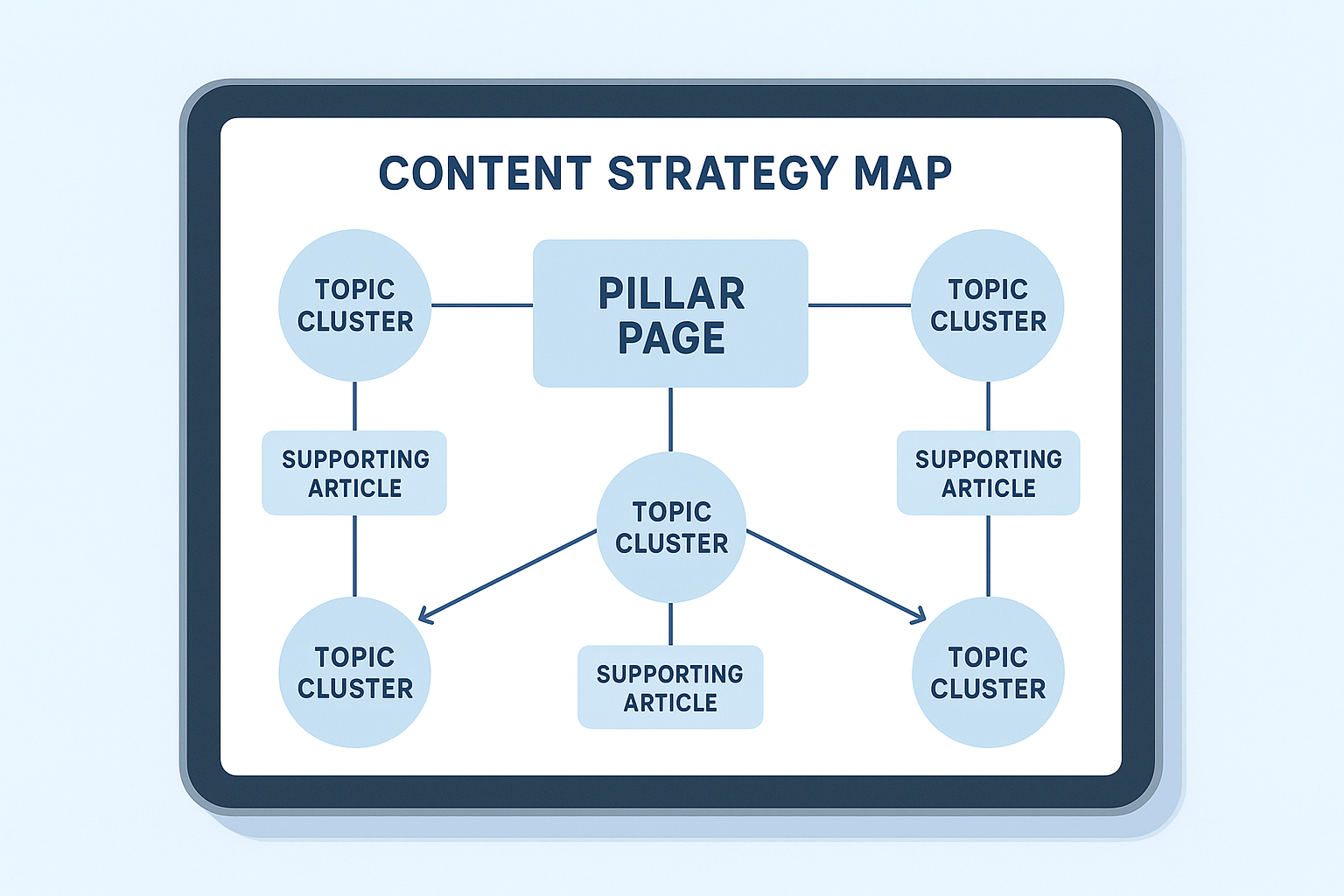
A well-structured topic cluster map is one of the most effective tools for building lasting topical authority.
AI Content Optimization and Its Impact on Authority
AI-assisted content creation, including the AI-powered SEO guide, has become a powerful accelerator for authority building when used responsibly. The key distinction is that AI tools should enhance — not replace — genuine expertise. Content that blends AI efficiency with human insight, accurate data, and real-world experience consistently outperforms purely automated output in both quality scores and search performance.
To understand how AI-driven content strategies can accelerate your ranking trajectory, explore AI content optimization strategies to rank faster and smarter. These techniques are particularly relevant for teams managing high content volumes across multiple topics.
Link Building Strategies That Strengthen Domain Credibility
Backlinks remain one of the most powerful ranking signals in Google’s algorithm. However, the quality of those links matters far more than quantity. A single link from a respected industry publication carries significantly more authority weight than dozens of links from low-quality directories or irrelevant sites. For guidance on whether AI can help with these ranking signals, see Can AI improve rankings.
Effective link acquisition strategies in 2025 include digital PR campaigns, original data studies, expert round-up contributions, and strategic guest posting on topically relevant, high-authority domains. Furthermore, broken link building — identifying dead links on authoritative sites and offering your content as a replacement — remains a highly efficient tactic. Learn how automation can scale these efforts with off-page SEO automation.
According to Moz’s domain authority research, sites with diverse, high-quality backlink profiles consistently outperform those with homogeneous or low-authority link portfolios, regardless of on-page optimization quality.
Avoiding Common Link Building Mistakes
Many site owners undermine their own authority by pursuing shortcuts. Paid link schemes, private blog networks (PBNs), and excessive link exchanges violate Google’s Search Essentials guidelines and can result in manual penalties or algorithmic demotions. These risks far outweigh any short-term gains.
Instead, focus on earning links through genuine value creation. When your content is truly the best available resource on a topic, links follow naturally over time. This sustainable approach is the cornerstone of long-term authority building.
Automating Search Authority Optimization at Scale
For businesses managing multiple websites or high-volume content operations, manual authority building quickly becomes unsustainable. This is where intelligent automation platforms provide a significant competitive advantage. Platforms like rankauthority.com combine automated GEO and AEO optimization with AI-driven insights to continuously strengthen search authority and answer questions like AI for search rankings without requiring constant manual intervention.
The platform’s 1-Click AI AutoPilot technology handles the technical and strategic complexity of authority building — from structured data implementation to content discoverability improvements — allowing businesses to focus on growth rather than optimization mechanics. Moreover, a risk-free seven-day trial makes it accessible for teams of all sizes.
To see how this translates into measurable visibility gains, review how Rank Authority improves search visibility through its automated optimization pipeline.
Key Insight
Sites that combine technical SEO excellence, topical content depth, and consistent link acquisition see compounding authority gains over time — meaning the effort invested today pays dividends for years. Additionally, platforms that automate these processes can accelerate results by 40% or more compared to manual-only approaches.
Sustaining Long-Term Search Rankings Through Authority
Authority, once built, creates a compounding advantage. Established sites attract more organic links, generate more branded searches, and earn more AI citations — all of which further reinforce their authority in a self-reinforcing cycle. In contrast, sites that neglect authority maintenance often see gradual ranking erosion as competitors invest more consistently. Learn more about long-term search rankings.
Consequently, sustaining authority requires ongoing attention to content freshness, regular technical audits, and continuous link monitoring. For a comprehensive roadmap to maintaining your position over time, explore what you can do to achieve long-term search rankings — a practical guide to keeping your authority strong through algorithm updates and shifting search behaviors.
Frequently Asked Questions About Search Authority Optimization
What is search authority optimization?
Search authority optimization is the process of systematically building a website’s credibility, trust signals, and topical expertise so search engines and AI platforms rank it higher and more consistently. It combines link building, content depth, technical SEO, and brand signals into a unified strategy.
How long does it take to see results from search authority optimization?
Most websites begin seeing measurable improvements within 3 to 6 months of consistent effort. However, competitive niches may require 6 to 12 months before significant ranking gains become visible.
What is domain authority and why does it matter?
Domain authority is a score developed by Moz that predicts how likely a website is to rank in search engine results. Higher domain authority generally correlates with better rankings because it reflects the quantity and quality of backlinks pointing to your site.
How does AI change search authority optimization?
AI-powered search engines evaluate topical depth, entity relationships, and content trustworthiness more holistically than traditional algorithms. As a result, search authority optimization must now include structured data, entity optimization, and answer-focused content to remain competitive.
What is the difference between GEO and traditional SEO?
Traditional SEO focuses on ranking web pages in keyword-based search results, while Generative Engine Optimization (GEO) targets visibility within AI-generated answers and summaries. GEO requires content structured for direct answers, entity clarity, and high factual accuracy.
How many backlinks do I need to build search authority?
Quality matters far more than quantity. A handful of backlinks from high-authority, relevant domains can outweigh hundreds of low-quality links. Focus on earning links from trusted publications, industry directories, and reputable partners.
Can small businesses compete with large brands in search authority?
Yes, absolutely. Small businesses can build strong topical authority in niche areas where large brands spread their content too broadly. By focusing on specific topics and local signals, smaller sites can outrank major competitors in targeted searches.
What technical SEO factors affect search authority?
Core technical factors include site speed, mobile responsiveness, secure HTTPS connections, structured data markup, clean URL structures, and crawlability. These signals tell search engines that your site is reliable and well-maintained.
What common mistakes hurt search authority optimization efforts?
Common mistakes include building low-quality backlinks, publishing thin or duplicate content, neglecting technical SEO, ignoring E-E-A-T signals, and failing to update outdated pages. These errors erode trust signals and can trigger algorithmic penalties.
How does E-E-A-T relate to search authority optimization?
E-E-A-T stands for Experience, Expertise, Authoritativeness, and Trustworthiness. Google uses these quality signals to evaluate content credibility. Demonstrating E-E-A-T through author credentials, accurate citations, and transparent sourcing directly strengthens search authority.
Is social media important for building search authority?
Social media does not directly influence search rankings, but it amplifies content reach and increases the likelihood of earning organic backlinks. Strong social presence also builds brand recognition, which contributes to indirect authority signals over time.
How can automation tools help with search authority optimization?
Automation platforms like rankauthority.com streamline the technical and strategic tasks involved in building search authority. They handle content optimization, structured data implementation, and ranking analysis — saving significant time and reducing manual errors at scale.
Conclusion: Building Lasting Visibility Through Search Authority Optimization
Search authority optimization is not a one-time project — it is an ongoing investment in your website’s long-term competitive position. By combining high-quality backlink acquisition, comprehensive topical content, technical SEO excellence, and AI-readiness, you create a compounding foundation that grows stronger with every passing month. Furthermore, as AI-powered search continues to reshape how users discover information, the sites with the deepest, most credible authority signals will consistently capture the most valuable visibility. Start building that foundation today, and your rankings tomorrow will reflect the effort you invest now. Learn how to achieve long-term search rankings with step-by-step guidance.

