
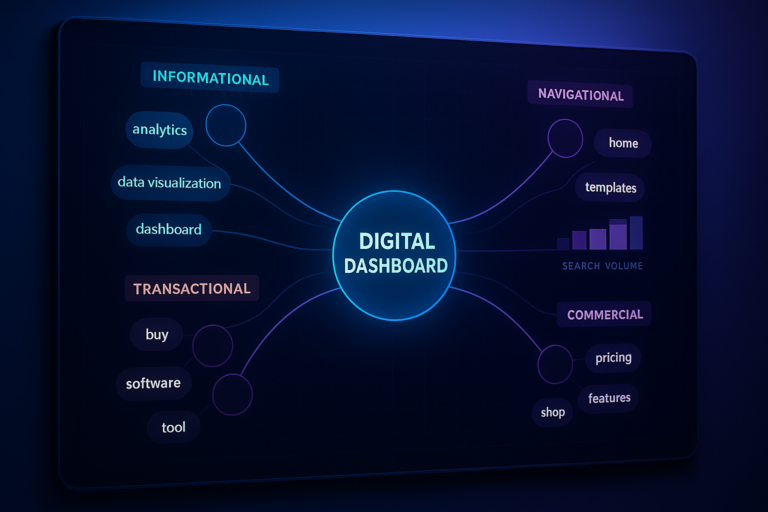
AI keyword research is the practice of using machine learning and natural language processing to discover, cluster, and prioritize search terms based on user intent — and in 2025, it has become the single most powerful lever available to SEO professionals who want to outrank well-funded competitors. Because Google itself now uses AI to interpret every query it receives, your keyword strategy must match that intelligence or fall further behind each year.
Traditional keyword tools were built for a different era. They returned flat lists of search volumes. However, modern search engines parse meaning, context, and intent — so your research process needs to do the same. This guide covers everything: how AI keyword research works, step-by-step processes, tool selection criteria, semantic clustering, common pitfalls, and the emerging trends reshaping the discipline right now.
What Is AI Keyword Research? A Clear Definition
AI keyword research applies natural language processing (NLP) — a branch of computer science that teaches machines to understand human language — and predictive machine learning models to the process of finding and evaluating search terms. Rather than pulling a static list of search volumes, AI systems analyze billions of query patterns to understand what searchers mean, not just what they type.
For example, an AI model recognizes that “how to lose belly fat fast,” “core fat exercises,” and “stomach reduction tips” all share the same underlying intent. Consequently, it groups them into one cluster so you can build a single authoritative page — rather than three thin, competing ones.
This shift from volume-first thinking to intent-first thinking is the core value proposition of AI-driven keyword research. Furthermore, it mirrors precisely how Google’s own systems evaluate and rank content.
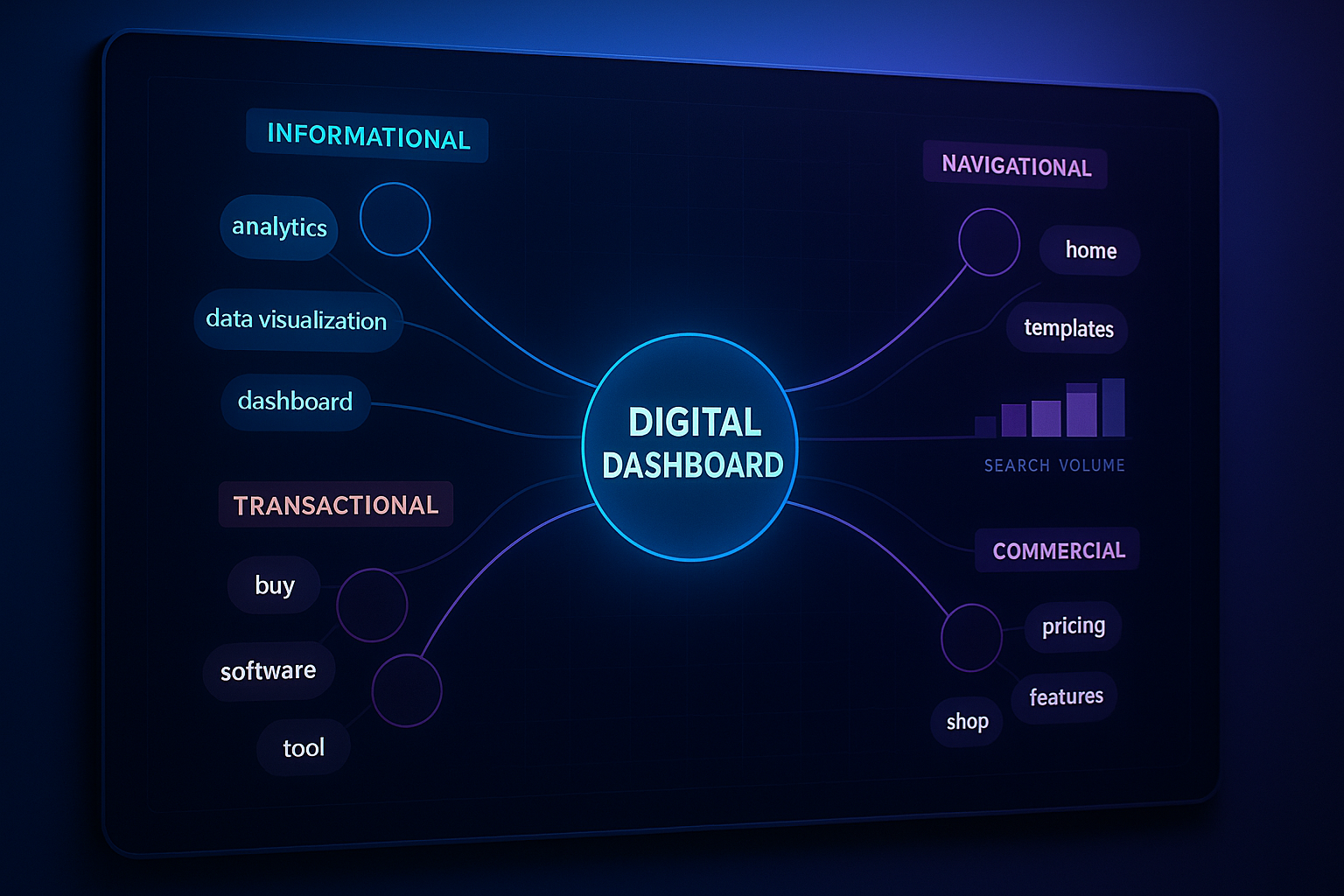
AI keyword research tools visualize semantic clusters and intent signals in ways traditional spreadsheets simply cannot replicate.
How AI Keyword Research Technology Actually Works
Under the hood, AI keyword tools rely on transformer-based language models — the same architecture powering tools like ChatGPT — trained on massive datasets of search queries, SERP results, and user engagement signals. These models learn which queries satisfy similar informational needs, even when the phrasing differs completely.
Embedding Vectors and Semantic Similarity
Modern AI tools convert keywords into numerical representations called embedding vectors — think of them as coordinates in a multi-dimensional meaning space. Keywords positioned close together in this space share similar intent. This mathematical approach is why AI clustering is far more accurate than manually grouping terms by hand.
Predictive Ranking Potential Scoring
Additionally, machine learning models analyze historical ranking data to predict which keywords a given domain can realistically compete for. This predictive scoring replaces hours of manual difficulty assessment. In practice, the AI ingests a seed keyword, expands it into thousands of related queries, classifies each by intent, and surfaces ranked opportunities — see automated keyword research tools for specific platform comparisons — all within seconds.
SERP Feature Analysis
Advanced AI research tools also parse live SERP features — featured snippets, People Also Ask boxes, image packs, and shopping results — and use that data to tell you not just whether to target a keyword, but how to format the content that targets it. This layer of intelligence is something traditional tools cannot provide at all.
AI Keyword Research vs. Traditional Keyword Research: Key Differences
Understanding where AI research outperforms conventional methods helps you decide how and when to adopt it.
In short, traditional research tells you what people search. AI keyword research tells you why they search it and how to satisfy them completely.
The Top Benefits of AI Keyword Research
Before diving into process, it helps to understand the concrete advantages that make AI keyword research worth adopting.
- Faster long-tail discovery: AI surfaces question-based and long-tail queries that manual brainstorming consistently misses — often at dramatically lower competition levels.
- Automated intent classification: Every keyword is labeled informational, navigational, commercial, or transactional without manual review — saving hours per research session.
- Competitive gap analysis: AI tools compare your current rankings against competitors to identify keyword opportunities your site is missing entirely.
- Content consolidation: Semantic clustering reveals that dozens of keyword rows can often be served by a single, comprehensive page — reducing content sprawl.
- Trend detection: Real-time AI monitoring alerts you to emerging search patterns before they peak — giving you a first-mover advantage over slower competitors.
- Reduced human error: Automated data processing eliminates transcription errors, miscalculated opportunity scores, and overlooked duplicate keywords.
How to Do AI Keyword Research: A 7-Step Process
Following a structured process ensures you extract maximum value from AI tools. Here is a proven, step-by-step workflow that goes deeper than the basic approaches most guides describe.
-
1
Define your seed topic and strategic goal.
Start with a broad topic that reflects your core business focus. Enter it into your AI tool to generate an initial universe of related queries. Crucially, define your goal upfront — whether that is driving organic traffic, generating leads, or building topical authority — because this goal determines which filters and scoring weights matter most when reviewing your results.
-
2
Expand with competitor URL analysis.
Feed the URLs of your top-ranking competitors into the AI tool. Most platforms will reverse-engineer the keywords those pages rank for, revealing gaps in your current content strategy. This step is particularly powerful for finding high-value transactional keywords you may be completely absent from.
-
3
Cluster keywords by search intent.
Use the semantic clustering feature to group queries as informational, commercial, transactional, or navigational. Each intent type demands a different content format — a how-to article, a comparison page, a product landing page, or a brand page respectively. Skipping this step means you risk building the wrong type of content for the traffic you want to attract.
-
4
Score and prioritize by AI opportunity index.
Sort clusters using a composite score that combines search volume, keyword difficulty, your domain’s topical authority, and the AI-predicted ranking probability. Prioritize high-opportunity, low-competition clusters where your site already has established context — these deliver the fastest ranking returns.
-
5
Map clusters to specific content pages.
Assign each keyword cluster to one specific existing or planned page. Document this mapping in a content calendar. This prevents keyword cannibalization — where multiple pages compete for the same terms — and ensures every URL has a clear, singular topical focus that search engines can evaluate accurately.
-
6
Validate with real audience signals.
Cross-reference your AI-generated clusters against Google Search Console data, customer support tickets, sales call transcripts, and forum discussions. AI tools excel at scale but lack direct knowledge of your specific audience’s language. Real-world language validation dramatically improves conversion rates from the traffic you earn.
-
7
Monitor, refresh, and iterate quarterly.
Schedule quarterly reviews and configure AI-powered trend alerts within your tool. Search behavior shifts constantly — new questions emerge, competitor content matures, and algorithm updates revalue certain query types. Refreshing your keyword map on a regular cadence ensures you capture rising opportunities before competitors claim them first.

A structured seven-step AI keyword research process turns raw data into a focused, measurable content strategy.
Semantic Keyword Clustering: Why It Changes Everything
Traditional keyword lists treat each term as an isolated unit. In contrast, semantic clustering treats keywords as members of an intent family. This distinction matters enormously for content planning and site architecture.
For instance, a traditional approach might produce 40 separate keyword rows, seemingly requiring 40 individual pages. Meanwhile, an AI clustering approach reveals that those 40 terms collapse into six intent groups — each requiring one comprehensive page. The result is a leaner, more authoritative site structure with fewer cannibalization risks.
How Clustering Aligns With Google’s Helpful Content System
Semantic clusters align naturally with Google’s Helpful Content system, which rewards depth and topical completeness over thin, keyword-stuffed pages. When your page covers an entire intent cluster thoroughly, it satisfies the full range of what searchers want — which is precisely what Google’s quality raters look for.
Furthermore, a well-structured cluster map feeds directly into your internal linking strategy. Related cluster pages link to each other naturally, building topical authority signals across your entire domain — not just on individual URLs.
The Best AI Keyword Research Tools in 2025
The AI keyword research tool market has expanded dramatically. Choosing wisely depends on your site’s scale, budget, and technical needs. Below are the leading platforms worth evaluating.
Semrush — Best for Enterprise-Scale Research
Semrush integrates AI-powered intent classification and keyword clustering across a database of over 25 billion keywords. Its Keyword Magic Tool and Topic Research feature handle large-scale content mapping efficiently. Therefore, it suits agencies and large in-house SEO teams managing hundreds of content pages simultaneously.
Ahrefs — Best for Competitive Gap Analysis
Ahrefs excels at reverse-engineering competitor keyword strategies. Its AI-assisted Content Gap tool identifies keywords your competitors rank for that you do not — making it indispensable for building out a competitive content strategy. In addition, Ahrefs’ traffic estimation data is widely regarded as among the most reliable in the industry.
Surfer SEO — Best for On-Page Integration
Surfer SEO combines keyword clustering with real-time content optimization guidance. Its AI analyzes the top-ranking pages for your target keyword and generates a content structure that mirrors the signals those pages send to Google. As a result, it is particularly useful for writers and content strategists who need keyword data and content guidance in one place.
Google’s AI Overviews and Search Generative Experience
It is worth noting that Google’s own AI Overviews — powered by its Gemini models — now influence which content surfaces for complex, multi-part queries. Consequently, targeting the question-based clusters that AI Overviews draw from is increasingly important. Tools that surface “People Also Ask” and long-tail conversational queries help you optimize specifically for this visibility layer.
Budget-Friendly Options for Smaller Sites
Mid-market and lower-cost tools — including Ubersuggest, Keyword Insights, and LowFruits — offer 80% of the clustering and intent-classification value at a fraction of the enterprise price. For growing sites and solo operators, these platforms provide a highly practical entry point into AI-driven keyword research. Resources like RankAuthority provide comparative tool reviews to help you identify the best fit for your specific niche and budget.
How to Choose the Right AI Keyword Research Tool
With so many platforms available, evaluating them on the right criteria is more important than ever. Consider these factors before committing.
- Data freshness: How frequently is the keyword database updated? Real-time or near-real-time data is critical for trend-sensitive niches.
- Clustering accuracy: Test the tool with a known seed keyword and evaluate whether the clusters it produces make semantic sense. Poorly calibrated clustering creates more work, not less.
- Intent classification quality: Verify that the tool correctly distinguishes transactional from informational intent — this is where cheaper tools often fall short.
- Workflow integration: Does it connect with your CMS, Google Search Console, or content calendar? Friction in the workflow reduces how consistently your team uses the insights generated.
- Pricing relative to scale: Enterprise platforms offer real-time data pipelines and API access. However, mid-market tools often deliver 80% of the value at 20% of the cost — making them the smarter choice for growing sites.
Using AI Keyword Research to Build Topical Authority
One of the most powerful — and underutilized — applications of AI keyword research is building topical authority: the signal Google uses to determine whether your site is a genuine expert on a subject rather than a collection of loosely related posts.
AI tools generate what SEOs call a topic cluster map — a pillar page (broad topic) surrounded by cluster pages (specific subtopics), all connected via internal links. This architecture is a direct result of semantic keyword research applied at scale.
Pillar Pages vs. Cluster Pages: What AI Research Reveals
When you run AI keyword research on a broad topic like “content marketing,” the tool groups thousands of related queries into tiers. High-volume, broad queries become pillar page targets. Specific, lower-volume queries — “content marketing KPIs for SaaS” or “how to repurpose blog posts for social media” — become individual cluster page targets.
This structured approach means your content investment is precisely directed. Furthermore, every cluster page you publish reinforces the topical authority of your pillar page — creating a compounding SEO effect over time.
AI Keyword Research for Voice Search and Conversational Queries
Voice search queries are longer, more conversational, and phrased as complete questions. Because AI models are trained on natural language, they surface these question-based patterns far more effectively than traditional tools built around short, typed queries.
As a result, AI-driven research directly improves your chances of winning featured snippets and position-zero results — the primary visibility targets for voice assistant responses. Structuring content around AI-identified question clusters is therefore one of the highest-leverage tactics available in 2025.
Optimizing for People Also Ask Boxes
AI keyword tools that surface “People Also Ask” data give you a direct window into the follow-up questions Google considers most relevant to your target keyword. Answering these questions concisely within your content — ideally in a dedicated FAQ section — significantly increases the probability of earning PAA box placements alongside your primary ranking.
Common Pitfalls to Avoid in AI Keyword Research
Even powerful AI tools produce poor results when used carelessly. Knowing where practitioners go wrong saves significant time and prevents wasted content investment.
Blindly Trusting AI Volume Estimates
AI volume estimates are statistical predictions, not precise counts. Therefore, always cross-reference them against Google Search Console impressions, Google Keyword Planner data, and at least one third-party tool before committing major content resources to a specific keyword cluster.
Ignoring Low-Volume Long-Tail Keywords
Low search volume does not mean low value. Long-tail keywords — typically three or more words — often convert at dramatically higher rates because the searcher’s intent is highly specific. AI tools are particularly effective at surfacing these hidden opportunities that manual research consistently misses.
Over-Relying on AI Without Strategic Judgment
AI tools augment rather than replace human judgment. They surface data and patterns at scale, but an experienced SEO professional still needs to evaluate business context, brand voice, audience nuance, and strategic priorities. Algorithms cannot fully grasp why your specific audience prefers certain language — only you can.
Skipping the Content Mapping Step
Many teams complete the clustering step and then fail to formally map clusters to specific pages. Without this mapping document, keyword cannibalization — where multiple pages compete for the same queries — is almost inevitable. It also makes editorial planning far more chaotic than it needs to be.
AI Keyword Research and E-E-A-T: What the Connection Means
E-E-A-T — Experience, Expertise, Authoritativeness, and Trustworthiness — is the framework Google’s search quality raters use to evaluate content quality. AI keyword research directly supports all four dimensions when used correctly.
Specifically, by identifying the full range of subtopics and questions within a subject, AI research helps you build content that demonstrates comprehensive expertise. When your page covers a topic cluster thoroughly and cites authoritative sources, it signals both expertise and trustworthiness to both readers and ranking algorithms.
Furthermore, using AI to discover the specific language your audience uses — including technical terminology and colloquial phrasing — helps you write in a way that feels genuinely authoritative rather than generic. This is the experience signal that separates high-quality content from mass-produced AI text.
Integrating AI Keyword Research Into Your Broader SEO Workflow
AI keyword research does not exist in a vacuum. Its real power emerges when it feeds into connected SEO systems. Here is how to integrate it effectively.
Content Calendar and Editorial Planning
Export your prioritized keyword clusters directly into your content calendar. Assign each cluster a target publish date, a content type, and a responsible team member. This transforms abstract research data into concrete editorial action — the step where most teams lose momentum.
On-Page SEO and Content Briefs
Feed your keyword clusters into your content brief template. The primary keyword becomes the page’s focus keyphrase. Secondary cluster members become LSI (latent semantic indexing) terms — related words and phrases — to distribute naturally throughout headings, subheadings, and body copy. This ensures on-page relevance without forcing awkward repetition.
Technical SEO: URL Structure and Internal Linking
Your keyword cluster map should directly inform URL structure. Pillar pages get short, broad URLs. Cluster pages get longer, more specific URLs nested under the pillar’s subfolder where appropriate. Internal links between cluster pages and the pillar reinforce topical signals at the domain level — a benefit that compounds over time as your content library grows.
Key Takeaway: AI keyword research is most powerful when it is not a standalone activity but a connective tissue linking your content strategy, editorial calendar, on-page optimization, and technical architecture into a single coherent system.
Emerging Trends in AI Keyword Research for 2025 and Beyond
The discipline of AI keyword research is evolving faster than any other area of SEO. Staying ahead of these trends ensures your strategy remains effective as the search landscape shifts.
Multimodal Search and Visual Query Research
Google Lens and visual search are growing rapidly. Consequently, AI keyword research is beginning to expand beyond text-based queries to include image-based and video-based search patterns. Forward-looking SEO teams are already building visual content strategies informed by AI analysis of image search data.
Zero-Click Optimization and AI Overview Targeting
As Google’s AI Overviews answer more queries directly on the results page, zero-click searches — where the user finds their answer without visiting a website — are increasing. AI keyword research now needs to identify which queries are likely to trigger AI Overviews and adjust content strategy accordingly: either optimizing to appear as a cited source within the overview, or deprioritizing those keywords in favor of queries that still drive clicks.
Real-Time Trend Integration
Next-generation AI keyword platforms are integrating real-time trend data — pulling signals from social media, news feeds, and search autocomplete — to surface emerging keywords before they appear in traditional volume databases. This real-time layer gives early adopters a significant first-mover advantage in fast-moving industries.
Frequently Asked Questions About AI Keyword Research
What is AI keyword research?
AI keyword research is the process of using machine learning and natural language processing to discover, cluster, and prioritize search terms based on semantic meaning and user intent. Unlike traditional tools that return static volume lists, AI systems analyze billions of query patterns to surface smarter, more actionable keyword opportunities aligned with how modern search engines interpret content.
How is AI keyword research different from traditional keyword research?
Traditional research relies on manually filtering volume and competition metrics. AI keyword research goes further by understanding search intent, grouping semantically related terms, predicting ranking probability, and identifying content format guidance based on live SERP features — saving hours of manual analysis per research cycle.
What are the main benefits of using AI for keyword research?
Key benefits include faster discovery of long-tail opportunities, automated intent classification, semantic clustering, competitive gap analysis, topical authority mapping, trend detection, and the ability to scale research across hundreds of topics simultaneously — while significantly reducing human error in data interpretation.
Can AI keyword tools replace human judgment in SEO?
No — AI tools augment rather than replace human judgment. They surface data and patterns at extraordinary scale, but an experienced SEO professional still needs to evaluate business context, brand voice, audience nuance, and strategic priorities that algorithms cannot fully grasp.
What is semantic keyword clustering and why does it matter?
Semantic keyword clustering groups related search terms by meaning rather than exact-match similarity. AI models use NLP to understand that “best running shoes” and “top sneakers for jogging” target the same intent, allowing you to build one comprehensive page rather than creating keyword cannibalization across multiple thin pages.
How does AI identify and classify search intent?
AI models classify intent by analyzing language patterns, SERP features, click behavior, and engagement signals associated with each query. They categorize keywords as informational, navigational, commercial, or transactional — helping you match the right content format to what each category of searcher actually wants.
Is AI keyword research suitable for small businesses and solo operators?
Yes — small businesses benefit greatly because AI tools reduce the time and expertise required to find viable opportunities. Many affordable and free-tier AI-powered SEO platforms now give smaller sites access to intent classification and clustering capabilities that were previously reserved for large agencies with dedicated research teams.
What common mistakes should I avoid with AI keyword research?
Common mistakes include blindly trusting AI volume estimates without cross-referencing, ignoring low-volume long-tail keywords with high conversion potential, skipping the content mapping step, over-relying on AI without human validation, and failing to integrate keyword research into a connected content and technical SEO system.
How often should I run AI keyword research?
Refresh your core keyword research quarterly or whenever a major algorithm update occurs. However, configure real-time trend alerts within your AI tool so you can react to emerging keyword opportunities as they arise — not weeks or months after competitors have already claimed them.
How does AI keyword research improve voice search and featured snippet performance?
Because AI models understand conversational language, they excel at surfacing natural-language and question-based queries that align with how people speak to voice assistants. Structuring content around these AI-identified question clusters — particularly in FAQ sections — significantly improves your chances of earning featured snippets and voice search answers.
What role does NLP play in AI keyword research?
Natural Language Processing enables AI systems to understand the meaning, context, and relationships between words — rather than treating queries as isolated character strings. This capability enables more accurate intent detection, better semantic clustering, smarter content recommendations, and alignment with how Google’s own ranking systems interpret queries.
How do I choose the best AI keyword research tool for my site?
Evaluate tools on data freshness, clustering accuracy, intent classification quality, competitive gap analysis capability, workflow integration, and pricing relative to your site’s scale. Test any tool with a known seed keyword before committing. Comparative resources like RankAuthority can help you identify the best AI SEO stack for your specific niche and goals.
How does AI keyword research support topical authority building?
AI keyword research generates comprehensive topic cluster maps — pillar pages surrounded by semantically related cluster pages — that signal genuine subject-matter expertise to Google. Each cluster page published reinforces the authority of the pillar, creating a compounding SEO effect that grows stronger over time as your content library expands.
Conclusion: Why AI Keyword Research Is Now Non-Negotiable
AI keyword research has moved from competitive advantage to competitive baseline in 2025. Because search engines themselves use AI to interpret every query, matching that intelligence in your research process is simply the most logical path to consistent organic growth.
In summary, the teams that win will be those who use AI to work smarter at every level: clustering keywords by intent, building topical authority through structured content maps, prioritizing by predictive opportunity scores, and refreshing their strategy continuously. The technology handles the scale; your judgment handles the direction.
Specifically, start with one seed topic today, run it through an AI keyword research tool, and compare the semantic clusters you receive against what manual brainstorming would have produced. The difference will be immediately compelling. From there, integrate the results into your content calendar, map clusters to specific pages, and validate against your actual audience’s language.
The gap between sites that use AI keyword research systematically and those that rely on intuition alone will only widen from here. Starting that systematic practice today — even imperfectly — puts you ahead of the majority of your competition. For deeper guidance on building this workflow, explore more resources on RankAuthority.

