

A backlinks SEO check is the process of auditing every inbound link pointing to your website to evaluate quality, relevance, and overall impact on your search engine rankings. Because Google treats backlinks as votes of confidence, a single toxic link cluster can quietly erode rankings that took months to build. Therefore, understanding how to perform this audit is one of the most valuable skills any site owner can develop.
Why Your Link Profile Determines Search Visibility
According to Google’s original PageRank algorithm, links from other websites act as endorsements that transfer authority and relevance signals. However, not all endorsements carry equal weight. A single link from a well-established industry publication can be worth more than a thousand links from obscure, unrelated directories.
Additionally, Google’s Penguin algorithm update specifically targets manipulative link-building practices. As a result, sites with unnatural link profiles risk algorithmic demotions or even manual penalties. For this reason, routine audits are not optional — they are a core maintenance task for any site competing in organic search.

A well-structured backlinks SEO check reveals both link strengths and hidden risks across your entire link profile.
Tools You Need Before Starting
Before diving into the audit process, you need reliable data sources. No single tool captures every backlink on the internet, so combining two sources gives you a more complete picture.
The most trusted options include:
- Google Search Console — Free, directly from Google, and shows links Google has actually crawled. It is the essential baseline for any audit.
- Ahrefs — One of the largest third-party link indexes, offering detailed metrics like Domain Rating, anchor text breakdowns, and link velocity charts.
- Semrush — Provides a Backlink Audit tool with a built-in toxicity scoring system that automatically flags suspicious links.
- Moz Link Explorer — Offers Domain Authority scores and spam score metrics that are useful for quick quality assessments.
In practice, starting with Google Search Console for free data and then cross-referencing with Ahrefs or Semrush covers the vast majority of your backlink universe. Resources like RankAuthority also provide practical guidance on selecting the right tool combination for your site’s size and budget.
How to Perform a Backlinks SEO Check Step by Step
Step 1 — Export Your Full Backlink Data
First, log into Google Search Console and navigate to the Links report. Export the full list of external links to a spreadsheet. Next, run the same export from your chosen third-party tool. Merge both lists, removing duplicates, so you have a single master file of every known referring domain.
Step 2 — Evaluate Domain Authority and Relevance
For each referring domain, note the Domain Rating (Ahrefs) or Domain Authority (Moz). However, authority alone is not sufficient — a high-authority link from a completely unrelated niche adds less value than a mid-authority link from a closely related industry site. Therefore, assess both the score and the topical relevance of each linking domain.
Step 3 — Analyze Anchor Text Distribution
Review how your anchor text is distributed across all backlinks. A healthy profile typically shows a mix of branded anchors, generic phrases like “click here,” and some keyword-rich anchors. In contrast, a profile where 60% or more of anchors use the same exact keyword phrase looks manipulative to Google and can trigger ranking penalties.
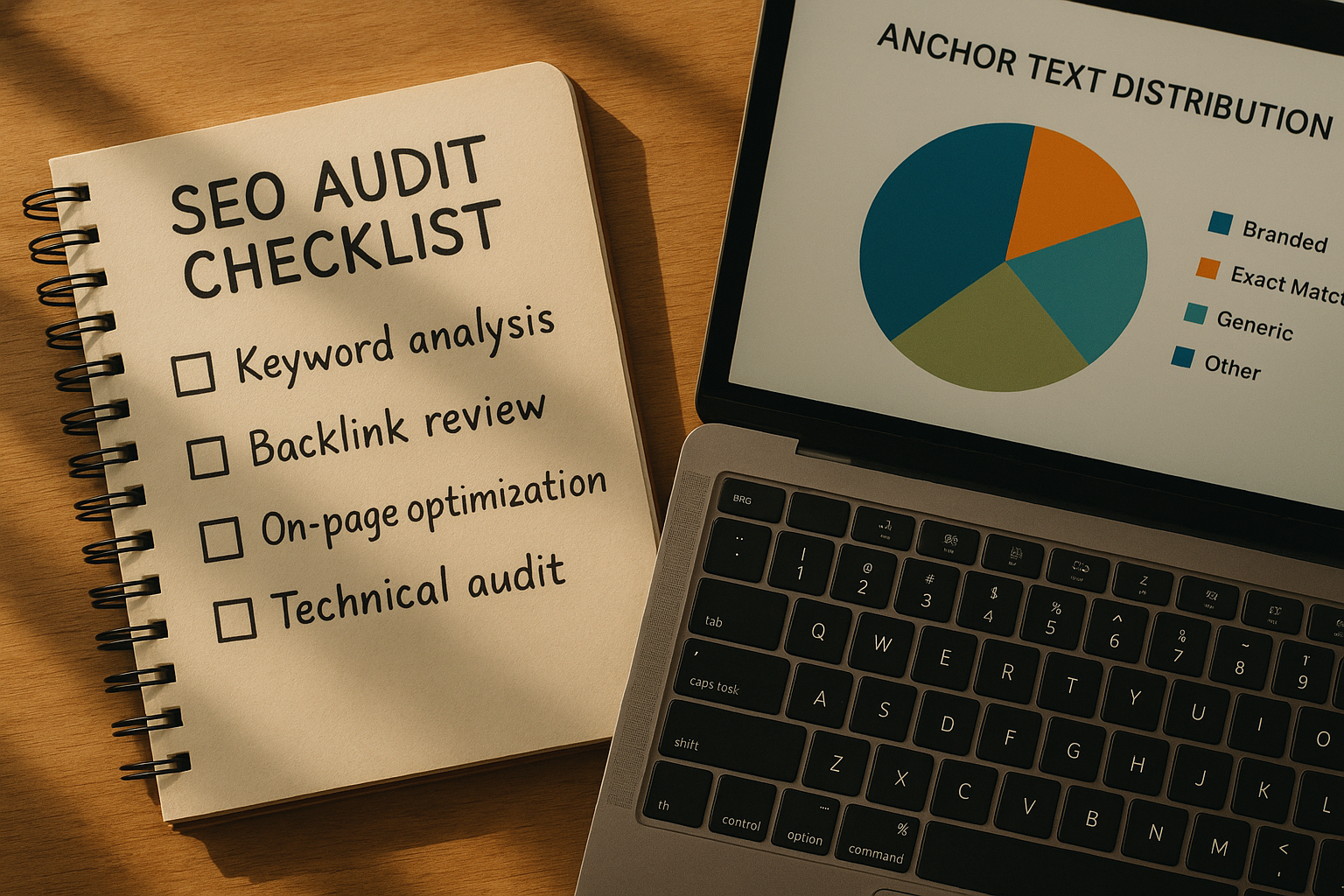
Reviewing anchor text distribution is a critical step in any thorough link profile audit.
Step 4 — Flag and Remove Toxic Links
Toxic backlinks typically originate from link farms, private blog networks (PBNs), hacked sites, or irrelevant foreign-language directories. Once flagged, first attempt outreach to the linking site’s webmaster requesting removal. If that fails after two attempts, compile a disavow file and submit it through Google’s Disavow Tool in Search Console. This tells Google to exclude those links when evaluating your site.
Step 5 — Build on Your Strongest Links
Finally, identify the pages on your site that attract the most high-quality backlinks. Analyze what made those pages link-worthy — whether it was original research, a comprehensive guide, or a unique tool. Then replicate that approach with new content to continue earning authoritative links organically.
Key Metrics to Track in Every Audit
Beyond simply counting links, a meaningful audit tracks several interconnected metrics. Understanding each one helps you make smarter decisions about which links to pursue and which to disavow.
Referring Domains vs. Total Backlinks — A site with 500 links from 10 domains is far more vulnerable than one with 500 links from 400 unique domains. Diversity signals natural link acquisition.
Dofollow vs. Nofollow Ratio — While nofollow links have some indirect value, a healthy profile includes a substantial portion of dofollow links that pass authority directly.
Link Velocity — Sudden spikes in new backlinks can appear suspicious, especially if they are not tied to a content launch or PR campaign. Monitor velocity trends monthly.
Lost vs. Gained Links — Tracking which links you have lost recently helps you identify broken pages or partnerships worth rebuilding.
Common Mistakes That Undermine Your Audit
Many site owners make avoidable errors when auditing their link profiles. First, relying on a single tool leads to incomplete data — because no crawler indexes the entire web. Second, disavowing too aggressively can strip away legitimate editorial links, which actually weakens your authority. Therefore, only disavow links you are confident are harmful.
Another frequent mistake is ignoring internal links during the audit. Although the focus is on external backlinks, understanding how your internal linking structure distributes authority ensures that the link equity you earn from external sources flows to your most important pages. Resources like RankAuthority cover both external and internal link strategies in depth.
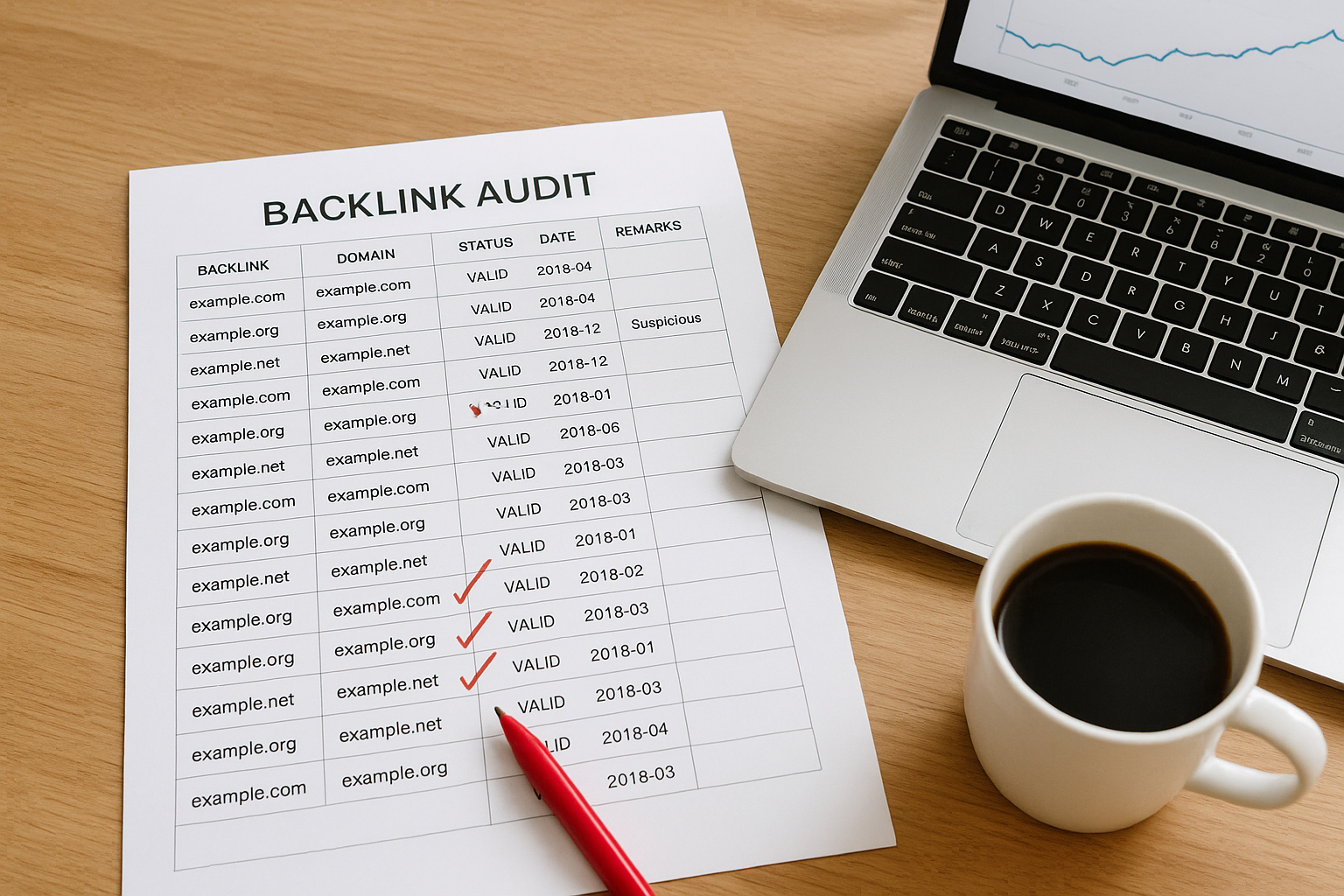
Carefully flagging suspicious entries in your backlink data is essential before submitting a disavow file.
How to Strengthen Your Link Profile After the Audit
Once you have cleaned up harmful links, the next priority is building a stronger foundation. Focus on earning links from sites that are both authoritative and topically aligned with your niche. For example, if you run a finance blog, a link from a personal finance publication carries far more weight than one from a general lifestyle directory.
Additionally, consider digital PR campaigns, original data studies, and guest contributions to reputable publications. These strategies earn editorial links naturally, which are the type Google values most. Meanwhile, consistently publishing high-quality content creates a compounding effect — each new authoritative link reinforces the credibility of your existing link profile.
Frequently Asked Questions About Backlinks SEO Check
What is a backlinks SEO check?
A backlinks SEO check is the process of auditing all inbound links pointing to your website to evaluate their quality, relevance, and potential impact on search rankings. It helps you identify both valuable links that boost authority and harmful links that may trigger Google penalties.
How often should I run a backlink audit?
Most SEO professionals recommend a full audit every three to six months. However, if your site experiences a sudden ranking drop or you suspect a negative SEO attack, you should audit immediately.
Which tools are best for checking backlinks?
The most widely used tools include Ahrefs, Semrush, Moz Link Explorer, and Google Search Console. Because each tool has a different index size, using two together gives a more complete picture of your link profile. For a deeper walkthrough, see our Basics of Search Engine: A Complete Beginner’s Guide.
What makes a backlink toxic or harmful?
Toxic backlinks typically come from spammy, irrelevant, or low-authority domains, link farms, or sites with malware. Links with over-optimized exact-match anchor text in large quantities can also signal manipulation to Google.
How do I remove bad backlinks?
First, reach out to the linking site’s webmaster and request removal. If that fails after two attempts, use Google’s Disavow Tool in Search Console to tell Google to ignore those links when assessing your site.
Does the number of backlinks directly determine rankings?
Not directly. Google values quality over quantity, so ten links from high-authority, relevant domains will outperform hundreds of links from low-quality sources. A healthy link profile balances volume with relevance and diversity.
What is anchor text and why does it matter?
Anchor text is the clickable text used in a hyperlink. In a backlink audit, reviewing anchor text distribution helps you spot over-optimization, where too many links use the same exact keyword phrase, which can appear manipulative to search engines.
What is a referring domain versus a backlink?
A referring domain is a unique website that links to you, while a backlink is each individual link. One referring domain can send multiple backlinks. Tracking unique referring domains is generally a better indicator of link profile health than raw backlink count.
Can backlinks hurt my site’s SEO?
Yes. A large volume of spammy or irrelevant backlinks can result in a Google manual penalty or an algorithmic demotion. This is precisely why regular backlink audits are essential for maintaining strong search performance.
What is link velocity and should I monitor it?
Link velocity refers to the rate at which your site gains or loses backlinks over time. Sudden unnatural spikes can appear suspicious to Google, so monitoring velocity helps you detect both negative SEO attacks and the results of your own link-building campaigns.
What metrics should I focus on during a backlink audit?
Key metrics include Domain Rating or Domain Authority of linking sites, anchor text distribution, the ratio of dofollow to nofollow links, link velocity, and topical relevance of referring domains. Together, these metrics paint a complete picture of your link profile’s health.
Is Google Search Console enough for a backlink audit?
Google Search Console is a useful free starting point, but it typically shows fewer links than third-party tools. For a thorough audit, combining Search Console data with at least one premium tool like Ahrefs or Semrush is strongly recommended.
Conclusion: Make Backlink Auditing a Regular Practice
Performing a consistent backlinks SEO check is not a one-time task — it is an ongoing discipline that protects your rankings and uncovers new growth opportunities. By combining free tools like Google Search Console with professional platforms, analyzing the right metrics, and acting decisively on toxic links, you give your site the cleanest possible foundation for long-term search success. In practice, the sites that dominate competitive search results are those that treat their link profiles with the same care they give to content and technical SEO. Start your next audit today and take full control of how Google perceives your site’s authority.

