

To check backlink profile means to systematically analyze every external website that links to your domain, evaluating link quality, source authority, anchor text patterns, and potential risks. Understanding your backlink profile is one of the most important steps in any serious SEO strategy.
Backlinks remain a foundational ranking signal for Google. However, not all links help your site — some can actively damage it. Therefore, regularly auditing your link profile gives you the insight needed to protect rankings, identify growth opportunities, and outpace competitors.
Why Your Backlink Profile Matters for Rankings
According to Google’s original PageRank algorithm, links from external websites act as votes of confidence. In practice, the quality and relevance of those votes carry far more weight than sheer quantity. A single link from a high-authority news publication can outperform dozens of links from obscure directories.
Additionally, your backlink profile signals to search engines how trustworthy and relevant your content is within its niche. A diverse, natural-looking profile builds long-term authority, while a manipulative or spammy one invites penalties.
Because of this, monitoring your profile is not a one-time task — it is an ongoing SEO responsibility. For a deeper walkthrough, see our SEO and Broken Links: Why They Matter and How to Fix Them.
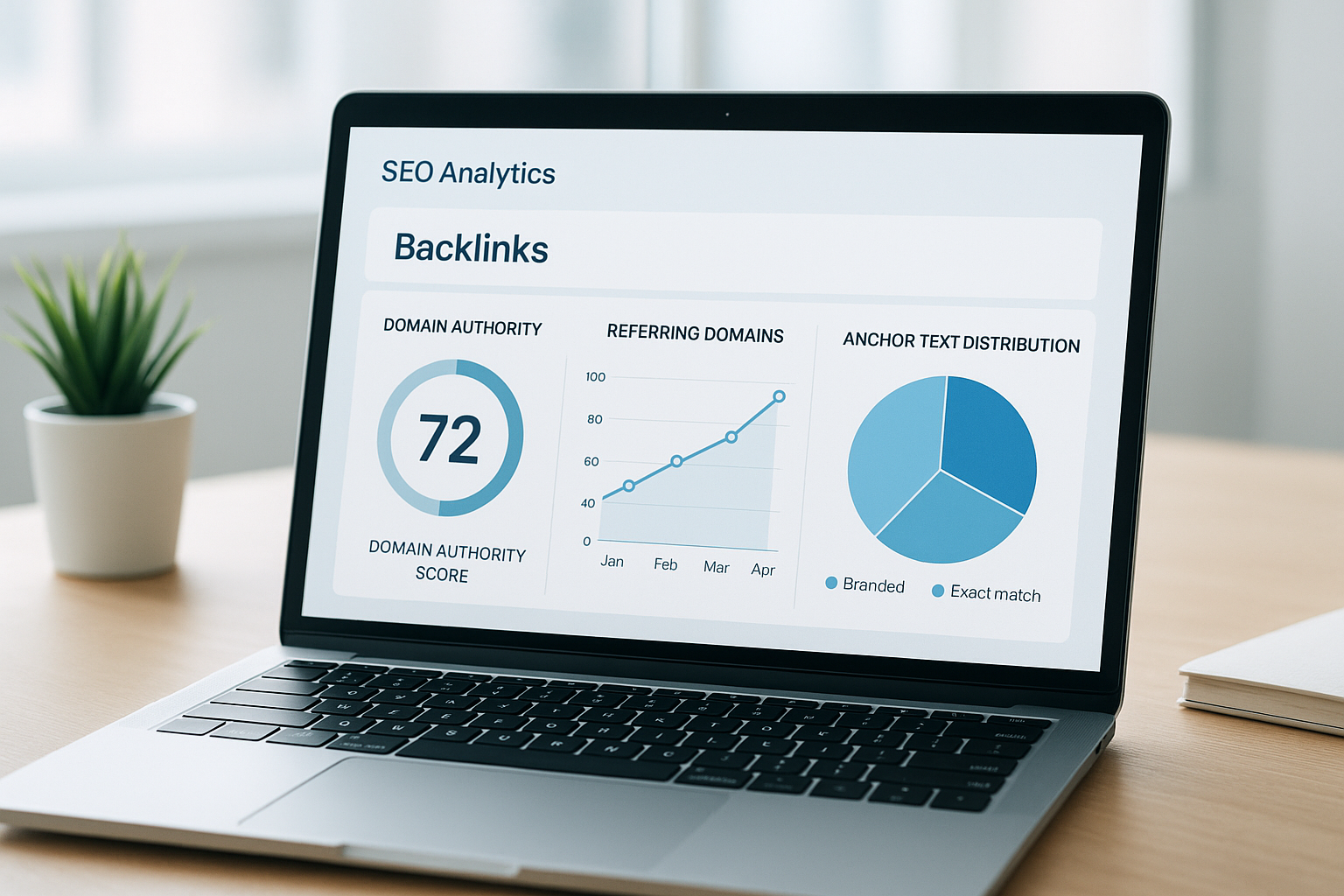
A well-organized backlink dashboard makes it easier to check backlink profile data at a glance.
The Best Tools to Analyze Your Links
Several industry-leading platforms make it straightforward to gather comprehensive backlink data. Each tool has distinct strengths, so choosing the right one depends on your budget and goals.
Top Backlink Analysis Tools
- Ahrefs — Largest live backlink index; excellent for competitor research
- SEMrush — Strong toxic link detection and disavow workflow
- Moz Link Explorer — Reliable Domain Authority scoring
- Google Search Console — Free, direct data from Google itself
In practice, combining Google Search Console with one paid tool gives you the most reliable and complete dataset. Search Console reflects what Google actually sees, while third-party tools fill in gaps and provide richer filtering options.
For a deeper dive into choosing the right platform, RankAuthority offers detailed guidance on backlink auditing tools and SEO workflows.
Step-by-Step: How to Check Your Backlink Profile
Following a structured process ensures you do not miss critical data points. Below is a practical six-step workflow you can apply immediately.
Choose your backlink analysis tool
Select a reliable platform based on your budget and the scale of your site. Free tools like Google Search Console are a good starting point, while paid tools provide far deeper data.
Enter your domain and export the data
Input your root domain and export the full backlink list, including referring domains, anchor text, link type (dofollow or nofollow), and first-seen dates. For a deeper walkthrough, see our Broken Link Repair Service for Websites | Full Guide.
Evaluate referring domain quality
Review the domain authority or domain rating of each referring site. Flag sources that are low-quality, irrelevant to your niche, or show signs of spam patterns.
Audit anchor text distribution
Analyze the anchor text breakdown across all links. A healthy profile includes branded anchors, naked URLs, and natural phrase variations — not a heavy concentration of exact-match keywords.
Identify and act on toxic links
Flag spammy or harmful backlinks, then either request manual removal from the linking site or submit a disavow file through Google Search Console to neutralize their impact.
Benchmark against competitors
Run the same analysis on your top-ranking competitors. As a result, you will uncover link-building gaps and high-value opportunities that your current strategy is missing. For a deeper walkthrough, see our Free Broken Link Checker.
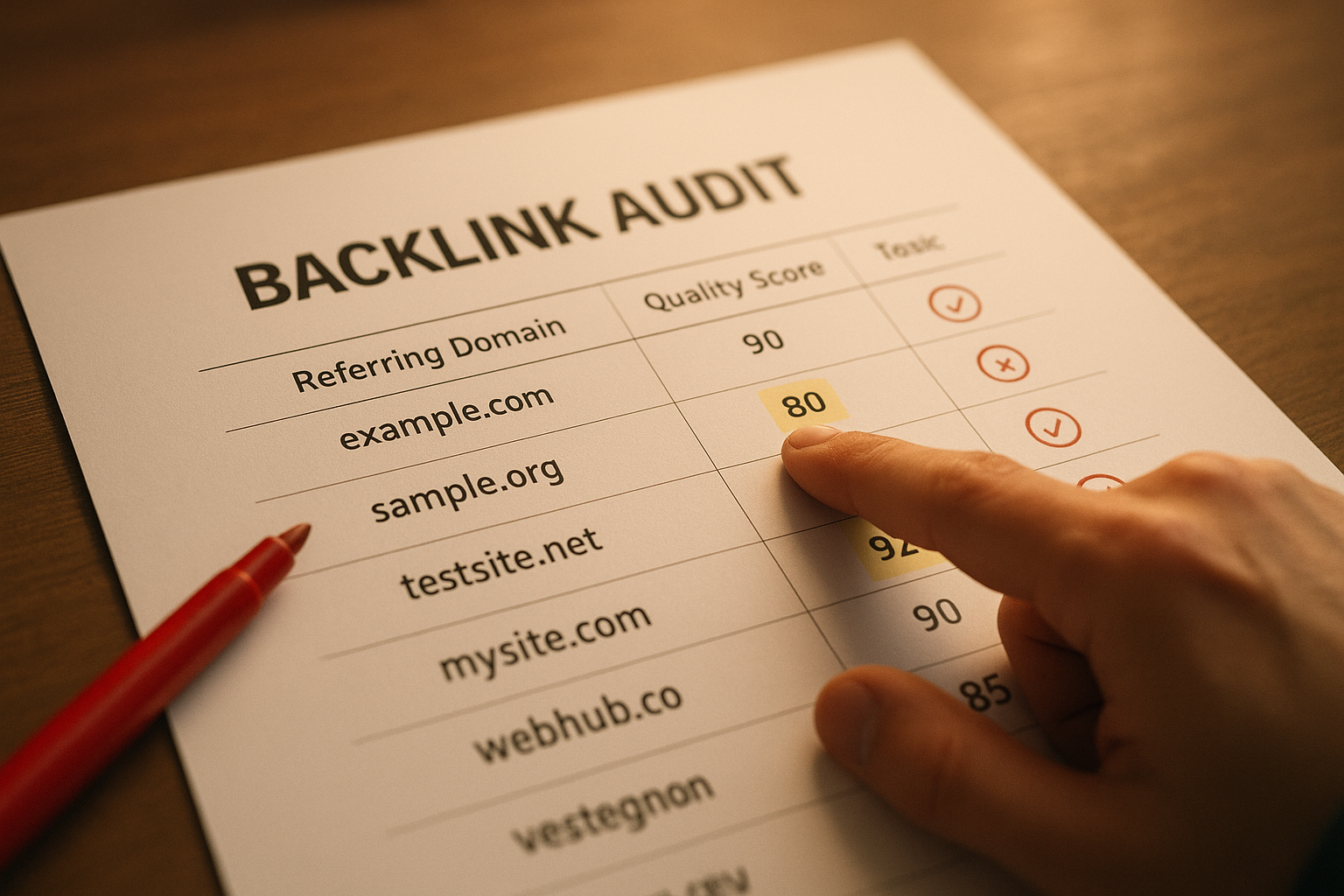
Manually reviewing flagged entries helps catch toxic backlinks that automated filters may miss.
Understanding Key Metrics in Your Analysis
When you review backlink data, several metrics deserve close attention. Understanding what each one means helps you make smarter decisions about which links to pursue and which to remove.
Referring Domains — The number of unique websites linking to you. This is generally more meaningful than total link count because diversity signals a natural link acquisition pattern. For a deeper walkthrough, see our Broken Link Repair Service for Websites | Full Guide.
Domain Authority / Domain Rating — A score that predicts a site’s ranking potential based on its own link profile. Links from high-authority domains carry more weight and pass more ranking value.
Dofollow vs. Nofollow — Dofollow links pass SEO value, while nofollow links signal to search engines not to count the link as an endorsement. However, nofollow links still drive traffic and contribute to a natural-looking profile. For a deeper walkthrough, see our Broken Link Testing: The Complete SEO Guide (2024).
Link Velocity — The rate at which you gain new links over time. A sudden, unnatural spike can trigger spam signals, whereas steady organic growth is viewed positively by Google.
Common Mistakes When Auditing Backlinks
Even experienced SEOs make avoidable errors during backlink audits. First, many professionals rely on a single tool, missing links that only appear in competing databases. Using at least two tools simultaneously significantly improves data completeness.
Another frequent mistake is disavowing too aggressively. Although removing toxic links is important, disavowing legitimate links by accident can strip away valuable authority. Therefore, always verify flagged links manually before submitting a disavow file.
Finally, many site owners audit once and never return. In contrast, the best SEO teams treat backlink monitoring as a recurring monthly task, catching new toxic links before they cause ranking damage.
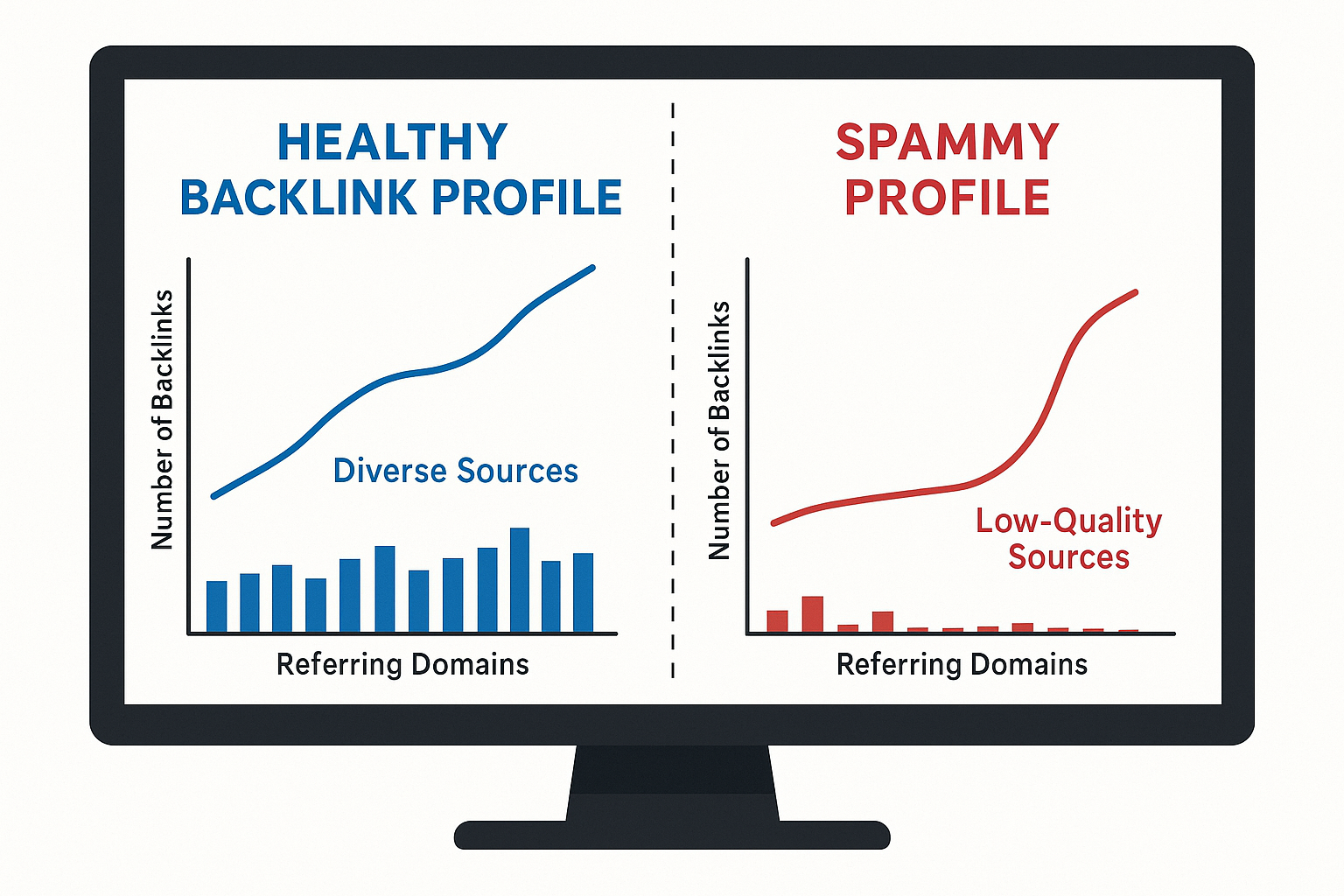
Comparing profile quality visually makes it easier to spot patterns that require action.
Using Competitor Backlinks to Find Opportunities
One of the most practical applications of backlink analysis is competitive research. By entering a competitor’s domain into Ahrefs or SEMrush, you can see exactly which sites link to them but not to you. These represent warm link-building opportunities because those sites have already demonstrated willingness to link within your niche.
Additionally, studying competitor anchor text distributions can reveal keyword strategies you have not yet considered. For example, if a competitor earns many links with a specific service-related anchor, that phrase may represent an underserved content opportunity for your site.
For actionable link prospecting strategies, RankAuthority provides structured frameworks for turning competitor backlink data into real outreach campaigns. For a deeper walkthrough, see our Broken Link Testing: The Complete Guide (2025).
Turning Your Audit Into an Action Plan
A backlink audit is only valuable if it leads to concrete action. After completing your analysis, organize findings into three categories: links to protect, links to remove or disavow, and link opportunities to pursue.
Links to protect are high-authority, relevant backlinks that drive real SEO value. Monitor these regularly to ensure they remain live and have not been changed to nofollow. Meanwhile, links to remove are those from penalized, irrelevant, or clearly spammy sources that create more risk than reward.
Finally, your opportunity list should feed directly into your outreach calendar. Prioritize prospects by domain authority and topical relevance, then craft personalized outreach messages that explain the value your content offers to their audience.
Quick Takeaway
When you regularly check backlink profile data and act on what you find, you build a compounding SEO advantage — stronger authority, cleaner link signals, and a growing list of high-value link prospects that competitors have not yet approached. For a deeper walkthrough, see our Broken Link Testing: The Complete SEO Guide (2024).
Frequently Asked Questions
What does it mean to check backlink profile?
To check backlink profile means to analyze all the external websites linking to your domain, evaluating link quality, source authority, anchor text, and potential spam risks. This process helps SEOs understand how a site earns authority and where vulnerabilities exist. For a deeper walkthrough, see our Broken Link Repair Service for Websites | Full Guide.
How often should I check my backlink profile?
Most SEO professionals recommend checking at least once a month. If you are running an active link-building campaign or have recently experienced a ranking drop, weekly reviews are advisable to catch new issues early.
Which tools are best for backlink profile analysis?
The most widely used tools are Ahrefs, SEMrush, Moz Link Explorer, and Google Search Console. Using two tools together typically provides the most complete and accurate dataset. For a deeper walkthrough, see our Broken Link Testing: The Complete SEO Guide (2024).
What are toxic backlinks and why do they matter?
Toxic backlinks are links from spammy, low-quality, or penalized websites. Google may interpret them as manipulation, potentially triggering a manual penalty or an algorithmic ranking downgrade that is difficult to recover from.
Can I check a competitor’s backlink profile?
Yes, tools like Ahrefs and SEMrush allow you to enter any competitor’s domain and view their backlink data. This is a valuable tactic for discovering link-building opportunities your site has not yet captured.
What is a healthy anchor text distribution?
A healthy distribution includes branded anchors, naked URLs, generic phrases, and a smaller proportion of exact-match keyword anchors. Over-reliance on exact-match anchors can appear manipulative to search engines and trigger scrutiny.
How do I remove or disavow toxic backlinks?
First, contact the linking site and request manual removal. If that fails, use Google’s Disavow Tool in Search Console to instruct Google to ignore those links when evaluating your site’s authority.
What is domain authority and how does it relate to backlinks?
Domain authority is a Moz score that predicts ranking potential based largely on the quality and quantity of backlinks. Higher-quality links from authoritative sites generally improve this score over time, which in turn supports better rankings.
What is the difference between referring domains and total backlinks?
Referring domains are the unique websites linking to you, while total backlinks count every individual link including multiple links from the same domain. Referring domains is generally the more meaningful metric because source diversity matters more than raw volume.
Does Google Search Console show all my backlinks?
Google Search Console shows a sample of links Google has discovered, but it does not display every backlink. For a more complete picture, combine it with a dedicated third-party tool such as Ahrefs or SEMrush. For a deeper walkthrough, see our Broken Links Test: The Complete Guide to Fix Errors.
How do new backlinks affect rankings?
New backlinks from authoritative, relevant sites can positively impact rankings within weeks, though the exact timeline varies. Google crawls and processes links at different speeds depending on the linking site’s own crawl frequency.
What is link velocity and why does it matter?
Link velocity is the rate at which a site acquires new backlinks over time. An unnaturally sudden spike can trigger spam signals, whereas a steady and organic growth pattern is viewed as a positive trust indicator by search engines.
Conclusion
Taking the time to check backlink profile data on a regular basis is one of the highest-return activities in technical SEO. It protects your domain from toxic links, reveals competitor opportunities, and ensures your link-building efforts are building genuine authority rather than creating risk. By following the structured six-step process outlined above and monitoring key metrics consistently, you position your site for sustainable, long-term ranking growth.

