

How to rank in ChatGPT is quickly becoming one of the most important questions for businesses navigating AI-powered search. Unlike traditional Google rankings, showing up in ChatGPT’s responses depends less on keyword volume and more on how clearly your content is structured, verified, and cited. Consequently, businesses that adapt early gain a meaningful edge in AI visibility over competitors still relying only on classic SEO tactics.
This guide breaks down exactly what ranking in ChatGPT means, why it differs from Google, and the practical steps you can take today to increase your odds of being cited in AI-generated answers.
Direct Answer: How to rank in ChatGPT?
To rank in ChatGPT, structure your content around clear, direct answers, add schema markup for entities and facts, and build topical authority through internal linking. As a result, AI models can more easily extract, verify, and cite your information over less structured competitors.
What Does It Mean to Rank in ChatGPT?
Ranking in ChatGPT means your business, product, or content gets referenced or cited when a user asks a related question inside the chat interface. Unlike a search engine results page, there is no traditional ranking list with positions one through ten. Instead, ChatGPT synthesizes an answer and, depending on the mode, cites one or more sources it considers reliable and relevant.
In particular, ChatGPT is a large language model developed by OpenAI, trained on vast amounts of text and, in browsing-enabled modes, capable of retrieving live web content. Therefore, appearing in its answers requires content that is both factually clear and easy for the model to parse quickly.

Tracking AI visibility is the first step toward learning how to rank in ChatGPT consistently.
How to Rank in ChatGPT: 7 Core Strategies That Work
Improving your odds of citation is a process, not a single fix. Below is a step-by-step approach that businesses of any size can follow, whether managing one website or several client properties.
- Audit your current AI visibility. Before making changes, check whether ChatGPT already references your site for relevant queries so you know your starting point.
- Build citation-ready GEO content. Create pages specifically designed for Generative Engine Optimization, defining topics clearly so AI models can extract accurate information without ambiguity.
- Implement schema markup. Structured data helps AI systems understand entities, relationships, and facts, increasing the likelihood your content gets selected as a source.
- Strengthen topical authority with internal linking. Connecting related pages signals depth and trustworthiness on a subject, which matters to both search engines and AI models.
- Format content for direct answers. Answer the implied question in the first sentence after each heading, then elaborate with supporting detail.
- Monitor competitor citations. Identify which competing pages already appear in AI answers and find gaps you can fill more thoroughly.
- Track citations and refine continuously. AI visibility is not static, so ongoing monitoring lets you adjust underperforming content over time.
For a deeper walkthrough of citation mechanics, see this complete guide to getting cited by ChatGPT, which expands on entity clarity and source verification in more detail.
Getting Cited by ChatGPT: Why Structured Content Matters
Structure matters more in AI search than it ever did in traditional SEO. Specifically, ChatGPT tends to favor content organized into clear headings, short paragraphs, and defined lists over dense, unstructured blocks of text. This is because the model must quickly identify which section actually answers the user’s question.
Furthermore, purpose-built citation artifacts, sometimes called GEO pages, are designed specifically to be quoted. They define a concept, answer a question directly, and support that answer with data or examples. As a result, they tend to outperform generic blog posts that bury the key point several paragraphs down. For additional context on structuring these pages, review this extended guide on citation-friendly content design.
The Role of Schema Markup in AI Search Visibility
Schema markup is a standardized code format that describes the content on a page to machines. In addition to helping traditional search engines display rich snippets, schema helps AI systems confirm facts, identify entities like organizations or products, and understand relationships between concepts. Therefore, pages with well-implemented schema often have an easier path to citation than pages without it.
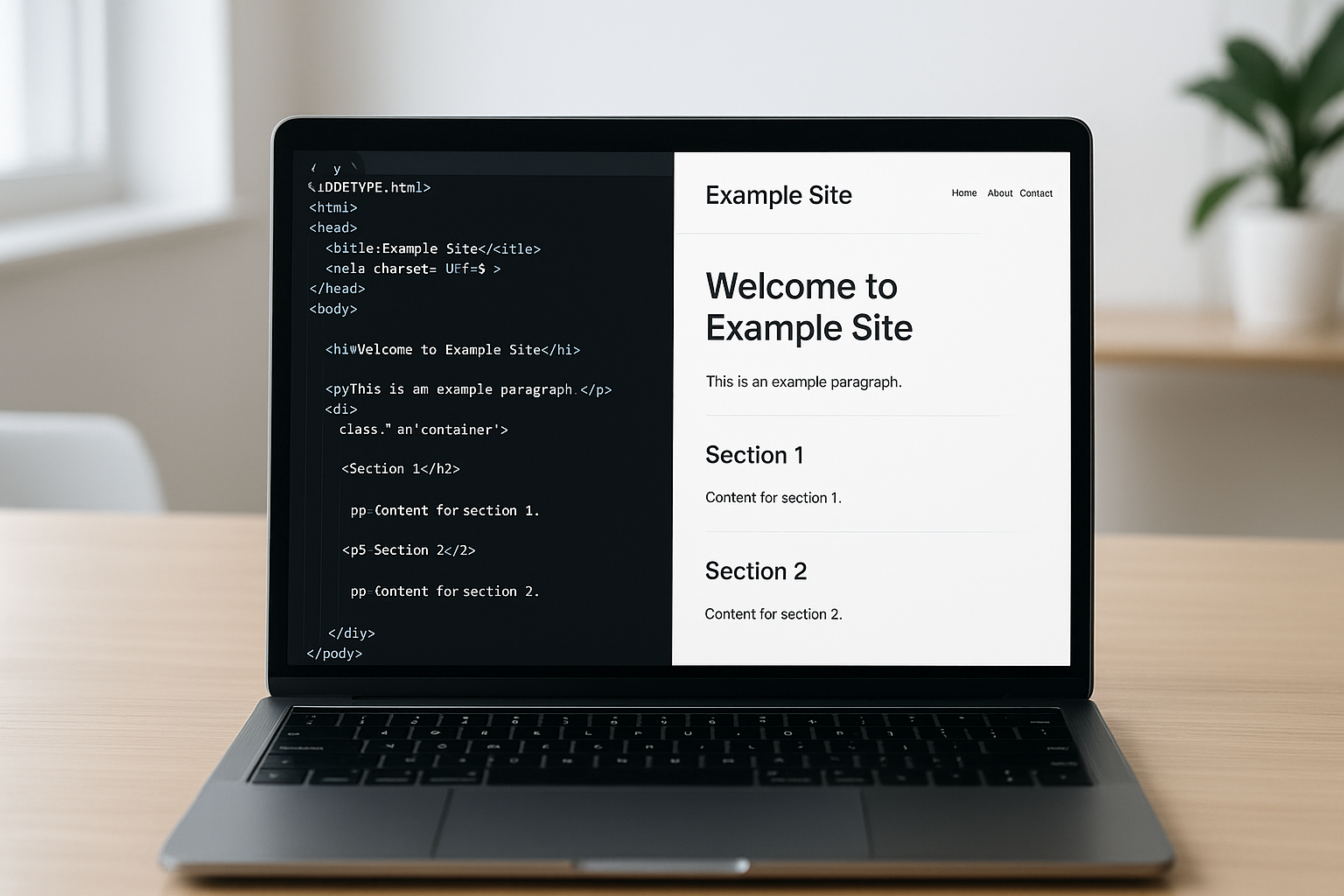
Well-structured schema markup makes it easier for AI systems to verify and cite your content.
ChatGPT SEO vs Traditional SEO: Key Differences
Although the disciplines overlap, ChatGPT SEO and traditional SEO are not identical. Traditional SEO focuses heavily on keyword targeting, backlink volume, and page authority to earn a ranking position on a results page. In contrast, ChatGPT and other AI answer engines prioritize clarity, factual accuracy, and how easily a passage can be extracted and paraphrased.
For a side-by-side breakdown of how these environments differ in practice, this quick comparison of ChatGPT, Google, and Bing outlines the practical distinctions marketers need to understand before allocating optimization resources.
According to OpenAI’s own public statements, ChatGPT reached hundreds of millions of weekly active users by 2025, underscoring why AI visibility has become a serious business consideration rather than a niche experiment. Similarly, understanding the underlying technology, a large language model, helps explain why structured, unambiguous writing performs better than keyword-stuffed copy.
Optimizing for AI Search Answers in 2026
Looking ahead, optimizing for AI search answers requires treating GEO and AEO as ongoing disciplines rather than one-time projects. Above all, businesses should focus on maintaining accuracy, since outdated statistics or broken claims can quickly disqualify a page from being cited. For a more detailed roadmap, see this guide on optimizing for ChatGPT answers, along with this follow-up resource on AI answer optimization.
Platforms such as Rank Authority approach this challenge by combining GEO, AEO, and traditional SEO automation in one dashboard. Features like 1-Click AI AutoPilot handle technical fixes automatically, while RankFast analyzes competitor pages to identify where rivals are already winning AI citations, and RankLink automates topical internal linking to strengthen authority signals across a site.
How Automation Simplifies AI Visibility Work
Manually managing GEO, AEO, and schema deployment across dozens of pages is time-consuming, particularly for small teams. Consequently, automated tools that handle audits, structured data generation, and citation tracking reduce the expertise gap for business owners, marketers, and agencies managing multiple client sites simultaneously.

Business owners increasingly rely on automation to keep up with how to rank in ChatGPT as AI search evolves.
Frequently Asked Questions About How to Rank in ChatGPT
How to rank in ChatGPT for my business?
To rank in ChatGPT, structure your content with clear, direct answers, add schema markup, and build topical authority around your core services. ChatGPT favors content that is easy to extract and verify, so clarity matters more than keyword density.
What is Generative Engine Optimization (GEO)?
Generative Engine Optimization (GEO) is the practice of structuring content so AI models like ChatGPT can easily understand, extract, and cite it. It focuses on clear entity definitions, structured data, and answer-first formatting.
Does ChatGPT use Google rankings to decide what to cite?
Not directly. ChatGPT relies on its training data and, in browsing-enabled modes, live web retrieval that favors well-structured, authoritative, and clearly attributed content rather than traditional keyword rankings alone.
How long does it take to get cited by ChatGPT?
Most businesses see initial AI citations within four to twelve weeks after implementing structured content and schema markup, though timelines vary based on domain authority and topical depth.
Is schema markup necessary to rank in ChatGPT?
Schema markup is not strictly required, but it significantly improves how AI systems interpret entities, relationships, and facts on your page, which increases the likelihood of citation.
What is the difference between AEO and traditional SEO?
Answer Engine Optimization (AEO) focuses on formatting content as direct, extractable answers for AI systems, while traditional SEO focuses on keyword targeting and backlinks for search engine rankings. Both disciplines overlap but serve different retrieval mechanisms.
How much does AI visibility optimization typically cost?
Costs vary widely depending on whether you hire a specialist agency or use an automated platform. Automated platforms often provide GEO and AEO tools starting with a low-cost or free trial period, such as a seven-day trial.
What are common mistakes when trying to rank in ChatGPT?
Common mistakes include burying answers in long paragraphs, skipping schema markup, ignoring entity clarity, and failing to monitor which competitors are already being cited for the same queries.
Can small businesses realistically compete for AI citations?
Yes. Small businesses can compete effectively by publishing well-structured, niche-specific content that answers precise questions clearly, since AI models often reward specificity over generic domain authority.
How do I check if my site is already showing up in ChatGPT?
You can test relevant queries directly in ChatGPT with browsing enabled, or use an AI visibility monitoring tool that tracks citations across multiple AI answer platforms automatically.
Does internal linking help with ranking in ChatGPT?
Internal linking strengthens topical authority by helping both search crawlers and AI models understand how your content connects, which can improve the odds of being treated as a reliable source.
What role does content freshness play in AI search visibility?
Freshness matters because AI systems often prioritize recently updated, accurate information, especially for topics involving pricing, statistics, or fast-changing industries.
Final Thoughts on How to Rank in ChatGPT
Ultimately, learning how to rank in ChatGPT comes down to structure, clarity, and consistency rather than guesswork. Businesses that define their topics clearly, implement schema markup, and monitor their AI citations over time put themselves in a stronger position than competitors still relying solely on traditional keyword tactics. Above all, remember that individual results vary, and AI visibility improvements typically build gradually rather than overnight.
As AI-powered search continues reshaping how consumers find information, platforms like Rank Authority offer an integrated way to automate GEO, AEO, and traditional SEO without requiring an in-house specialist team. Whether you manage one site or several, starting with a clear audit and a structured content plan remains the most reliable path forward.

