

Moz Brand Authority is a metric developed by Moz that quantifies the strength of a brand’s overall online presence on a logarithmic scale from 1 to 100. Unlike traditional link-based scores, it captures how recognizable and influential your brand is across the entire web — making it one of the most comprehensive brand health indicators available to SEO professionals today.
Understanding this metric is increasingly important as search engines place greater weight on brand signals. Therefore, marketers and SEO teams who track and improve their Brand Authority score gain a meaningful competitive edge in organic search.
What Is Moz Brand Authority and How Does It Work?
Moz Brand Authority is a score that reflects how strongly a brand registers across search engines, social platforms, and the broader web. It was introduced by Moz to give marketers a single, actionable number that represents brand-level influence — not just website-level link equity.
The score is calculated using a machine learning model that analyzes signals including branded search volume, backlink profiles, social mentions, and press coverage. As a result, brands that consistently appear across multiple online channels tend to score higher over time.
Because the scale is logarithmic, moving from a score of 20 to 30 is far easier than moving from 70 to 80. In practice, this means that well-established global brands occupy the upper tiers, while newer or niche brands typically cluster in the lower to mid-range.
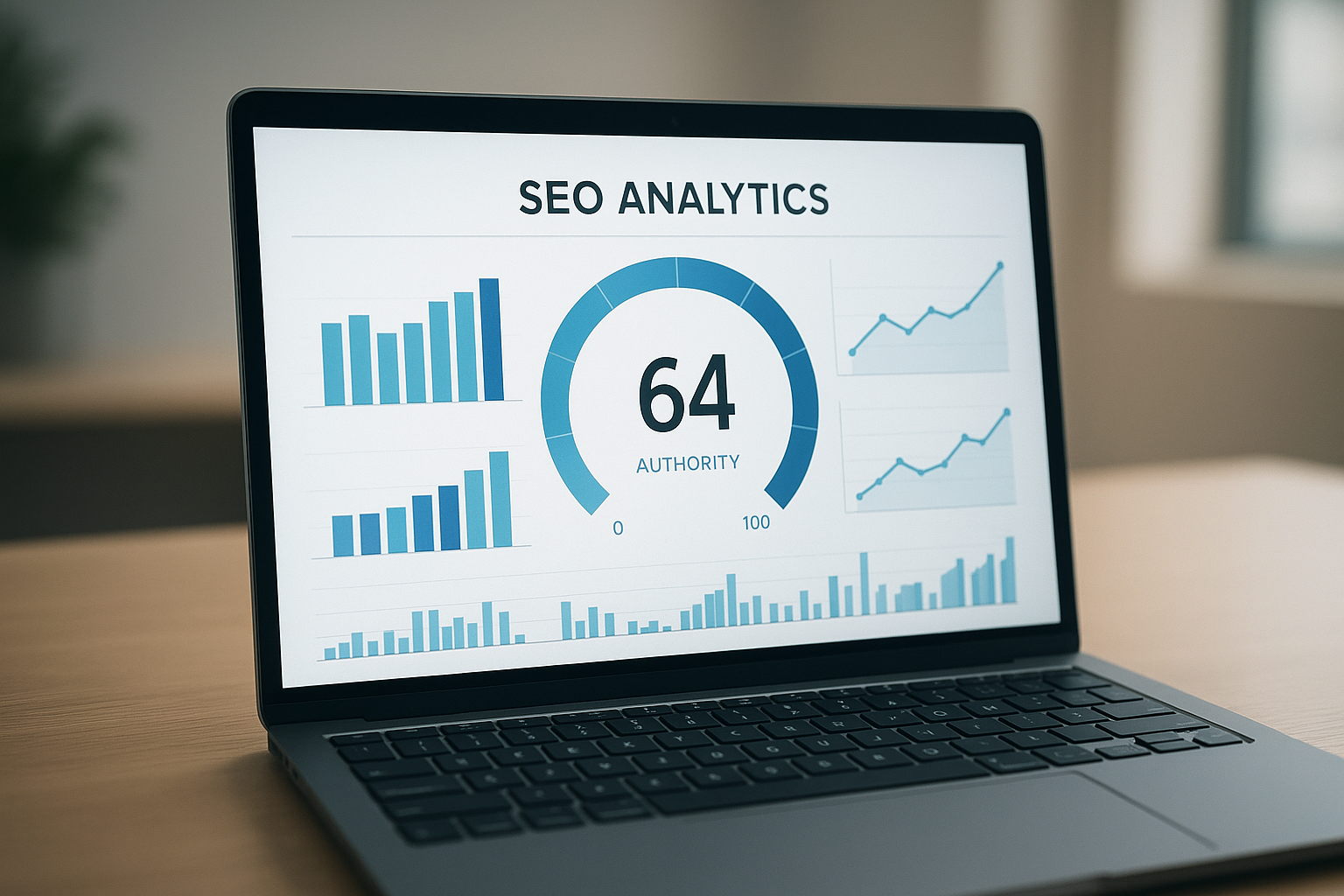
A Brand Authority score gives SEO teams a single number to benchmark their brand’s online strength against competitors.
Brand Authority vs. Domain Authority: Key Differences
Many SEO professionals confuse Brand Authority with Domain Authority, but the two metrics measure fundamentally different things. Domain Authority predicts how likely a specific website is to rank in search results based primarily on its backlink profile. Brand Authority, however, evaluates the recognition and reach of the brand itself — across all its web properties and beyond.
For example, a company might have a modest Domain Authority score yet still carry a high Brand Authority if it generates substantial branded search demand and earns frequent press mentions. Conversely, a site with many backlinks from obscure sources might have a decent Domain Authority but low Brand Authority because few people actually search for that brand by name.
Additionally, Brand Authority is inherently multi-channel. It reflects activity on social media, news sites, podcasts, and forums — not just the link graph that Domain Authority relies upon.
Quick Answer: Moz Brand Authority measures the breadth and strength of a brand’s recognition across the entire internet, while Domain Authority measures a single website’s potential to rank based on its backlinks. Both are useful, but they answer different strategic questions. For a deeper walkthrough, see our Moz Keyword Difficulty Checker: Full Guide (2025).
Why This Metric Matters for Your SEO Strategy
Brand signals have become increasingly important to Google’s ranking systems. According to research published on Wikipedia’s SEO overview, search engines now use a wide range of signals beyond links to evaluate trustworthiness and relevance. Brand Authority captures many of those same signals in one score.
Furthermore, a growing Brand Authority score is often a leading indicator of improved organic performance. When more people search for your brand by name, Google interprets that demand as a trust signal. As a result, branded search volume can lift rankings for non-branded keywords as well.
For competitive analysis, Brand Authority also provides a useful benchmark. Comparing your score against direct competitors reveals whether your brand is gaining or losing ground in your niche — even before those changes show up in keyword rankings.
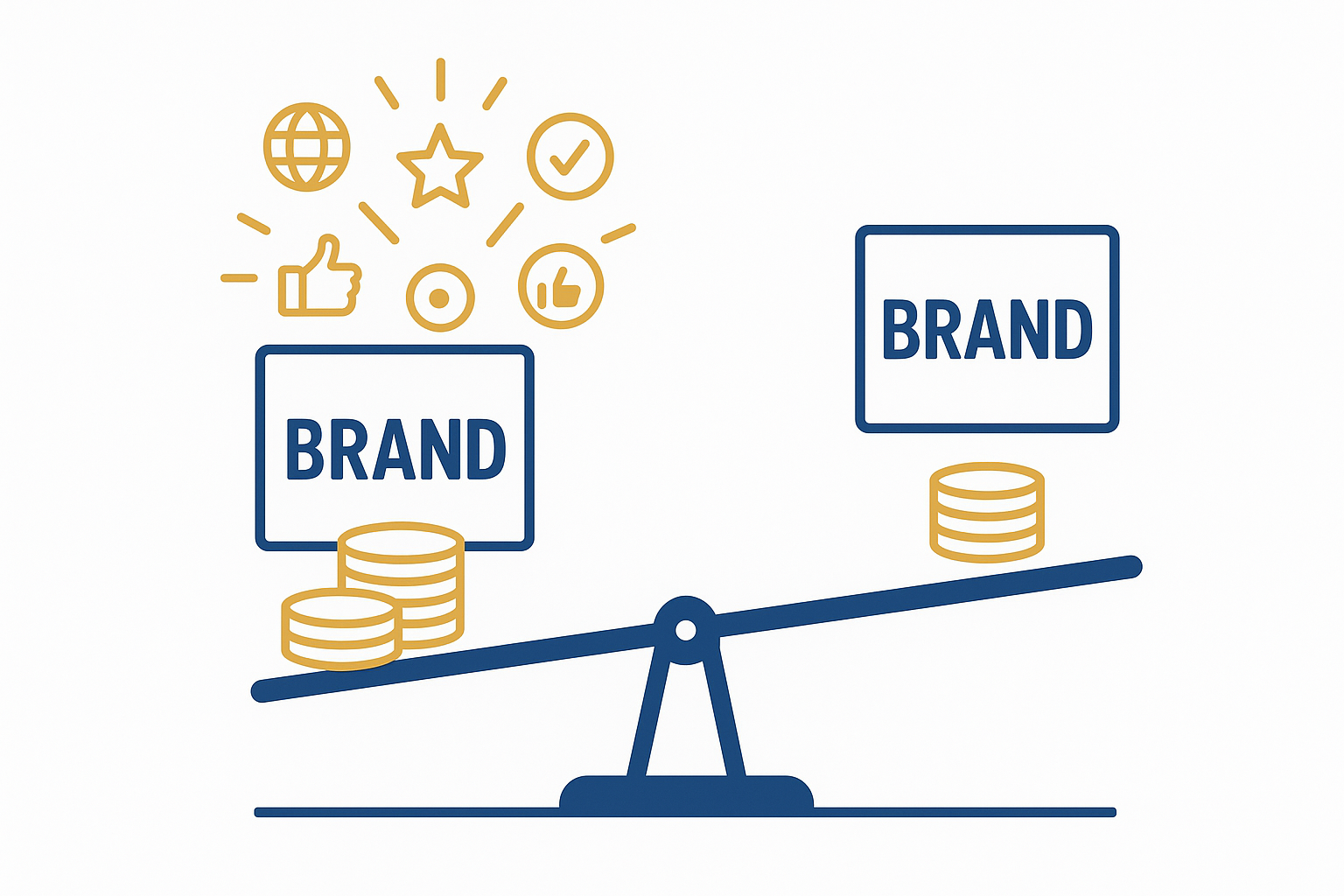
Comparing brand authority scores against competitors helps identify gaps in online visibility and brand recognition.
Five Proven Ways to Improve Your Score
Improving your Brand Authority score requires a consistent, multi-channel approach. Below are five strategies that reliably move the needle over time.
1. Build High-Quality Backlinks
Earning backlinks from authoritative, relevant websites remains one of the strongest signals feeding into Brand Authority. Focus on digital PR, guest contributions, and partnerships with credible industry publications. Quality consistently outweighs quantity in this area.
2. Grow Branded Search Demand
Invest in campaigns that make people aware of your brand name specifically. Podcast appearances, influencer collaborations, and consistent social media presence all drive branded searches. Additionally, offline advertising can translate directly into online branded search spikes.
3. Earn Press and Media Mentions
Media coverage on news sites and industry blogs generates both backlinks and unlinked brand mentions. Both types of mentions contribute to Brand Authority signals. Therefore, a proactive PR strategy is one of the fastest ways to accelerate score growth.
4. Maintain Active Social Profiles
Social media activity contributes to brand visibility even when it doesn’t directly produce backlinks. Consistent posting, engagement with followers, and shareable content all amplify your brand’s footprint across the web. In turn, this activity feeds the signals that Brand Authority models track.
5. Create Consistently Branded Content
Publishing high-value content that prominently features your brand name helps reinforce recognition. Resources like guides, research reports, and tools attract links and shares while simultaneously training audiences to associate your brand with expertise. For deeper guidance on building authority through content, RankAuthority offers practical frameworks tailored to this goal.
Common Mistakes That Hurt Brand Authority Growth
Even experienced SEO teams make avoidable errors when trying to build Brand Authority. One of the most common mistakes is treating it as a purely link-building exercise. Because Brand Authority measures multi-channel presence, ignoring social media and press outreach leaves significant score potential on the table.
Another frequent error is inconsistency. Brands that publish content sporadically or run short-burst campaigns rarely sustain meaningful score growth. Instead, long-term, steady activity across channels produces compounding gains that reflect in the metric over time.
Finally, some teams focus exclusively on their Brand Authority score in isolation rather than benchmarking it against competitors. Since the metric is most meaningful in relative terms, always compare your trajectory against your closest industry rivals. Resources like RankAuthority can help contextualize your score within your competitive landscape.

Monitoring brand signals across multiple platforms is essential for understanding and improving your overall Brand Authority score.
How to Read and Benchmark Your Score
Brand Authority scores are most useful when viewed in context. A score of 35 might be excellent for a local service business yet unremarkable for a national retailer. Therefore, always start by identifying the Brand Authority scores of your top five to ten competitors using Moz’s free Link Explorer tool.
From there, track your score monthly rather than daily. Because the metric aggregates signals over time, short-term fluctuations are normal and not cause for alarm. However, a consistent downward trend over three or more months warrants a strategic review of your brand-building activities.
As a general guide: scores below 20 suggest a limited online footprint, scores between 20 and 40 indicate a developing brand presence, scores between 40 and 60 reflect an established mid-market brand, and scores above 60 typically belong to well-known industry leaders or nationally recognized companies.
Conclusion: Making Brand Authority Work for You
Moz Brand Authority is one of the most forward-looking metrics available to SEO professionals today. Because it captures the full breadth of a brand’s online presence — not just its backlinks — it aligns closely with how modern search engines evaluate trustworthiness and relevance. Brands that invest consistently in PR, content, social presence, and link building will see their Brand Authority score rise as a natural byproduct of those efforts.
In summary, treat your Brand Authority score as a long-term health indicator for your brand’s digital presence. Track it monthly, benchmark it against competitors, and use it to guide where you invest your brand-building resources. Over time, a rising score is one of the clearest signals that your broader SEO and marketing strategy is working.
Frequently Asked Questions About Moz Brand Authority
What is Moz Brand Authority?
Moz Brand Authority is a metric that measures the strength and visibility of a brand’s online presence on a scale from 1 to 100. It evaluates how prominently a brand appears across search results, social platforms, and the wider web, giving marketers a single benchmark for brand health.
How is Moz Brand Authority different from Domain Authority?
Domain Authority focuses on a website’s likelihood to rank based on its backlink profile. Brand Authority, however, measures the broader recognition of the brand itself across the entire web, including social media, press coverage, and branded search demand.
What scale does the score use?
The score runs on a logarithmic scale from 1 to 100. Because of this, improvements become progressively harder to achieve at higher score levels, and the gap between a 70 and an 80 represents far more effort than the gap between a 20 and a 30.
How can I check my Brand Authority score?
You can check your score using Moz Pro or the free Moz Link Explorer. Enter your domain to see your current Brand Authority alongside Domain Authority, backlink counts, and other key metrics.
What factors influence the score?
Key factors include branded search volume, backlink quality and quantity, social media presence, press and media mentions, and overall web visibility. Consistent multi-channel brand activity tends to raise the score over time.
Is a higher score always better?
Generally yes, but the metric is most meaningful when compared against direct competitors in the same industry. A score of 45 might be excellent in one niche and below average in another, so context always matters.
How long does it take to improve the score?
Improvement is a long-term effort that typically takes months of consistent activity. Building quality backlinks, earning press coverage, and growing branded search demand all contribute, but significant score changes rarely happen overnight.
Can small businesses achieve a high score?
Yes. Small businesses can achieve competitive Brand Authority scores within their niche. A local brand with strong community recognition and consistent online presence can score well relative to its industry peers even without a massive marketing budget.
Does Brand Authority directly affect Google rankings?
Moz Brand Authority is a third-party metric and is not used directly by Google’s algorithm. However, the underlying factors that raise the score — such as backlinks, branded searches, and mentions — do positively influence organic rankings in practice.
What is considered a good score?
There is no universal benchmark, but scores above 40 generally indicate a well-established brand presence. Scores above 60 are considered strong, and scores above 80 typically belong to nationally or globally recognized brands.
How does branded search volume affect the score?
Branded search volume — how often people search for your brand name directly — is a strong signal of recognition and trust. Higher branded search volume typically correlates with a higher Brand Authority score because it signals genuine public awareness of the brand.
How does Moz Brand Authority compare to Ahrefs Domain Rating?
Ahrefs Domain Rating is purely a backlink-based metric, while Moz Brand Authority incorporates broader brand signals including search demand and web mentions. They measure related but distinct aspects of online authority, and using both together gives a more complete picture of your competitive position.

