

Moz search engine ranking factors are the research-backed signals that Moz identifies as the most influential variables determining where a web page appears in Google’s search results. Understanding these factors is essential for any SEO professional who wants to build a sustainable, data-driven strategy. In fact, Moz’s periodic ranking factors study is one of the most cited resources in the SEO industry worldwide.
Moz conducts its research by surveying hundreds of experienced SEO practitioners and correlating ranking data with measurable on-page and off-page signals. As a result, the findings reflect both expert consensus and real-world evidence. This guide breaks down the most important factor categories, explains how they interact, and shows you how to act on them today.
What Are Moz Search Engine Ranking Factors?
Moz search engine ranking factors is a research framework that categorizes the signals Google and other search engines use to evaluate and rank pages. These signals span several broad domains: link authority, on-page content, technical performance, and user engagement. Each category carries a different weight, and that weight has shifted noticeably over the past decade.
According to Moz, link signals have historically been the single strongest category. However, content quality and technical hygiene have grown in importance as Google’s algorithm has matured. Therefore, a balanced approach — rather than an over-focus on any one signal — consistently produces the best long-term results.
For a deeper strategic perspective on applying these factors, RankAuthority.com provides practical guidance tailored to competitive search environments.
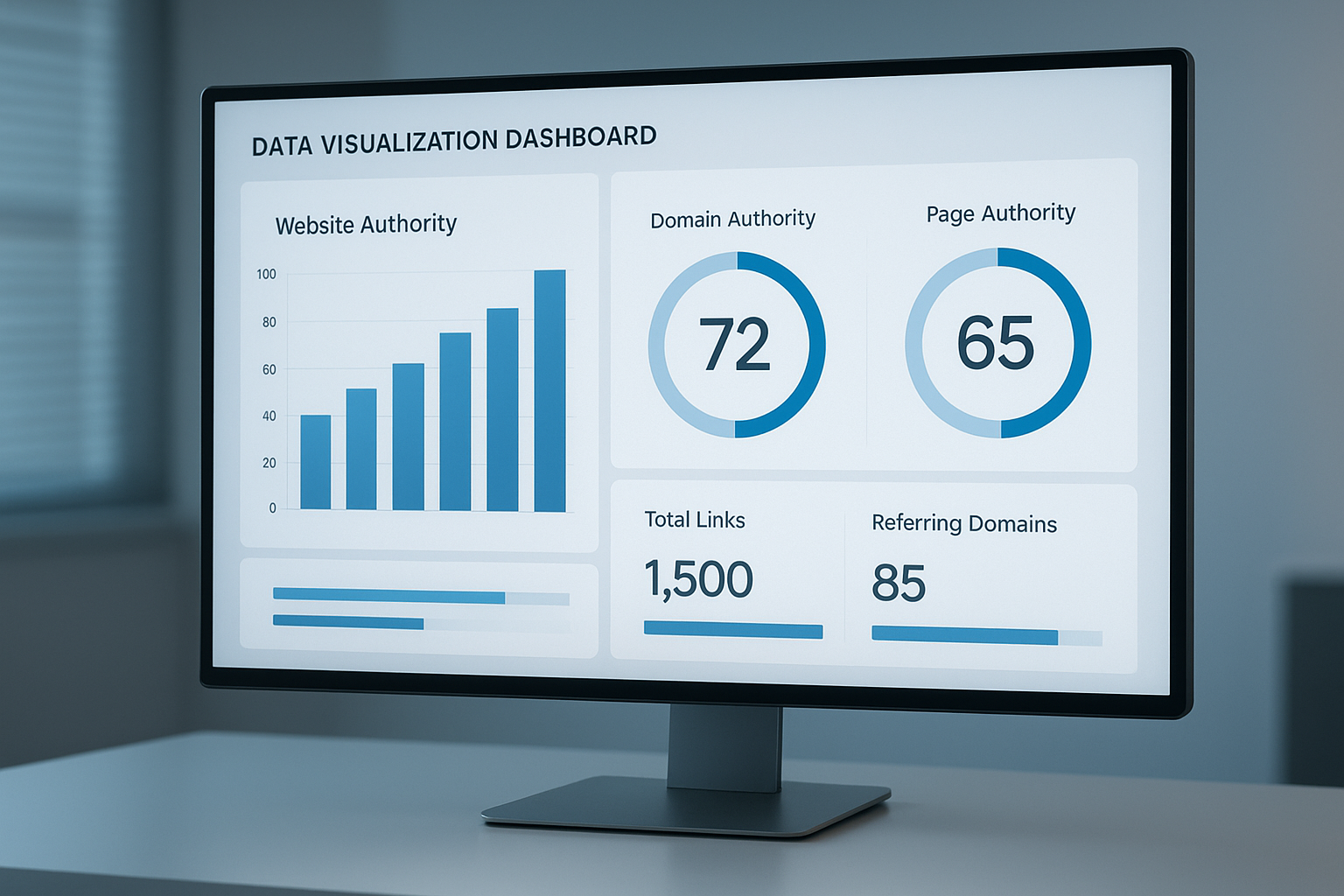
A data dashboard illustrating key Moz search engine ranking factors such as domain authority scores and link signal metrics.
Domain Authority and Page Authority Explained
Two of Moz’s most recognized contributions to SEO are Domain Authority (DA) and Page Authority (PA). Domain Authority is a logarithmic score from 1 to 100 that predicts how likely an entire domain is to rank competitively. Page Authority applies the same logic to a single URL rather than the full site. For a deeper walkthrough, see our What Is Moz Rank? A Complete SEO Guide (2024).
Both metrics are derived from Moz’s own link index and incorporate dozens of signals, including the number of linking root domains, the quality of those linking domains, and the diversity of anchor text. It is important to note that DA and PA are not direct Google ranking signals. Instead, they serve as comparative benchmarks to help you assess your competitive position.
For example, if your site has a DA of 35 and your top competitor has a DA of 60, you can reasonably expect that competitor to rank more easily for shared keywords. Consequently, your strategy should focus on closing that authority gap through consistent link acquisition and content development.
Link Signals: Quality Over Quantity
Link signals remain the backbone of Moz’s ranking factor research. Specifically, the quality, relevance, and diversity of inbound links are weighted more heavily than sheer volume. A single link from a highly authoritative, topically relevant domain can outweigh dozens of links from low-quality sites.
Anchor text also plays a meaningful role. According to Moz data, exact-match and partial-match anchor text from trusted sources helps search engines confirm topical relevance for target keywords. However, an over-concentration of exact-match anchors can trigger algorithmic penalties, so natural anchor text diversity is critical.
Additionally, the concept of linking root domains — the number of unique domains pointing to your site — is a strong predictor of ranking potential. Therefore, a link-building strategy that prioritizes earning links from a wide variety of authoritative sources will outperform one that repeatedly earns links from the same few domains.
You can learn more about how link authority is measured and applied by reviewing the PageRank algorithm on Wikipedia, which underpins much of how link equity flows across the web.

Link signals form a network of authority — the quality and diversity of connections matter far more than raw volume.
On-Page Optimization: The Foundation of Relevance
On-page factors tell search engines what a page is about and confirm its relevance to a specific query. Moz’s research consistently highlights several on-page elements as high-impact signals.
Key On-Page Ranking Signals
- Title tag: The single most important on-page element for keyword relevance.
- H1 and H2 headings: Structural signals that reinforce topical focus.
- Meta description: Influences click-through rate, which indirectly affects rankings.
- Body content keyword usage: Natural keyword placement throughout the page text.
- Internal linking: Distributes page authority and helps crawlers discover content.
- URL structure: Clean, descriptive URLs signal relevance to both users and search engines.
- Schema markup: Structured data helps search engines understand content context.
In practice, the title tag carries the most weight among on-page signals. Including your primary keyword near the beginning of the title tag is a well-established best practice supported by Moz’s correlation data. Meanwhile, over-stuffing keywords anywhere on the page can harm rather than help your rankings.
Content Quality and User Engagement Signals
Content quality has become an increasingly prominent factor in Moz’s research over recent years. This shift reflects Google’s ongoing investment in understanding user intent and satisfaction. Although Google does not publish its exact algorithm, Moz’s survey data shows that SEO experts rate content depth, originality, and comprehensiveness as top-tier ranking influences.
User engagement metrics — such as dwell time, bounce rate, and click-through rate — are believed to serve as indirect signals of content quality. For instance, a page that keeps visitors engaged for several minutes sends a positive behavioral signal to Google. As a result, investing in well-researched, genuinely useful content tends to produce compounding ranking benefits over time.
Additionally, content that earns natural backlinks because it is genuinely informative creates a virtuous cycle: better content attracts more links, which in turn boosts authority, which further improves rankings. For additional strategies on content-driven ranking improvement, RankAuthority.com offers actionable frameworks for competitive niches.
Technical SEO: The Non-Negotiable Foundation
Technical SEO factors function as prerequisites rather than differentiators. In other words, getting them right will not guarantee top rankings on its own, but getting them wrong can severely suppress even the most authoritative, well-optimized pages.
Moz’s research identifies the following technical factors as consistently important:
Mobile-Friendliness
Google’s mobile-first indexing means responsive design is a baseline requirement for competitive rankings.
HTTPS Security
Sites using HTTPS receive a confirmed ranking signal advantage over HTTP equivalents.
Page Speed & Core Web Vitals
Google’s Core Web Vitals (LCP, FID, CLS) are now official ranking signals affecting both desktop and mobile results.
Crawlability & Indexability
A clean sitemap, logical robots.txt, and proper canonical tags ensure search engines can discover and index your content efficiently.
Because technical issues can silently block ranking progress, regular site audits — using tools like Moz Pro or Google Search Console — are an essential part of any serious SEO workflow.
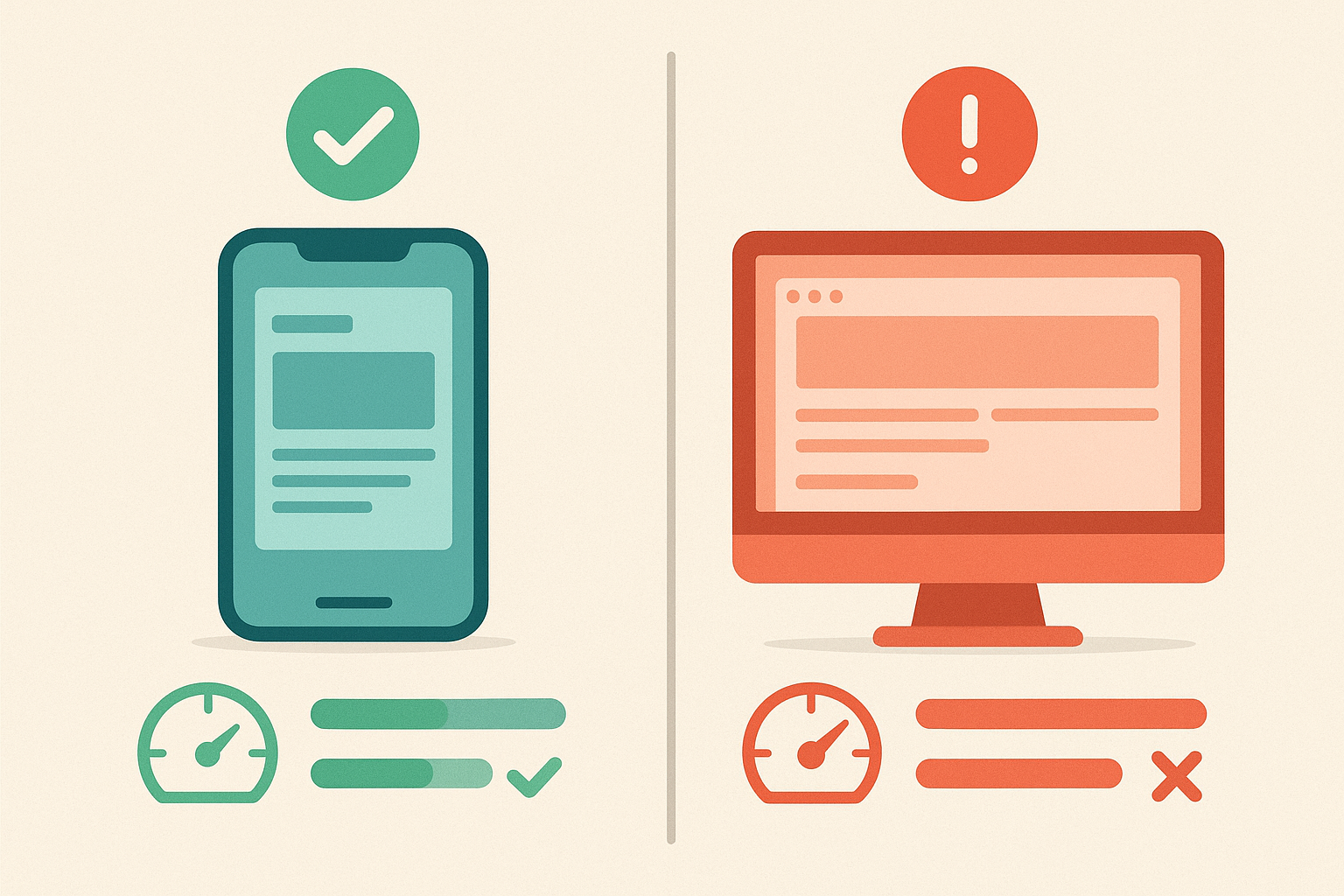
Technical factors like page speed and mobile performance are foundational SEO requirements identified in Moz’s ranking research.
Common Mistakes When Applying Ranking Factor Research
Many SEOs misapply Moz’s findings in ways that limit their results. First, treating Domain Authority as a direct Google signal is the most widespread error. DA is a predictive metric for competitive benchmarking — it is not something Google reads or acts upon directly.
Second, over-indexing on a single factor category — such as building hundreds of low-quality links — while neglecting content or technical health leads to diminishing returns. In contrast, a holistic approach that addresses all major factor categories simultaneously produces far more durable ranking improvements.
Finally, applying outdated research without accounting for algorithm updates is a common pitfall. Because Google evolves rapidly, the relative weights of ranking factors shift over time. Therefore, revisiting Moz’s latest research editions and cross-referencing them with current industry data is a best practice every SEO team should maintain.
Putting It All Together: A Practical Ranking Strategy
Understanding Moz search engine ranking factors is most valuable when translated into a concrete action plan. The following prioritized steps reflect the relative impact of each factor category based on Moz’s research:
- Audit your technical foundation — Resolve crawl errors, fix HTTPS issues, and optimize Core Web Vitals before investing heavily in content or links.
- Optimize on-page elements — Ensure title tags, H1s, meta descriptions, and body content are keyword-aligned and structured for clarity.
- Develop high-quality content — Create comprehensive, original content that genuinely satisfies user intent and earns natural engagement.
- Build authoritative links — Pursue links from topically relevant, high-DA domains through outreach, digital PR, and linkable asset creation.
- Monitor and iterate — Track DA, PA, keyword rankings, and engagement metrics regularly, and adjust your strategy based on what the data reveals.
In summary, the most successful SEO strategies treat Moz’s ranking factor research as a living framework — one that informs priorities, guides resource allocation, and adapts as the search landscape evolves.
Frequently Asked Questions
What are Moz search engine ranking factors?
Moz search engine ranking factors are the signals and variables that Moz research identifies as influencing where a page ranks in Google and other search engines. These include domain authority, link signals, on-page content, keyword usage, and technical SEO elements. Moz periodically surveys SEO experts and analyzes ranking data to produce its well-known ranking factors report.
How often does Moz update its ranking factors research?
Moz typically updates its Search Engine Ranking Factors study every one to two years, though the frequency can vary. Each edition surveys hundreds of SEO professionals and correlates metrics with real ranking data to reflect the current state of Google’s algorithm.
What is Domain Authority and why does it matter?
Domain Authority (DA) is a proprietary Moz score from 1 to 100 that predicts how likely a domain is to rank in search results. A higher DA generally correlates with stronger ranking potential, though it is a comparative metric rather than a direct Google ranking signal.
What is the difference between Domain Authority and Page Authority?
Domain Authority measures the ranking strength of an entire domain, while Page Authority measures the ranking strength of a single URL. Both scores use a 1 to 100 logarithmic scale and are calculated from link data in Moz’s index.
Are link signals still the most important ranking factor according to Moz?
Yes, link signals — including the quantity, quality, and relevance of inbound links — consistently rank among the top factors in Moz’s research. However, content quality and on-page optimization have grown in relative importance over recent years.
How does content quality affect rankings according to Moz?
Moz identifies content quality as a critical ranking factor, emphasizing depth, relevance, and user satisfaction signals like dwell time and low bounce rates. Content that comprehensively answers a search query tends to earn more links and engagement, further reinforcing its rankings.
Does page speed influence Moz ranking factors?
Yes, page speed is recognized in Moz’s research as a technical ranking factor. Slow-loading pages create poor user experiences, which can indirectly lower rankings through higher bounce rates and reduced engagement metrics.
What on-page factors does Moz consider most important?
Moz highlights keyword placement in the title tag, H1, meta description, and body content as key on-page factors. Additionally, internal linking structure, URL clarity, and schema markup contribute meaningfully to on-page optimization.
How does anchor text affect search rankings based on Moz data?
Anchor text provides context to search engines about the content of the linked page. Moz research shows that exact-match and partial-match anchor text from authoritative sources can significantly boost rankings for target keywords, though natural diversity is essential to avoid penalties.
Is social media a ranking factor according to Moz?
Moz’s research suggests social signals have a weak direct correlation with rankings. However, social sharing can indirectly improve rankings by driving traffic, increasing brand visibility, and earning natural backlinks.
How can I use Moz tools to improve my site’s ranking factors?
Moz offers tools like Moz Pro, Link Explorer, and Keyword Explorer to audit your site’s DA, identify link gaps, and research keyword opportunities. Using these tools alongside guidance from resources like RankAuthority.com helps build a data-driven SEO strategy.
What is the biggest mistake SEOs make when applying Moz ranking factors?
The most common mistake is treating Domain Authority as a direct Google ranking signal rather than a predictive metric. DA is useful for competitive benchmarking, but optimizing solely for DA without focusing on content quality and user experience will not guarantee better rankings.
How do technical SEO factors rank in Moz’s research?
Technical factors such as mobile-friendliness, HTTPS security, crawlability, and Core Web Vitals are consistently cited in Moz’s research as foundational requirements. While they may not be primary differentiators, failing to meet them can significantly suppress rankings even for well-linked, high-quality pages.
Conclusion
Applying moz search engine ranking factors effectively requires understanding that no single signal wins rankings on its own. Instead, a coordinated strategy — one that builds link authority, optimizes on-page elements, produces genuinely valuable content, and maintains a technically sound site — produces the most durable and competitive results. As Google’s algorithm continues to evolve, revisiting Moz’s research regularly and acting on its findings remains one of the smartest investments any SEO team can make.

