

The SEMrush website authority checker is a built-in tool within the SEMrush platform that assigns every domain a composite Authority Score from 0 to 100, reflecting the overall strength and trustworthiness of that domain in the eyes of search engines. Understanding how to read and act on this score can meaningfully accelerate your link-building strategy and competitive research.
Whether you are auditing your own domain or benchmarking a competitor, Authority Score gives you a fast, reliable signal of where a site stands. However, to use it effectively, you need to understand exactly what the metric measures and what it does not.
What Does SEMrush Authority Score Actually Measure?
Authority Score is a proprietary SEMrush metric that evaluates three distinct signals simultaneously. First, it weighs the quality and volume of backlinks pointing to the domain, including the authority of each linking site. Second, it factors in estimated organic search traffic, because domains that consistently attract search visitors tend to be more trusted. Third, it measures the ratio of natural to spammy links, penalizing profiles that show signs of manipulation.
As a result, Authority Score is more nuanced than older metrics like Moz’s Domain Authority, which relies primarily on link data alone. Because SEMrush incorporates traffic signals, a domain can score lower than expected if its backlinks appear artificial despite being numerous.
Direct Answer: The SEMrush website authority checker measures domain strength on a 0–100 scale by combining backlink quality, organic traffic volume, and spam link detection. A higher score indicates a more authoritative and trustworthy domain.
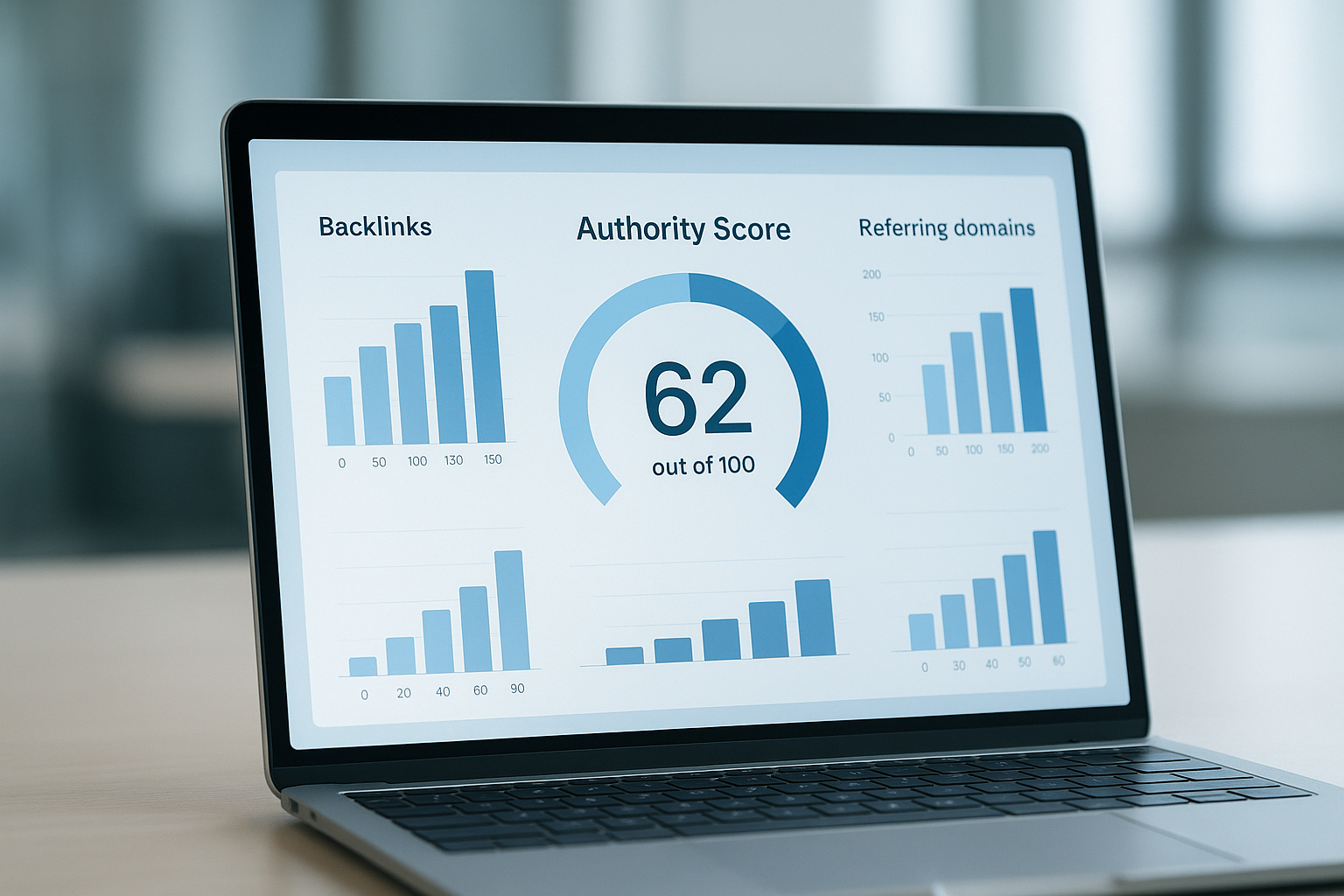
The SEMrush website authority checker displays a composite Authority Score alongside key backlink and traffic metrics.
How to Use the Tool Step by Step
Using the checker is straightforward once you know where to look inside SEMrush. Follow these five steps to get accurate, actionable data.
- Open Backlink Analytics. Log into SEMrush and navigate to Backlink Analytics in the left sidebar under the Link Building section.
- Enter the target domain. Type any domain into the search bar and click Analyze. You can check your own site or any competitor’s domain without restriction.
- Review the Authority Score. The score appears prominently at the top of results, alongside referring domains, total backlinks, and estimated monthly visits.
- Analyze backlink quality. Scroll down to examine the backlink breakdown by authority tier, anchor text distribution, and toxic score percentage.
- Compare against competitors. Run separate lookups for rival domains to benchmark your score within your niche and identify the authority gap you need to close.
Understanding Score Ranges and What They Mean
Not all scores carry equal weight in every niche. Therefore, context matters enormously when interpreting your number. A score of 35 might be competitive in a local services niche while being far below average in finance or technology.
0–20
New or low-authority domain. Few or no quality backlinks established yet.
21–40
Developing domain. Some backlinks present but limited diversity or quality.
41–60
Established domain. Solid backlink profile with meaningful organic visibility.
61–100
High-authority domain. Strong link profile, significant traffic, low spam ratio.
Additionally, it is worth noting that the scale is logarithmic in practice. Moving from 20 to 40 requires considerably less effort than moving from 60 to 80. For this reason, setting realistic incremental targets is more productive than chasing a specific absolute number.
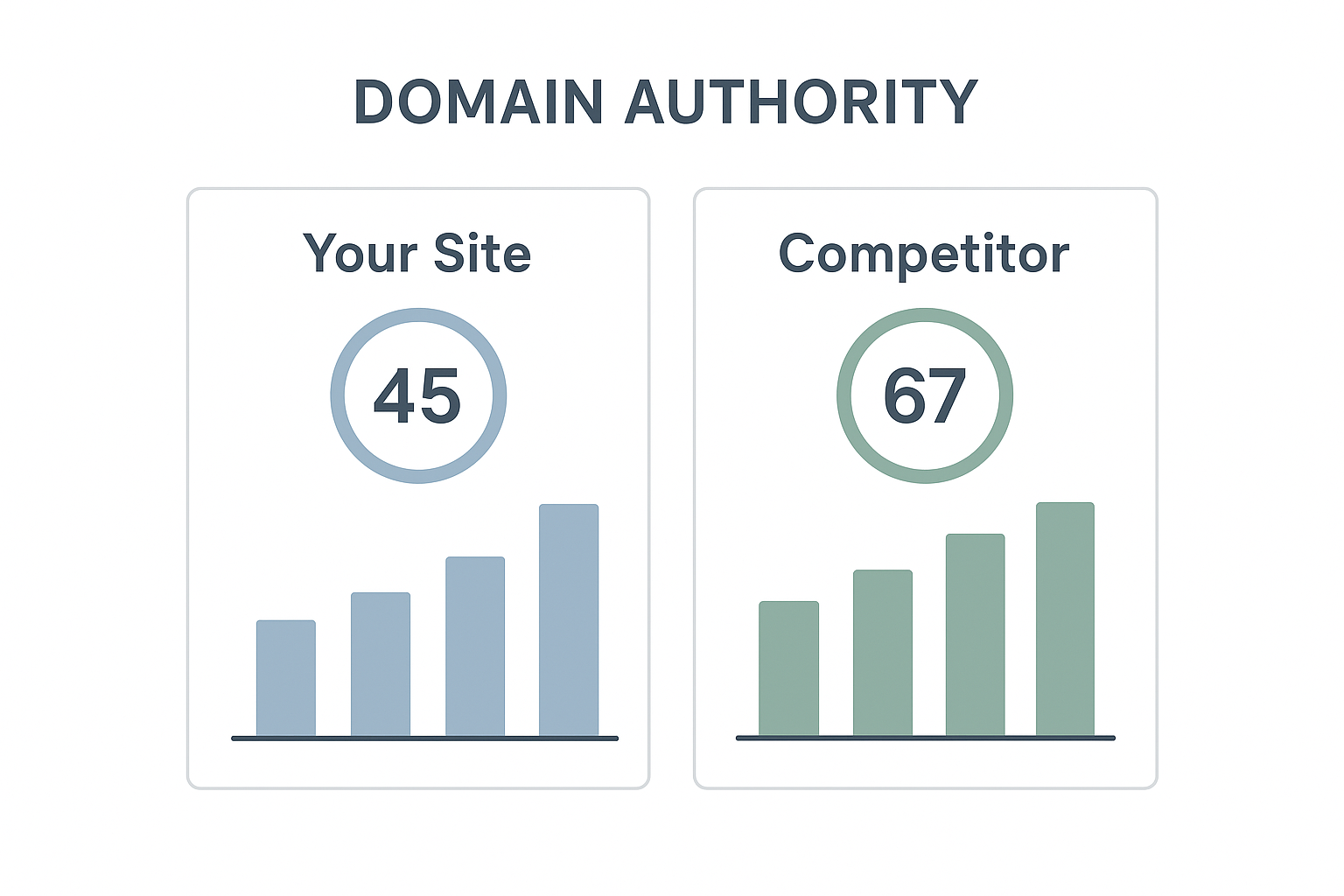
Comparing Authority Scores side by side reveals the exact gap to close when targeting a competitor’s ranking position.
Common Mistakes When Interpreting Authority Score
Many SEOs make the mistake of treating Authority Score as a direct Google ranking signal. In reality, Google does not use SEMrush’s metric — or any third-party authority score — in its algorithm. Instead, these scores are proxy indicators designed to help you understand relative domain strength.
Another common error is ignoring the toxic score alongside the Authority Score. A domain can show a respectable overall score while carrying a dangerously high proportion of spammy backlinks. Over time, those toxic links can erode rankings even if the headline number looks acceptable.
Finally, comparing scores across completely different niches is misleading. Therefore, always benchmark against direct competitors in your specific vertical rather than against industry-leading domains in unrelated sectors.
Practical Ways to Improve Your Score Over Time
Because Authority Score responds to both link quality and traffic signals, a two-pronged approach tends to work best. First, focus on earning editorial backlinks from established, topically relevant websites. Guest posting, digital PR, and creating link-worthy data studies are proven methods for building this kind of profile.
Second, address the toxic link problem proactively. Use SEMrush’s Backlink Audit tool to identify harmful links and either request their removal or submit a disavow file to Google. Reducing your toxic score directly supports a healthier Authority Score over subsequent update cycles.
For deeper analysis of how authority metrics interact with real-world rankings, RankAuthority provides additional context and practical benchmarking guidance that complements SEMrush’s data. According to SEO principles documented on Wikipedia, link quality has consistently outweighed link quantity as a ranking factor since Google’s Penguin updates.
How It Compares to Other Authority Metrics
SEMrush Authority Score, Moz Domain Authority, and Ahrefs Domain Rating all attempt to quantify the same underlying concept, but they use different data sources and weighting methods. As a result, the same domain will often show meaningfully different numbers across platforms.
| Metric | Provider | Primary Signals | Scale |
|---|---|---|---|
| Authority Score | SEMrush | Backlinks + traffic + spam | 0–100 |
| Domain Authority | Moz | Backlinks + linking root domains | 0–100 |
| Domain Rating | Ahrefs | Backlink profile strength | 0–100 |
In practice, using two or more of these tools together gives a more complete picture than relying on any single metric. However, for consistency in tracking progress over time, it is best to choose one platform and stick with it. Resources like RankAuthority can help you contextualize scores from multiple tools within a unified framework.
Key Takeaways Before You Start Checking
The SEMrush website authority checker is one of the most efficient ways to benchmark domain strength, identify link-building opportunities, and monitor the impact of your SEO campaigns over time. Use it as a directional guide rather than an absolute verdict on your site’s health.
Focus on improving the underlying signals — quality backlinks, organic traffic growth, and a clean link profile — and the Authority Score will naturally follow. Meanwhile, keep an eye on your competitors’ scores to ensure you are closing the gap rather than falling further behind.
Frequently Asked Questions
What is the SEMrush website authority checker?
The SEMrush website authority checker is a tool that measures a domain’s overall strength using a metric called Authority Score, which ranges from 0 to 100. It evaluates backlink quality, organic traffic, and spam signals to produce a composite score. You access it through the Backlink Analytics section of SEMrush.
What is a good Authority Score on SEMrush?
A score between 40 and 60 is generally considered good for most mid-sized websites. Scores above 70 indicate very strong domain authority, while scores below 20 suggest the domain is new or lacks quality backlinks. Always compare within your specific niche for meaningful context.
How is SEMrush Authority Score calculated?
SEMrush calculates Authority Score using three main factors: the quality and quantity of backlinks, estimated organic search traffic, and the ratio of natural versus spammy links. These signals are combined into a single 0–100 composite score. Because traffic is included, the metric is more holistic than pure link-based scores.
Is SEMrush Authority Score the same as Moz Domain Authority?
No, they are different metrics from different companies. Both use a 0–100 scale, but they rely on different data sources and algorithms, so scores for the same domain will often differ. SEMrush incorporates traffic data, while Moz focuses more heavily on link-based signals.
How often does SEMrush update Authority Score?
SEMrush typically updates Authority Score data on a rolling weekly or bi-weekly basis as new backlink data is crawled. Significant changes in your backlink profile can reflect in the score within a few weeks. Smaller incremental changes may take longer to appear.
Can I check a competitor’s authority score with SEMrush?
Yes, you can enter any domain into SEMrush’s Backlink Analytics tool to view its Authority Score, backlink count, referring domains, and other metrics. This makes competitor benchmarking straightforward and requires no special permissions. It is one of the most practical uses of the tool.
How do I improve my SEMrush Authority Score?
Focus on earning high-quality backlinks from authoritative domains, removing or disavowing toxic links, and consistently publishing content that attracts organic traffic. Avoid link schemes that inflate quantity without improving quality. Patience is essential, as meaningful score improvements typically take several months.
Is the SEMrush authority checker free to use?
SEMrush offers limited free lookups for Authority Score through Backlink Analytics, but full access requires a paid subscription. Free users can check a limited number of domains per day before hitting a usage cap. Paid plans unlock unlimited lookups and deeper backlink data.
What is a toxic score in SEMrush?
A toxic score in SEMrush measures the percentage of backlinks that appear spammy or potentially harmful to your rankings. A high toxic score can negatively impact your Authority Score and overall SEO performance. Addressing toxic links through removal or disavowal is therefore an important part of link profile maintenance.
How does Authority Score differ from Ahrefs Domain Rating?
Both metrics measure domain-level link strength on a 0–100 scale, but Ahrefs Domain Rating focuses almost exclusively on the backlink profile. In contrast, SEMrush Authority Score also incorporates organic traffic data and spam detection signals, making it a broader composite measure.
What number of referring domains is considered strong?
There is no universal threshold, but domains with hundreds of unique referring domains from diverse, high-authority sources tend to score well. Quality consistently matters more than raw quantity. A hundred links from trusted editorial sources will outperform thousands of links from low-quality directories.
Should I obsess over my Authority Score for rankings?
Authority Score is a useful diagnostic metric but is not a direct Google ranking factor. Use it as a relative benchmark to compare your site against competitors rather than treating it as the sole measure of SEO health. Focusing on the underlying signals — quality content and earned links — will produce better long-term results.

