
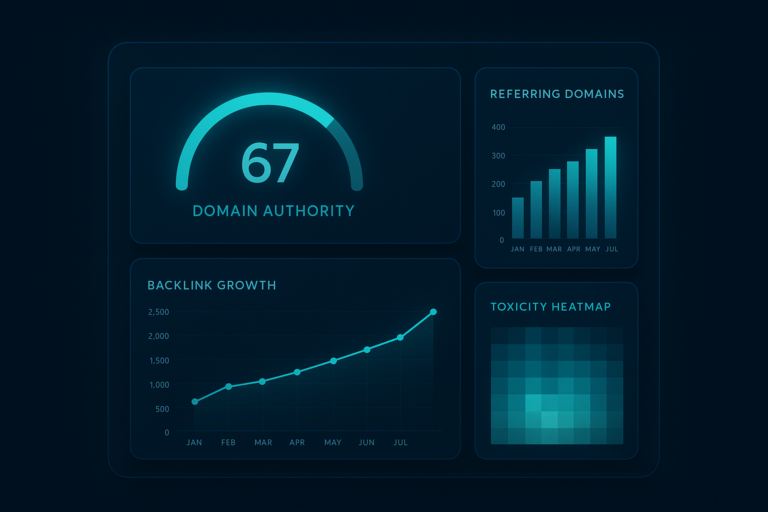
An SEO AI domain authority checker is a tool that uses machine learning algorithms to analyze a website’s backlink profile, content signals, and trust indicators, producing a predictive score that reflects the site’s overall ranking potential. Because these tools automate what once required hours of manual analysis, they have become essential for SEOs, content strategists, and digital marketers at every level. Authored by RankAuthority's SEO team. Last updated: 2026-07-02. See our Website Authority Checker for a live example of authority scoring.
Understanding your domain authority score is no longer optional in a competitive search landscape. Therefore, Free Domain Ranking Checker — and knowing how to act on its data — can mean the difference between stagnating on page three and consistently earning top-ten rankings.
What Does an SEO AI Domain Authority Checker Measure?
Domain Authority Explained is a third-party scoring metric, originally developed by Moz, that estimates how likely a domain is to rank on search engine results pages. The score runs from 1 to 100, where higher numbers indicate stronger ranking potential. In practice, no single number tells the whole story, but authority scores provide a fast, comparable benchmark.
Traditional Domain Authority Checker tools relied on relatively simple link-counting formulas. AI-enhanced tools, however, go further by weighting link quality, contextual relevance, spam patterns, and even content engagement signals simultaneously. As a result, modern scores are considerably more nuanced than their predecessors.
How SEO AI Domain Authority Checkers Change Scoring
Machine learning models can process millions of backlink data points in seconds and identify subtle patterns that older rule-based systems miss. For example, an AI model might detect that a cluster of links originates from a private blog network even when the individual domains appear legitimate on the surface.
Additionally, AI tools continuously retrain on fresh crawl data, meaning scores update more frequently than older tools that relied on monthly batch processing. This dynamic recalibration gives site owners a far more accurate picture of where their domain stands at any given time.
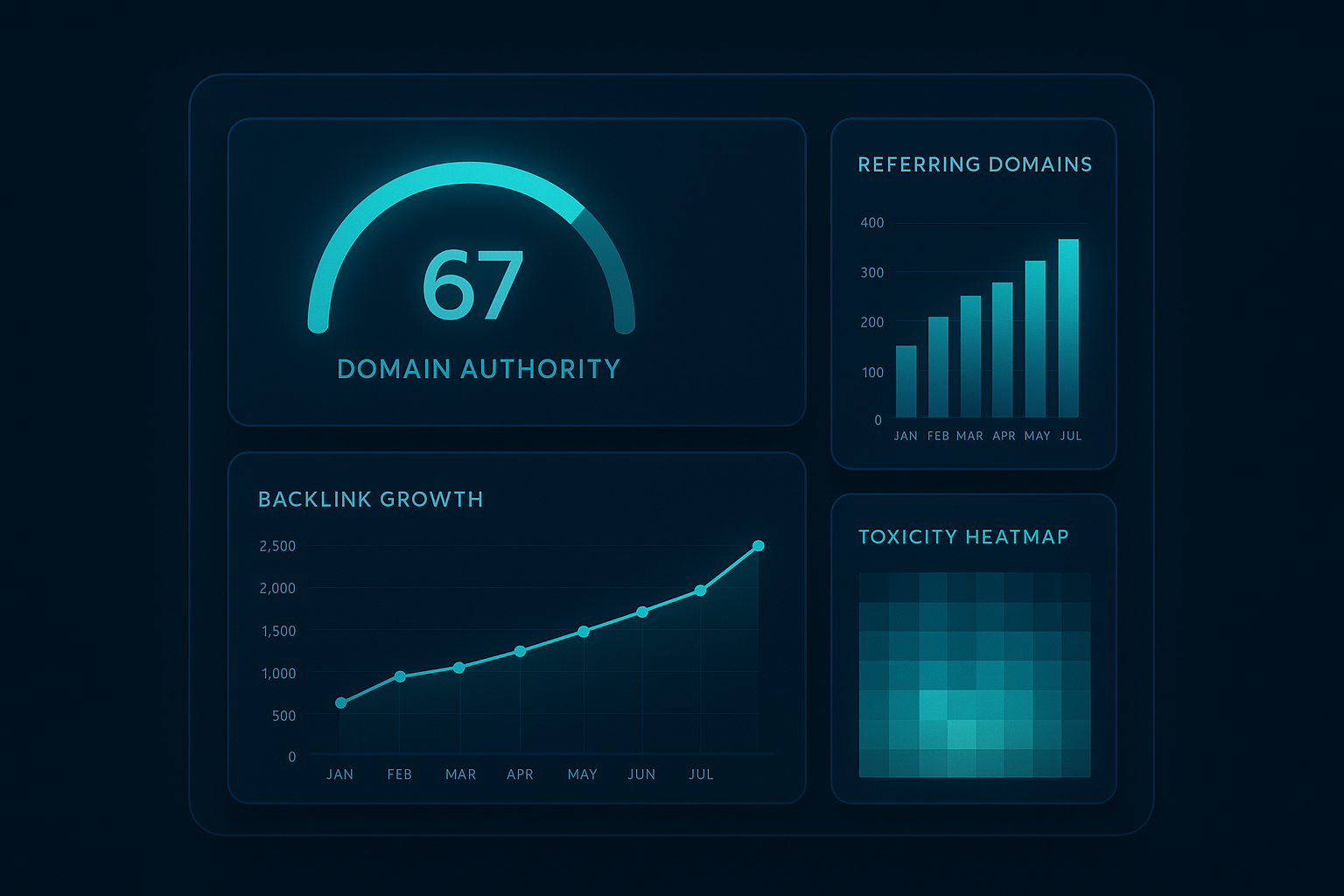
A modern SEO AI domain authority checker presents backlink data, toxicity signals, and score trends in a single unified view (see our AI-powered SEO guide). For a deeper walkthrough, see our SEO Backlinks Analysis: A Complete Guide to Rankings.
Key Signals an AI Checker Evaluates
Because AI models analyze far more variables than traditional tools, it helps to understand which signals carry the most weight. The primary factors most AI authority checkers evaluate include:
- Backlink quantity and quality — the number of links pointing to your domain and the authority of the sites linking to you.
- Referring domain diversity — links from many unique root domains carry more weight than hundreds of links from a single source.
- Anchor text distribution — natural variation in anchor text signals organic link acquisition rather than manipulation.
- Spam and toxicity scores — AI flags links from low-trust, penalized, or irrelevant domains that can drag your score down.
- Link velocity trends — sudden spikes in link acquisition can indicate unnatural activity and may be weighted negatively.
Together, these signals form a composite picture that is far more reliable than any single metric alone. Furthermore, the best AI checkers like DA Checker Free surface actionable recommendations alongside each signal, so you know exactly what to fix.
How to Use an SEO AI Domain Authority Checker Step by Step
Using one of these tools effectively involves more than simply entering a URL and reading a number. Follow these five steps to extract maximum value from your authority check.
Step 1 — Enter Your Domain URL
Navigate to your chosen tool (for example, our AI Rank Checker) and enter your full domain, including the https:// prefix. Some tools also allow bulk entry so you can check multiple domains simultaneously.
Step 2 — Review Your Authority Score
First, note your overall score and whether it has trended upward or downward since your last check. A declining score often signals that competitors are earning links faster than you are, or that toxic links have recently been discovered. For a deeper tool-specific review, see our SEO.AI Domain Authority Checker review and walkthrough.
Step 3 — Analyze Your Backlink Profile
Drill into the referring domain list and review anchor text patterns. Look for any links the AI has flagged as potentially toxic, and add those domains to your disavow consideration list. For a complete walkthrough, see how to check backlink profiles step by step.
Step 4 — Benchmark Against Competitors
Enter your top three to five competitors — or consult Domain Authority Explained — and compare authority scores side by side. This reveals the size of the gap you need to close and highlights which competitor link sources you should target.
Step 5 — Build an Action Plan
Use the AI-generated recommendations to prioritize link acquisition targets, set monthly growth benchmarks, and schedule regular re-checks to track progress. Tools like RankAuthority streamline this workflow by combining authority scoring with link-building guidance in one platform — see our Ahrefs comparison for index-size context.
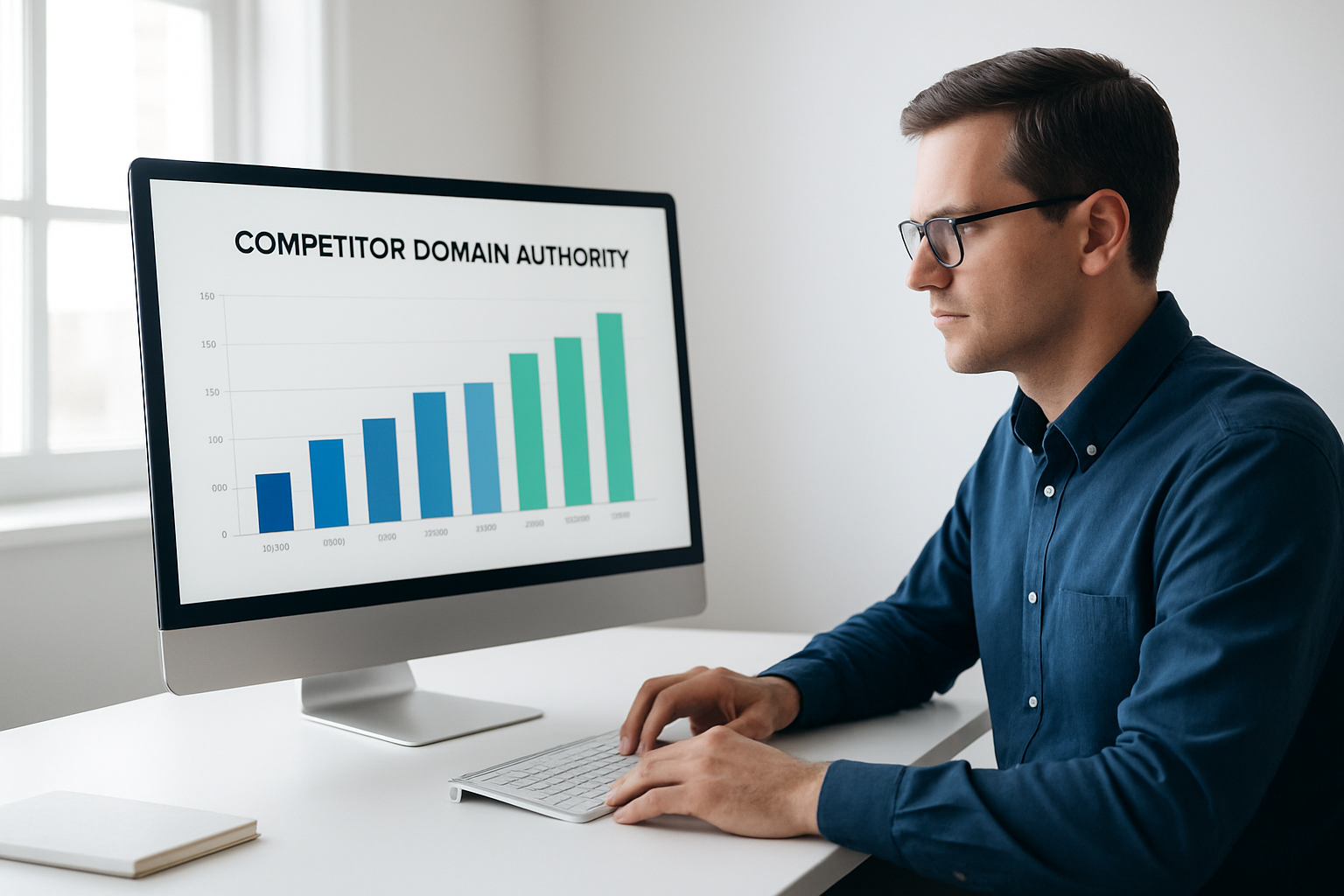
Benchmarking competitor scores helps identify exactly how large the authority gap is and where link-building efforts should be focused.
Common Mistakes That Skew Your Results
Even experienced SEOs make errors when interpreting authority scores. The most frequent mistake is comparing scores across different tools — Moz’s Domain Authority, Ahrefs’ Domain Rating, and Semrush’s Authority Score each use different methodologies and scales, so a score of 45 in one tool does not equal 45 in another.
Another common error is treating domain authority as a direct Google ranking factor. In reality, it is a predictive proxy metric. Although high authority generally correlates with strong rankings, a lower-authority site with highly relevant content and excellent on-page SEO can still outrank a higher-authority competitor for specific queries.
Finally, many site owners check their authority score once and forget about it. However, because competitors are continuously earning links, your relative authority can shift even without any changes on your end. Therefore, scheduling monthly checks is a best practice.
Strategies to Improve Your Score Over Time
Improving domain authority is a long-term investment rather than a quick fix. Nevertheless, the right strategies produce measurable results within three to six months.
Earn editorial backlinks by creating data-driven content, original research, and comprehensive guides that other sites naturally want to cite. These are the highest-value links an AI checker will recognize because they come from contextually relevant, high-authority sources. Learn content tactics in our AI content writing guide.
Audit and disavow toxic links regularly. AI checkers make this easier by automatically flagging suspicious domains, but you still need to review flagged links manually before submitting a disavow file to Google Search Console.
Build topical authority through content clusters. When your site covers a subject comprehensively, more domains will link to it as a reference. Additionally, internal linking across your content cluster helps distribute authority throughout your domain more effectively.
Resources like RankAuthority provide ongoing guidance on link acquisition strategies tailored to your current authority level, making it easier to prioritize the actions with the highest potential impact.
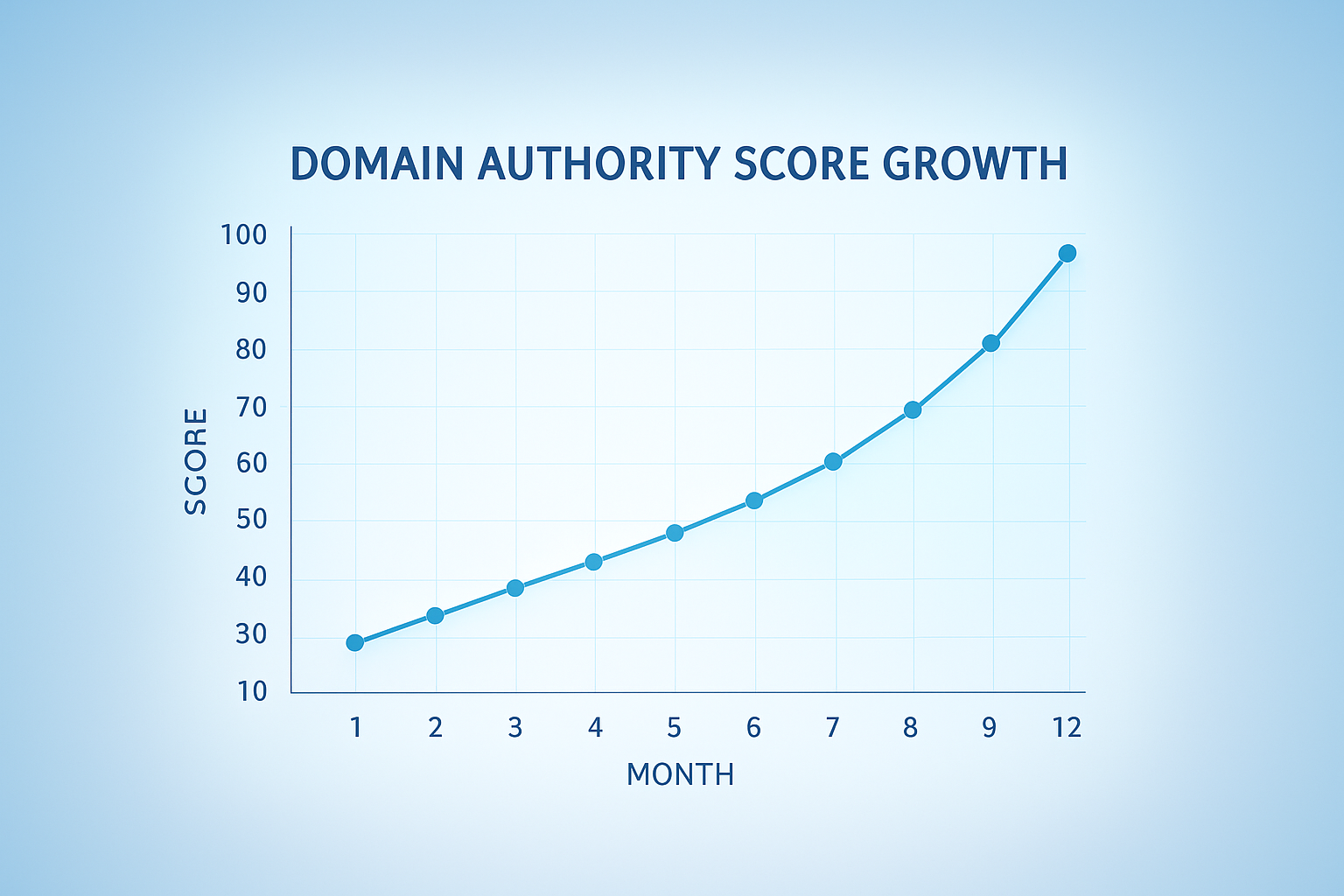
Consistent link-building and content strategies produce steady upward trends in domain authority scores over time.
Choosing the Right Tool for Your Needs
The market offers dozens of domain authority checkers, ranging from free browser extensions to enterprise-grade platforms. When evaluating options, consider the size of the tool’s backlink index — larger indexes produce more accurate scores because they capture more of your actual link profile. Compare features on our DA Checker for Free guide to pick the right tool.
Also consider how frequently the tool recrawls the web. An AI checker that updates its data weekly will reflect recent link changes far sooner than one that processes data monthly. For competitive niches where link profiles shift rapidly, this difference is significant.
Finally, look for tools that pair authority scoring with actionable insights — not just a number. The best platforms explain why your score changed, which specific links contributed most, and what steps you should take next.
Quick Answer: An SEO AI domain authority checker uses machine learning to score your site’s ranking potential on a scale of 1 to 100 by analyzing backlinks, referring domains, and trust signals. To improve your score, focus on earning editorial backlinks from high-authority sites, removing toxic links, and building comprehensive topical content over three to six months.
Why Consistent Monitoring Matters for Long-Term SEO
Domain authority is not a static metric. Because it reflects the relative strength of your link profile compared to all other sites in the index, your score can fluctuate even when you have not changed anything on your site. For instance, if a major competitor earns a wave of high-authority backlinks, your relative position may drop.
Consistent monitoring also helps you detect negative SEO attacks early. If your score drops suddenly without any changes to your link-building activity, an AI checker can help you identify whether a competitor has been pointing spam links at your domain — a tactic designed to trigger a penalty.
In conclusion, using an SEO AI domain authority checker as part of a regular SEO workflow gives you the data-driven clarity needed to make smarter link-building decisions, outpace competitors, and build lasting search visibility.
Frequently Asked Questions
What is an SEO AI domain authority checker?
An SEO AI domain authority checker is a tool that uses machine learning to evaluate a website’s backlink profile and trust signals, producing a score from 1 to 100 that predicts ranking potential. Unlike older rule-based tools, AI-driven checkers process hundreds of signals simultaneously and update scores more frequently.
How is domain authority calculated by AI tools?
AI tools calculate domain authority by weighting signals such as backlink count, referring domain diversity, anchor text patterns, spam scores, and historical ranking data. Machine learning models continuously retrain on fresh crawl data to keep scores accurate and reflective of current conditions.
Is domain authority an official Google ranking factor?
No. Domain authority is a third-party metric, not an official Google ranking signal. However, the underlying factors it measures — particularly backlink quality and quantity — are genuine Google ranking considerations, which is why the metric correlates with search performance.
How often do AI tools update domain authority scores?
Most AI-powered checkers update scores weekly or monthly depending on the platform. Some advanced tools recalculate in near real-time as new backlink data is crawled. More frequent updates are especially valuable in competitive niches where link profiles change rapidly.
What is a good domain authority score?
A score above 40 is generally considered good for most industries. Scores above 60 indicate strong authority, while scores above 80 are typical of major news sites and established brands. New domains typically start below 20 and build from there.
Can I improve my domain authority score quickly?
Domain authority improves gradually, not overnight. Meaningful gains typically take three to six months of consistent link-building, toxic link removal, and content investment. Shortcuts like buying links can temporarily inflate scores but risk penalties that cause severe drops.
What is the difference between domain authority and page authority?
Domain authority scores the entire website, while page authority scores a single URL. Both use similar methodologies. Page authority is more useful when evaluating whether a specific landing page can compete for a targeted keyword.
Are free AI domain authority checkers accurate?
Free tools provide reasonable estimates but often use smaller backlink indexes and simpler models than paid alternatives. For competitive research or professional reporting, a premium tool with a larger crawl database delivers more reliable and comprehensive scores.
How does AI detect toxic backlinks during a domain check?
AI models flag toxic backlinks by identifying patterns such as links from known spam networks, unnatural anchor text repetition, sudden link spikes, and domains with very low trust scores. These signals are weighted to reduce the domain’s overall authority score accordingly.
Should I compare my domain authority to competitors?
Yes, competitive benchmarking is one of the most valuable uses of domain authority data. A lower score than your competitors for shared keywords signals a link-building gap. Closing that gap should become a primary strategic priority.
What common mistakes should I avoid when using a domain authority checker?
Avoid comparing scores across different tools, treating authority as a direct Google ranking factor, and checking your score only once. Additionally, never ignore a sudden score drop — it may indicate a negative SEO attack or a recent algorithm update affecting your link profile.
How do I use domain authority data to build a better link strategy?
Use authority data to identify high-scoring sites in your niche as outreach targets, audit weak or toxic links for removal, and track your progress month over month. Prioritize earning links from domains with authority scores higher than your own for the greatest impact.

