

A good SEO score is a numerical indicator — typically between 70 and 100 on a 100-point scale — that reflects how well your website is optimized for search engine visibility across technical, content, and authority dimensions. Understanding what that number means is the first step toward actually improving your rankings.
However, many website owners chase a high score without knowing which factors drive it or how to fix the issues dragging it down. In this guide, you will learn exactly what a good score looks like, how it is measured, and the practical steps to reach and maintain it. For a deeper walkthrough, see our How to Get Keywords From a Website (Complete Guide).
What Does a Good SEO Score Actually Mean?
A good SEO score is a composite measurement produced by third-party audit tools — not a metric issued directly by Google. Tools such as Semrush, Ahrefs, and Moz each calculate scores using their own weighted formulas. Therefore, a score of 80 on one platform does not necessarily equal an 80 on another.
Generally speaking, the scoring ranges break down as follows:
Critical issues present — rankings are likely being suppressed
Moderate optimization — room for meaningful improvement
Good — strong foundation with minor gaps to address
Excellent — competitive technical and content health
It is important to note that even a perfect score does not guarantee first-page rankings. Additionally, your competitors’ scores matter — because SEO is inherently relative to your niche.
The Three Pillars Behind Every SEO Score
Every reputable audit tool evaluates your website across three core dimensions. Understanding these pillars helps you prioritize fixes strategically rather than guessing where to start.
1. Technical SEO Health
Technical SEO covers everything that affects how search engine crawlers access and index your site. Common issues include broken links, slow page load times, missing canonical tags, and crawl errors. For example, a single redirect chain can slow both users and bots, ultimately lowering your score. According to Wikipedia’s overview of SEO, technical optimization is foundational because no amount of great content helps if search engines cannot properly access your pages.
2. On-Page Content Quality
On-page factors include keyword targeting, meta titles, meta descriptions, header structure, internal linking, and content depth. Each page should serve a clear search intent. As a result, thin or duplicated content consistently lowers scores across all major audit platforms.
3. Off-Page Authority and Backlinks
Off-page signals — primarily backlinks from trusted external websites — determine how authoritative your domain appears. Tools translate this into metrics like Domain Authority or Domain Rating. Therefore, even a technically perfect site can score lower if it lacks quality inbound links.

A good SEO score of 80 or above reflects balanced performance across technical health, content quality, and domain authority.
Step-by-Step: How to Improve Your Score
Improving your score is a structured process, not a one-time fix. Follow these five steps in order for the most efficient results.
Step 1 — Run a Full Site Audit
First, use a tool like Google Search Console, Semrush, or Ahrefs to generate a complete technical audit. This gives you a prioritized list of errors, warnings, and notices to work through systematically.
Step 2 — Fix Critical Technical Errors
Next, resolve the highest-priority issues: broken internal links, missing meta descriptions, duplicate title tags, and pages blocked from indexing. These fixes often produce quick score gains within days of re-crawling.
Step 3 — Optimize On-Page Content
Review each key page to ensure it targets one primary keyword, includes that keyword in the title tag and first paragraph, and is structured with clear H2/H3 headings. Additionally, check that your content genuinely answers the searcher’s intent rather than simply stuffing keywords.
Step 4 — Improve Page Speed and Core Web Vitals
Use Google PageSpeed Insights to diagnose loading bottlenecks. Compress images, enable browser caching, minimize JavaScript, and consider a content delivery network (CDN). Because Core Web Vitals are an official Google ranking signal, even small speed improvements translate into measurable score gains.
Step 5 — Build Quality Backlinks
Finally, earn links from authoritative, topically relevant websites through content marketing, digital PR, and strategic outreach. One high-quality backlink from a trusted domain is worth far more than dozens of low-quality directory links.

A structured five-step approach is the most reliable way to move from a low score to a consistently high-performing site.
Common Mistakes That Keep Scores Low
Many sites plateau in the 50–65 range not because of a lack of effort, but because of recurring mistakes that undo progress. Being aware of these traps helps you avoid them.
Ignoring mobile usability: Google uses mobile-first indexing, meaning it evaluates the mobile version of your site first. Therefore, a desktop-only optimization strategy will consistently underperform in both score and rankings.
Publishing thin content: Pages with fewer than 300 words rarely satisfy search intent. In contrast, comprehensive pages that answer related questions tend to earn more backlinks and rank for more keyword variants naturally.
Neglecting internal linking: Internal links distribute authority across your site and help crawlers discover new pages. Meanwhile, orphan pages — those with no internal links pointing to them — are often overlooked entirely by search engines.
Chasing score instead of intent: A score is a proxy metric. Ultimately, the goal is to serve searchers well. Sites that optimize purely for audit tool scores without considering user experience often see score improvements that do not translate into traffic gains.
Tools and Resources Worth Using
Choosing the right tools makes the auditing process significantly more efficient. Each tool below serves a slightly different purpose, so using two or three in combination gives the most complete picture.
Google Search Console is free and provides direct data from Google about crawl errors, indexing status, and search performance. It is the most authoritative source for understanding how Google specifically views your site.
Semrush and Ahrefs both offer comprehensive site audits with numerical scores, prioritized issue lists, and competitive benchmarking. Additionally, their backlink analysis features are essential for off-page strategy.
For a deeper strategic perspective on building lasting search authority, RankAuthority provides actionable guidance on both technical and content-driven SEO improvements that move the needle beyond surface-level score metrics.
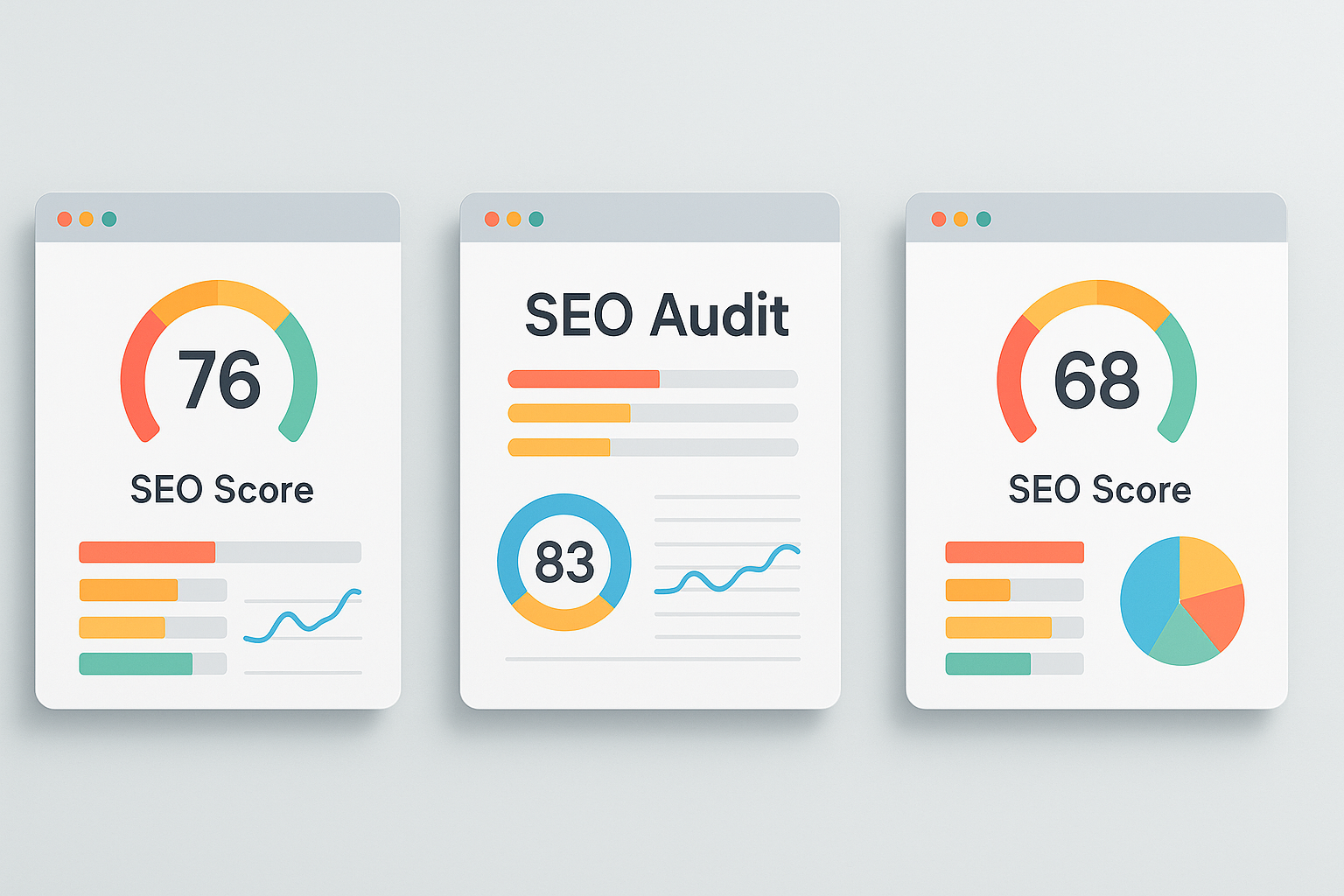
Using multiple SEO audit tools together provides a more complete and reliable picture of your site’s overall health.
Maintaining Your Score Over Time
Achieving a high score is only half the challenge — maintaining it requires ongoing attention. New content, site updates, and CMS changes can introduce errors that gradually erode a previously clean audit.
Schedule monthly audits as a minimum. For larger sites with frequent content updates, weekly automated crawls through a tool like Semrush or Screaming Frog help catch regressions early. Additionally, monitor your Core Web Vitals regularly through Google Search Console, as hosting changes or new plugins can unexpectedly slow load times.
Finally, track rankings alongside your score. If your score improves but traffic does not, it signals a content or intent mismatch that technical fixes alone will not solve. In that case, revisit your keyword strategy and content depth before continuing with further technical audits.
Conclusion: What a Good SEO Score Really Represents
A good SEO score — generally 70 or above — is a reliable signal that your website is technically sound, content-rich, and building genuine authority. However, it is a means to an end, not the end itself. The true goal is sustainable organic traffic from searchers who find exactly what they need on your site.
By auditing regularly, fixing technical errors promptly, optimizing content for real search intent, and earning quality backlinks, you create the conditions for both a high score and the rankings that follow. For ongoing strategic support, resources like RankAuthority can help you stay ahead of algorithm changes and competitive shifts.
Frequently Asked Questions
What is considered a good SEO score?
A good SEO score typically falls between 70 and 100 on the 100-point scale used by tools like Semrush or Ahrefs. Scores above 80 indicate strong technical health, quality content, and solid backlink authority. However, the exact benchmark varies by tool and industry.
How is an SEO score calculated?
SEO scores are calculated by auditing technical factors such as page speed, crawlability, and mobile-friendliness alongside on-page signals like keyword usage and meta tags, and off-page signals like backlinks. Different tools weight these factors differently, so scores will vary across platforms.
Does Google use an SEO score to rank websites?
No, Google does not use a single numerical SEO score to rank websites. Rankings are determined by hundreds of signals evaluated by Google’s algorithm. Third-party SEO scores are useful diagnostic tools but are not official Google metrics.
How long does it take to improve an SEO score?
Technical fixes like resolving crawl errors can improve your SEO score within days. However, improvements in rankings and organic traffic from content and link building typically take three to six months to become visible.
What is the fastest way to raise a low SEO score?
The fastest improvements come from fixing critical technical errors such as broken links, missing meta descriptions, and slow page load times. These issues are flagged clearly by tools like Google Search Console and Semrush.
What tools measure SEO score?
Popular tools that measure SEO score include Semrush Site Audit, Ahrefs Site Audit, Moz Pro, and Google Search Console. Each uses its own scoring methodology, so results will differ between platforms.
What are Core Web Vitals and why do they affect my score?
Core Web Vitals are a set of user experience metrics defined by Google that measure loading speed, interactivity, and visual stability. Because Google uses these as ranking signals, poor Core Web Vitals scores directly lower your overall SEO performance.
Can a high SEO score guarantee first-page rankings?
No, a high SEO score does not guarantee first-page rankings. It indicates your site is technically healthy and well-optimized, but competition, search intent alignment, and content quality also determine where you rank.
How do backlinks influence an SEO score?
Backlinks from authoritative, relevant websites signal trustworthiness to search engines and raise domain authority metrics. Most SEO scoring tools factor link quality and quantity heavily into their overall site score.
What is a bad SEO score?
Scores below 50 on most SEO audit tools indicate significant technical or content issues that are likely hurting rankings. Common causes include slow load times, duplicate content, broken links, and missing structured data.
How often should I check my SEO score?
Monthly audits are recommended for most websites, while high-traffic or e-commerce sites benefit from weekly monitoring. Regular checks help catch newly introduced errors before they compound into ranking drops.
Does mobile optimization affect an SEO score?
Yes, mobile optimization is a significant factor in SEO scoring. Google uses mobile-first indexing, meaning it primarily evaluates the mobile version of your site for rankings, so a poor mobile experience directly lowers your score.

