

Complete SEO Strategy Guide
“A well-linked website is a well-understood website — by both users and search engines.”
Internal linking is the practice of hyperlinking one page on your website to another page within the same domain. It is one of the most powerful — and most underused — tools in any SEO strategy. Done correctly, internal linking shapes how search engines crawl your site, how authority flows between pages, and how users navigate your content. Whether you manage a five-page business site or a sprawling content library with thousands of articles, a deliberate internal linking strategy will meaningfully improve your organic visibility.
Quick Answer
Internal linking connects pages on the same website using clickable hyperlinks. It helps search engines discover and understand your content, distributes ranking power across your site, and guides visitors toward high-value pages — all of which contribute directly to better search rankings.
What Is Internal Linking?
Internal linking is the structured practice of connecting related pages within a single website. When a blog post links to a service page, or a product page links to a relevant how-to guide, those are internal links. Unlike external links — which point to other domains — internal links are entirely within your control. You decide which pages get linked, how often, and with what anchor text.
According to Wikipedia’s overview of hyperlinks, a hyperlink is a reference in a document that a reader can follow to reach another location. In the context of SEO, internal hyperlinks are strategic signals that communicate content relationships to both users and crawlers.
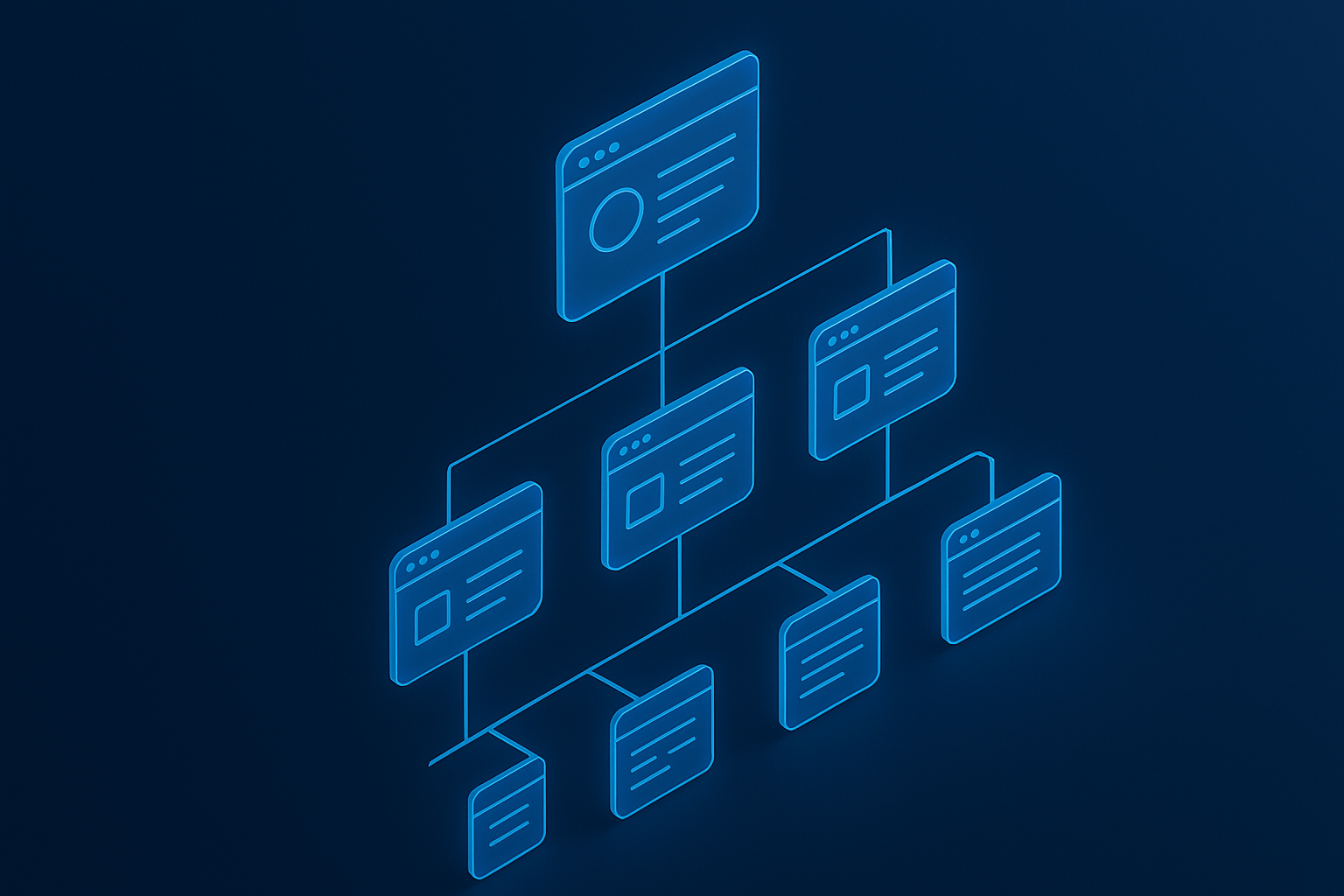
A visual representation of internal linking architecture — each node is a page, each line is a deliberate link. For a deeper walkthrough, see our Internal Link Suggestion Engine: The Complete Guide.
Why Internal Linking Matters for SEO
Search engines like Google use crawlers — automated programs that follow links to discover and index content. When your pages are well-connected through internal links, crawlers can find every important page on your site efficiently. Pages that receive no internal links, often called “orphan pages,” are frequently missed during crawls and may never rank.
Beyond discoverability, internal links pass link equity (sometimes called “link juice”) — the ranking power that flows from one page to another. A high-authority page that links to a newer, lower-authority page transfers some of that authority, boosting the linked page’s potential to rank. This makes internal linking one of the few SEO levers you can pull entirely on your own, without needing third-party backlinks.
Crawlability
Internal links create pathways for search engine bots to discover every page on your site, ensuring nothing gets left behind in the index.
Authority Flow
Link equity flows from strong pages to weaker ones through internal links, helping elevate the ranking potential of your most important content.
User Experience
Well-placed internal links guide visitors to related content, increasing time on site, reducing bounce rates, and improving overall engagement metrics.
Topical Authority
Linking related content together signals to search engines that your site covers a topic comprehensively, building topical authority in your niche.
How Does Internal Linking Work Technically?
Every internal link consists of two components: the anchor text (the visible, clickable words) and the destination URL (the page being linked to). Both elements send signals to search engines. The anchor text tells crawlers what the destination page is about, while the destination URL receives a small boost of authority from the linking page.
Google’s crawlers follow links in a process called link graph traversal — essentially walking through your website by following every hyperlink they encounter. Pages that appear frequently as link destinations are interpreted as important. This is why your most valuable pages (service pages, money pages, cornerstone content) should receive the most internal links from other pages on your site.
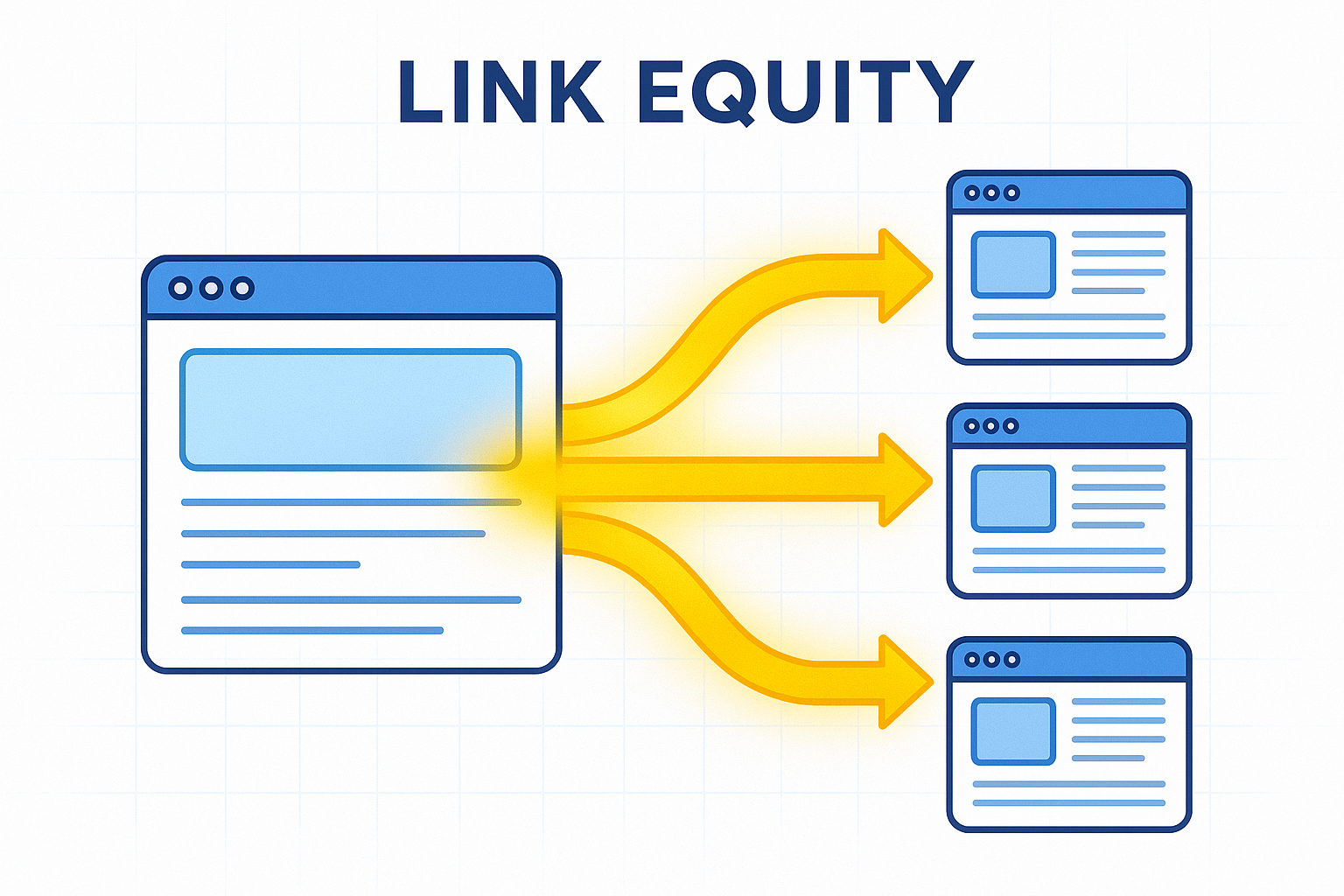
Link equity flows from authoritative pages through internal linking to boost the ranking potential of connected pages.
Internal Linking Best Practices
Knowing that internal linking matters is only the first step. The real gains come from implementing it strategically. Here are the core best practices every site owner and SEO professional should follow:
1. Use Descriptive, Keyword-Rich Anchor Text
Anchor text is one of the strongest signals in internal linking. Avoid vague phrases like “click here” or “read more.” Instead, use natural, descriptive phrases that reflect the target page’s topic. If you’re linking to a page about keyword research, anchor text like “how to conduct keyword research” is far more valuable than a generic call to action.
2. Link Deep, Not Just to the Homepage
Many websites over-link to their homepage and top-level navigation pages while neglecting deeper content. Deep linking — pointing to specific blog posts, product pages, or resource pages — distributes authority more evenly and helps important content rank. Aim to link to pages that are two or three levels deep in your site hierarchy.
3. Prioritize Contextual Links Over Navigation Links
Links embedded naturally within body content carry more SEO weight than those in headers, footers, or sidebars. Contextual links appear relevant because they exist within a meaningful content block that surrounds them with topically related text. Search engines weigh these links more heavily when assessing relevance.
4. Audit and Fix Orphan Pages
An orphan page is a page with no internal links pointing to it. These pages are invisible to crawlers that rely on link traversal, meaning they may never be indexed or ranked. Regularly audit your site using tools like Screaming Frog or Ahrefs to identify orphaned content and connect it into your link structure.
5. Build Topic Clusters with Pillar Pages
A topic cluster model groups related content around a central “pillar page” that covers a broad topic comprehensively. Supporting cluster pages cover subtopics in depth and link back to the pillar, while the pillar links out to each cluster page. This structure signals topical authority and creates a clean, logical internal linking architecture. For a deeper dive into structuring these strategies, RankAuthority’s internal linking best practices guide provides an actionable framework for building topic clusters from scratch.
Pro Tip
When publishing new content, always go back to two or three existing high-authority pages on your site and add a contextual internal link pointing to the new page. This immediately connects the new content to your link graph and accelerates indexing.
Frequently Asked Questions About Internal Linking
How many internal links should a page have?
There is no fixed limit, but Google recommends keeping the number of links on a page reasonable. Most SEO practitioners aim for 3 to 10 contextual internal links per page, depending on content length and site size. Quality and relevance always outweigh quantity.
Does internal linking improve search rankings?
Yes. Internal linking improves search rankings by passing link equity between pages, helping search engines understand site structure and content relationships, and increasing the crawl frequency of important pages. It is a confirmed ranking factor.
What is the difference between internal linking and external linking?
Internal linking connects pages within the same website domain, while external linking points to pages on different websites. Both types of links play important roles in SEO, but internal links give you full control over equity distribution and site navigation.
What is the best anchor text for internal links?
The best anchor text is descriptive and keyword-rich, accurately reflecting the content of the destination page. Avoid generic phrases like “click here” and instead use natural, contextual phrases that include target keywords where appropriate.

Planning your internal linking structure before publishing new content saves hours of retroactive SEO work.
Common Internal Linking Mistakes to Avoid
Even experienced SEOs make internal linking mistakes that quietly erode their rankings. Here are the most common pitfalls:
- Broken internal links: Links that lead to 404 pages waste link equity and damage user experience. Audit regularly and fix or redirect broken links immediately.
- Over-optimization of anchor text: Using the exact same keyword-rich anchor text repeatedly for one page can appear manipulative. Vary your anchor text naturally.
- Linking to irrelevant pages: Only link pages that share genuine topical relevance. Forced links between unrelated content confuse both users and search engines.
- Ignoring nofollow attributes: Using nofollow on internal links blocks equity flow unnecessarily. Reserve nofollow for external links you don’t want to endorse.
- Linking only from new content: New pages have little authority. Always link from established, high-authority pages to give new content the best possible start.
Building an Internal Linking Strategy That Scales
As your website grows, managing internal links manually becomes increasingly complex. Scaling your internal linking strategy requires a systematic approach. Start by mapping your site’s content into logical silos or topic clusters. Identify your highest-authority pages using a tool like Google Search Console or an SEO platform — these become your “link hubs” that distribute equity to newer or weaker pages.
Create a content brief template that includes an internal linking section. Every new piece of content should identify at least three existing pages to link from and three pages to link to before a single word is written. This proactive approach prevents orphan pages and ensures every new piece of content integrates immediately into your link graph.
For a comprehensive walkthrough of building and executing a scalable internal linking strategy, the team at RankAuthority’s internal links and SEO guide covers everything from site architecture planning to advanced link equity modeling — an essential read for any serious SEO practitioner.
Conclusion
Internal linking is not a set-and-forget tactic — it is an ongoing SEO discipline that compounds in value over time. Every contextual link you add connects your content more deeply, distributes authority more efficiently, and makes your site easier for both users and search engines to navigate. Start with an audit to identify orphan pages and your highest-authority content, build a topic cluster structure, use descriptive anchor text, and commit to linking new content from established pages every time you publish.
The sites that dominate search results are rarely those with the most backlinks alone — they are the sites where every page is purposefully connected, every piece of content is discoverable, and every link serves both the user and the algorithm. A strong internal linking strategy is your most controllable path to achieving that.

