
Domain Authority: The Complete Guide to Understanding, Checking, and Improving Your Score
Domain authority is a score from 1 to 100 that predicts how likely a website is to rank in search engine results. Domain authority (DA) is a metric developed by Moz to help SEOs benchmark a site’s backlink strength against competitors. Understanding and improving this number is one of the highest-leverage activities in any serious SEO strategy.
Last updated: 2025-07-14 | Reading time: approx. 12 minutes
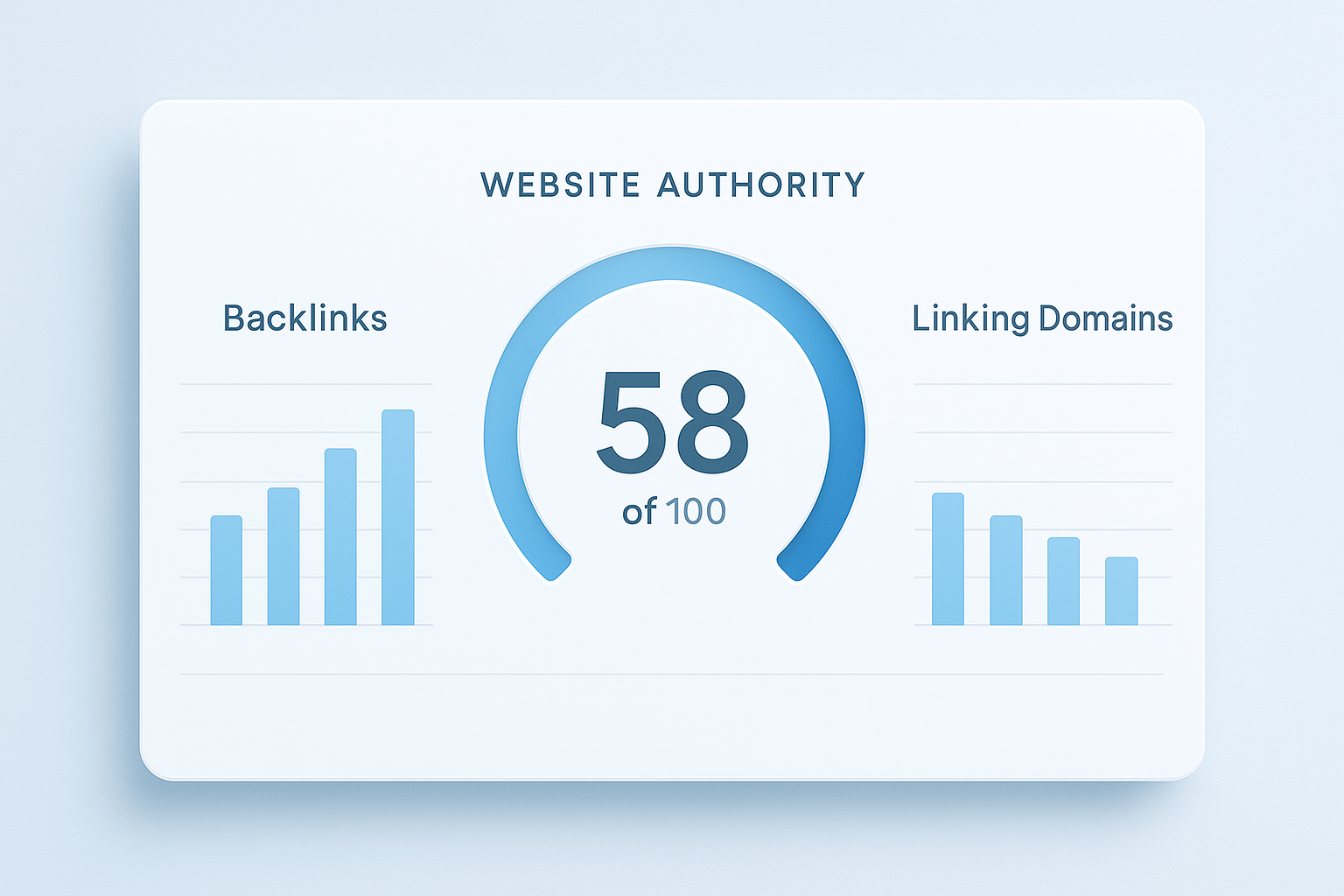
A domain authority dashboard showing DA score, linking root domains, and full backlink data at a glance.
What Is Domain Authority?
Domain authority is a predictive SEO metric — a third-party score, not a Google ranking signal — that estimates how competitive a website is likely to be in organic search. Moz created it to give marketers a standardised way to compare link profiles across domains. In short, the higher the score, the stronger the site’s backlink foundation.
The score runs on a logarithmic scale from 1 to 100. “Logarithmic” simply means that gains get harder as the number climbs. Moving from DA 20 to DA 30 is far easier than moving from DA 70 to DA 80. Therefore, the effort required at each stage increases significantly — and your expectations should reflect that reality.
According to Wikipedia’s overview of domain authority, Moz introduced the metric as a practical approximation of Google’s own PageRank signals — the internal score Google uses to measure link equity. Consequently, while DA and Google’s algorithm are separate systems, they respond to many of the same inputs: link quality, linking domain diversity, and overall backlink health.
How Moz Calculates the Domain Authority Score
Moz calculates domain authority using a machine learning model. Specifically, it analyses the following signals:
- Number of unique linking root domains — how many distinct websites link to you, regardless of how many links each sends
- Authority of those linking domains — a link from a DA 80 publication outweighs ten links from DA 10 blogs
- Total backlink volume — the overall count of inbound links, weighted by quality
- Spam Score — Moz’s own indicator of link toxicity; high spam signals reduce the net value of your link profile
- Link diversity and relevance — links from topically related, reputable sources carry more authority than unrelated or low-quality ones
In addition, the score is relative, not absolute. Moz recalibrates the entire scale periodically, which means your DA can drop even when your backlink profile is growing — simply because other sites in the index are growing faster. This is a crucial detail many site owners misunderstand.
Why Domain Authority Matters for SEO
Google does not use domain authority in its ranking algorithm — Moz has stated this explicitly. However, the metric still matters enormously in practice. Here is why.
First, DA acts as a reliable proxy for backlink health. Sites with high DA scores consistently rank well because they have earned many high-quality links — and those links are precisely what Google’s algorithm rewards. In other words, the actions that raise your DA also raise your actual rankings.
Second, domain authority is the most widely used benchmark in link-building outreach. When a publisher considers whether to accept a guest post or link to your content, they typically check your DA first. Consequently, a higher DA makes your domain more attractive to potential link partners — which in turn accelerates further growth.
Third, DA is indispensable for competitive analysis. If your DA is 30 and your top competitor sits at 65, you have a clear, quantifiable gap — and a realistic sense of the link-building investment required to compete for the same keywords. Without this benchmark, SEO strategy becomes guesswork.
Domain Authority as a Comparative, Not Absolute, Metric
A DA score only means something in context. For example, a DA of 35 may be strong enough to dominate a local services niche, yet hopelessly outgunned in competitive verticals like finance or health. Therefore, always benchmark your score against the actual competitors appearing on page one for your target keywords — not against some abstract ideal.
What Is a Good Domain Authority Score?
There is no universally “good” domain authority score — it depends entirely on your niche and competitors. That said, the following general benchmarks are widely recognised among SEO professionals:
| DA Range | Typical Interpretation | Common Site Type |
|---|---|---|
| 1–20 | Very low / new site | Brand-new domains, minimal backlinks |
| 21–40 | Below average to average | Growing blogs, local businesses |
| 41–60 | Good | Established niche sites, mid-size brands |
| 61–80 | Strong | National brands, well-known publications |
| 81–100 | Elite | Wikipedia, Amazon, major news outlets |
New websites almost always start with a DA near 1. With consistent content creation and targeted link building, reaching DA 20–30 within the first year is realistic. Pushing past 40–50, however, typically requires 18–24 months of sustained effort and a deliberate backlink acquisition strategy.
Rather than chasing a fixed number, focus on outperforming your direct competitors. If the top three sites in your niche have DA scores of 45, 50, and 55, then targeting DA 50–55 is far more actionable than pursuing an arbitrary milestone like DA 70.
How to Check Your Domain Authority Score
Checking your domain authority score is simple and takes less than a minute. Several tools provide this data, with Moz’s own Link Explorer being the primary source.
Using Moz Link Explorer
Visit Moz Link Explorer and enter your domain URL. The results display your current DA score alongside Page Authority (PA), the number of linking root domains, and total backlinks. A free Moz account allows a limited number of monthly queries. A paid Moz Pro subscription unlocks deeper historical data, full link export, and competitor comparison features.
When reviewing your results, pay close attention to linking root domains — this figure is often more meaningful than raw backlink count. For instance, 500 links from just 10 domains carry far less weight than 200 links from 200 unique domains. Diversity signals broader trust across the web, and Moz’s algorithm reflects this heavily.
Other Tools That Show Domain Authority
Several third-party tools also surface Moz DA data or their own equivalent scores:
- MozBar — a free Chrome extension that displays DA and PA scores directly in your browser as you browse competitor sites or search results
- Ahrefs — shows Domain Rating (DR), its own equivalent of DA, alongside detailed backlink and organic traffic data
- Semrush — provides an Authority Score metric, again reflecting backlink strength on a 1-to-100 scale
- RankAuthority — offers practical guidance on interpreting authority scores in the context of broader SEO strategy
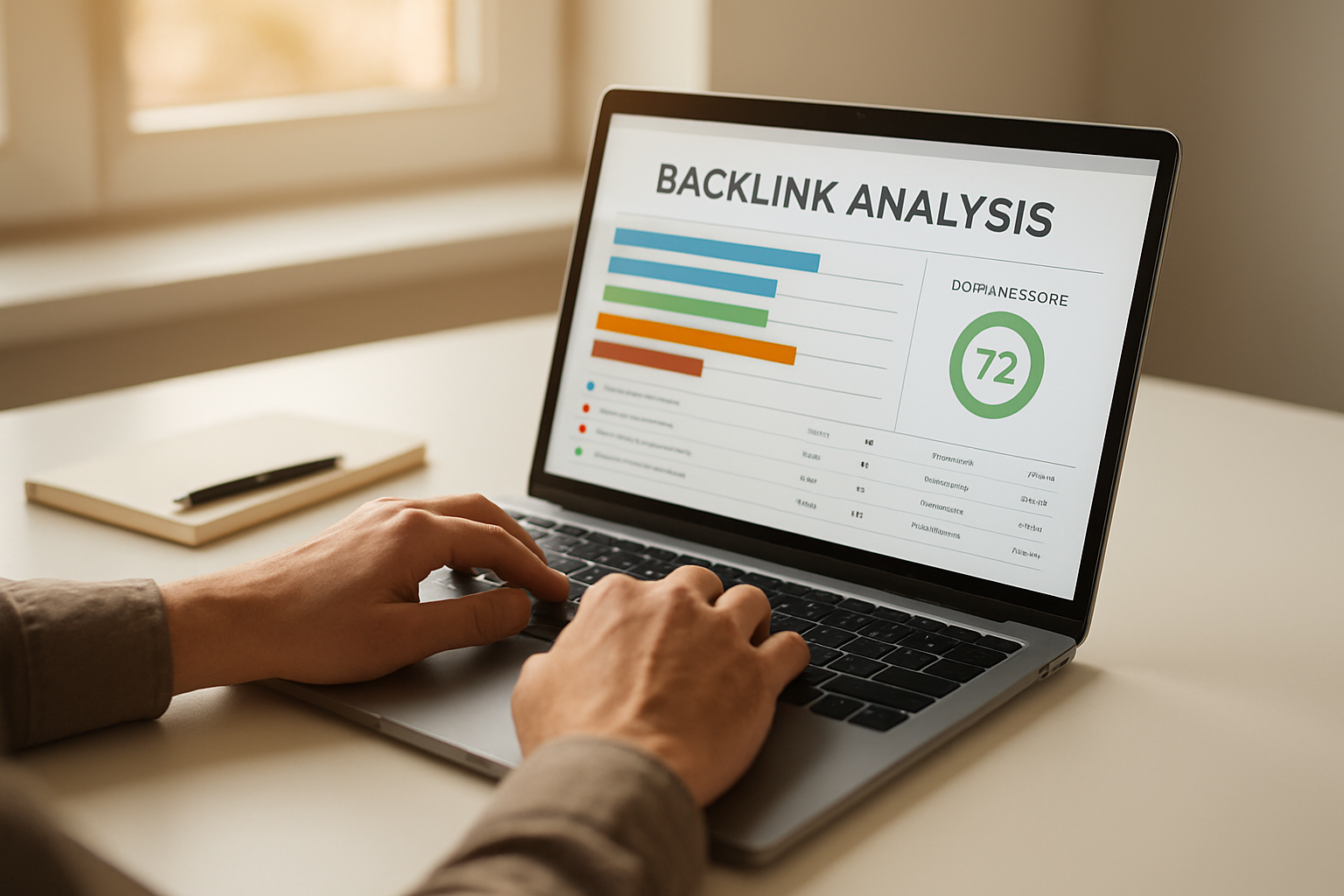
Regularly auditing your backlink profile in Moz Link Explorer helps you track domain authority progress over time.
How to Improve Your Domain Authority: 7 Proven Steps
Improving domain authority requires a consistent, multi-layered approach. Below is a proven seven-step process that works whether you are starting from zero or pushing past a long-standing plateau.
Step 1 — Audit Your Current Backlink Profile
Use Moz Link Explorer to identify all existing backlinks. Specifically, look for toxic or spammy links dragging your score down. Moz’s built-in Spam Score feature flags suspicious links automatically. In addition, look for lost or broken backlinks that previously contributed authority — reclaiming these is often the fastest win.
Step 2 — Remove or Disavow Toxic Links
If you find links from low-quality, irrelevant, or penalised sites, attempt manual removal first. If that fails, however, submit a disavow file through Google Search Console. A clean link profile protects your domain authority score from being held down by bad-neighbourhood associations.
Step 3 — Create Link-Worthy Content
Original research, comprehensive guides, data studies, and visual assets like infographics naturally attract editorial backlinks. In contrast, thin, duplicated, or purely promotional content rarely earns links from authoritative sources. Furthermore, content that solves a specific problem tends to accumulate links passively over time — compounding your authority without additional outreach effort.
Step 4 — Pursue Strategic Guest Posting
Reach out to bloggers, journalists, and industry publishers in your niche. A guest post on a DA 60+ publication passes significantly more link equity than dozens of posts on low-authority blogs. Additionally, participating in expert roundups, podcasts, and digital PR campaigns earns high-value mentions from well-known outlets — often without requiring a formal outreach campaign.
Step 5 — Reclaim Lost and Unlinked Mentions
Use tools like Moz, Ahrefs, or Google Alerts to identify sites that mention your brand without linking to you. Reaching out to request a link conversion is one of the easiest and most overlooked domain authority tactics. Similarly, identify previously earned links that have since been removed and contact the webmaster to restore them.
Step 6 — Strengthen Your Internal Link Structure
While domain authority is driven by external backlinks, a strong internal linking structure distributes page-level authority across your site more effectively. Specifically, link from high-DA pages to important pages that need a rankings boost. This ensures that link equity earned externally does not sit idle on a single landing page.
Step 7 — Monitor, Track, and Iterate Monthly
Track your DA and linking root domain count every month. Because Moz refreshes its index regularly, scores can fluctuate — therefore, consistent monitoring lets you catch drops early and adjust your strategy before competitors widen the gap.
Common Mistakes That Damage Domain Authority
Many site owners unknowingly harm their domain authority through avoidable mistakes. Understanding these pitfalls is as important as knowing the positive steps.
Buying Bulk Links from Link Farms
Purchasing backlinks in bulk from link farms may temporarily inflate raw link counts. However, Moz’s spam detection identifies these patterns quickly. As a result, your Spam Score increases and your DA suffers — the opposite of the intended effect. Furthermore, Google’s own Spam Brain system can detect and neutralise these links, meaning you get no ranking benefit either.
Ignoring Lost Backlinks
Sites that previously linked to you regularly update, redesign, or remove content — and your links go with it. Meanwhile, your competitors keep building. Failing to monitor and reclaim lost links is a silent domain authority leak. Moz Link Explorer’s link tracking features make it straightforward to identify and address these losses before the gap widens.
Neglecting Technical SEO
Broken links, redirect chains, and crawl errors prevent Moz’s spider from accurately assessing your site’s full link profile. In addition, duplicate content issues can split link equity across multiple URLs, diluting the authority each individual page accumulates. Fixing these technical issues ensures that every backlink you earn is counted at full value.
Focusing Only on Quantity Over Quality
One editorial link from a DA 70 publication typically outweighs fifty links from DA 10 blogs. Consequently, investing outreach time in high-authority, topically relevant sources delivers a disproportionate return on effort. In contrast, chasing volume alone produces diminishing returns and risks triggering spam signals.
Domain Authority vs. Other SEO Authority Metrics
Moz’s domain authority is one of several third-party authority scores available to SEOs. Each tool measures backlink strength differently, and understanding those differences prevents confusion when scores disagree.
| Tool | Metric Name | Scale | Primary Data Source |
|---|---|---|---|
| Moz | Domain Authority (DA) | 1–100 | Moz Link Index |
| Ahrefs | Domain Rating (DR) | 1–100 | Ahrefs Link Index |
| Semrush | Authority Score | 1–100 | Semrush Link Database |
| Majestic | Trust Flow / Citation Flow | 0–100 | Majestic Historic Index |
Because each tool uses its own crawl data and weighting algorithm, scores will differ. A site might have a Moz DA of 45 and an Ahrefs DR of 62 — both are valid, they simply reflect different datasets. Most experienced SEO professionals track at least two of these metrics simultaneously to build a more complete picture.
However, no single authority metric should be treated as the definitive measure of SEO success. Organic traffic, keyword rankings, and conversion rates ultimately matter more than any third-party score. Therefore, use domain authority as a directional guide and competitive benchmark — not a hard performance target.
Domain Authority vs. Page Authority
Moz also offers Page Authority (PA) — a score that measures the predicted ranking strength of a single URL rather than an entire domain. Both use the same 1-to-100 logarithmic scale and similar calculation methods. In practice, a high-DA domain tends to produce high-PA pages, but individual pages can outperform their domain average if they attract a concentrated cluster of strong backlinks.
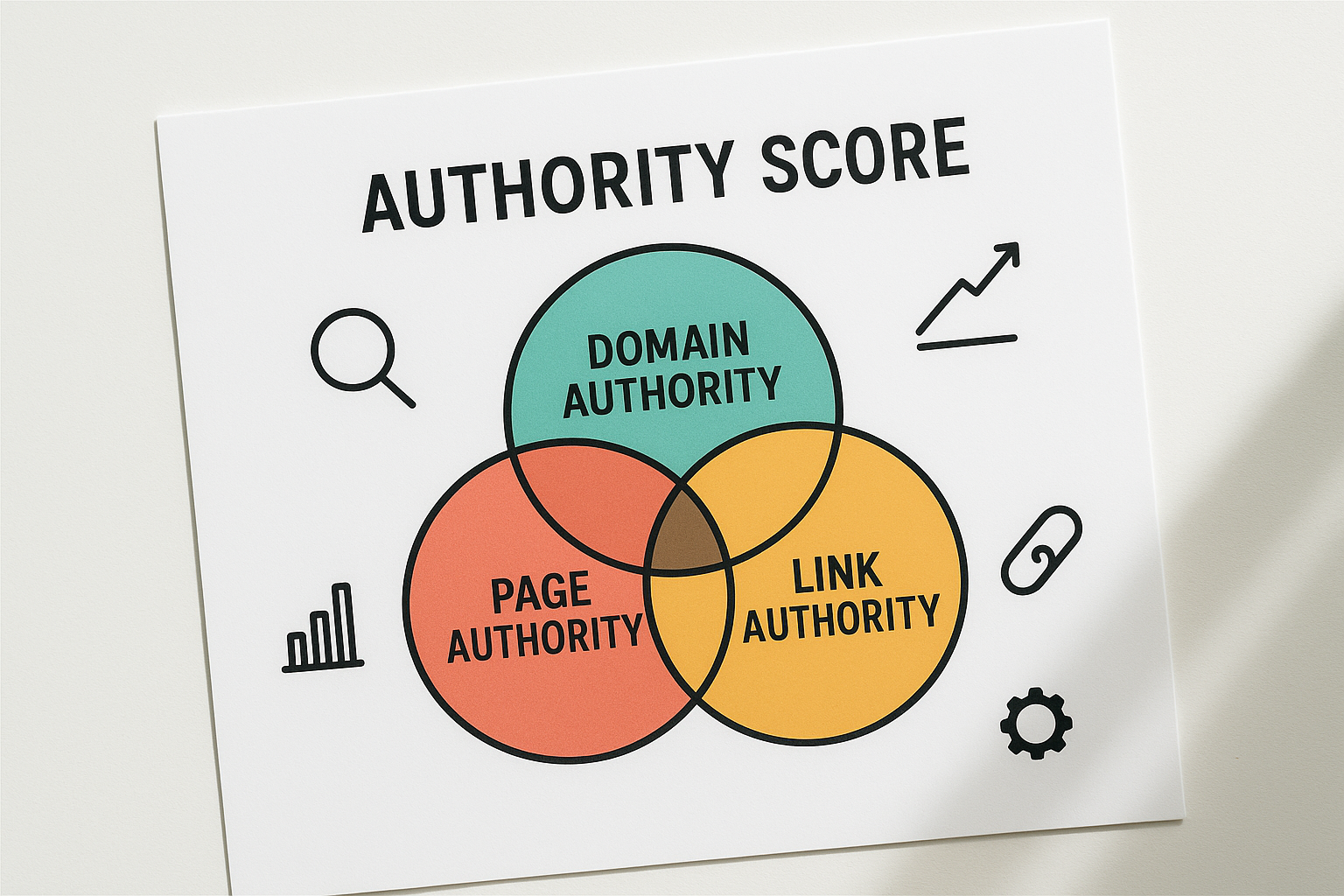
Comparing domain authority with equivalent metrics from Ahrefs, Semrush, and Majestic provides a fuller competitive picture. For a deeper walkthrough, see our Domain Authority Ahrefs: Complete Guide (2024).
Domain Authority and Link Building Strategy
Because domain authority is fundamentally a reflection of your backlink profile, every link-building decision should consider its likely impact on your DA trajectory. Specifically, the following link types have the greatest positive effect:
- Editorial links from high-DA publications — earned naturally when your content is cited as a credible source
- Links from .edu and .gov domains — these carry disproportionate authority due to their trusted, regulated origin
- Niche-relevant backlinks — links from topically aligned sites are weighted more heavily than links from unrelated industries
- Diverse link types — a mix of guest posts, resource page mentions, podcast appearances, and product reviews signals organic growth
- Do-follow vs. no-follow links — while no-follow links do not pass link equity directly, a natural link profile contains both, and a suspiciously 100% do-follow profile can itself trigger spam signals
How Many Linking Root Domains Do You Need?
There is no fixed number of linking root domains required to reach any given DA score, because quality and relevance matter more than raw quantity. However, general patterns emerge across the score range:
- DA 20–30: typically 50–200 unique linking root domains
- DA 30–50: typically 200–1,000 unique linking root domains
- DA 50–70: typically 1,000–10,000 unique linking root domains
- DA 70+: tens of thousands of unique linking root domains, predominantly from high-authority sources
These ranges are approximate and vary significantly by niche. Furthermore, a single link from a DA 90 publication can move your score more than 100 links from DA 20 blogs. As a result, prioritise quality acquisition over volume at every stage.
Why Your Domain Authority Score Might Have Dropped
A sudden or gradual drop in domain authority is alarming — but it is usually explainable. Understanding the common causes helps you respond quickly and accurately.
- Competitors grew faster: Because DA is a relative metric, your score can fall even if your own link profile improved — if competing sites grew more quickly during the same period.
- Lost backlinks: Links from high-DA referring domains that have been removed, redirected, or deindexed directly reduce your score.
- Moz algorithm update: Moz periodically recalibrates its machine learning model, which can shift scores across the entire index — including yours.
- Spam links detected: If Moz’s spam detection identified and discounted a portion of your link profile, the previously inflated score adjusts downward accordingly.
- Domain restructuring: Migrating to a new domain, changing URL structures, or canonicalising multiple domains can temporarily disrupt how Moz indexes your link profile.
In most cases, the appropriate response is to audit your link profile in Moz Link Explorer, identify the root cause, and resume consistent link-building. A short-term drop is rarely cause for panic — especially if organic traffic and rankings remain stable.
Frequently Asked Questions About Domain Authority
What is domain authority?
Domain authority is a score from 1 to 100 developed by Moz that predicts how likely a website is to rank in search engine results pages. It is calculated using a machine learning model that analyses the quality and quantity of backlinks pointing to a domain. The higher the score, the stronger the predicted ranking ability.
Does domain authority directly affect Google rankings?
No. Domain authority is a third-party metric created by Moz and is not part of Google’s ranking algorithm. However, the factors that improve DA — specifically, earning high-quality backlinks — are also key ranking signals in Google’s own algorithm. As a result, improving your domain authority typically correlates strongly with improved search rankings.
What is a good domain authority score?
A DA of 40–50 is considered average to good for an established website. DA 50–60 is strong, and DA 60+ is highly competitive. However, the most meaningful benchmark is your direct competitors — if the top-ranking sites in your niche have DA scores around 45–55, matching or exceeding that range is the practical goal.
How is domain authority calculated by Moz?
Moz uses a machine learning model to evaluate linking root domains, total backlinks, link quality, and Spam Score signals. The model is calibrated against a large dataset of websites and updated regularly as Moz refreshes its link index. The resulting score is logarithmic, meaning gains become progressively harder at higher score levels.
How long does it take to improve domain authority?
Meaningful improvements to domain authority typically take several months of consistent link-building. New sites can reach DA 20–30 within the first year with sustained effort. Pushing from DA 30 to DA 50 generally requires 18–24 months of active backlink acquisition. Above DA 60, progress slows considerably due to the logarithmic scale.
What is the difference between domain authority and page authority?
Domain authority measures the predicted ranking strength of an entire domain or subdomain. Page Authority (PA), by contrast, measures the ranking strength of a single page URL. Both use the same 1-to-100 logarithmic scale. High domain authority generally supports strong page authority, but specific pages can outperform their domain average by attracting concentrated, high-quality backlinks.
Why did my domain authority drop suddenly?
Sudden drops in domain authority are most commonly caused by: competitors gaining backlinks faster, lost backlinks from your own profile, Moz updating its algorithm or index, or spam links being detected and discounted. Because DA is a relative metric, external changes can affect your score without any changes to your own site.
What types of backlinks improve domain authority most?
Editorial links from high-DA, topically relevant domains carry the greatest weight. Links from .edu and .gov domains are particularly valuable due to their trusted status. Mentions from well-known publications, original research citations, and resource page inclusions also contribute significantly. In all cases, link diversity — many unique domains rather than many links from few domains — is critical.
Can toxic backlinks lower my domain authority?
Yes. A high volume of spammy or low-quality backlinks raises your Moz Spam Score, which negatively impacts your domain authority. Using Moz Link Explorer’s Spam Score feature to identify problematic links and disavowing them through Google Search Console helps protect your overall backlink profile.
Is domain authority the same as Ahrefs Domain Rating?
No. Domain authority (DA) is Moz’s proprietary metric, while Domain Rating (DR) is Ahrefs’ equivalent. Both use a 1-to-100 scale but rely on different crawl indexes, weighting algorithms, and data sources. Scores often differ significantly between tools, which is why tracking both provides a more balanced view.
How can I check my domain authority for free?
Visit Moz Link Explorer at moz.com/link-explorer and enter your domain URL. A free account allows a limited number of monthly queries and displays your DA, PA, linking root domains, and top backlinks. Additionally, the free MozBar Chrome extension shows DA and PA scores in your browser as you browse search results or competitor sites.
How many linking root domains do I need to reach DA 50?
There is no fixed number, because link quality and relevance matter more than raw quantity. That said, sites at DA 50 typically have several hundred to a few thousand unique linking root domains from reputable, topically relevant sources. In competitive niches, the authority of those domains matters as much as their total count.
Conclusion: Building Domain Authority for Long-Term SEO Success
Domain authority is not a vanity metric — it is one of the most reliable indicators of your website’s long-term competitive position in organic search. While it is not a Google ranking factor, the backlink quality and diversity that drive your DA score are precisely the signals that Google rewards most. Therefore, improving your domain authority and improving your actual rankings are, in practice, the same goal pursued through the same activities.
Specifically, the path to a higher DA involves auditing your existing link profile, removing or disavowing toxic links, creating genuinely valuable content that attracts editorial links, building strategic partnerships with high-authority publishers, and monitoring your progress consistently each month. Furthermore, understanding how domain authority compares to competing metrics like Ahrefs Domain Rating and Semrush Authority Score helps you make better-informed, tool-agnostic decisions.
Above all, use domain authority as a directional benchmark against your direct competitors — not as an end goal in itself. A DA of 50 means nothing in isolation; it means everything when the sites outranking you sit at 48 and 52. For additional strategic guidance on building authority at every stage of your SEO journey, RankAuthority provides actionable resources backed by real-world data.

