
Moz authority is a proprietary SEO metric developed by Moz that scores a website’s likelihood to rank on search engine results pages on a scale from 1 to 100. If you are serious about SEO, understanding this score is essential — because it gives you a fast, comparable benchmark for your site’s overall link-based strength.
However, many site owners misunderstand what the score actually measures and how to move it in the right direction. In this guide, you will learn exactly how Moz authority works, what influences it, and the proven strategies that build it sustainably over time.
Direct Answer: Moz authority (Domain Authority, or DA) is a logarithmic score from 1 to 100 that estimates how well a website will rank in search results, based primarily on the quality and quantity of its backlink profile. It is a comparative tool, not a Google ranking factor.
How Does Moz Authority Actually Work?
Moz calculates Domain Authority using a machine learning model that analyzes dozens of signals within a site’s link profile. The most important factor is the number of unique linking root domains — meaning distinct websites that link to yours at least once. Additionally, the quality and trustworthiness of those linking sites carry significant weight.
Because the scale is logarithmic, early gains are relatively easy to achieve. For example, moving from a DA of 10 to 30 requires far less effort than moving from 60 to 70. As a result, patience and consistency are non-negotiable at higher score ranges.
It is also worth noting that DA is recalibrated regularly as Moz updates its index. Therefore, your score can fluctuate even if your link profile has not changed, simply because the broader competitive landscape shifted.
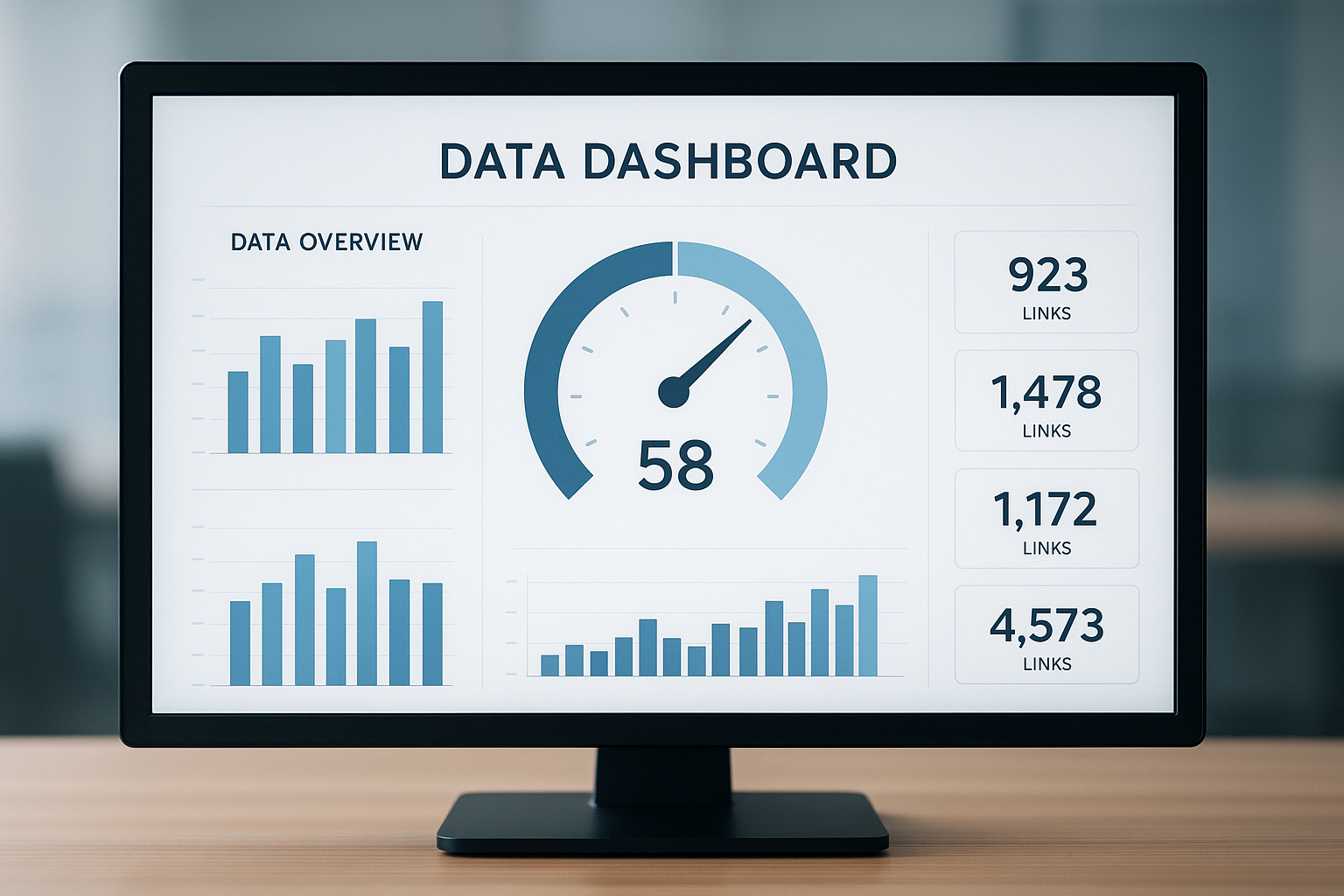
A typical Moz authority dashboard view showing Domain Authority on a 1-to-100 scale alongside backlink statistics.
Domain Authority vs. Page Authority: Key Differences
Moz offers two closely related metrics that are often confused. Domain Authority (DA) measures the ranking strength of an entire website, while Page Authority (PA) evaluates the strength of a single URL. Both use the same 1-to-100 scale and the same underlying methodology.
In practice, a site can have a relatively modest DA but still have individual pages with high PA if those specific pages have attracted strong backlinks. Therefore, when evaluating a competitor or a link opportunity, checking both metrics gives you a more complete picture.
What Score Should You Aim For?
There is no universal target DA score. Instead, the right benchmark is relative to your niche and your direct competitors. If your top three competitors average a DA of 35, reaching DA 40 puts you in a strong position. In contrast, targeting a DA of 40 in a competitive financial niche where rivals sit at 75 would still leave you at a disadvantage.
As a general reference, according to widely accepted SEO practice, scores can be interpreted roughly as follows:
Five Proven Strategies to Build Your Score
Improving your DA requires a deliberate, long-term approach. Because the metric is driven primarily by backlinks, every strategy below is designed to earn high-quality links from authoritative sources.
1. Earn Links from High-DA Websites
A single backlink from a website with a DA of 75 carries far more weight than dozens of links from DA 15 blogs. Therefore, focus your outreach on authoritative publications, industry associations, and educational institutions. Digital PR campaigns — such as original research or data studies — are especially effective at earning these high-value placements.
2. Publish Link-Worthy Content Assets
Content that earns links naturally includes original research, comprehensive guides, free tools, and data visualizations. Additionally, regularly updating existing posts keeps them relevant and increases the chance other sites will reference them over time.
3. Use Strategic Guest Posting
Guest posting on reputable sites within your niche remains one of the most reliable link-building tactics. However, prioritize relevance and editorial quality over volume. A guest post on a niche-relevant DA 50 site is more valuable than ten posts on unrelated DA 20 blogs.
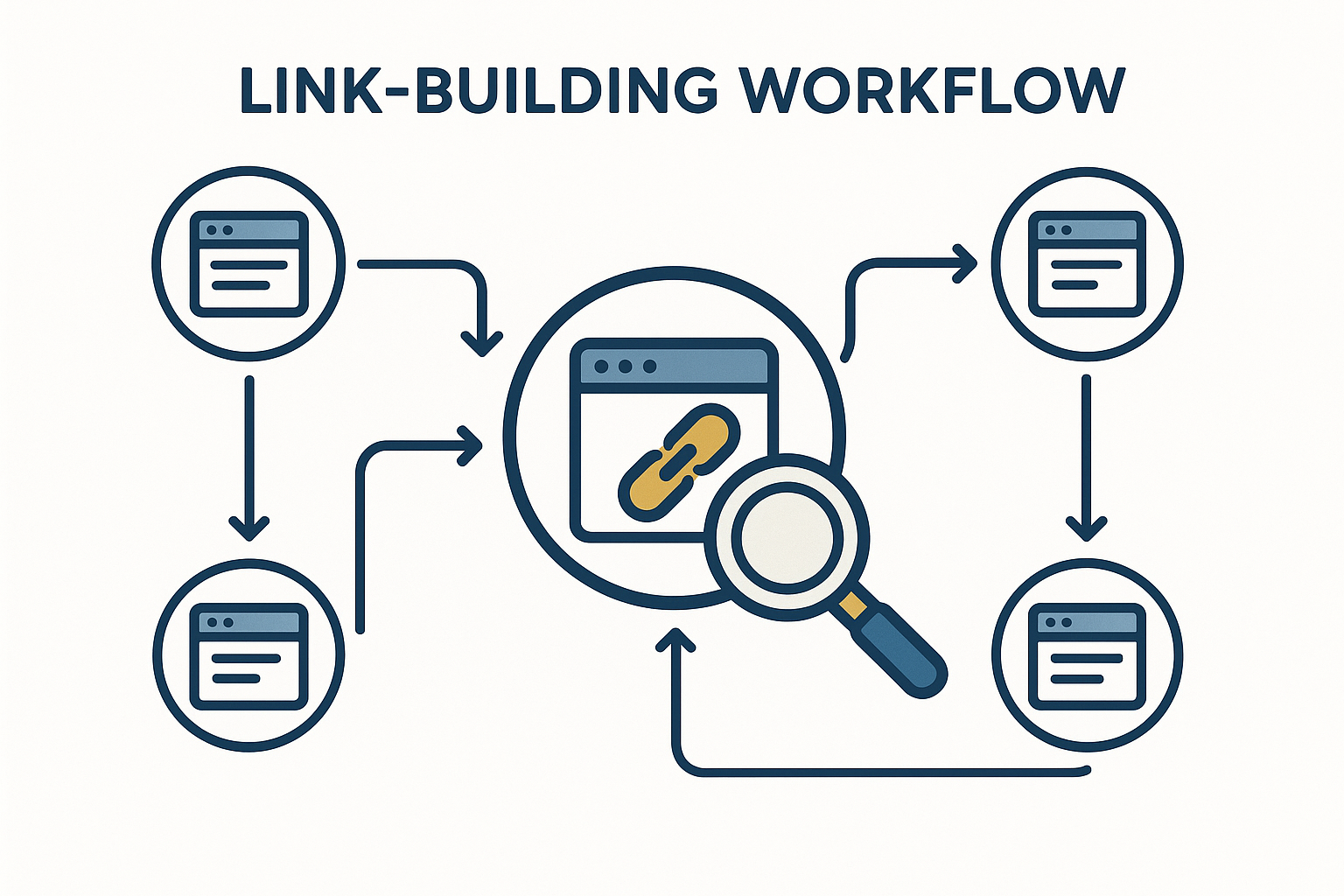
A strategic link-building workflow is the backbone of any plan to grow Moz authority over time.
4. Audit and Remove Toxic Backlinks
Spammy or low-quality backlinks can drag your DA down over time. Consequently, running a regular backlink audit using Moz Link Explorer or a similar tool helps you identify harmful links. When you cannot get them removed manually, using Google’s Disavow Tool protects your profile from their negative influence.
5. Strengthen Your Internal Link Structure
Internal links distribute link equity across your site, helping important pages accumulate more authority. Furthermore, a logical site structure signals to search engines that your content is well-organized and comprehensive. For practical guidance on tracking these efforts, resources like RankAuthority can help you monitor progress across multiple SEO signals at once.
Common Mistakes That Stall Your Progress
Many site owners make avoidable errors that slow or reverse their DA growth. First, buying cheap backlinks from link farms is one of the most damaging mistakes. Although it may produce a short-term bump, these links are frequently devalued or penalized, ultimately hurting your score.
Second, neglecting content quality means fewer sites will link to you organically. Meanwhile, ignoring competitor backlink analysis means missing easy opportunities to replicate successful link-building strategies in your niche.
Finally, treating DA as a Google ranking factor leads to misaligned priorities. DA is a predictive estimate — not a direct input into Google’s algorithm. Use it as a directional guide, not as the sole measure of SEO success.
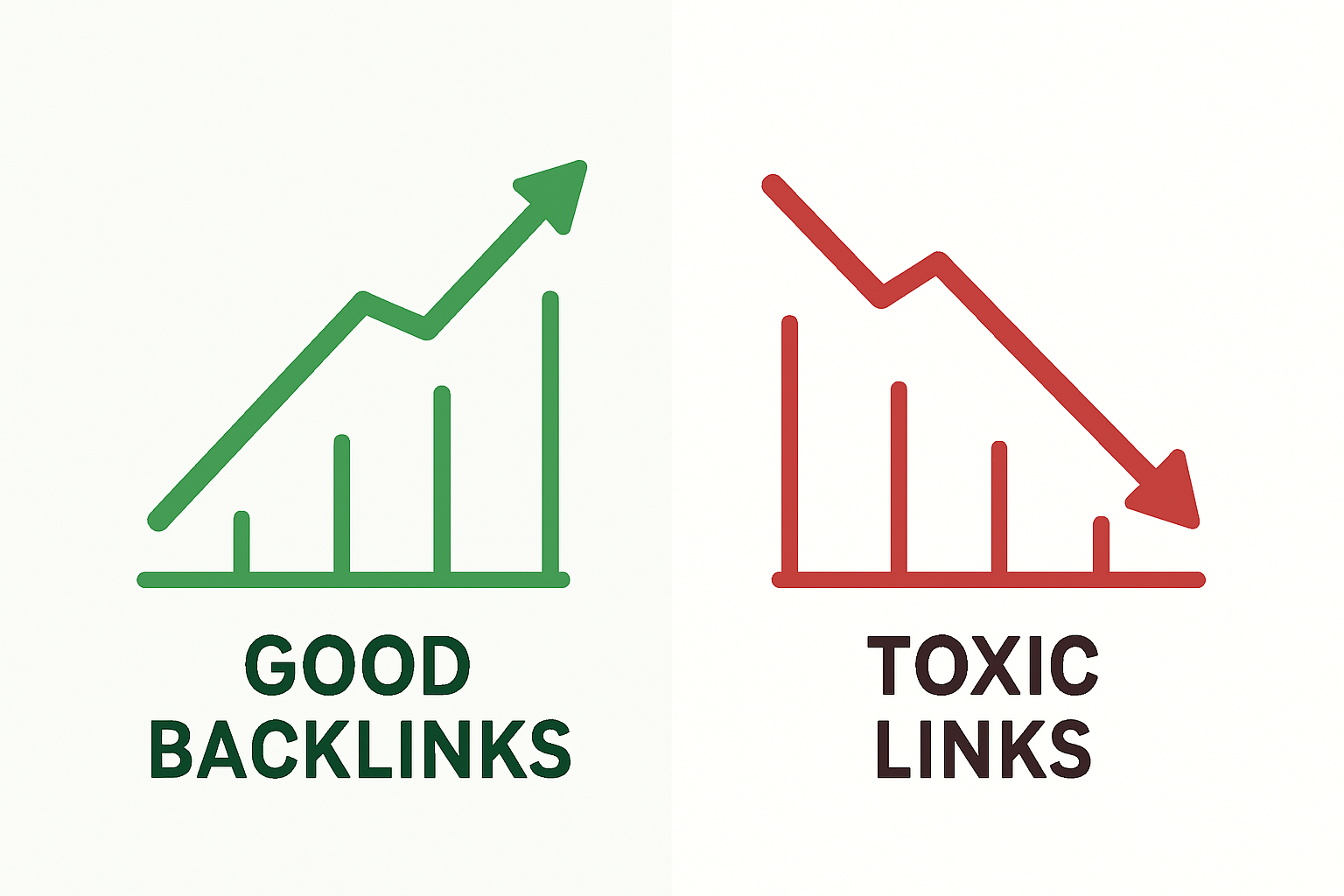
Understanding the difference between quality backlinks and toxic links is critical for protecting your Moz authority score.
Tracking Your Progress Over Time
Consistent monitoring is just as important as active link building. Because DA updates regularly, checking your score monthly gives you a clear picture of whether your efforts are moving the needle. Tools like Moz Link Explorer, the free MozBar extension, and platforms such as RankAuthority make it straightforward to track DA alongside other performance metrics.
Additionally, always benchmark your DA against your top five competitors rather than against an abstract ideal. This competitive framing keeps your goals realistic and actionable. As a result, you spend your time on strategies that actually close the gap in your specific market.
Pro Tip: Set a monthly reminder to export your backlink report and compare it to the previous month. Track new linking root domains gained and any lost links — both numbers tell a richer story than the DA score alone.
Conclusion: Building Moz Authority the Right Way
Moz authority is one of the most widely used benchmarks in SEO, and for good reason — it offers a fast, comparable snapshot of a website’s link-based strength. However, it is most powerful when used as a relative comparison tool rather than an absolute target. By consistently earning high-quality backlinks, publishing genuinely useful content, and auditing your link profile regularly, you can grow your DA in a way that also translates to real improvements in search rankings and organic traffic.
In practice, the sites that win in the long run are not those chasing a number — they are the ones building genuine authority through trust, relevance, and editorial quality.
Frequently Asked Questions About Moz Authority
What is Moz authority?
Moz authority, commonly called Domain Authority (DA), is a proprietary score developed by Moz that ranges from 1 to 100 and predicts how likely a website is to rank on search engine results pages. Higher scores indicate stronger ranking potential based on backlink quality and quantity.
Who created the Domain Authority metric?
Domain Authority was created by Moz, an SEO software company founded in Seattle. Moz developed the metric as a way to benchmark a website’s ranking strength against competitors using a logarithmic scale.
What is a good Moz Domain Authority score?
A DA score above 40 is generally considered good for most small to medium businesses, while scores above 60 are strong and above 80 are excellent. Context matters most — a DA of 30 can be very competitive in a low-authority niche.
How is Moz Domain Authority calculated?
Moz calculates Domain Authority using a machine learning model that factors in the number of linking root domains, the quality of those backlinks, and the overall link profile. The score is logarithmic, making it harder to improve at higher levels.
What is the difference between Domain Authority and Page Authority?
Domain Authority measures the ranking strength of an entire website, while Page Authority (PA) measures the ranking strength of a single specific page. Both use the same 1-to-100 scale and are calculated by Moz.
Does Google use Moz authority as a ranking factor?
No, Google does not use Moz Domain Authority as a ranking factor. DA is a third-party metric created by Moz to estimate ranking potential. Google uses its own internal PageRank and hundreds of other signals that are not publicly disclosed.
How long does it take to improve Domain Authority?
Improving Domain Authority typically takes three to twelve months of consistent link-building and content efforts. Because the score is logarithmic, gains become progressively slower as you move from a DA of 50 toward 80 or above.
Can my Domain Authority score drop?
Yes, your DA score can drop if competitors earn more high-quality backlinks than you, if your existing backlinks are removed, or if Moz updates its scoring algorithm. Regular monitoring helps you catch unexpected drops early.
What is the fastest way to increase Moz authority?
The fastest legitimate way to increase Moz authority is to earn backlinks from high-DA websites through tactics like digital PR, guest posting, and creating link-worthy content assets. Avoiding toxic links and disavowing spammy ones also protects your score.
How do I check my Moz Domain Authority score?
You can check your DA score for free using the Moz Link Explorer tool at moz.com or by using the MozBar browser extension. Third-party SEO platforms like RankAuthority also display DA alongside other key metrics.
What is a linking root domain and why does it matter?
A linking root domain is a unique website that links to your site at least once. Moz places heavy emphasis on the number of unique linking root domains because they signal broad trust across the web, which is more valuable than many links from the same site.
Is a higher Domain Authority always better?
Not always in absolute terms. DA is most useful as a relative comparison tool. A site with DA 35 in a niche where competitors average DA 25 is well-positioned, while the same score in a highly competitive niche may be insufficient.
What common mistakes hurt Domain Authority?
Common mistakes include buying low-quality backlinks, ignoring toxic link removal, publishing thin or duplicate content, and failing to build internal links. These practices can stall or reverse DA growth over time.