

AI search optimization tools are the software platforms modern brands now depend on to stay visible — not just in classic blue-link results, but inside the AI-generated answers produced by ChatGPT, Perplexity, Google’s AI Overviews, and similar assistants. As a result, these platforms have moved from “nice extra” to core marketing infrastructure in just a couple of years. Specifically, they automate technical work such as structured data markup, content structuring, and AI citation tracking so that brands can compete without hiring a full technical team. This guide goes further than most comparisons on the market: it breaks down exactly what these tools do, how they work step-by-step, what they cost, who should use them, and which features actually move the needle — so you can choose with confidence.
Quick answer: AI search optimization tools are automated platforms that combine traditional SEO with generative engine optimization (GEO) and answer engine optimization (AEO), so content ranks well and gets cited accurately across both classic search results and AI-generated answers.
What Are AI Search Optimization Tools?
In simple terms, AI search optimization tools are automated platforms that help content perform well across both traditional search engines and next-generation AI answer engines. Typically, they monitor rankings, generate structured data (a machine-readable format that tells search engines and AI models exactly what your content means), and track how often a brand’s content is referenced inside AI-generated responses.
Unlike older SEO software, these platforms also watch for AI citation frequency — meaning how often an AI assistant quotes, paraphrases, or links to your content when answering a user’s question. Consequently, they give marketers visibility into a channel that classic rank-tracking tools simply cannot see, which is exactly the blind spot that generic AI writing assistants tend to ignore.
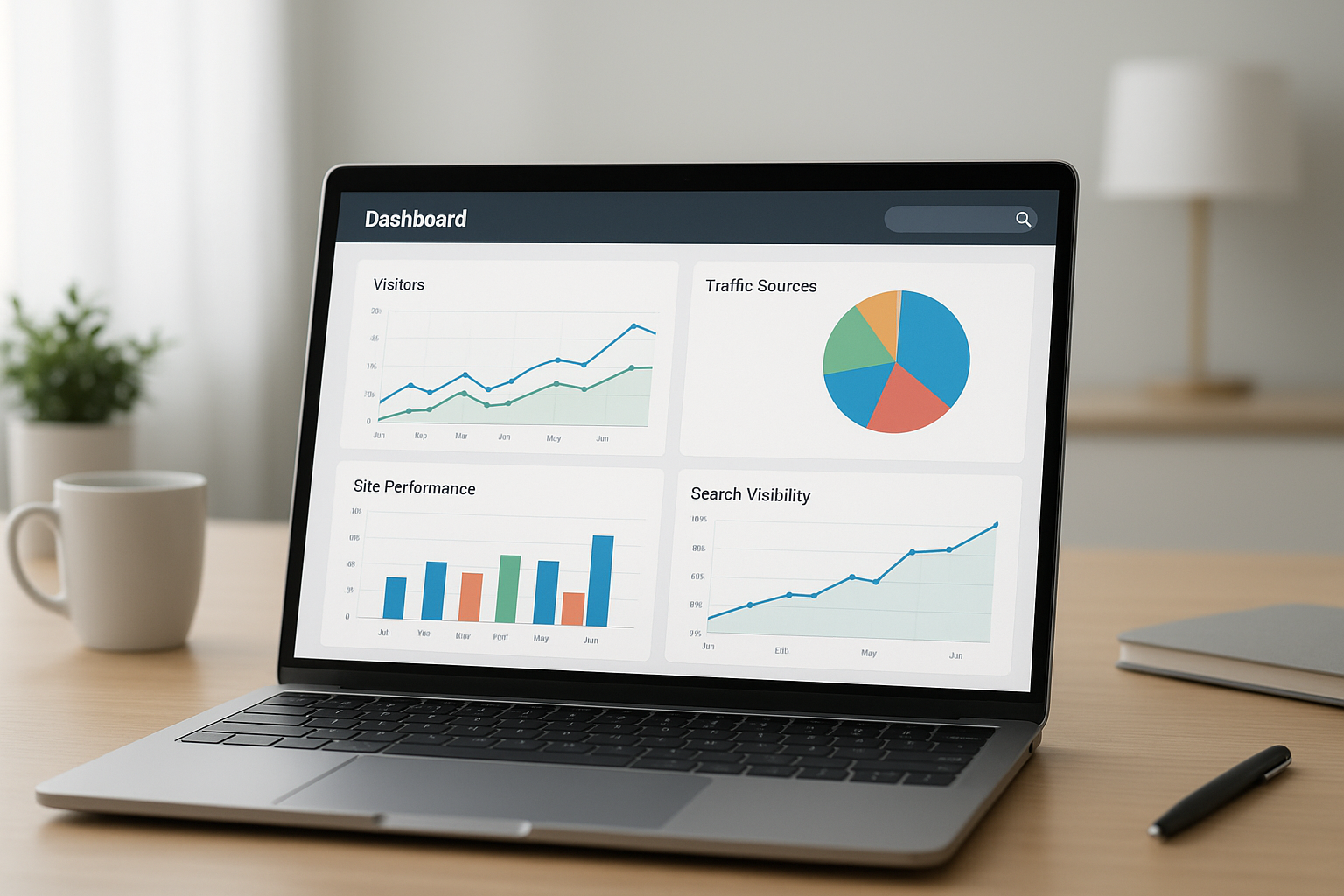
A typical dashboard view inside AI search optimization tools, tracking both traditional rankings and AI citation data.
GEO vs. AEO: Two Sides of the Same Coin
Generative Engine Optimization (GEO) focuses on helping AI models understand and trust content well enough to summarize it accurately. In contrast, Answer Engine Optimization (AEO) focuses specifically on structuring content to directly answer user questions inside voice assistants and chat interfaces.
Most modern AI-powered search optimization software blends both approaches rather than picking one. For a deeper breakdown, see this explainer on AEO as the future of AI search.
Why AI-Powered Search Optimization Matters Right Now
Search behavior is shifting quickly. For example, Gartner has projected that traditional search engine volume could drop significantly as more users turn to AI assistants for direct answers rather than clicking through lists of links.
Because of this shift, businesses that only optimize for classic keyword rankings risk becoming invisible inside AI-generated summaries. Therefore, adopting AI search optimization tools early gives brands a meaningful head start over competitors still relying on outdated methods. You can review broader strategy context in this guide to AI search engine optimization strategies and ROI, or check whether automated search optimization is actually effective before you commit budget to it.
Did you know? Gartner has publicly projected that traditional search engine volume could drop by roughly 25% by 2026 as users shift toward AI chatbots and other virtual agents — underscoring why AI search optimization tools have become a priority rather than an experiment.
AI Search Optimization Tools vs. AI Content Writing Tools
This distinction matters, and it’s often blurred by platforms that only focus on drafting articles. A pure AI writing assistant helps you produce blog posts faster. However, an actual AI search optimization tool does far more: it audits existing pages, generates schema markup automatically, tracks whether AI assistants are citing your brand, and flags content gaps competitors already cover.
In other words, writing content is only one input into visibility. Specifically, a tool that only generates drafts but never checks structured data, citation frequency, or technical crawlability leaves half the job undone. Therefore, when comparing platforms, ask whether the tool merely writes text, or whether it optimizes the entire pipeline from technical setup through AI-answer monitoring.
If you’re unsure which category a platform falls into, this comparison on how to choose the best search optimization tool in 2025 walks through the exact questions to ask a vendor before signing up.
Key Features to Compare in AI Search Optimization Software
Not all platforms are built the same. Specifically, look for these core capabilities before committing to a subscription.
- Automated structured data (schema markup) generation for better machine readability. Learn more in the AI content optimization tools guide for implementation tips.
- AI citation tracking across major assistants like ChatGPT and Perplexity.
- Content gap analysis that highlights missing topics competitors already cover.
- Multi-site management for agencies handling several client properties at once.
- Plain-language reporting that doesn’t require a technical background to interpret.
- Update frequency alerts that flag when AI models change how they source and cite content.
For a closer look at which capabilities move the needle most, this resource on features that improve AI search optimization tools is worth reviewing. Similarly, if you manage rankings across a growing content library, the intelligent SEO tools that boost rankings with AI in 2025 breakdown covers scaling considerations in more depth.
How AI Search Optimization Tools Work
Most platforms follow a similar automated workflow. The steps below outline a typical implementation process from start to finish, and each step builds directly on the one before it.
- Audit current search and AI visibility by checking existing keyword rankings and testing whether AI assistants like ChatGPT or Perplexity already reference your content when users ask related questions.
- Select a platform based on structured data automation, citation tracking depth, reporting clarity, and ease of use relative to your team’s budget and technical comfort level.
- Connect the tool to your website and configure automation settings such as schema generation rules, crawl frequency, and monitoring alerts for citation changes.
- Monitor weekly or monthly reports covering both AI citation frequency and traditional keyword movement, comparing performance against your baseline audit from step one.
- Refine underperforming pages using the data collected, updating thin sections, adding missing structured data, and strengthening topical authority over time through consistent iteration.
Notably, this process mirrors general SEO best practices outlined by Google’s own SEO starter guide, but extends it to account for generative AI outputs as well.

AI search optimization tools help connect website content to the AI systems generating answers for users.
What It Costs: Pricing Breakdown for AI Search Optimization Tools
Pricing varies widely across this category. Therefore, it helps to see typical tiers side by side before requesting a demo.
| Tier | Typical Monthly Price | Best For |
|---|---|---|
| Free / Starter | $0 | Testing basic visibility checks and citation tracking |
| Growth | $50–$150 | Small businesses managing one or two sites |
| Professional | $150–$300 | Marketing teams needing deeper reporting |
| Agency / Enterprise | $300–$500+ | Agencies managing multiple client properties |
Above all, don’t judge a platform on price alone. In particular, check whether you can test the software before paying — this guide on trying search optimization tools for free explains exactly what to expect from trial periods and free tiers.
Best Practices for Using AI Search Optimization Tools Effectively
First, pair automation with human review rather than treating any tool as fully hands-off. Even the most advanced platforms benefit from editorial oversight to preserve brand voice and factual accuracy.
Second, prioritize structured data early, since this markup format — defined by the community-maintained Schema.org vocabulary — helps AI systems parse your content more reliably. Additionally, track content performance across multiple properties if you manage several sites, as explained in this overview of digital optimization tools for AI-powered search success.
Finally, revisit your strategy quarterly. Because AI models update frequently, what worked six months ago may need adjustment today. You can find practical tactics in this guide on how to improve search performance using AI.
Common Mistakes to Avoid
One frequent error is choosing software that tracks only traditional rankings while ignoring AI citation data entirely. Another mistake is neglecting structured data, which limits how well AI crawlers can interpret page content — a concept documented in Mozilla’s MDN Web Docs on HTML fundamentals.
Similarly, some teams set up automation and never revisit reports. However, ongoing monitoring is what separates lasting visibility gains from short-term spikes. Consequently, treat your dashboard as a living document, not a one-time setup task.
Who Should Use AI Search Optimization Tools?
In practice, several types of teams benefit most from adopting this category of software.
- Small business owners who need heavy automation because they lack an in-house technical team.
- Digital marketing agencies managing multiple client sites that require centralized, multi-property dashboards.
- E-commerce brands that need product content cited accurately when shoppers ask AI assistants for recommendations.
- Local service businesses that want to appear when nearby customers ask voice assistants for a provider.
- SaaS and content-heavy publishers that need to defend topical authority against fast-moving competitors.
In short, if your business depends on organic discovery in any form, this category of software is now relevant to you — not just to large enterprises with dedicated SEO staff.
Choosing the Right AI Search Optimization Tools for Your Business
Ultimately, the right choice depends on your team size, technical comfort level, and how many sites you manage. Small business owners often prefer platforms with heavy automation, while agencies may need multi-client dashboards instead.
Platforms such as rankauthority.com offer a 1-Click AI AutoPilot approach designed specifically to remove the technical learning curve, backed by a risk-free seven-day trial so teams can test results before committing. This makes it a practical starting point for small businesses, digital marketers, and agencies alike, and it pairs naturally with the workflow described in the how-to steps above.
Frequently Asked Questions About AI Search Optimization Tools
What are AI search optimization tools?
AI search optimization tools are software platforms that help content rank well in AI-driven search environments such as chatbots, AI Overviews, and answer engines. They combine traditional SEO signals with generative engine optimization techniques.
How do AI search optimization tools differ from traditional SEO tools?
Traditional SEO tools focus mainly on keyword rankings and backlinks for search engine results pages. AI search optimization tools also track how content is cited or summarized inside AI-generated answers.
How are AI search optimization tools different from AI content writing tools?
AI content writing tools focus on drafting text. In contrast, AI search optimization tools cover the full pipeline: structured data automation, citation tracking, content gap analysis, and ongoing visibility monitoring across AI answer engines.
Why are AI search optimization tools important in 2025?
They matter because a growing share of search traffic now flows through AI assistants instead of classic blue-link results. Brands that ignore this shift risk losing visibility as user behavior changes.
What is Generative Engine Optimization (GEO)?
GEO is the practice of structuring content so generative AI systems can understand, trust, and cite it accurately. It focuses on clarity, structured data, and authoritative sourcing.
What is Answer Engine Optimization (AEO)?
AEO prepares content to directly answer user questions inside voice assistants, chat interfaces, and featured snippets. It relies heavily on concise answers and question-based headings.
How much do AI search optimization tools cost?
Pricing varies widely, ranging from free basic checkers to monthly subscriptions of $50 to $500 depending on automation depth and the number of sites managed. Many platforms, including rankauthority.com, offer a risk-free trial period before committing.
How long does it take to see results from AI search optimization?
Most businesses see measurable movement in AI citation frequency within four to eight weeks. Full authority-building results typically take three to six months of consistent optimization.
Can small businesses benefit from AI search optimization tools?
Yes, small businesses often benefit the most since automated platforms remove the need for in-house technical expertise. This levels the playing field against larger competitors with bigger marketing teams.
Do AI search optimization tools work for e-commerce and local businesses?
Yes. E-commerce brands use them to get product content cited accurately in AI shopping recommendations, while local businesses use them to appear when nearby customers ask voice assistants for a service provider.
What common mistakes should I avoid when choosing AI search optimization tools?
A common mistake is choosing a tool that only tracks traditional rankings without monitoring AI answer citations. Another is ignoring structured data support, which limits how well AI systems can parse your content.
Do AI search optimization tools replace human content writers?
No, these tools automate technical and structural optimization but still benefit from human oversight for tone, accuracy, and brand voice. The best results come from combining automation with editorial review.
What features matter most in AI search optimization tools?
Key features include structured data automation, AI citation tracking, content gap analysis, and multi-site management. Ease of use also matters for teams without dedicated technical staff.
How do AI search optimization tools measure success?
Success is typically measured through AI citation frequency, share of voice inside generated answers, and organic traffic growth. Some platforms also track brand mention sentiment across AI outputs.
Is 1-Click automation reliable for AI search optimization?
Automated platforms like the 1-Click AI AutoPilot approach are designed to handle repetitive technical work reliably while flagging strategic decisions for user review. This reduces manual errors compared to fully manual optimization.
Final Thoughts
In summary, AI search optimization tools have moved from a nice-to-have to a core part of any modern visibility strategy. They combine traditional SEO fundamentals with newer GEO and AEO techniques so content can be found and cited across both classic search engines and AI-powered answer platforms.
As AI search technologies continue to reshape how people find information, businesses that invest in reliable, well-featured AI search optimization tools now will be better positioned for sustained visibility later. Consequently, taking the time to compare platforms, test trial periods, and monitor results consistently pays off well beyond the initial setup effort.

