

Performance-driven SEO tools are the backbone of any modern strategy built to win visibility in both traditional search engines and AI-powered answer engines. Unlike static keyword trackers, these platforms combine automation, real-time data, and measurable outcomes to help businesses climb rankings faster than manual methods allow. In this guide, we’ll break down what performance-driven SEO tools actually do, how to choose the right one, and why platforms built for automation are reshaping how brands compete for search visibility. Last updated: 2026-07-30. Author: RankAuthority SEO team.
Quick answer: Performance-driven SEO tools are automated platforms that track, analyze, and improve search rankings using real-time performance data instead of manual guesswork. They help businesses save time, reduce errors, and adapt quickly as both traditional and AI-powered search algorithms evolve.
What Are Performance-Driven SEO Tools?
Performance-driven SEO tools are software platforms that use data, automation, and measurable KPIs — key performance indicators, or metrics used to track progress — to improve a website’s search rankings. Rather than relying on guesswork, these tools continuously analyze real ranking signals and adjust strategy accordingly. For example, automated systems can audit a site, flag technical issues, and optimize content within minutes rather than days.
In particular, this approach matters because search itself has changed. As a result, businesses now need tools that account for both classic search engine results pages and AI-generated summaries. If you’re wondering whether these systems can fully replace manual work, this breakdown on relying on automated tools for SEO success covers that question in depth.

Performance-driven SEO tools turn raw ranking data into best SEO tool.
Why Performance-Driven SEO Tools Matter in the AI Search Era
Search behavior has shifted dramatically over the past few years. Specifically, more users now get answers directly from AI Overviews, chatbots, and voice assistants instead of clicking through ten blue links. Google alone processes more than 8.5 billion searches every day, and a growing share of those queries now trigger AI-generated summaries rather than traditional listings, according to Google’s own search documentation.
Consequently, businesses that ignore this shift risk losing visibility even if their traditional rankings look strong. Similarly, Generative Engine Optimization (GEO) and Answer Engine Optimization (AEO) — practices focused on making content easy for AI systems to summarize and cite — have become essential, not optional. To understand what these AI-focused approaches look like in practice, see this overview of digital optimization tools built for AI-powered search.
SEO Software That Adapts in Real Time
Above all, the defining trait of modern SEO software is responsiveness. When rankings shift, the best tools flag the change immediately and suggest corrective action. This is a marked contrast to older reporting tools that simply logged historical data without offering next steps.
Key Features to Look for in Performance-Driven SEO Software
Not every SEO platform delivers the same value, so it helps to know what separates a genuinely useful tool from one that just generates noise. In general, the strongest platforms share a few core characteristics.
- Automated technical audits: Continuous scans for crawl errors, broken links, and page speed issues.
- AI content optimization: Suggestions that align content with both keyword intent and AI answer formatting.
- Real-time rank tracking: Live updates instead of weekly or monthly snapshots.
- Multi-site management: Useful for agencies overseeing several client properties at once.
- Clear reporting dashboards: Data presented in a way non-experts can act on immediately.
Furthermore, tools that support automated content optimization can significantly reduce the manual editing workload for marketing teams. If you’d like a deeper comparison of options in this category, this guide to tools that support automated content optimization is a useful next read.
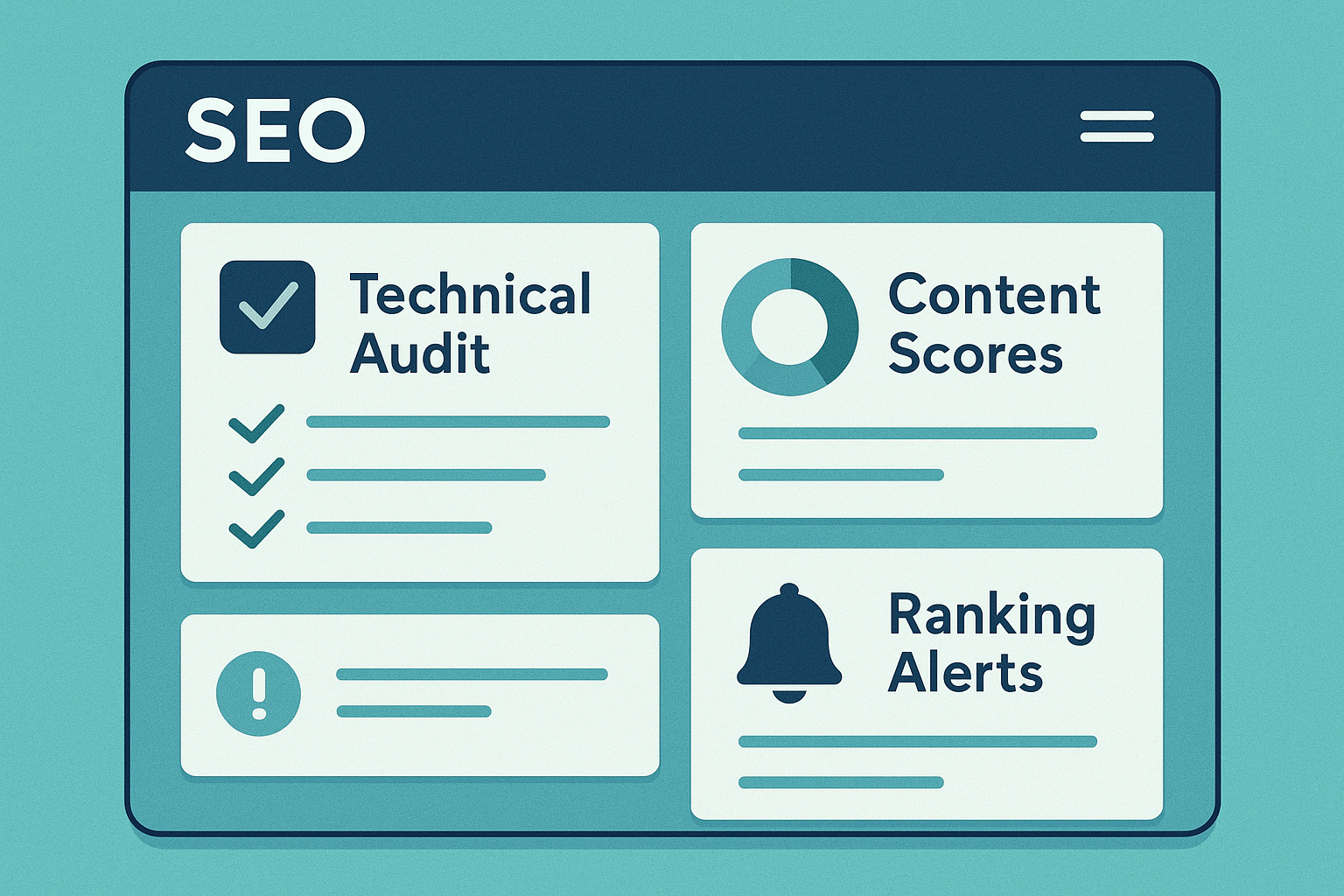
Automated audits and content scoring are core features of reliable SEO software.
How Performance-Driven SEO Tools Work: A Step-by-Step Process
Understanding the mechanics behind these platforms makes it easier to use them effectively. Here is a general five-step process most performance tracking tools follow.
- Audit current search performance. Run a full technical and content audit to identify existing ranking gaps, broken links, and missed AI search opportunities before making any changes.
- Automate technical fixes and content optimization. Use the tool’s automated engine to resolve technical issues and optimize on-page content for both keyword relevance and AI readability.
- Monitor rankings and AI visibility continuously. Set up ongoing tracking dashboards to monitor keyword positions, AI Overview appearances, and organic traffic trends in real time.
- Adjust strategy using performance data. Review regular performance reports and shift content priorities based on which pages are gaining or losing visibility across search engines.
- Scale optimization across multiple pages or sites. Once results stabilize, expand the same automated workflow to additional pages or client websites to multiply ranking gains efficiently.
This process mirrors what’s outlined in this complete guide to automated search ranking tools, which walks through implementation in more detail.
Choosing the Right Automated SEO Ranking Tools
With so many platforms on the market, choosing wisely matters just as much as using the tool correctly. Therefore, automate your SEO process rather than chasing the tool with the longest feature list.
For small businesses managing one website, a simpler dashboard with automated audits may be enough. In contrast, agencies overseeing multiple client sites typically need multi-property management, white-label reporting, and bulk optimization features. RankAuthority’s 1-Click AI AutoPilot technology, for instance, is designed to automate both the technical and strategic layers of GEO and AEO for exactly this range of users, from solo entrepreneurs to full-service agencies, and it’s worth exploring directly at rankauthority.com.
Comparing Competitive Options
Before committing, it also helps to compare several platforms side by side. This roundup of competitive SEO tools dominating search in 2025 is a practical starting point for that comparison.
Common Mistakes When Using SEO Optimization Tools
Even the best software can underperform when used incorrectly. One common mistake is treating a tool as a “set it and forget it” solution rather than an ongoing process that needs periodic strategy review.
Another frequent issue is ignoring AI search signals entirely and focusing only on traditional keyword rankings. As search engine optimization has evolved into a discipline that spans both classic algorithms and AI answer systems, according to Wikipedia’s overview of SEO, tools that only address one side of that equation leave visibility gains on the table.
Frequently Asked Questions About Performance-Driven SEO Tools
What are performance-driven SEO tools?
Performance-driven SEO tools are software platforms that use automation, real-time data, and measurable KPIs to improve search rankings. They differ from static tools by continuously adjusting strategy based on actual performance signals.
How do performance-driven SEO tools differ from traditional SEO software?
Traditional SEO software often relies on manual audits and periodic reports, while performance-driven tools automate ongoing optimization based on live ranking data. This makes them faster to adapt when search algorithms change.
Why are performance-driven SEO tools important for AI search visibility?
AI-powered answer engines rank content differently than traditional search, prioritizing structured, authoritative signals. Performance-driven tools help align content with these new ranking factors automatically.
How much do performance-driven SEO tools typically cost?
Pricing varies widely, from free basic trackers to premium automated platforms costing $50 to $500 per month. Most reputable platforms offer a risk-free trial before committing to a paid plan.
Can small businesses benefit from automated SEO tools?
Yes, small businesses often benefit the most because automation removes the need for in-house SEO expertise. As a result, owners can compete with larger brands without hiring a full marketing team.
How long does it take to see results from SEO automation tools?
Most businesses notice initial visibility improvements within four to eight weeks, though full ranking gains typically take three to six months. Results depend on site history, competition, and content quality.
What features should I look for in an SEO ranking tool?
Look for real-time rank tracking, automated technical audits, AI content optimization, and clear performance dashboards. Above all, the tool should translate data into specific, actionable steps.
Are performance-driven SEO tools suitable for agencies managing multiple clients?
Absolutely, many platforms are built specifically for multi-site management with client reporting features. This allows agencies to scale optimization work without proportionally increasing staff hours.
What is the biggest mistake businesses make with SEO automation?
The most common mistake is treating automation as a one-time setup rather than an ongoing process. SEO tools still require periodic review of goals and content strategy to stay effective.
Do performance-driven SEO tools work for AI-powered search engines like AI Overviews?
Yes, many modern tools now include Generative Engine Optimization and Answer Engine Optimization features specifically for AI Overviews and chat-based search. This helps content surface in both traditional results and AI-generated summaries.
How do I measure the success of an SEO tool?
Track organic traffic growth, keyword ranking improvements, and AI search appearances over consistent time periods. Comparing these metrics before and after implementation shows the tool’s real impact.
Is a free trial enough to evaluate performance-driven SEO tools?
A seven-day trial is often enough to test setup ease, dashboard clarity, and initial audit accuracy, though ranking changes take longer to fully materialize. Use the trial period to assess usability rather than final results.
Final Thoughts
In summary, performance-driven SEO tools have become essential as search continues shifting toward AI-generated answers alongside traditional results. By automating audits, content optimization, and rank tracking, these platforms free up time while consistently pointing toward the actions that actually move rankings. Whether you’re a solo business owner or an agency managing multiple client sites, choosing a tool that adapts to both classic and AI search environments will keep your content visible as the landscape keeps evolving.

