AI SEO Services: Strategy, Tools, and Results in 2026AI SEO Services: The 2026 Playbook for Growth
AI SEO services turn search data and content into predictable growth. They combine machine learning, automation, and expert strategy to improve rankings, traffic, and revenue. As a result, teams move faster with fewer guesswork loops.
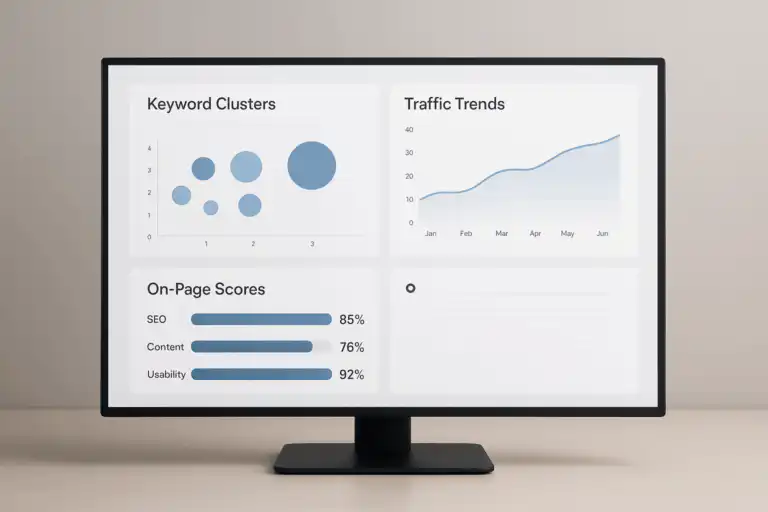
 A clear dashboard makes AI SEO services easy to trust and act on.
What Are AI SEO Services?
In simple terms, AI SEO services blend human expertise with algorithms that learn from your market. They forecast demand, cluster keywords, and recommend content that matches search intent. Therefore, your team publishes the right page at the right time.
These services usually include research automation, on-page optimization, content generation support, internal linking, and technical checks. Additionally, they monitor competitors and surface quick wins. The result is a system that scales without sacrificing quality.
For a deeper overview and practical resources, explore RankAuthority. Their guides outline how to roll out AI-led workflows while staying aligned with business goals.
How AI SEO Services Drive Results
Great outcomes come from precise inputs. First, models group semantically related queries into clusters that map to topics, not single keywords. Next, content briefs translate those clusters into outlines, FAQs, and internal link suggestions. Consequently, writers focus on substance rather than guesswork.
Second, AI systems evaluate pages against intent and E‑E‑A‑T signals. They assess clarity, depth, and citations, then flag gaps. However, humans still make final calls on tone, nuance, and brand style. This balanced approach keeps quality high and risk low.
Google’s documentation stresses helpful, people‑first content. Therefore, align your process with their guidance and avoid shortcuts that chase algorithms alone. Review the official Search Essentials to stay compliant and effective (Google Search Central).
 Teams collaborate on briefs and links while AI speeds the heavy lifting.
Building Your AI‑Powered SEO Stack
Choose tools that cover research, content, optimization, and reporting. Additionally, ensure they integrate with your CMS and data warehouse. This reduces manual copying and prevents version chaos.
Core Capabilities to Include
- Topic and keyword clustering with intent labeling.
- Automated content briefs with headings, FAQs, and entities.
- On‑page scoring tied to search intent and readability.
- Internal link suggestions that strengthen topical authority.
- Technical audits that catch crawls, speed, and structure issues.
- Dashboards that surface ROI, not just visits.
If you need a vetted setup, compare tool stacks and playbooks from RankAuthority. Their recommendations emphasize measurable outcomes over vanity metrics.
A Step‑by‑Step Workflow Using AI
1) Discover Opportunities
Start with clustering and opportunity scoring. Prioritize topics by potential revenue, not only volume. Consequently, your roadmap supports sales and product priorities.
2) Build the Brief
Use AI to draft outlines, headings, and questions users ask. Moreover, pull sources that writers can verify. This keeps speed high while preserving accuracy.
3) Draft and Edit
Writers create the first pass, then refine with AI suggestions. However, they keep brand voice consistent and remove fluff. Therefore, each paragraph delivers value.
4) Optimize and Interlink
Apply entity suggestions, add descriptive alt text, and insert relevant internal links. Additionally, ensure calls to action fit user intent on every page. Small details compound into stronger rankings.
5) Publish and Learn
Ship quickly, then monitor impressions, CTR, and conversions. As a result, you learn which topics deserve more content and links. Rinse, improve, and expand.
Measuring ROI from AI‑Driven SEO
Leaders need clarity on returns. Therefore, agree on KPIs ahead of production. Useful metrics include non‑brand clicks, assisted conversions, pipeline influenced, and content efficiency (revenue per article). Additionally, track time‑to‑publish and cost per page, since automation should lower both.
Tie dashboards to your CRM so channel value is visible. Meanwhile, annotate releases and algorithm events to explain swings. With this data, AI SEO services prove impact beyond traffic alone.
 Consistent improvements show how AI SEO services compound over time.
Choosing a Partner for AI SEO Services
Selecting a vendor should feel rigorous. Ask for their data model, feature roadmap, and case studies tied to revenue. Additionally, request a pilot with success criteria before a longer contract. This approach lowers risk and builds trust.
Consider how the provider collaborates with your in‑house experts. Do they train writers, SEOs, and developers to use the system daily? Furthermore, do they adapt to your analytics stack and reporting needs? A strong AI SEO services partner will align with your workflows, not force a rebuild.
Compliance, Content Quality, and Risk
AI helps with speed; humans safeguard credibility. Therefore, institute editorial standards, source checks, and review steps. For example, require citations for claims and keep notes on data assumptions. Moreover, schedule periodic audits to prevent drift from user needs.
Finally, respect search guidelines and accessibility. Use descriptive alt text, readable headings, and clear language. As a result, your content works for users and search engines alike.
Conclusion: Scale Smart with AI SEO Services
When used well, AI SEO services deliver faster research, stronger content, and measurable growth. Start with a focused stack, follow a clear workflow, and track ROI. Additionally, lean on resources like RankAuthority to accelerate adoption. With this approach, you scale search performance and protect quality.