
2025 Complete Guide
“AI answer engines are rewriting who gets found — and who gets ignored. This checklist ensures you’re found.”
The on-page SEO checklist for AI answers is a structured set of content, technical, and formatting optimizations designed to help your web pages get cited, quoted, and featured by AI-powered search tools — including Google’s AI Overviews, Perplexity, ChatGPT, and emerging answer engines. Unlike a traditional SEO checklist, this framework targets how large language models (LLMs) read, parse, and extract meaning from your pages, not just how crawlers index them.
Direct Answer
An on-page SEO checklist for AI answers covers title tags, structured data, direct answer blocks, entity clarity, heading hierarchy, and conversational keyword use. Together, these signals tell AI engines that your content is authoritative, well-structured, and directly answers real user questions — making it far more likely to be surfaced in AI-generated responses.
What Is an On-Page SEO Checklist for AI Answers?
Traditional on-page SEO was built for a world of ten blue links. You optimized your title tag, stuffed in keywords, built some backlinks, and hoped to land on page one. That world still exists — but it now shares the stage with AI Overviews, zero-click answers, and LLM-powered assistants that synthesize information before a user ever clicks a result.
The on-page SEO checklist for AI answers bridges both worlds. It ensures your pages satisfy classic ranking factors and meet the structural, semantic, and clarity requirements that AI engines use to decide which sources to cite. According to research on search engine optimization principles, content relevance and structure have always driven rankings — AI search simply raises the bar on both.

A well-structured on-page SEO checklist for AI answers connects your content directly to how AI engines extract and cite information.
The Complete On-Page SEO Checklist for AI Answers
Work through each section below. Every item has a direct impact on whether AI systems surface your content — or your competitor’s.
1
Title Tag and Meta Description Optimization
- Include the primary keyword naturally in the title tag (50–60 characters)
- Write a meta description that answers the core question directly (120–156 characters)
- Avoid clickbait — AI engines favor titles that match content precisely
- Use sentence-style clarity: what the page is, who it helps, what they’ll learn
2
Heading Structure and Semantic Hierarchy
- Use one H1 (handled by your CMS), then H2s for major topics, H3s for subtopics
- Phrase at least one heading as a direct question (e.g., “What is…?”, “How does…?”)
- Include the focus keyword in at least one H2 or H3
- Keep headings descriptive — LLMs use them to understand page structure
- Avoid skipping heading levels (H2 → H4 creates confusion for parsers)
3
Direct Answer Blocks
- Place a 1–3 sentence direct answer immediately after the opening paragraph
- Answer the primary question the page targets — no preamble
- Use plain, definitive language: “X is…”, “To do Y, you must…”
- Format with a visually distinct block (border, background color) to signal importance
4
Schema Markup and Structured Data
- Add FAQPage schema for any Q&A sections
- Use Article or BlogPosting schema on all editorial content
- Add HowTo schema for step-by-step guides
- Ensure schema matches actual on-page content exactly
- Validate using Google’s Rich Results Test before publishing
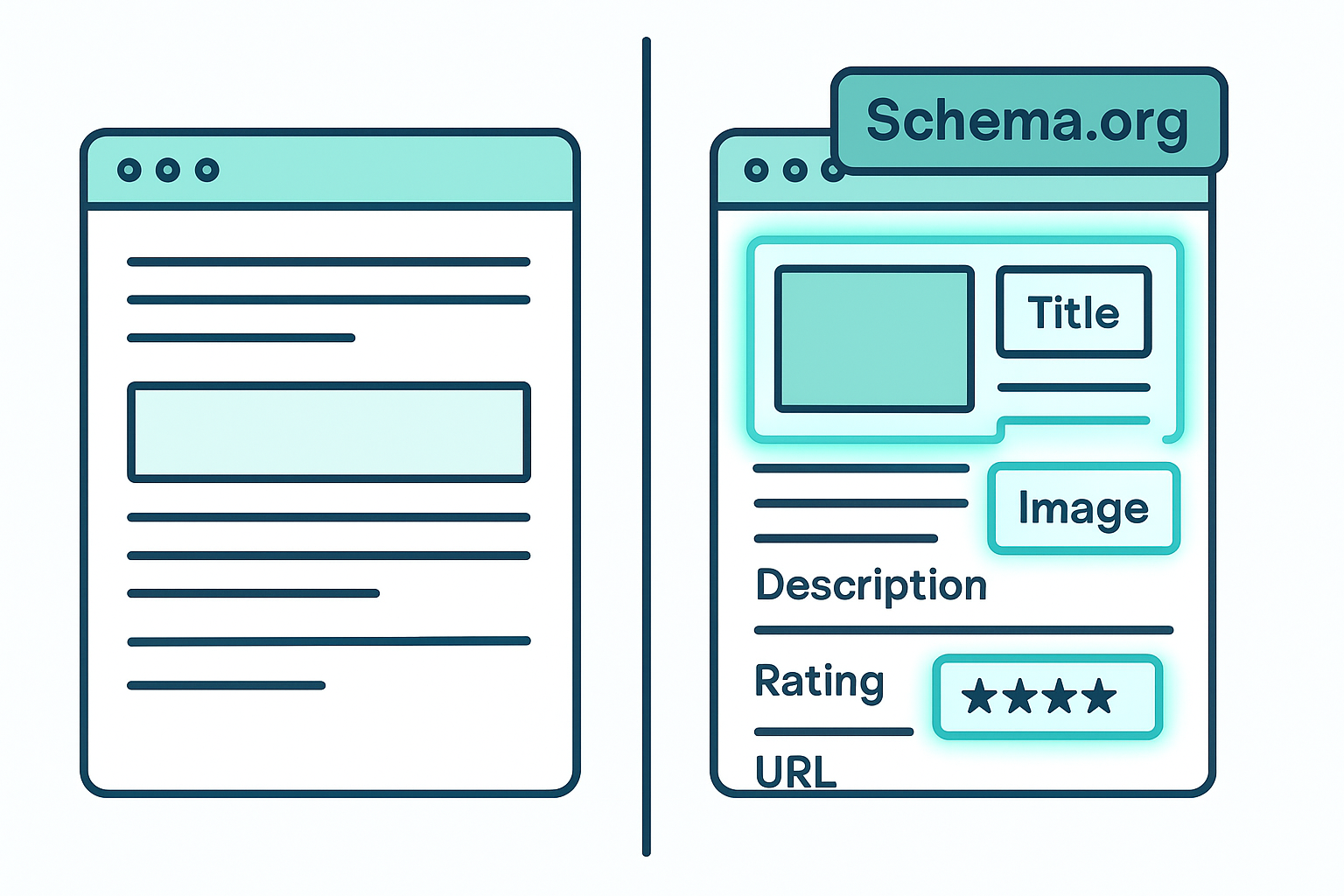
Schema markup transforms plain content into structured signals that AI engines can reliably parse and cite.
5
Entity Clarity and Topical Authority
- Define key terms explicitly on first use — LLMs reward definitional clarity
- Name, describe, and contextualize every entity (person, tool, concept) mentioned
- Build topical depth: cover subtopics thoroughly rather than superficially
- Link internally to related pages to signal topical authority across your site
- Use consistent terminology — avoid synonym overload that confuses entity recognition
6
Conversational and Long-Tail Keyword Integration
- Target natural language questions, not just head keywords
- Include “who, what, when, where, why, how” variants throughout the content
- Mirror the phrasing users type into AI chat interfaces
- Avoid keyword stuffing — AI engines penalize unnatural density
7
Content Freshness and Accuracy Signals
- Include a visible “Last Updated” date on all key pages
- Refresh statistics, examples, and references at least annually
- Cite primary sources — AI engines favor pages that reference verifiable data
- Remove or update outdated claims promptly
8
Technical On-Page Factors
- Ensure pages load in under 2.5 seconds (Core Web Vitals compliance)
- Use descriptive, keyword-containing URL slugs
- Add descriptive alt text to all images
- Ensure mobile responsiveness — AI crawlers index mobile-first
- Use canonical tags to prevent duplicate content confusion
How to Monitor and Maintain Your AI SEO Performance
Applying this checklist once is not enough. AI search behavior evolves continuously as models are retrained, ranking signals shift, and new answer formats emerge. Staying ahead requires ongoing monitoring — not just quarterly audits.
One of the most effective ways to stay on top of emerging issues is through real-time SEO issue alerts from Rank Authority, which notify you the moment a technical or on-page problem is detected — before it costs you visibility in AI-generated results. Reactive auditing is a losing strategy in an AI-first search environment.
For teams that need to scale optimization across dozens or hundreds of pages, manual implementation of every checklist item becomes a bottleneck. That’s where 1-click AI-powered SEO from Rank Authority changes the equation — automating meta tag optimization, heading structure fixes, schema injection, and more so your team can focus on strategy rather than execution.
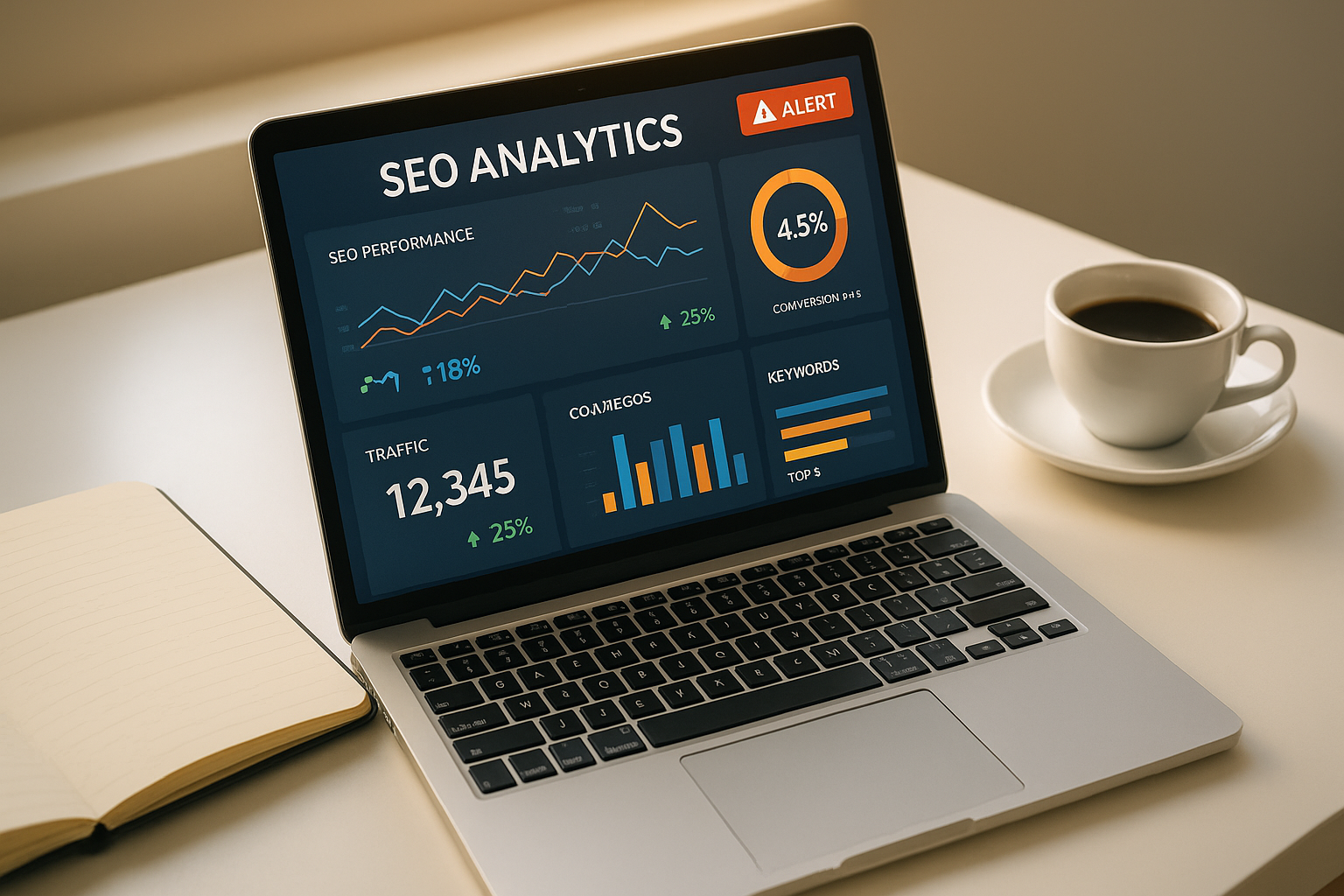
Continuous monitoring ensures your on-page optimizations remain effective as AI search algorithms evolve.
Frequently Asked Questions
How is AI search optimization different from traditional on-page SEO?
Traditional on-page SEO focuses on keyword placement, meta tags, and link signals to rank in blue-link results. AI search optimization additionally requires structured answer formatting, explicit entity definitions, FAQ schema, and content written to directly satisfy conversational queries so that large language models can extract and cite your content accurately.
Does schema markup help with AI answer engines?
Yes. Schema markup — especially FAQPage, HowTo, and Article schema — gives AI engines structured signals about what your content means and how to categorize it. This increases the likelihood that your page is cited in AI-generated responses.
How often should I audit my pages against an AI SEO checklist?
You should audit your most important pages at least once per quarter. AI search behavior evolves rapidly, so using a real-time SEO alert tool helps you catch issues as they emerge rather than during scheduled reviews.
Can AI tools help me apply the on-page SEO checklist faster?
Yes. Platforms that offer 1-click AI-powered SEO can automatically apply many checklist items — such as meta tag optimization, heading structure, and schema injection — dramatically reducing the manual effort required to optimize pages for AI answers.
Conclusion: Make Every Page AI-Answer Ready
The shift to AI-powered search is not a future event — it is already reshaping how millions of users find information every day. Applying a rigorous on-page SEO checklist for AI answers to every page you publish is now a baseline requirement for sustainable organic visibility, not an advanced tactic.
Each item in this checklist — from direct answer blocks and schema markup to entity clarity and real-time monitoring — serves a single goal: making your content so clear, structured, and authoritative that AI engines have no better option than to cite you. Start with your highest-traffic pages, work systematically through the checklist, and use automation tools where available to accelerate results.
Ready to Optimize?
The pages that win in AI search are the ones built for clarity, structure, and authority — starting today.