

Search engine visibility improvement is the process of making a website easier to find, rank, and cite across traditional search engines and the growing wave of AI-powered answer platforms. For business owners and marketers, this isn’t just about climbing a results page anymore; it’s about being the source an AI assistant quotes when someone asks a question. Achieving that requires a mix of technical precision, content clarity, and structured data that machines can read easily. Author: RankAuthority editorial team.
Direct answer: Search engine visibility improvement means optimizing technical SEO, content structure, and schema markup so a website ranks higher in search results and gets cited more often by AI answer engines. In practice, it combines site audits, keyword-aligned content, and structured data deployment into one ongoing process.
What Is Search Engine Visibility Improvement?
Search engine visibility improvement refers to the ongoing work of helping a website appear more frequently, and more prominently, wherever people search. This includes classic Google results, featured snippets, and increasingly, AI-generated summaries from tools like ChatGPT and Gemini. In particular, this shift means visibility is no longer measured by rank position alone.
Instead, marketers must also track how often their content gets cited inside AI answers. According to a 2023 industry analysis, organic search still drives more than half of all website traffic, which is why search engine optimization remains foundational even as AI search grows. As a result, businesses that ignore either channel risk losing significant traffic.
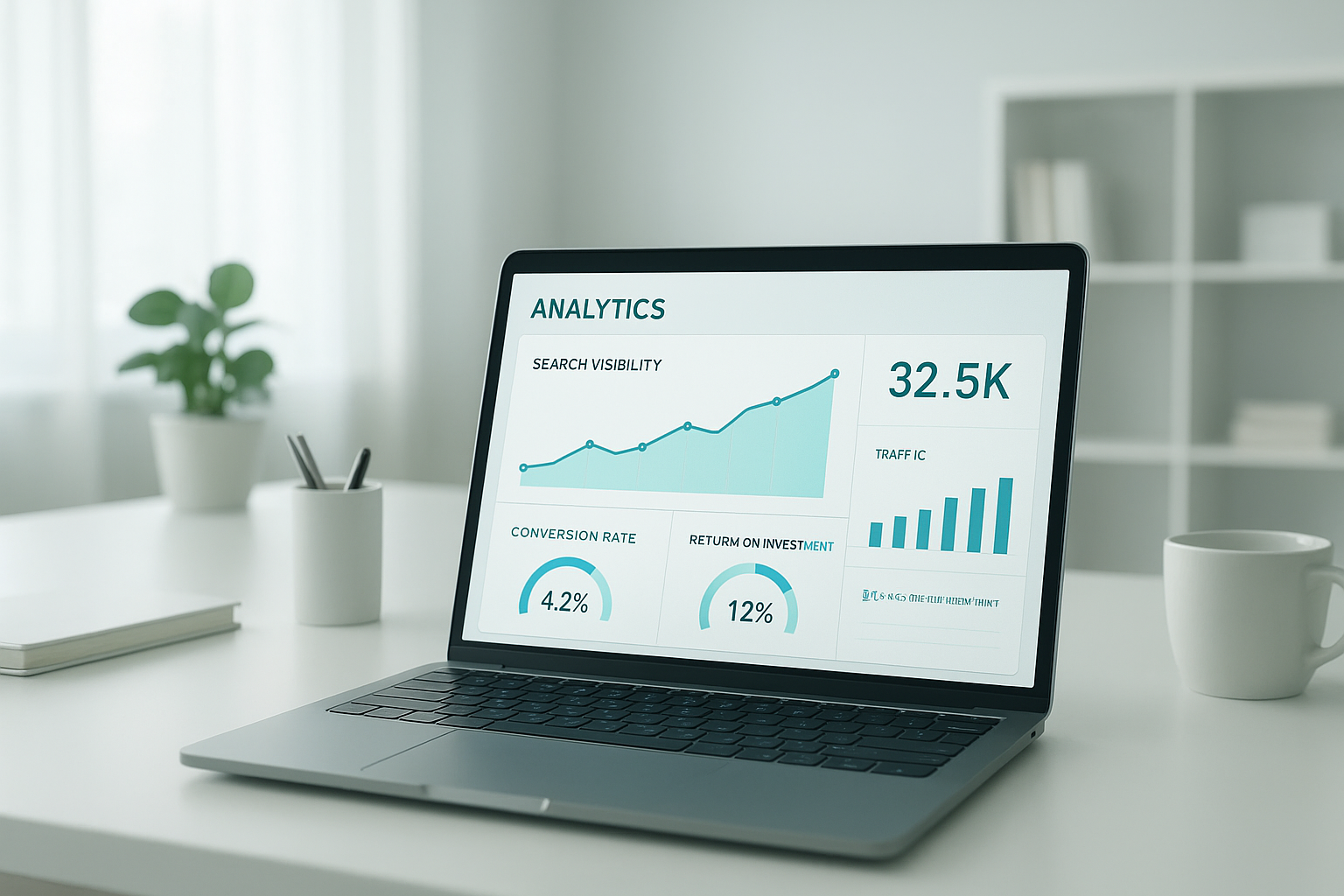
Tracking metrics is a core part of any search engine visibility improvement strategy.
Why Search Visibility Matters for Modern Businesses
Consequently, businesses that invest in stronger search visibility tend to capture more qualified traffic without paying for every click. Furthermore, higher visibility builds trust, since users generally assume top-ranked or frequently cited sources are more credible. In contrast, sites buried on page three or absent from AI answers often lose potential customers before they even know the brand exists.
Additionally, visibility across AI platforms is becoming a competitive differentiator. Similarly to how backlinks once separated leaders from laggards in classic SEO, AI citation frequency is starting to separate visible brands from invisible ones. For a deeper look at how automated tools support this shift, see this guide to automated search engine visibility tools.
Key Factors That Influence Search Rankings
Several factors influence how visible a site becomes. Above all, technical health matters most, since crawl errors or slow load times can suppress even excellent content. Google’s own SEO Starter Guide emphasizes crawlability, mobile usability, and page experience as core ranking signals.
Beyond technical health, content relevance and structured data play major roles. Specifically, pages that use clear headings, concise answers, and properly formatted structured data tend to earn more rich results and AI citations. Meanwhile, backlink quality and internal linking continue to signal authority and topical relevance to crawlers.
How to Improve Search Engine Visibility: A Step-by-Step Process
Improving visibility does not require guesswork. Instead, following a structured process tends to produce faster, more reliable results.
- Run a full technical audit. Identify crawl errors, broken links, and slow pages before making any other changes.
- Optimize on-page content. Align titles, headings, and meta descriptions with real search intent while keeping the language natural.
- Deploy schema markup. Add structured data so both search engines and AI systems can parse page content accurately.
- Strengthen internal linking. Connect related pages using descriptive anchor text to build clear topical silos.
- Monitor AI visibility. Track citation frequency across AI answer platforms alongside traditional ranking data.
Notably, platforms like RankAuthority’s 1-Click AI AutoPilot automate steps one through three, which removes much of the manual technical workload for small teams.
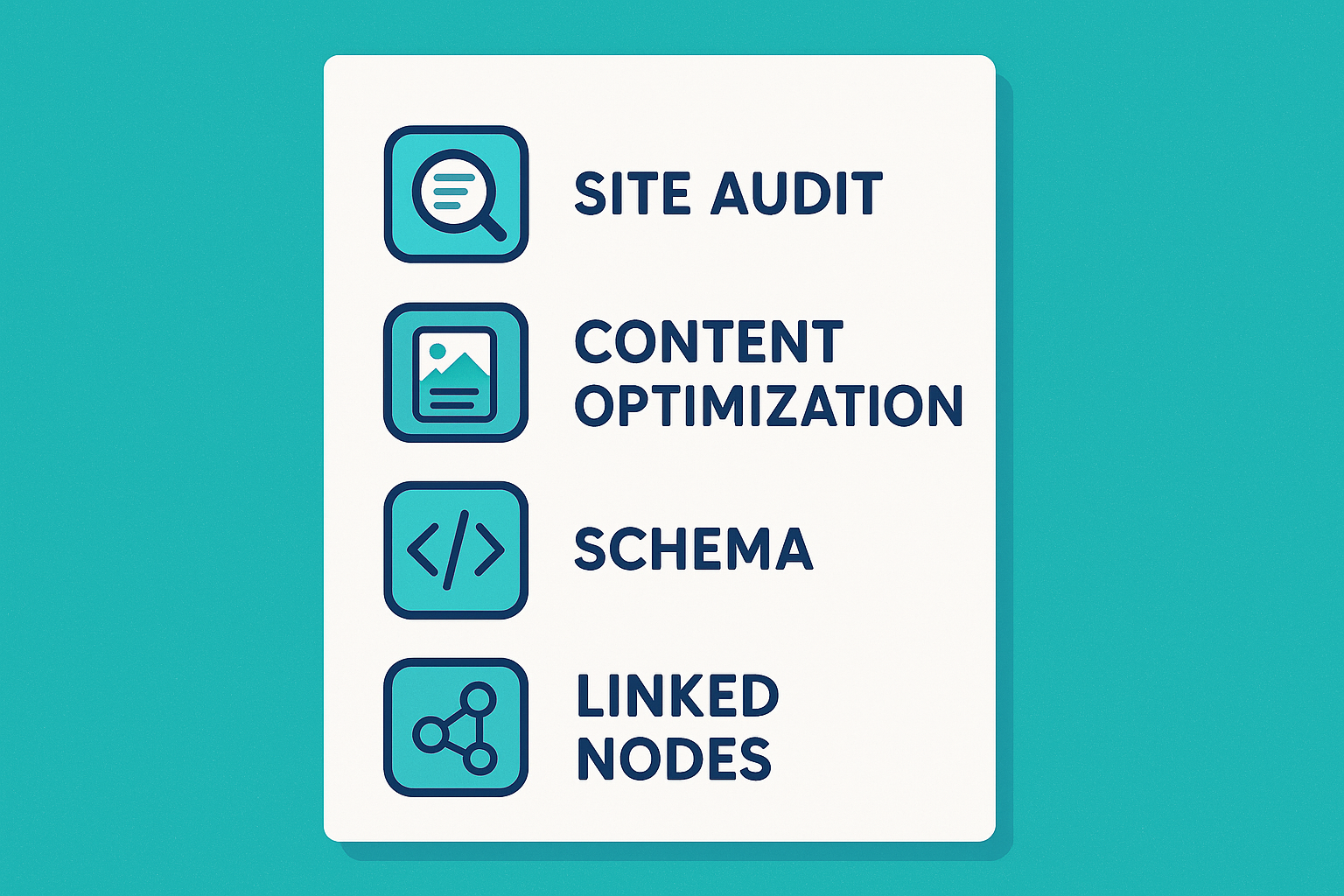
A structured checklist keeps search engine visibility improvement efforts consistent.
Common Mistakes That Hurt Online Visibility
Even well-intentioned teams make avoidable mistakes. For example, skipping mobile optimization remains common, despite mobile traffic accounting for the majority of searches in most industries. Similarly, thin or duplicated content often fails to earn rankings because it offers little unique value.
Moreover, many sites neglect structured data entirely, which limits eligibility for rich results and AI citations. In addition, inconsistent internal linking confuses both users and crawlers about which pages matter most. Therefore, addressing these gaps early tends to produce the fastest visibility gains.
Tools and Technologies for Boosting Search Rankings
Fortunately, a wide range of tools now support search engine visibility improvement. Free diagnostic tools, such as an AI Visibility Checker or Site Audit Checker, help teams identify weak spots quickly. Meanwhile, automated platforms can handle schema generation, indexing submissions, and competitor gap analysis at scale.
For instance, tools like RankFast analyze competitor pages and rebuild stronger versions, while RankLink automates topical siloing and internal linking. Together, these approaches reduce the manual effort typically required for enterprise-level SEO. Readers can also explore this overview of digital optimization tools for AI-powered search success for additional context.
The Role of AI in Search Engine Visibility Improvement
AI is reshaping how visibility gets measured and achieved. Specifically, Generative Engine Optimization (GEO) and Answer Engine Optimization (AEO) now sit alongside traditional SEO as necessary disciplines. Consequently, content must be structured not only for human readers but also for machine extraction.
In practice, this means using clear question-based headings, concise direct answers, and well-formed schema. For businesses wondering where to start, this resource on improving website search visibility with AI offers practical next steps. Ultimately, combining AI automation with human strategy tends to produce the strongest long-term results.
AI-driven optimization is now central to search engine visibility improvement strategies.
Frequently Asked Questions About Search Engine Visibility Improvement
What is search engine visibility improvement?
Search engine visibility improvement is the process of increasing how often and how prominently a website appears in search engine results, AI answer engines, and generative search summaries. It combines technical SEO, content optimization, and structured data to help pages get found and cited.
How long does search engine visibility improvement take to show results?
Most sites see measurable movement within 8 to 12 weeks after technical fixes and content updates go live. However, competitive niches or larger sites may take three to six months for full results.
What is the difference between SEO and GEO?
Traditional SEO focuses on ranking in classic search engine results pages, while Generative Engine Optimization (GEO) focuses on getting content cited inside AI-generated answers. Both share technical foundations but require different content structuring.
Why is schema markup important for visibility?
Schema markup helps search engines and AI systems understand page content precisely, which increases eligibility for rich results, featured snippets, and AI citations. Without it, engines must guess at context, which can reduce visibility.
How much does search engine visibility improvement cost?
Costs vary widely, from free DIY audits to monthly retainers of several thousand dollars for agency-led campaigns. Automated platforms typically offer a more affordable middle ground by handling technical fixes and schema deployment automatically.
What common mistakes hurt search visibility?
Common mistakes include ignoring page speed, skipping structured data, duplicating content, and neglecting internal linking. Thin content and missing meta descriptions also frequently suppress rankings.
Can AI tools automate search engine visibility improvement?
Yes, AI-driven platforms can automate technical audits, schema generation, and content optimization, significantly speeding up search engine visibility improvement. Automation does not replace strategy entirely, but it removes much of the manual workload.
How do backlinks affect search visibility?
Backlinks from authoritative, relevant sites signal trust to search engines, which can boost rankings and visibility. Low-quality or spammy links, in contrast, can suppress visibility or trigger penalties.
What is Answer Engine Optimization (AEO)?
Answer Engine Optimization is the practice of structuring content, headings, and schema so that AI assistants and featured snippet systems can extract direct answers easily. It focuses heavily on concise, well-labeled answer blocks.
How often should I update my website content?
Reviewing and refreshing key pages every three to six months helps maintain relevance and accuracy signals. Fast-moving topics may need monthly updates to stay competitive.
Does page speed affect search visibility?
Yes, page speed is a confirmed ranking factor because slow-loading pages create poor user experiences. Search engines generally favor sites that load quickly on both desktop and mobile devices.
What role does internal linking play in visibility?
Internal linking distributes authority across a site and helps search engines understand topical relationships between pages. Strong internal linking structures, often called topical silos, can improve rankings for related keyword clusters.
How can small businesses compete with larger sites?
Small businesses can compete by targeting specific long-tail keywords, earning local citations, and using structured data to stand out in AI answer results. Consistency and technical accuracy often matter more than sheer content volume.
What tools can measure search engine visibility improvement progress?
Tools such as Google Search Console, keyword rank trackers, and AI visibility monitors can measure progress over time. Combining traditional ranking data with AI citation tracking gives the most complete picture. For a broader strategic view, this complete guide to online brand visibility optimization is a useful next read, and this resource for elevating SEO knowledge covers foundational concepts in more depth.
In summary, search engine visibility improvement blends technical precision, structured content, and AI-ready schema into one ongoing process. Businesses that combine audits, on-page optimization, structured data, internal linking, and AI monitoring tend to see the strongest, most durable gains. Above all, treating visibility as a continuous practice rather than a one-time fix is what separates brands that get found from those that get overlooked. Platforms like RankAuthority can help automate much of this work, making consistent search engine visibility improvement achievable even for teams without a dedicated SEO department.

